
Lead Time, MOQ, and Payment Terms: What Apple Cider Vinegar Powder Suppliers Won't Tell You Until You Ask
2026-11-18 17:34:44
A quotation for apple cider vinegar powder is deceptively short: a number per kilogram, a grade, a lead time, a payment line. Everything that actually decides whether that container lands clean, on budget and on schedule lives in the gaps between those four fields - and suppliers rarely volunteer it. This brief opens the gaps one at a time: what a "7-20 day" lead time really contains, why MOQ is a manufacturing constraint and not a negotiation tactic, how payment terms encode trust, which Incoterm quietly transfers your risk to a freight market you don't control, and the buyer-side compliance duties (FSVP, patulin, contaminant panels) that turn a cheap quote into an expensive import. Then a due-diligence checklist and the questions to ask a supplier before the first drum moves.
Key takeaways
The quoted lead time is the short part of the journey. Our own published standard is 7-20 days to shipment readiness[11] - then add lab release, booking, ocean transit and inland delivery. Plan the calendar, not the quote.
MOQ is the manufacturing calendar talking. 1 kg bags, 5 kg tins and 25 kg drums exist because filling lines, campaign scheduling and container math are discrete[11]. Custom specs buy exclusivity with volume; that trade is honest - and non-negotiable physics dressed as flex is not.
Payment terms are your credit biography written in advance. The ladder - prepay, staged T/T, L/C at sight, then credit[4][10][11] - is climbed, not argued. A first-order open account is not a discount; it is a risk transfer with the supplier's name on the risk.
Your Incoterm is a hidden payment term. FOB/FCA keep freight control with you, CIF ships you someone else's charter economics with minimum insurance, DDP prices convenience at a premium - and none of them is "safe by default"[1][2][3].
The buyer side of compliance is real work. US importers carry FSVP verification duties for every foreign supplier[6][7]; apple-derived powders live under patulin scrutiny with the FDA action level at 50 ppb in juice products - the reason a supplier testing each batch to 10 ppb by LC[5][11] is saving you money, not adding margin.
1. The Direct Answer: The Three Clauses That Decide Everything
Direct answer: behind the unit price, three clauses decide whether an ACV powder purchase succeeds - and every one of them is a system the supplier controls, not a number they choose to be nice or greedy about. Lead time is a production-calendar fact (fermentation campaigns, release testing, sailing schedules), so fight it with forecasting and buffer policy, not with pressure. MOQ is a packaging-line and campaign-scheduling fact, so fight it with pack mix and SKU consolidation, not with the phrase "trial order forever." Payment terms are a risk-price, the supplier's actuarial table of your relationship, so climb it deliberately - prepay, staged T/T, documentary credit, then credit lines - instead of requesting the final rung first.
The rest of this brief unpacks each system, adds the two you did not buy but inherit anyway (your Incoterm's risk transfer[1][2] and your country's importer duties[6][7]), and closes with the checklist that turns all of it into one page your team can execute. Since we are the supplier being "exposed": every first-party number below is quoted from our own public specification - 7-20 days, T/T, L/C and Trade Assurance, credit terms for large orders, 1/5/25 kg packs, 5,000 tonnes annual capacity, patulin at 10 ppb by LC on every batch[11][12] - because a procurement brief that anonymises its own numbers is marketing.
Who this brief is for: procurement and supply-chain leads at supplement, beverage and food-manufacturing buyers sourcing ACV powder from China; also useful the other way around - it is literally the set of questions we would ask our own commercial team if we were buying.
2. Anatomy of a Lead Time: What 7-20 Days Actually Contains
Direct answer: a published lead time is the distance between a confirmed order and a shipment-ready lot - production slot, fermentation and drying, QC release, packing and paperwork. It is deliberately not the distance to your warehouse door, and a buyer who forecasts on the quote is building a stockout with extra steps.
Here is the chain for a standard 10%-acidity ACV powder order, with the segment a supplier controls, the segment the market controls, and the segment you control:
| Segment | Typical span | Who controls it | What moves it |
|---|---|---|---|
| Order confirmation & advance payment | 1-3 days | Buyer + supplier | Bank rails, spec sign-off speed - the "7-20 days" clock starts here, after payment clears[11] |
| Campaign scheduling | 0-10 days | Supplier | Fermentation and spray-drying run in campaigns; a custom spec waits for its own slot, a stocked standard may not[11] |
| Production & QC release | 3-7 days | Supplier | Assay, moisture, micro and patulin panels must pass before the lot exists on paper; a retest is days, not emails[11][12] |
| Packing & export paperwork | 2-4 days | Supplier | Drum filling lines, COA/MSDS set, invoice and packing list, origin documents per destination[11] |
| Booking & sailing | 5-21 days | Carrier + you (via forwarder) | Space availability and the sailing calendar - the single least controllable segment and the one the quote quietly excludes |
| Arrival customs & inland delivery | 3-10 days | You + broker | Entry readiness (FSVP file, prior notice, label review) decides whether this is 3 days or a demurrage story[5][6][8] |
Three professional consequences:
Define the clock in the contract. "Lead time: 7-20 days" should say from what to what - ours is stated from confirmed order (advance received) to shipment-ready ex-factory[11]. A supplier who resists defining endpoints is resists for a reason.
Ask for the release protocol, not a promise. What happens when a batch fails its own patulin plate? Good answers re-run and disclose; bad answers "ship and sort it out," which converts a supplier problem into your import rejection.
Forecast is a shared document. Rolling 3-month call-off forecasts against annual capacity[11] convert you from campaign stowaway to scheduled cargo - the honest mechanism behind "we can do you a quicker lead time" at serious mills.
3. The Harvest Calendar Hiding Inside Your Delivery Date
Direct answer: ACV powder is agricultural arithmetic - apple juice fermented twice, concentrated and spray-dried[11] - and apples pick in one season. In China, the origin for most world supply, the harvest runs roughly August through October, with the crop then feeding concentrate and powder lines for the following twelve months[9]. Prices, slot availability and even contaminant baselines breathe with that calendar, and the quotation you hold is priced inside it whether or not anyone says so.
Post-harvest (autumn): new-crop concentrate enters the system; fresh lots reset inventory. This is when quality conversations are easiest and when an annual volume lock usually prices best - if a supplier quotes you autumn pricing in spring, you are already reading last year's calendar.
Mid-year tightness: as carry-over concentrate thins, campaign priority goes to committed volume. "Spot orders wait" is not rudeness; it is the same physics your grain broker calls basis.
Contaminant logic: patulin rides with fruit condition - bruised and windfall apples drive it up, careful orchard handling drives it down, which is why the honest question to any ACV powder supplier is not "do you test" but "what is your patulin limit, what method, and what have the last four lots measured?" Our public answer is 10 ppb maximum by liquid chromatography, batch by batch - one fifth of the FDA's 50 ppb action level for apple juice products - and the released COA is downloadable[5][11][12].
The sourcing move: build the annual agreement around the harvest (call-off schedule, price-validity window, harvest-lock volume), then let spot orders live in the small remainder where they belong. Our own manufacturing explainer on the science and supply chain behind organic ACV powder walks the process this calendar governs, and the ACV powder FAQ answers the specification questions that ride alongside it.
4. MOQ Mechanics: Drums, Campaigns and Custom Specs
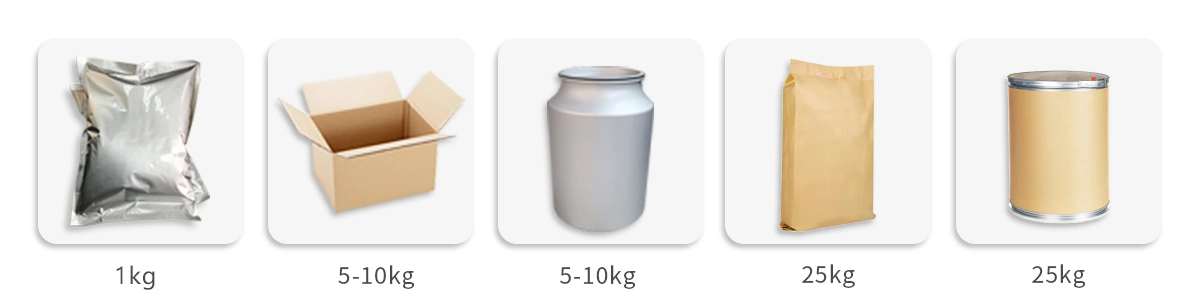
Direct answer: minimum order quantities are not greed meters, they are the grain of the manufacturing system. Standard grades ship against stock and the MOQ collapses to the pack unit - one kilogram in a foil bag if that is what your R&D needs, five in a tin, twenty-five in the drum that commercial pricing counts in. Everything "custom" - your acidity point between 5 and 10 percent, your carrier, your mesh, your printed bag - restarts the chain as a dedicated campaign, and campaign economics set the custom MOQ, not the salesperson's mood[11].
The three-tier ladder you will actually see quoted, using our published packaging as the reference object[11]:
1 kg foil bag - evaluation tier. Bench work, pilot gummies, regulatory sample submissions. The polite question that gets you far: does the sample come from the same production line and the same COA logic as bulk? A sample hand-blended in a lab is a different ingredient wearing your future spec sheet.
5 kg tin - pilot tier. Enough for a retail soft-launch or a test batch series, priced per kilo like the pilot it is. This is where "we'll pay a premium for small" is efficient - the premium is the honest price of the drum-breaking problem.
25 kg drum - commercial atom. The unit that filling lines, pallet patterns, container plans and per-kilo price breaks are all built around. Discounts that beat the drum price at sub-drum volumes are cross-subsidy theatre; the real lever is Section 5's container math.
Two MOQ sentences worth learning to hear: "custom specs require a batch minimum because your spec excludes us from stock sales of that campaign" - true and negotiable with volume commitment; and "MOQ is one ton but you can take it over six months" - also true, and called a call-off contract, the standard instrument for turning capacity reservation into inventory discipline. The sentence to distrust: no MOQ at any price on a custom spec. That quote is for someone else's powder with your label on the carton.
5. Container Math That Changes Your MOQ Negotiation
Direct answer: ACV powder is a light freight - dense in value, generous in volume - and once you do the drum arithmetic you will never negotiate MOQ the same way. Our published pack data: a 25 kg drum occupies 0.06 cubic metres and ships at 28 kg gross[11]. Run those two numbers against the two container classes and the negotiation rewrites itself.
| Measure | 20-ft container | 40-ft container |
|---|---|---|
| Nominal usable volume | ~28 m³ | ~58-60 m³ |
| Drums by volume (0.06 m³ each) | ~466 | ~966-1,000 |
| Net product at those counts | ~11.7 tonnes | ~24-25 tonnes |
| Gross weight (28 kg/drum) | ~13 tonnes - comfortable | ~27-28 tonnes - at the payload ceiling |
| Binding constraint | Volume: the box fills before the weight does | Weight: drums ride out before the box fills |
What this buys you in the negotiation:
FCL beats LCL below a real threshold. Loose-load freight prices per cubic metre with handling overhead at both ends; somewhere short of a third of a 20-ft the consolidation premium stops paying for itself versus committing to more drums of one spec. Do the crossed-line before defending "smaller orders" as a principle.
Multi-SKU consolidation is the legitimate MOQ bypass. One container, several actives, one factory - the yucca and ACV order that travels together lands cheaper per kilo than either alone, and any supplier with a broad catalogue (ours spans feed botanicals, fruit powders and extract lines) should be asked to quote the combined movement[11].
Drum footprint is warehouse input, not trivia. Those published dimensions (54 × 37 × 37 cm or 35 × 35 × 51 cm depending on format[11]) decide your racking and your pallet pattern before the first container is booked - and asking which format ships this lot is a two-minute call that prevents a receiving-day surprise.
6. The Payment-Terms Ladder and How You Climb It
Direct answer: every supplier's terms sheet is a risk price for your unknown-ness, and it descends in a predictable ladder: full prepayment (samples, first micro-orders) - staged T/T with the balance against documents (the standard first bulk structure) - documentary credit for real volume - and open credit only where the relationship has generated its own collateral: order history, committed volume, verifiable financials. Our own published terms read T/T, L/C and platform Trade Assurance, with credit terms for large orders[11] - which is the whole ladder in one sentence; the question is which rung you are standing on.
Why the advance is not a shakedown. Apple concentrate is bought against a harvest calendar (Section 3) - the supplier's cash went into fruit months before your PO existed - and your campaign slot is capacity they declined to sell elsewhere. The advance is the mirror of your own deposit on a custom home.
Staged T/T, the working compromise. Common practice is a percentage up front and the balance released against shipping documents (or after your pre-shipment sample clears): both sides keep skin in the game. Where the balance sits - against bill-of-lading copy, or after your own lab signs - is worth more negotiation than the headline rate.
Documentary credit, when the ticket justifies the banks. Under UCP 600 a letter of credit is irrevocable the moment it is issued, and banks deal in documents, not goods - they pay against a conforming presentation and refuse everything else[4]. That is the buyer's strongest ordinary protection (nothing pays until the paperwork proves the agreed shipment) and the seller's payment guarantee in one instrument. The cost is fee-and-rigidity: a discrepancy list is how a clean shipment bounces, so specify documents simply and completely.
Escrow rails are the new normal. Platform Trade Assurance and comparable services warehouse the money against delivery terms[11] - cheaper than banks on small orders, with the trade-off that the platform's dispute logic, not yours, becomes the referee.
Credit terms are earned, then protected. "Available for large orders"[11] is the polite universal truth: open account appears after order history and committed volume, sometimes behind the supplier's export-credit insurance. And the ladder is a two-way ratchet: repeated payment slippage pushes even established buyers back toward prepayment - slow payment is not free float, it is a repricing event[10].
The meta-point suppliers will not say out loud: the same ton sold at prepay and at 60-day terms is not the same transaction - interest and default risk are priced into the credit quote whether or not anyone writes them down. When a supplier quotes you net-60 with a smile, check that you have not just paid for the float in the unit price.
7. Incoterms: The Hidden Payment Term
Direct answer: the three letters after your unit price silently allocate freight volatility, insurance depth, customs friction and the exact meter at which a ruined shipment becomes your problem instead of the seller's. Incoterms 2020 is eleven published rules whose whole job is to say who moves risk and cost at which point[1][2] - and every one of them is a price you are paying one way or another.
EXW (ex works) reads cheapest and behaves dearest: you inherit Chinese export-side logistics, origin clearance and everything upstream of your forwarder's first touch. For a first container, it is a self-assigned homework assignment in a language you do not speak.
FCA / FOB - the working default once you have a forwarder you trust. Risk transfers when the goods are handed to the carrier (FCA) or placed alongside/on board at the port (FOB); freight from there is your contract and your volatility - which is the point: ocean rates move enough that whoever books the ship should be whoever watches the market[2][3]. Note the ICC's own guidance that FOB was designed for bulk and break-bulk, not containerized cargo handed to a terminal - FCA is the container-correct cousin.
CIF - convenience with a clause trap. The seller arranges freight and insurance to your port, which sounds generous until you read what is owed: under Incoterms 2020, CIF's insurance obligation is minimum cover - Institute Cargo Clauses C, the thin tier - while the freight is whatever charter saved the seller money[1][3]. You arrive owning a shipment insured to the legal floor on a route you did not choose.
DDP - the full-service door, priced and exposed accordingly. The seller carries everything including import duties and clearance - maximum convenience, maximum embedded margin, and a structural oddity: your import history becomes someone else's filing. Many brand-owners use DDP to enter a market, then graduate to FOB once volume justifies owning their freight line.
The procurement rule that falls out of this: never compare two quotations before both are reduced to the same Incoterm point - normally your warehouse door - by adding your own freight, insurance and duty estimates to the one that stops short. A CIF "bargain" that beats your FOB quote by less than the market freight rate is not a bargain; it is a freight contract you did not read. The ICC publishes the rules; trade agencies publish the plain-language tables - put both on your buyer's shelf before the next quotation cycle[1][2].
8. The Hidden-Cost Ledger Between Quote and Landed Cost
Direct answer: the unit price is the entry fee; landed cost is the ticket. Between them lives a ledger that suppliers are not obliged to read aloud and forwarders mention in footnotes. Here is the full line-item list we tell our own buyers to pre-fill - every one of these has appeared on a real ACV powder import.
Ocean freight movement after quote validity. Rates are weather; a 30-day quotation validity in a volatile season is a courtesy, not a hedge - your hedge is a booking date.
Origin charges: terminal handling, documentation, customs clearance on the export side - under FOB these are the seller's, under EXW they are your surprise.
Destination terminal handling and drayage - port to warehouse, priced per move, spiking with trucker capacity.
Demurrage and detention. The container's clock starts when the carrier says it does: demurrage accrues while the box sits at the terminal past free time, detention while you keep the equipment past yours - both escalate daily, both are avoidable only by having your clearance story ready before arrival[8]. This is where the FSVP work in Section 10 quietly pays: an unready importer is a demurrage donor.
Duty and classification risk. Your tariff line for a fermented-and-dried apple product is a broker question, not a supplier one - get the ruling before the container is priced into your COGS.
Third-party verification. SGS/bureau-style pre-shipment testing and sampling, if you want your numbers instead of the COA's - a few hundred dollars per campaign, and the cheapest dispute clause ever written.
Disagreement costs. When your incoming lab and the shipped COA disagree on acidity or patulin, someone pays for referee testing, hold fees and the clock - which is why the referee clause is in Section 9, not in a footnote.
Samples and paper shipments. The four express parcels of "pre-production samples" before the bulk order are a real expense line and, under most countries' rules, real customs paperwork.
Safety-stock carry. If you planned on the quoted 7-20 and the calendar in Section 2 taught you otherwise, the buffer inventory is interest, space and shelf life you are paying monthly.
Quality-reject option value. The premium you did not pay for a supplier testing patulin to 10 ppb on every batch instead of the minimum legal story[5][11] - the cheapest line item that never appears because the disaster it prevents is invisible.
Build the spreadsheet once, fill it per supplier, and quotations across different desks finally become comparable. The supplier who flinches when you show them the model is answering your due-diligence question for free.
9. Quality Clauses That Become Payment Disputes
Direct answer: almost every commercial fight we have seen in this ingredient category traces to four specification gaps - what method measured the acidity, which sample is legally "the goods," what happens on a lab disagreement, and when the buyer's inspection clock expires. Write those four into the purchase order and the remaining disputes are weather.
Method is the spec. "Total acidity ≥10%" without a method is a mood: our published standard is acid-base titration with pH indicator, reported as total acidity in acetic acid[11] - the same words a competitor's COA should carry with the same or a different method, and different methods disagree at the margins where price breaks live. Same for moisture (loss on drying) and patulin (liquid chromatography, our limit 10 ppb against the FDA action level of 50 ppb in apple-juice products[5][11]).
The retained-sample triangle. Every released lot: sealed sample held by supplier, sealed sample held by buyer from arrival, both referenced to a named referee lab with cost-to-loser arbitration. It costs nothing at signing and is the only witness anybody trusts at month nine.
Inspection window. The PO should state when conformity is judged - on arrival, on opening, on in-house assay - and how long you have to file a claim. Silence defaults to the supplier's convenience; "notice within 30 days of arrival with photographic evidence of drum seals intact" defaults to everyone's clarity.
Document-conformity discipline. If payment rides documents (L/C or T/T-against-copy), the document set is the product: names, weights, lot numbers and the COA values must match the PO letter-perfect, because banks read like compilers[4]. Half of all "supplier caused payment delay" stories are actually "the paperwork said two different things" stories.
10. Your Own Side of the Border: FSVP, Documents and Contaminants
Direct answer: US food importers carry a public, auditable duty - the Foreign Supplier Verification Program puts the obligation to verify that your foreign supplier controls hazards squarely on the importer, with risk-based evaluation, verification activities and corrective actions on file before the shipment is routine[6][7]. China-origin ACV powder does not become your supplier's problem at the waterline; it becomes your documentation. The same logic exists, in different clothes, in the EU and the UK; and the supplier's job in this arrangement is to make your FSVP file write itself.
Concretely, an ACV powder import dossier wants:
From the supplier, per lot: batch COA with measured values and methods (acidity by titration, moisture by loss on drying, patulin by LC at their stated limit, the micro panel), MSDS, specification sheet, allergen and Non-GMO statements, and the process documentation (flow chart, fermentation description) our own specification page lists as standard issue[11][12];
From the supplier, per system: the certificate stack - ISO 9001 and ISO 22000 at minimum, FSSC 22000/HACCP/cGMP/FAMI-QS where the product lines run, and the organic certificates where the lot claims them[11] - with license numbers you verify with the issuing body rather than admire as PDFs;
From you, per FSVP file: the hazard analysis for this ingredient (patulin is the named one in apples[5]), the supplier evaluation, the chosen verification activity (reviewing their COAs with your limits, plus periodic sampling when the risk warrants), corrective-action procedures and record retention - the law's list is short; the practice is diligence;
From your broker, per entry: prior notice timing, correct classification, label review for the destination market, and the tariff ruling from Section 8's ledger.
Here is the trade secret hiding in plain sight: a supplier testing patulin batch-by-batch to 10 ppb by LC[11] is not decorating a COA - they are writing half of your FSVP verification record for free, in the only format an auditor accepts. That is why the "cheaper" lot that "meets the legal limit" is often the most expensive purchase of the year, filed at the FDA's 50 ppb action level for apple-juice products instead of a food-safety margin[5]. The destination-market side is mirrored at origin: our China production runs under the GB 2760 ingredient framework with SC licensing and GB 2763 residue limits; export documentation follows the destination country's current rules[11]. Ask any supplier for both columns - origin license and destination-history - and watch who suddenly needs "to check with the team."
11. The Trust Verification Sequence, Step by Step
Direct answer: trust is a sequence, not a feeling, and it costs a defined amount of money at each stage. Skip stages and you are not being efficient; you are donating your margin to the stage you skipped. Six stages, roughly the order we would use if we were buying:
Desk audit (free, days). Registration and business scope verifiable in public Chinese company registries; certificate license numbers re-typed and checked with the issuers; the site's own numbers - lead times, packs, contaminant limits - read for internal consistency. A supplier whose public pages state 7-20 days, 1/5/25 kg, 5,000 tonnes and a downloadable COA has at least handed you the answer key[11][12].
Sample + COA congruence (shipping cost, one week). Production-line sample, with the COA's methods matched to your incoming method - the sample that dissolves perfectly while the COA lists a test you cannot reproduce is a question, not a victory.
Remote or third-party audit (a day's fee, one week). Video walkthrough of the fermentation and drying lines, or a pre-shipment inspection firm's report. What you are checking: that the spray dryer, the lab and the drum-filling corner in the photos are the same ones you will be buying from.
Pilot order on protective terms (the drum price, two months). Small volume, full prepay or escrow, inspection-before-balance clause, retained samples from day one. This is the stage where the lead-time contract language from Section 2 gets its first live test.
First committed container (the real test, one quarter). Incoterm chosen deliberately (Section 7), documentary terms sized to the ticket (Section 6), incoming-QC script written before arrival, FSVP file complete before the vessel (Section 10). Success at this stage is what earns the next one.
Annual agreement with harvest mechanics (ongoing). Call-off schedule, price-validity and harvest-lock terms, agreed re-audit cadence. Your supplier's calendar now has your name printed in it - which is the only way "lead time" ever becomes a promise instead of a range.

12. Twenty Questions and the Pilot Purchase-Order Clauses
Direct answer: hand the ten questions below to any ACV powder supplier - the quality of the answers sorts the market faster than any audit. Then paste the six pilot clauses into your next purchase order and let the quotations compete on the only field that matters: your real landed risk.
| # | Ask | The tell inside the answer |
|---|---|---|
| 1 | Lead time from what event to what event? | Endpoints defined = they have run the chain (Table 1); "about two weeks" = they have not |
| 2 | What is the release-test failure protocol? | Re-run + disclosure vs "rarely happens" - you are buying the protocol, not the hope |
| 3 | Sample and bulk from the same campaign and line? | The difference between a spec and a story[11] |
| 4 | Patulin: limit, method, last four lots' values? | Numbers with a method beat "compliant"; ask for the COA PDF[5][12] |
| 5 | Which pack format actually ships this lot? | Dimensions decide your racking before your containers do[11] |
| 6 | Is your quoted price FCA, FOB, CIF or DDP - and to where? | Three-letter precision or an invitation to price the gap yourself[2][3] |
| 7 | Which payment structures do you accept at our order size? | A real menu (T/T, L/C, escrow) signals institutional operation[4][11] |
| 8 | What do your standard documents include, per shipment? | The FSVP file is assembled from this list before the boat[6][7] |
| 9 | How do you handle a referee-lab disagreement? | Cost-to-loser agreement or silence about the future |
| 10 | What volume commitment changes your terms? | The honest answer names the ladder (Section 6); the smooth answer promises the top rung |
And the six clauses every pilot purchase order should carry, in one line each:
Specification by value and method - acidity, moisture, solubility, mesh, micro, heavy metals, patulin with method and limit named[11];
Pre-shipment verification right - buyer's inspector sees the lot before the balance releases;
Retained-sample and referee-lab clause - both sides hold, named lab, cost to loser;
Defined lead-time endpoints and delay protocol - what triggers notice, what notice buys;
Document set annexed to the PO - every paper, in its final wording, listed before production;
Claim window and cure path - days on arrival, evidence standard, remake-or-credit sequence.
Six clauses, ten questions, one harvest calendar: this is the article's whole universe reduced to paperwork. The suppliers left standing after this filter are rare, pleasant and worth a very boring contract - which is the highest compliment a supply chain can pay.
13. Frequently Asked Questions
What is a realistic lead time for apple cider vinegar powder from China?
For a standard spec from an in-stock manufacturer, plan on the published production window - Wellgreen states 7-20 days from confirmed order and payment to shipment-ready[11] - plus release testing, booking and ocean transit, which routinely doubles or triples the quote before the drums are on your floor[8]. The planning number is the whole calendar; the quoted number is just the manufacturer's half of it.
Why do suppliers quote lead time as a range instead of a date?
Because the range encodes real variance: campaign scheduling around your lot, the release COA that must pass before the lot exists[11][12], and a sailing calendar nobody in the factory controls. A single exact date usually means buffer stock you are paying for, or confidence unbacked by process. Ask instead what each segment contains and what the release-failure protocol is.
What MOQ should I expect for food-grade ACV powder?
The pack unit is the atom: 1 kg foil bags for evaluation, 5 kg tins for pilots, 25 kg drums for commercial pricing - our published formats[11]. Custom acidity, carrier, mesh or packaging starts a dedicated campaign, and campaign economics, not salesperson moods, set custom minimums. A "no-MOQ custom spec" quote is a stock product wearing your label.
Can MOQ be negotiated below the drum size?
Down to the pack ladder (1 kg/5 kg), yes - that is what the ladder exists for. Across, yes - consolidate SKUs from one factory into one movement, the legitimate bypass we detail in Section 5. What no discount erases is the drum as the unit of filling lines, pallet patterns and price breaks. Negotiate the mix; the physics negotiates back.
What payment terms are fair on a first order?
Roughly symmetric exposure: a T/T advance around 30% against the campaign slot, balance against documents or your pre-shipment sample clearing; escrow rails (platform Trade Assurance) serve the same purpose[11]. Demand of a new supplier for 100% open account is not sophistication - it is asking them to self-issue insurance on you, which is why the answer is no and why slow payers get pushed back to prepay as relationships mature badly[10].
Is T/T or L/C safer for the first container?
A confirmed irrevocable sight letter of credit is the strongest ordinary buyer protection: banks pay only against documents conforming to the credit, under UCP 600 rules with a fixed examination window[4]. On small tickets, bank fees can exceed the protection's value - staged T/T plus third-party pre-shipment inspection is the pragmatic equivalent. Either way, discrepancy discipline is the risk: vague document requirements are how clean shipments bounce.
Which Incoterm should a mid-sized importer choose for ACV powder?
FCA or FOB once you trust a forwarder: risk transfers at handover to the carrier and freight volatility stays with the party able to manage it[2][3]. CIF looks convenient but obliges only minimum cargo cover and inherits the seller's charter economics[1][3]. DDP is legitimate convenience at a premium - price all quotations to the same point (your warehouse) before comparing[2].
What costs does the quotation usually leave out?
Freight after validity, origin and destination terminal charges, drayage, clearance, duty classification risk, demurrage and detention when the container waits past free time[8], third-party verification, referee retests on COA disputes, express parcels of pre-production samples, and the carry cost of safety stock you bought because the calendar said so. Quote plus this ledger equals landed cost - the only number worth negotiating.
How do I protect quality when I pay before the goods arrive?
Four clauses: pre-shipment verification against your spec with balance release conditioned on it; retained samples per batch at both ends with a named referee lab and cost-to-loser arbitration; COAs as measured values with methods[11][12]; and the inspection report made a documentary term when banks are involved[4]. Suppliers who love relationship and hate clause four have told you their plan.
How do apple harvest and seasonality affect ACV powder supply?
Fundamentally: ACV powder is harvested apples at the end of a fermentation and drying chain[11], and China's picking concentrates in August through October[9], resetting concentrate inventory annually. Expect firmer pricing and tighter campaign slots into the northern winter demand build; lock harvest-window volume with price-validity terms rather than discovering the calendar in your Q4 stockouts.
14. Sources and Further Reading
International Chamber of Commerce. Incoterms 2020 - the official rules page. iccwbo.org
International Trade Administration (US Department of Commerce). Know Your Incoterms. trade.gov
Ovrsea. Incoterms 2020: the 11 rules, who pays and bears the risk. ovrsea.com
ICC Academy. A guide to types of documentary credit (letters of credit under UCP 600). academy.iccwbo.org
US Food and Drug Administration. Compliance Program Guide Sec 510.150 - Apple Juice, Apple Juice Concentrates and Apple Juice Products: Adulteration with Patulin (action level 50 ppb). fda.gov
Law-firm explainer. Food importers must verify foreign suppliers (FSVP obligations summary). morsellaw.com
Law-firm compliance guide. FDA Food Import Rules: A Compliance Guide (FSVP under 21 CFR Part 1 Subpart L). reidellawfirm.com
Atlantic Project Cargo. What is Demurrage and Detention in Shipping Terms? atlanticprojectcargo.com
Global Times. Bumper harvest (China apple picking, October 2025 - seasonal context for the crop calendar). globaltimes.cn
Finch Trade. How payment delay disrupts inventory cycles in import-export businesses. finchtrade.com
Wellgreen. Bulk Apple Cider Vinegar Powder - specification, packaging, documents, lead time and payment. wellgreenxa.com
Wellgreen. Sample Certificate of Analysis - apple cider vinegar powder 10%. wellgreenxa.com (PDF)
Wellgreen R&D. Beyond raw materials: the science and supply chain behind organic apple cider vinegar powder. wellgreenxa.com/info
W
About Wellgreen Technology Co., Ltd.
Since 2011 Wellgreen has manufactured plant-extract and food-powder ingredients for buyers in 60+ countries. Our apple cider vinegar line is double-fermented from apple juice and spray-dried to 10% standard acidity (5-10% custom), packed 1 kg / 5 kg / 25 kg, released batch-by-batch against a COA that names methods and measured values - including patulin at 10 ppb maximum by LC, one fifth of the FDA action level. Lead time 7-20 days to shipment-ready; T/T, L/C and Trade Assurance accepted; credit terms for large orders; annual capacity 5,000 tonnes. This brief states our own commercial terms in full because a procurement article that hides its own numbers is advertising. It is sourcing guidance, not legal or customs advice - your broker and your lawyer remain the authorities for your border.
Quote the Whole Deal, Not the Kilo.
Send your specification, annual volume and destination port. You will receive a quotation written the way this brief says to read them: lead time with defined endpoints, pack formats with dimensions, payment structures at your volume, your chosen Incoterms priced, and the full export document set annexed - with a downloadable sample COA (patulin by LC) before you ever commit.