Berberine Hydrochloride Powder for Advanced Nutraceutical and Ingredient Formulation
2026-08-10 15:06:17
Berberine Hydrochloride Powder stands as a cornerstone ingredient for B2B nutraceutical developers seeking reliable, standardized botanical actives for metabolic health formulations. Extracted from plants like Berberis aristata and Coptis chinensis, this bright yellow crystalline powder delivers berberine in its most stable and soluble form—ideal for precise dosing in capsules, tablets, and functional blends. With purity levels routinely exceeding 97% via HPLC validation, it addresses the critical need for consistency and scientific backing in today's competitive supplement marketplace.
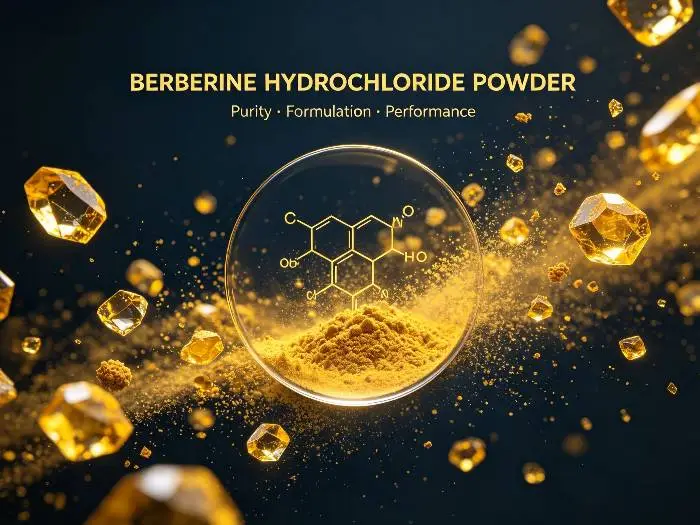
Understanding Berberine Hydrochloride Powder: Composition, Mechanism, and Health Benefits
Chemical Profile and Botanical Origins
The chemical name for Berberine Hydrochloride Powder is 633-65-8, and its molecular formula is C₂₀H₁₈ClNO₄. It is a quaternary ammonium salt that comes from isoquinoline alkaloids. Raw plant products have alkaloid levels that change a lot, but this refined form gives procurement directors the consistency they need. The formation of the hydrochloride salt improves the solubility in water compared to free-base Berberine Hydrochloride Powder. This helps with manufacturing problems that come up when tablets are compressed or capsules are sealed. It comes mostly from the roots and bark of different kinds of barberry. The extraction and crystallization process gets rid of any differences, leaving behind an ingredient that meets pharmaceutical standards like USP43 and Chinese Pharmacopoeia requirements.
Mechanisms Supporting Metabolic Health
The bioactive compound works through several biochemical pathways, which makes it appealing to formulators who want to improve metabolic health. AMP-activated protein kinase (AMPK) is turned on by Berberine Hydrochloride Powder. AMPK is a cellular energy monitor that controls the uptake of glucose and the processing of fats. Clinical studies show that it can improve insulin sensitivity and support good glucose levels that are already in the normal range. This is important for regulatory compliance in the U.S. market. Beyond metabolic pathways, Berberine Hydrochloride Powder changes the makeup of gut microbiota and inhibits dipeptidyl peptidase-4 (DPP-4). This gives it the ability to treat multiple targets, which is appealing to people who are making wellness goods that do more than one thing.
Evidence-Based Health Applications
Researchers have found that Berberine Hydrochloride Powder can help the heart, the gut system, and the inflammatory response. Meta-analyses show that this ingredient is statistically significantly better at controlling blood sugar levels. This makes it a good plant-based option for brands that want to focus on clean labels for metabolic support. Regulatory managers like that these methods based on evidence make structure-function claims that can be defended without going into the drug area. There is a lot of published clinical data, from randomized controlled trials to mechanistic studies. This gives product developers the scientific basis they need to show formulations to retail buyers or defend premium positioning in crowded market segments.
Comparative Insights: Berberine Hydrochloride Powder Versus Alternatives
Hydrochloride Salt Advantages Over Other Forms
Among the different types of Berberine Hydrochloride Powder products, the hydrochloride salt is more stable than the sulfate forms or the raw alkaloid mixes, and for Pure Berberine HCl Bulk, testing for storage stability shows that there isn't much loss of potency over 36 months under controlled conditions, and this takes away any worries about strength loss that comes with using less refined plant extracts, and the better solubility makes wet granulation processes easier in pill production, which cuts down on formulation time and raises batch accuracy. Testing for storage stability shows that there isn't much loss of potency over 36 months under controlled conditions. This takes away any worries about strength loss that comes with using less refined plant extracts. The better solubility makes wet granulation processes easier in pill production, which cuts down on formulation time and raises batch accuracy. Quality control teams like how accurate HPLC analysis is; it makes it easy to check the amount of Berberine Hydrochloride Powder without the problems that come up with matrix interference in whole-plant extracts.
When you compare Berberine Hydrochloride Powder to other metabolic support drugs, you can see that they work together rather than against each other. Metformin mostly works by stopping the liver from making glucose, but Berberine Hydrochloride Powder's multi-pathway method suggests that it could be used in combination with metformin. Some contract makers have successfully made products that combine Berberine Hydrochloride Powder with chromium picolinate or alpha-lipoic acid. These products are unique and help with digestive health in more than one way. The fact that it comes from plants fits with what people want, which is driving the category's double-digit growth, especially among groups looking for alternatives to manufactured chemicals.
Supplier Quality Benchmarks
Setting clear criteria for evaluating suppliers is essential for successful procurement. Third-party HPLC testing should confirm that the product contains at least 97% Berberine Hydrochloride Powder, and certificates of analysis should show that heavy metal levels (including lead, arsenic, cadmium, and mercury) are below the limits set by California Prop 65 and FDA guidelines. Facilities should show that they follow 21 CFR Part 111 or other foreign standards that are equal to GMP certification. Testing for microbes must show that the total plate count, yeast and mold, coliforms, and pathogens are all below the levels required by AHPA. Reliable sellers give you batch-specific paperwork that includes allergen statements, solvent residue analyses, and pesticide screenings. This lets you track back through the whole supply chain if you have quality issues after the fact.
Procurement Strategies for Berberine Hydrochloride Powder: Sourcing and Supplier Selection
Global Sourcing Landscape
China makes most of the Berberine Hydrochloride Powder because it has easy access to a lot of raw materials and a well-established system for extracting them. Facilities in Shaanxi and Sichuan provinces' main production hubs are equipped with modern chemical cleaning systems that can make pharmaceutical-grade output. When procurement teams look at Asian sources, they should do remote checks or hire third-party inspection services to make sure that the conditions of production match what the certifications say they are. For initial qualification runs, the minimum order numbers are usually between 25 kg and 100 kg. This lets formulation testing happen before committing to bigger inventory positions. Some things to think about when shipping things internationally are the right HS code classification, fumigation documentation for botanical materials, and temperature-controlled logistics for places that get a lot of humidity, and powder might not be able to flow well if it absorbs too much water.
Price negotiations are easier when you commit to buying a lot of something, but procurement managers have to find a balance between lowering costs and making sure quality is maintained, and for Pure Berberine HCl Bulk, setting up two sources of supply lowers the risk of a supply disruption, and finding backup suppliers that have been qualified through similar testing procedures ensures continuity when primary sources are experiencing capacity issues or regulatory problems. Setting up two sources of supply lowers the risk of a supply disruption. Finding backup suppliers that have been qualified through similar testing procedures ensures continuity when primary sources are experiencing capacity issues or regulatory problems. Payment terms like letters of credit and net-30 agreements show how old the relationship is and how creditworthy the parties are. Newer partnerships usually need more secure transaction structures until trust is built through consistent quality delivery.
Private Label and Custom Formulation Partnerships
Forward-thinking suppliers go beyond selling basic ingredients by helping with formulation development and making products under their own brand names. By using the supplier's current regulatory dossiers and stability data, these relationships shorten the time it takes to get a product on the market. This makes it easier for brand owners to validate the product. With custom blending services, you can have Berberine Hydrochloride Powder combination products made just the way you want them, combining it with bitter melon extract, cinnamon bark, or gymnema sylvestre. The products will be packaged in containers that are ready to sell. These kinds of deals are especially helpful for new brands that don't have their own manufacturing facilities or for supplement companies that want to add more products but don't have the money to buy new production equipment. Before finishing the terms of the relationship, you should ask for sample batches that meet your particular needs and do a full organoleptic evaluation, dissolution testing, and stability tracking.
Formulation and Application: Leveraging Berberine Hydrochloride Powder in Advanced Nutraceuticals
Dosage Form Optimization
Because of how Berberine Hydrochloride Powder is different, it needs to be carefully formulated. Because it tastes so bitter, it needs to be encapsulated or coated in order for people to be able to tolerate it. For example, veggie pills or enteric-coated tablets can hide the taste while possibly making it easier for the digestive system to handle. When manufacturing is scaled up, flow properties need to be looked at carefully because the fine crystalline powder may not flow well, which can affect the even weight of capsules filled automatically. Adding glidants like silicon dioxide at a level of 0.5 to 1.0% makes powder work better without lowering the purity claims. If the product is sensitive to moisture, it should be packed in bottles with desiccant or blister packs instead of large cases for routes that are likely to be humid.
In clinical literature, standard dosing ranges from 900 mg to 1500 mg per day, spread out over several doses to improve absorption. Formulators usually make 500mg capsules that are taken two or three times a day. This is in line with established research parameters and meets the needs of consumers for ease of use. According to ICH Q1A guidelines, stability testing should include both short-term storage at 40°C/75% RH and long-term storage at 25°C/60% RH. Over 24 months, the product's appearance, Berberine Hydrochloride Powder content, and moisture uptake should all be tracked to make sure that the shelf-life claims can be defended.
Bioavailability Enhancement Strategies
Berberine Hydrochloride Powder has trouble being absorbed because of P-glycoprotein efflux and a lot of first-pass metabolism. This means that new delivery systems are needed. Adding piperine (black pepper extract) to a recipe has been shown to improve bioavailability by blocking P-glycoprotein. This means that lower doses are needed to maintain effectiveness. Lipid-based delivery platforms, like self-emulsifying drug delivery systems or liposomal packaging, change the way solutes dissolve to improve absorption in the intestines. In store outlets, these advanced formulations command higher prices because customers want the ingredients to work as well as possible. Product designers who work with contract makers should look into these technologies early on in the development process because they need special tools and knowledge that go beyond what is available with regular tablets.
Berberine Hydrochloride Powder and other ingredients that support metabolism work better together in combination formulas, which create synergistic value propositions. Chromium improves insulin receptor sensitivity in different ways, while alpha-lipoic acid helps cells use energy by activating antioxidant pathways. Cinnamon extract and bitter melon both help the body's glucose metabolism in different ways. This means that marketers can place complete metabolic health formulas instead of single-ingredient goods. These multi-component approaches work well with customers who want complete solutions and help brands stand out in retail settings where standard Berberine Hydrochloride Powder products are common.
Future Trends and Market Outlook for Berberine Hydrochloride Powder
Expanding Application Categories
There are proven markets for traditional capsule and tablet forms, but new ones are opening up in healthy foods and drinks. Microencapsulation technologies have now made it possible to hide the bitter taste well enough for protein shakes, ready-to-drink wellness shots, and functional bars that focus on metabolic health. Different places have different rules about how to apply new technologies to food. For example, the U.S. dietary supplement system is more flexible than the EU's novel food laws, which require long safety dossiers. Brands that are interested in these new ideas should hire regulatory experts early on in the development process to help them figure out how to get approval and make sure their labels are correct for both food and supplement classification.
As genetic testing services make supplement suggestions, personalized nutrition is another area of growth. Because Berberine Hydrochloride Powder has been shown to interact with certain metabolic pathways, it could be used in genotype-targeted formulations, especially for people whose genes affect how they use glucose or process fats. This precise wellness approach is still in its early stages of commercialization, but it shows that there will be ways to set it apart in the future that go beyond mass-market positioning.
Regulatory Evolution and Quality Standards
The FDA keeps changing the goals for enforcing dietary supplement laws. Recently, they have put more focus on correct labeling and proof of structure-function claims. Berberine Hydrochloride Powder providers who give their B2B customers a lot of paperwork, like published clinical studies, safety reviews, and proof that the manufacturing process works, help regulators trust them. Berberine Hydrochloride Powder's regulatory status varies from member state to member state, and the EFSA still only approves a limited number of health claims. Brands that want to sell their products in other countries should get regulatory advice that is specific to that area. This is because marketing language that is okay in the U.S. might need major changes to be legal in the EU.
Harmonization of analytical methods through industry programs like AHPA's plant identity guidelines makes the supply chain more reliable. When suppliers use DNA barcoding identification along with standard HPLC analysis, it shows that they care about quality above and beyond what the law requires. These better verification methods stop adulteration that is done for financial reasons. This is a constant problem with valuable botanical ingredients because substitution or diluting them can happen without advanced testing being able to tell.
Conclusion
Berberine Hydrochloride Powder gives nutraceutical formulators the standardization, stability, and scientific proof they need to make competitive metabolic health products. This botanical ingredient is set to continue growing in the market thanks to its well-studied processes and improvements in production that make it more bioavailable and hide tastes. For buying to go well, suppliers must be carefully screened based on their ability to prove purity, provide proof of legal compliance, and have good manufacturing quality systems. Brands that use Berberine Hydrochloride Powder's evidence base and come up with new ways to deliver it and mix it with other ingredients will be able to get a bigger share of the growing metabolic wellness market.
FAQ
What purity level should I specify when sourcing berberine hydrochloride?
According to industry standards, the purity level must be at least 97% by HPLC analysis. For pharmaceutical-grade uses, the purity level may need to be at least 98% or 99%. Higher purity grades cost more, but they are better for preparation because they need fewer excipients and have clearer label statements.
How does berberine hydrochloride compare to whole plant extracts?
The hydrochloride salt has a known amount of alkaloids, which makes dosing accurate. However, crude extracts vary from batch to batch. When compared to complicated botanical models that need a lot of characterizing, standardized forms make regulatory compliance and quality control easier.
What certifications should reputable suppliers hold?
There is GMP certification according to 21 CFR Part 111, ISO 9001 quality management, and organic certification (USDA/EU) when it's needed. Third-party testing confirmation from approved labs adds more weight to certificates of analysis made by the seller.
Can berberine be incorporated into liquid formulations?
Liquid uses are limited by their inability to dissolve, but microencapsulation or complexation with cyclodextrins makes it possible to add them to drinks. Most products that do well in the market use solid dosage forms, where solubility is less important.
Partner with a Trusted Berberine Hydrochloride Powder Supplier
The Berberine Hydrochloride Powder that Wellgreen Technology provides is of pharmaceutical grade and meets the high standards that nutraceutical brands demand. Our manufacturing site is GMP-certified and keeps a large inventory to support variable MOQs from the first batches used for testing to full-scale production runs. Full documentation packages come with batch-specific COAs, heavy metal testing, microbial verification, and pesticide screening, which speeds up the process of qualifying raw materials and sending them to the government. Our technical team works with your R&D team to improve delivery methods and boost bioavailability, whether you need standardized bulk powder or custom formulation development for private label goods. Email us at wgt@allwellcn.com to get examples and talk about your unique formulation needs. Visit wellgreenherb.com to see our full selection of botanical extracts and learn why leading supplement companies choose Wellgreen as their Berberine Hydrochloride Powder supplier.
References
1. Yin J, Xing H, Ye J. "Efficacy of berberine in patients with type 2 diabetes mellitus." Metabolism: Clinical and Experimental, 2008, 57(5): 712-717.
2. Zhang Y, Li X, Zou D, et al. "Treatment of type 2 diabetes and dyslipidemia with the natural plant alkaloid berberine." Journal of Clinical Endocrinology & Metabolism, 2008, 93(7): 2559-2565.
3. Dong H, Wang N, Zhao L, Lu F. "Berberine in the treatment of type 2 diabetes mellitus: a systematic review and meta-analysis." Evidence-Based Complementary and Alternative Medicine, 2012, Article ID 591654.
4. Kumar A, Ekavali, Chopra K, Mukherjee M, Pottabathini R, Dhull DK. "Current knowledge and pharmacological profile of berberine: An update." European Journal of Pharmacology, 2015, 761: 288-297.
5. Tabeshpour J, Imenshahidi M, Hosseinzadeh H. "A review of the effects of Berberis vulgaris and its major component, berberine, in metabolic syndrome." Iranian Journal of Basic Medical Sciences, 2017, 20(5): 557-568.
6. Cicero AFG, Baggioni A. "Berberine and its role in chronic disease." Advances in Experimental Medicine and Biology, 2016, 928: 27-45.