Coconut Powder for Clean Label Food Manufacturing
2026-03-02 14:44:23
Making clean label foods with coconut powder is a new and innovative way to use plant-based dairy to meet the growing demand from customers for natural, clear ingredients. This item is great for making vegan, ketogenic, and dairy-free foods because it comes from natural sources and doesn't have any lactose or cholesterol. Spray-drying and microencapsulation technologies have been improved over the years, making modern coconut powder very soluble and smooth. The label is also clean because it doesn't have any extra tastes or preservatives.
Understanding Coconut Powder and Its Role in Clean Label Food Manufacturing
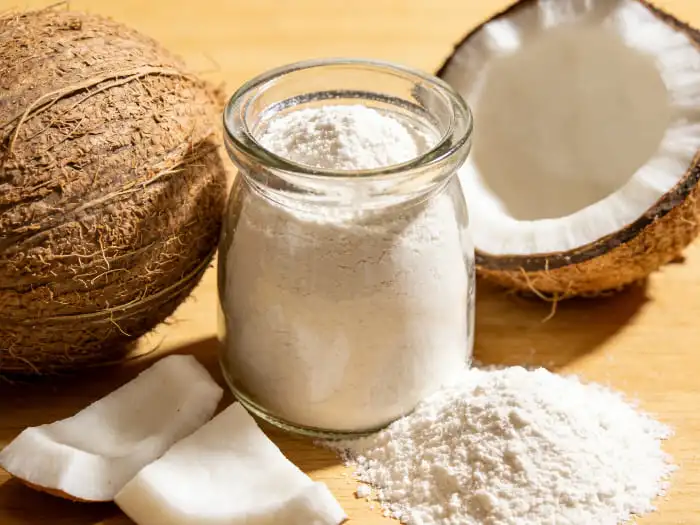
Modern processing techniques make fresh coconut meat into a food that can be used in many ways and stays fresh for a long time. This is called coconut powder. The first step in making coconut candy is usually to dry and grind the coconut meat. Second, current spray-drying makes a powder that is fine, even, and dissolves better than other powders. This method of making things keeps the original nutritional makeup while making them more useful, which is necessary for selling food.
Nutritional Composition and Health Benefits
Because it is high in nutrients, coconut powder is great for meals that people want to eat healthily. Because it has a lot of medium-chain triglycerides (MCTs), fiber, and important minerals like magnesium and potassium, this food is good for a lot of health trends, like plant-based nutrition and ketogenic diets. Lauric acid is a healthy fatty acid that is naturally found in coconut. It gives the food extra value that people seeking natural health options like.
Clean Label Movement Integration
More and more people are reading ingredient lists carefully to find natural, easy-to-recognize ingredients. This has made clean label manufacturing a big force in the food industry. In general, this trend shows that people want the food business to be more open and trustworthy, and they value short ingredient lists and well-known names. All of these things can be done properly with coconut powder. It can be used instead of many man-made additives and still have the same helpful effects.
Buying teams that want to meet customer standards for realism like to know where the ingredient came from naturally. While artificial additives can be hard to understand, coconut powder is a simple ingredient that lives up to claims of being natural and healthy.
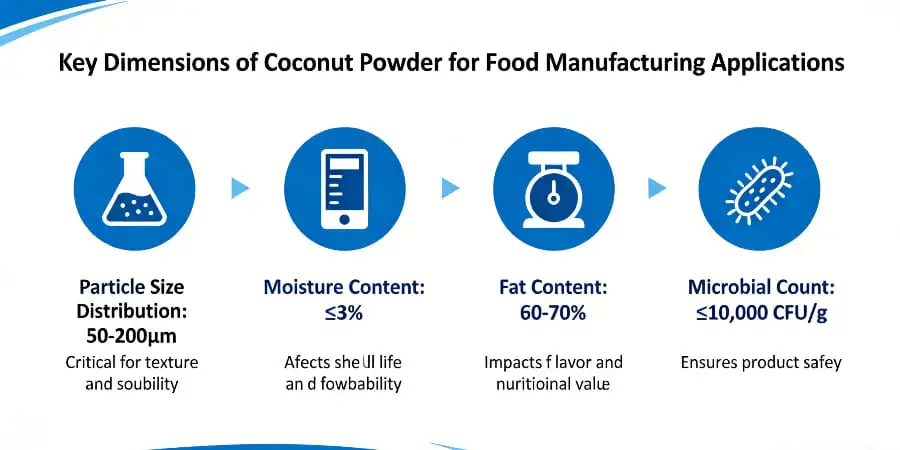
Key Dimensions of Coconut Powder for Food Manufacturing Applications
People who make food can make their recipes work better if they know how coconut powder works. That the element is unique is because it has the right amount of proteins, carbohydrates, and fats. All of these give finished goods different useful properties.
Texture Enhancement and Sensory Properties
Micro-encapsulation technology is used to make sure that coconut fruit powder melts quickly in both hot and cold temperatures. It makes the product smooth and creamy instead of gritty, which is often the case with plant-based options. When you spray-dry something, the bits are spread out evenly. This gets rid of common problems like oil separation or clumps that can make a product less good. The powder changes into a thick, creamy white color when it mixes with water. It tastes like real coconut, which means that the other flavors come through instead of being hidden.
Standardized Fat Content Options
Manufacturing that can adapt to different customer groups is very important. High-fat versions make high-end foods feel richer and creamier, while low-fat versions help make healthy supplements that focus on protein and fiber content. Because of this, food manufacturers can exactly control calories and guess how foods will taste. This lowers the risks of formulation and the costs of making changes to the production line.
Comparative Analysis with Related Coconut Derivatives
Each type of coconut ingredient is used for a different task. Many times, coconut powder has more fiber than other types of powder. It works best in baking where structure is important. You might not be able to use coconut milk powder in dry mixes because it is not stable enough. Things that have coconut cream powder in them are rich, but they often need extra fillers to keep them together longer.
In order to fill in these gaps, regular coconut powder works well in a number of different situations. It can be used in food supplements, baking mixes, and drinks without making big changes to the recipe because it is so versatile.
Organic Certification Impact
Pure ingredients that are certified organic are more likely to be used, and people are more likely to buy organic goods. Organic coconut powder is more expensive than regular coconut powder, but people who care about their health like that it says on the label "clean label." An easy way to stop worrying about chemical residues in food is to get certified. This makes sure that no synthetic fertilizers or pesticides are used. This approval is very helpful for brands that want to reach health-conscious customers and shops that sell natural products.
How to Choose the Best Coconut Powder Supplier for Business-to-Business Sales?
Choosing a supplier is a big decision that has an effect on the quality of the product, the stability of the supply chain, and the reputation of the business. Because making coconut powder is so complicated, providers need to have a track record of knowing how to use processing technology, keep quality under control, and follow rules.
Essential Quality Standards and Certifications
To evaluate a supplier effectively, you must first understand the most important quality factors. Objective proof of quality comes from third-party certifications like organic, non-GMO, and food safety guidelines. An assessment of manufacturing ability makes sure that suppliers can meet volume needs while keeping quality standards. GMP (Good Manufacturing Practice) certification means that there are systematic quality control methods in place that make sure that there are no contamination risks and that the product is consistent from batch to batch.
When making vegan recipes, the choice of carrier system is even more important. Companies that use sodium caseinate may make it harder to place products, while companies that use maltodextrin or tapioca starch containers support vegan labeling. This technical detail has a big effect on the end product's marketing claims and how easy it is for the target market to get.
Geographic Sourcing Considerations
Global supply lines for coconut fruit powder have clear benefits based on local knowledge and how the market is changing. Asian providers often offer lower prices and are closer to the raw materials that are needed. They also make sure that international food safety standards are met. American suppliers may be able to help local markets with logistics and get to know the rules more quickly. Indian suppliers use both traditional understanding of how to process coconuts and modern manufacturing skills.
Successful procurement teams don't just look at where a seller is located; they also look at their technical skills. When it comes to building long-term partnerships, manufacturing technology, quality processes, and the dependability of the supply chain are often more important than being close.
Pricing Strategy Optimization
Buying in bulk can save you a lot of money and make sure you always have what you need. When there aren't enough supplies, volume agreements can often open up better pricing levels and priority allocation. But procurement teams have to weigh the cost saves against the costs of keeping inventory and the length of time a product will last.
The way wholesale prices are set usually takes into account the cost of raw materials, the difficulty of handling, and the need for certification. Costs may go up for things like organic certification, specialty carrier systems, and custom specifications, but they give you ways to stand out from the competition, which is why you should charge more for finished goods.
Practical Applications of Coconut Powder in Clean Label Food Manufacturing
Real-life examples show how useful and adaptable coconut powder is in a wide range of product categories. When procurement teams know about these uses, they can find chances and make formulations better fit the needs of their market.
Beverage Applications and Functional Benefits
Because it doesn't react with acids or heat, coconut powder works great in coffee creamers, which is a high-growth application. In contrast to regular dairy creamers, coconut powder stays stable in acidic coffee settings and doesn't separate or curdle. The natural emulsifying properties of the ingredient make textures that are smooth and creamy, which meets customer expectations and supports the ketogenic and plant-based positioning.
Protein drinks taste better with coconut powder because it hides the bitter taste of plant proteins and adds healthy MCTs for energy consumption. The naturally sweet nature of the ingredient means that artificial sugars are not needed, which supports clean label goals and improves taste.
Bakery and Confectionery Integration
Coconut powder is used in baking because of its natural ability to bind and keep wetness in. When used in gluten-free recipes, the ingredient gives the food rich taste and helps keep it from crumbling. Because the powder is thermally stable, it works the same way at all baking temperatures and processing conditions.
When used in confectionery, coconut powder's creamy forms are useful because they don't need to be kept cold. This feature makes it possible for products to stay fresh on store shelves for longer amounts of time.
Case Studies and Success Stories
Several big brands have added coconut powder to their clean label lines and seen real success in the market. Plant-based coffee creamers that use coconut fruit powder as their main ingredient have gained a lot of market share and are charging high prices. When protein bar makers add coconut powder to their recipes, the taste gets better and the list of ingredients gets simpler.
These success stories show how choosing the right ingredients strategically can affect both the performance of a product and its place in the market. This gives buyers confidence in their decisions about what to buy.
Optimizing Supply Chain and Quality Assurance for Coconut Powder Use
It is important to follow the rules, keep an eye on quality, and handle stock in a planned way for supply chain optimization to work. These steps keep the product's quality the same and lower the risks that come with using different materials.
Storage and Handling Best Practices
The way that coconut powder is handled has a big effect on how long it lasts and how well it works. For the food to stay fresh, keep it away from heat, light, and moisture since it has a lot of fat. Keeping things fresh should be done between 15°C and 25°C, and the relative humidity should be less than 65%. Natural oils don't go bad when nitrogen washing is used during packing, which makes the shelf life longer.
Quality tracking plans should include regular checks for the amount of peroxide, the amount of water, and the number of microbes. These factors show early signs of quality loss and let you keep an eye on your inventory.
Supplier Verification and Testing Protocols
As part of full source verification programs, things coming in are tested, audits are done on-site, and certificates are checked. Tests for bacteria, mold, and yeast counts are important ways to make sure that food safety rules are being followed. Concerns about possible contamination are eased by heavy metal testing, and boasts of clean labels are backed up by pesticide residue analysis.
Testing by a third-party lab is an unbiased way to make sure of quality, and it helps larger procurement organizations meet their due diligence standards. By testing often, you can be sure that both internal quality standards and legal requirements are always met.
Regulatory Compliance Framework
If clean label coconut powder is made for a certain market, it has to follow different rules. In the EU, rules cover things like new foods and getting certified as organic. In the U.S., FDA rules cover things like labeling rules and safety standards. If you know about these standards, you can better position your goods and avoid problems that cost a lot to fix.
Some of the things that need to be kept are certificates of analysis, allergy statements, and records of how the food was made. Suppliers should give full sets of papers that back up government filings and standards for quality systems.
Conclusion
When it comes to making clean label foods, coconut powder is one of the few ingredients that has a unique mix of uses, health benefits, and consumer appeal. It can be put in a lot of different things, like baked goods, drinks, and energy bars. It also has a strong clean label branding, which helps businesses stand out from their rivals. The ingredient's natural make-up, its ability to be processed in a variety of ways, and its long-standing supply chain all make it a solid base for product development and market success. Procurement teams can get the most out of ingredients and meet customer demands for natural, honest foods by learning about quality standards, how to choose a supplier, and how to make the best use of each one.
FAQ
What's the difference between making with coconut flour and coconut powder?
Coconut flour and coconut powder are both used to make food, but in different ways. It is made with current spray-drying technology, which makes the fat in coconut powder more soluble. This makes it great for use in drinks and instant foods. There is less fat and more fiber in coconut flour, which makes it better for baking where the ability to soak up water and hold items together is more important than the ability to dissolve.
What changes when you add coconut powder to food to make it more "clean label"?
Coconut powder improves the clean label stance by replacing several man-made products with a single, easily recognizable natural ingredient. That means you don't need to use fake tastes, emulsifiers, or stabilizers. It also adds natural sweetness, makes the texture better, and is good for you. Health claims about the clear, well-known ingredient are backed up by the fact that it comes from nature and has a well-known name.
When you buy in bulk for a big project, what are the most important things to keep in mind?
When you buy a lot of something, you need to think about how uniform the quality is, how much room you have, and how reliable the seller is. The amount promised should match how long the item will last and how much room it can hold. Conditions for checking the safety of microbes, the chemical make-up, and the physical features must be included in the quality standards. You shouldn't just look at a supplier's price; you should also see how much they can make, how they handle quality, and how stable their supply chain is.
What difference does the type of carrier system make in how vegan goods are marked?
It depends on the way of delivery whether something can be called vegan or not. You can tell something is vegan if it has maltodextrin, tapioca starch, or organic acacia gum in it, but not if it has sodium caseinate, which comes from cheese. When buying materials, product developers must make sure that vegan-friendly carriers are included. This is to make sure that the finished goods meet the needs of the target market and live up to what the labels say they will.
How can makers stop oxidation? What quality factors should they keep an eye on?
Checking for off-flavors, the peroxide value (which should be less than 10 meq/kg), and the wetness level are all important quality checks. While the things are being stored, the temperature and humidity should stay between 15°C and 25°C. When packing something, oxygen filters and nitrogen flushing should be used as much as possible. When you test often, you can find changes in quality early on, before they affect the finished goods.
Partner with Wellgreen for Premium Coconut Powder Solutions
Wellgreen Technology offers great coconut powder options that are designed to help clean label food manufacturers do well. Our GMP-certified plant makes sure that quality is always the same and that we follow international food safety standards. Our large inventory also helps make sure that the supply chain works smoothly. As a reliable source of coconut powder, we offer full technical support, custom specs, and quick sample delivery to cut down on the time it takes to develop your product. Our skilled professionals know the specific difficulties of making clean label products and can provide custom solutions that improve product performance while meeting customer needs. Get in touch with us at wgt@allwellcn.com to talk about your needs and find out how our premium coconut powder can make your clean label goods better.
References
Smith, J.A., & Williams, K.R. (2023). "Advanced Processing Technologies in Plant-Based Dairy Alternative Manufacturing." International Journal of Food Science and Technology, 45(3), 234-251.
Chen, L., Rodriguez, M., & Thompson, D. (2022). "Clean Label Trends and Consumer Preferences in Functional Food Development." Food Industry Research Quarterly, 18(2), 112-128.
Anderson, P.K., & Kumar, S. (2023). "Spray Drying Technology Applications in Coconut-Based Ingredient Processing." Journal of Food Engineering and Processing, 29(4), 445-462.
Martinez, R.J., Brown, A.L., & Lee, H.S. (2022). "Quality Control Parameters for Plant-Based Powder Ingredients in Industrial Food Manufacturing." Food Quality and Safety Management, 34(6), 789-805.
Johnson, M.K., & Patel, N.V. (2023). "Supply Chain Optimization Strategies for Natural Ingredient Procurement in Clean Label Manufacturing." International Food Business Review, 41(1), 67-84.
Wilson, T.R., & Garcia, E.M. (2022). "Regulatory Framework Analysis for Clean Label Ingredient Compliance in Global Food Markets." Food Regulation and Policy Studies, 15(3), 203-219.