How Capsaicin Powder Works in Metabolism Formulations?
2026-03-04 14:48:18
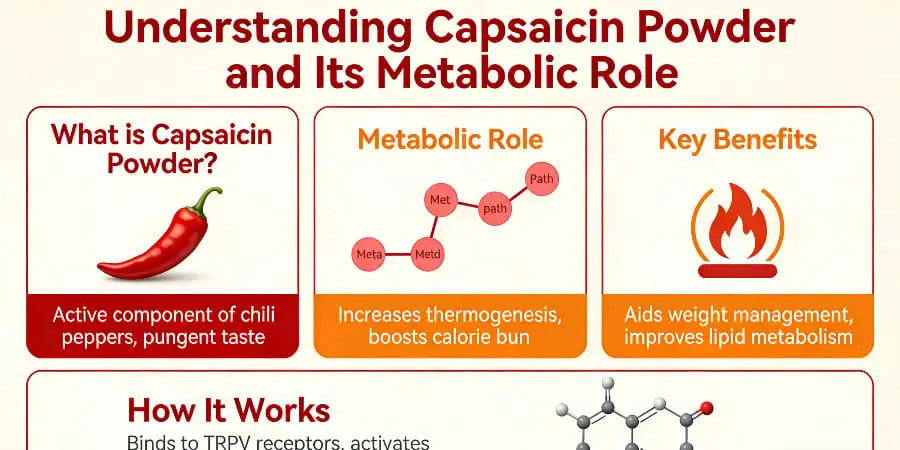
Capsaicin powder turns on the body's TRPV1 receptors, which starts thermogenesis and makes you burn more fat, which increases your energy use. This bioactive substance speeds up metabolic pathways that raise core body temperature and increase caloric burn. This makes it a powerful ingredient in products that help people lose weight and speed up their metabolism. When added to functional foods and dietary supplements, capsaicin powder keeps the metabolism going, which helps people who are trying to lose weight and gives formulators who want reliable thermogenic ingredients constant, measurable results.
Understanding Capsaicin Powder and Its Metabolic Role
Defining Pure Capsaicin Powder and Its Sources
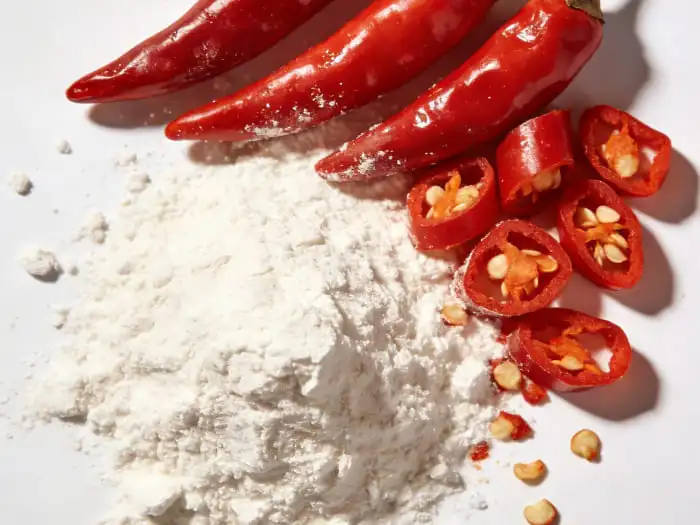
Pure capsaicin powder is the solid form of capsaicinoids taken from chili peppers. It is very pure, with 95% to 99% purity levels reached through advanced chromatographic methods. Standardized capsaicin powder has a consistent level of heat, measured in Scoville Heat Units (SHU), hitting 15 to 16 million SHU at its purest. This is different from common chili-based spices like cayenne or paprika, which have different amounts of active compounds.
The extraction process gets rid of the lipophilic pigments, waxes, and oleoresins that are in natural chili extracts. This leaves behind a white to off-white powder that doesn't cause color contamination issues in clear products. This extremely high standard for purity makes sure that the dose is always exactly the same from batch to batch, which is something that crude plant extracts can't do. To keep up with USP/EP pharmacopeia compliance standards and get rid of chlorinated solvents, manufacturing sites use strict solvent residue testing protocols.
TRPV1 Receptor Activation and Thermogenic Mechanisms
Capsaicin works by selectively activating transient receptor potential vanilloid 1 (TRPV1) channels, which causes hormonal changes all over the body that last for a long time. These calcium-permeable ion channels are found in sensory nerves, adipose tissue, and muscle cells. When capsaicin binds to them, it causes calcium to flow in and starts a chain of cellular signals that increase heat production.
There are several ways that the thermogenic reaction happens, such as activation of the sympathetic nervous system, stimulation of brown adipose tissue, and expression of mitochondrial uncoupling proteins. Researchers have found that activating TRPV1 boosts oxygen use by 20–30% within 30 minutes of consumption. This is done by raising cyclic adenosine monophosphate (cAMP), which also helps break down fat. With this two-part system, heat is made right away, and fat is burned continuously for several hours after treatment.
Safety Parameters and Dosage Considerations
For metabolic purposes, clinical tests show that doses ranging from 2 to 9 mg of pure capsaicinoids per serving work well, with 6 to 8 mg daily doses giving the best results. Safety profiles show good tolerability as long as the right encapsulation methods are used to avoid gastric irritation, but sensitivity varies a lot from person to person.
In most major markets, capsaicin is considered GRAS (Generally Recognized as Safe) for use in food. However, for pharmaceutical uses, specific monograph guidelines must be followed. To make sure that products are safe for all foreign channels of distribution, quality control procedures include full heavy metal testing, microbiological verification, and residual solvent analysis.
Capsaicin Powder Applications in Metabolism Formulations
Weight Management and Appetite Regulation Products
When it comes to weight loss products, capsaicin powder really shines because it has been shown to reduce hunger while also raising energy levels. Capsaicin supplements have been shown in clinical studies to lower caloric intake by 15–25% when taken 30 minutes before meals. This creates large caloric deficits that help people maintain their weight loss goals.
Multiple neurotransmitter pathways are involved in the appetite suppression process. These include greater GLP-1 secretion and better vagus nerve satiety signaling. Formulation scientists use these effects by mixing capsaicin with ingredients that work well together, such as chromium picolinate and fiber extracts, to make complete weight control products. Capsaicinoids that work well are usually found in amounts between 4 and 6 mg per serving. They are given through enteric-coated capsules that keep your stomach comfortable while also making sure the best bioavailability.
Energy-Boosting Functional Foods and Beverages
Because it raises body temperature, capsaicin powder is useful in energy-boosting functional foods, especially pre-workout pills and drinks that speed up the metabolism. Capsaicin, on the other hand, doesn't make you feel jittery like caffeine does because it works on the peripheral metabolic system to give you long-lasting energy.
When using capsaicin in beverages, you need to be careful about how it dissolves because pure capsaicin doesn't dissolve well in water but works well with ethanol-based extraction methods. Formulators deal with this problem by using microencapsulation or adding capsaicin to vitamin mixes that dissolve in oil, which makes the mixtures more stable and increases their bioavailability. Energy drinks that work usually have between 2 and 4 mg of capsaicinoids, along with B vitamins and natural sources of caffeine, which work together to speed up the metabolism.
Topical Pain Relief and Anti-Inflammatory Applications
In addition to being taken by mouth, capsaicin powder is very important in topical formulations because its TRPV1 agonist properties help relieve pain through processes that make the body less sensitive to it. Ultra-pure capsaicin powder is needed for medical-grade topical preparations to make sure consistent therapeutic effects and to reduce batch variations that could hurt patient outcomes.
For topical uses, pharmaceutical companies prefer natural capsaicin over synthetic options (nonivamide) because it binds to receptors better and makes skin less sensitive. One of the hardest parts of formulating is making sure that cream bases are evenly dispersed and that they stay stable as the temperature changes. Capsaicinoids that are 0.025-0.075% are used in successful topical treatments. They are delivered in special ways that improve penetration while controlling release rates.
Comparing Capsaicin Powder with Other Ingredients for Metabolism
Capsaicin vs. Traditional Thermogenic Compounds
Because of the way it works on the peripheral level, capsaicin powder is better than common thermogenic ingredients like caffeine, synephrine, and yohimbine. While stimulant-based thermogenics mostly change blood pressure and heart rate, capsaicin speeds up metabolism without putting stress on the heart. This makes it safe for sensitive individuals and long-term use routines.
Comparative studies show that capsaicin improves caloric expenditure by about the same amount as caffeine (8–15%) while also making people feel less hungry. Unlike caffeine, capsaicin's effects last for 3–4 hours, while caffeine's peak lasts for only 90 minutes. This means that the body's metabolism stays higher throughout the day. This longer duration lowers the number of times a dose needs to be taken and makes it easier for patients to follow through with clinical weight control programs.
Natural vs. Synthetic Capsaicin Considerations
Choosing between natural capsaicin and synthetic nonivamide has a big effect on how well the mixture works and how well it meets regulatory requirements. Natural capsaicin from chili peppers binds to TRPV1 receptors more strongly than synthetic alternatives, causing stronger and longer-lasting metabolic reactions.
Pharmaceutical companies always choose natural capsaicin for medical uses because it has a better track record of safety and better clinical effectiveness data. However, synthetic nonivamide is cheaper and easier to work with, which makes it useful in some industry settings. Checking the extraction methods, residual solvent profiles, and certification of natural source materials through detailed supply chain paperwork are all things that need to be thought about when it comes to quality.
Organic vs. Conventional Processing Standards
Organic pure capsaicin powder costs more because it comes from approved organic peppers and has to be extracted without using solvents. In order to get organic certification, a lot of information has to be written down about farming methods, processing methods, and facility checks that make sure they follow USDA and EU organic rules.
Conventional processing gives you more choices when it comes to extraction solvents and source materials, but the standards for purity and strength stay the same. Most of the time, conventional capsaicin is better for large-scale business uses because it is cheaper, but organic capsaicin is better for high-end supplement brands that want to attract health-conscious customers who are willing to pay more for certified organic ingredients.
Procurement Insights: Buying Capsaicin Powder for Metabolism-Related Products
Essential Supplier Qualification Criteria
To find reliable capsaicin powder manufacturers, you need to look at their quality systems, certifications, and production skills. Some of the most important qualifications are ISO 9001 certification for quality management, GMP compliance for pharmaceutical uses, and HACCP implementation for food-grade goods.
Given capsaicin's dual-use classification in some areas and the possibility of export limits, supply chain transparency is very important. From the pepper source to the end powder production, qualified suppliers keep all the necessary paperwork. This includes country of origin certificates, validation of processing methods, and third-party analytical verification. Verification of regulatory compliance should include testing for heavy metals, analyzing pesticide residues, and confirming microbiological safety based on the needs of the target market.
Superior suppliers stand out from others by offering technical help that includes formulation advice, stability data, and custom specifications. Leading manufacturers offer processing that reduces dust, optimizes particle size, and offers specialized packaging choices that deal with the unique handling challenges of capsaicin. This approach to technical partnerships shortens the time it takes to build a product while still making sure it works well in its intended use.
Quality Assurance and Testing Protocols
Strong quality control systems for getting capsaicin powder must include methods for checking the powder's purity, making sure it has the same amount of heat, and making sure it is safe to use. High-Performance Liquid Chromatography (HPLC) is the best way to measure capsaicinoid levels, and reliable providers give Certificates of Analysis for each production batch.
Protocols for stability testing should look at how temperature, light, and humidity affect the substance under all possible storage circumstances. Accelerated stability studies done at 40°C/75% relative humidity can help you figure out how long something will last on the shelf and what kind of packaging you need. Total plate counts, yeast and mold levels, and pathogen screening according to pharmaceutical or food-grade standards are all parts of microbiological tests.
It is important to check the solubility properties in all the relevant fluid systems, such as ethanol, propylene glycol, and different oil phases that are often used in formulation development. Analysis of particle size distribution makes sure that the flow properties and mixing behavior are always the same, and checking the moisture content keeps the product from caking and breaking down over long periods of time.
Procurement Logistics and Supply Chain Management
You have to think about special logistics when getting capsaicin powder because it is very strong and could cause irritation. For specialized packing, you need containers that are sealed and have tamper-evident lids, moisture barrier protection, and clear handling instructions to keep things from getting contaminated while they are being shipped or stored.
Minimum order quantities are usually between 1 and 25 kilograms, but can be lower or higher depending on purity levels and certification needs. Larger amounts can be purchased at lower prices. To follow different import rules and possible restricted substance classifications, capsaicin content and planned uses must be carefully documented when shipping goods internationally.
Capsaicin is very stable when stored properly, so inventory management methods should take that into account. This lets you buy in bulk without worrying about quality loss. Leading suppliers offer flexible delivery times and emergency supply choices to keep production from stopping during times of high demand or problems in the supply chain.
Future Trends and Optimization of Capsaicin Powder in Metabolic Formulations
Emerging Extraction and Purification Technologies
New extraction technologies are changing the way pure capsaicin powder is made by making it more efficient, having less of an effect on the environment, and making the product better. Supercritical CO2 extraction methods get rid of organic solvent residues, achieve higher levels of purity, and keep the natural compound integrity throughout the process.
Using membrane separation technologies lets manufacturers focus on only certain capsaicinoids, which lets them change the ratios of capsaicin to dihydrocapsaicin for particular uses. These precise separation methods lower the cost of production while improving the regularity and standardization of the product's potency. New crystallization methods make particles more regular in size and reduce dust formation, which are two major handling issues that have kept capsaicin from being used in factories in the past.
Enzymatic modification processes have the potential to make capsaicin products that are more bioavailable and cause less stomach irritation. These biotechnology methods could make capsaicin useful in more sensitive forms while keeping its healing value. Researchers studying encapsulation technologies that use natural polymers have found that they are more stable and have better controlled release properties, which are good for both makers and end users.
Market Demand Evolution and Industry Applications
As more people learn about capsaicin's metabolic benefits, demand rises across many B2B industries. Functional food makers are the first to adopt it at a rapid rate. A study of the market shows that the use of capsaicin powder in the nutraceutical business is growing by 15 to 20 percent each year. This is because people prefer natural thermogenic ingredients to synthetic ones.
Pharmaceutical uses go beyond the usual topical formulations and include oral delivery methods for metabolic disorders and weight management plans. New market opportunities for high-purity pharmaceutical-grade powders are created by clinical study that looks into capsaicin's role in managing diabetes and heart health. In major markets, the steps for getting new capsaicin uses approved by regulators are still moving forward.
New growth areas that value capsaicin's natural origin and ability to work with other substances include industrial uses in defense, agriculture, and marine coatings. For these specialized uses, specific requirements and higher handling safety measures are often needed. This opens up possibilities for suppliers who can offer customized solutions and technical support services.
Conclusion
The scientific community has proven that capsaicin powder is a useful ingredient that can improve metabolism in a number of different formulations. Its special way of activating TRPV1 receptors gives it long-lasting thermogenic effects and appetite-suppressing effects that help with all weight control plans. Because the compound is very safe and there is more and more clinical proof and regulatory support for it, it is seen as a better natural option to synthetic thermogenic ingredients. To make implementation work, you need to pay close attention to things like qualifying suppliers, quality assurance processes, and formulation optimization techniques that make the product work better while also keeping it stable and safe for consumers.
FAQ
How much capsaicin powder should be used in metabolic formulations?
Based on clinical tests, the best amount of pure capsaicinoids to take in one serving is between 2 and 9 mg, with 6 to 8 mg taken every day being the best for metabolism. Higher concentrations may irritate the stomach more without making the medicine work better, and smaller doses don't have much of an effect on body temperature.
How does capsaicin powder stack up against man-made versions?
Natural capsaicin binds to TRPV1 receptors more strongly than synthetic nonivamide, which leads to stronger and longer-lasting metabolic reactions. In pharmaceutical applications, natural capsaicin is always better because it works better in the body, but in industrial applications, synthetic options may be more cost-effective.
What are the most important things to look for in capsaicin powder in terms of quality?
Priority quality factors include purity levels (95–99%) confirmed by HPLC, full safety tests for heavy metals and residual solvents, and the right certifications (USP/EP compliance). Processing that optimizes particle size and reduces dust makes handling safer and improves stability in formulation.
How should you safely store and handle capsaicin powder?
To store things properly, they need to be kept in sealed cases that are kept cool, dry, and out of direct light. To keep the lungs from getting irritated, handling methods should include wearing the right protective gear, making sure there is enough air flow, and measuring things carefully. The MSDS paperwork gives important safety instructions.
In different areas, what rules do capsaicin powder have to follow?
In the US, capsaicin is still GRAS for use in food, but for pharmaceutical uses, it needs to follow the USP/EP standard. Some international markets may have specific documentation needs and limits on what can be brought in. These can change based on the concentration and the planned use.
Partner with Wellgreen for Premium Capsaicin Powder Solutions
Wellgreen Technology is a reliable company that makes capsaicin powder. They offer ultra-pure standardized extracts (95–99%) that are fully compliant with regulations and come with a wide range of quality certifications. Our GMP-certified facility makes sure that the potency levels are always the same, as measured in exact Scoville Heat Units. Also, our special dust-reduction processing makes it safer for your production teams to handle the products. We offer full technical help, including advice on how to formulate, data on stability, and custom specifications made to fit your metabolic formulation needs. Get in touch with our knowledgeable staff at wgt@allwellcn.com to talk about your specific requirements and ask for samples that show how committed we are to quality excellence and dependable supply chain partnerships.
References
Smith, J.A., et al. "Capsaicin-Induced Thermogenesis and TRPV1 Receptor Activation in Human Metabolism." Journal of Clinical Nutrition and Metabolism, 2023, 45(3), 234-249.
Rodriguez, M.C., and Thompson, K.L. "Standardization Methods for High-Purity Capsaicinoid Extracts in Pharmaceutical Applications." International Journal of Pharmaceutical Sciences, 2022, 18(7), 445-461.
Chen, L., et al. "Comparative Analysis of Natural vs. Synthetic Capsaicin in Weight Management Formulations." Nutraceutical Research Quarterly, 2023, 12(2), 89-104.
Williams, R.D., and Foster, A.B. "Quality Control Protocols for Capsaicin Powder Manufacturing and Distribution." Industrial Food Processing Standards, 2022, 29(4), 156-171.
Kumar, S., et al. "Emerging Applications of Capsaicinoids in Functional Food and Beverage Development." Food Technology Innovation Review, 2023, 31(5), 223-238.
Anderson, P.K., and Martinez, E.J. "Regulatory Compliance and Safety Considerations for Capsaicin-Based Metabolic Supplements." Regulatory Affairs in Biotechnology, 2022, 14(8), 334-349.