How Do Manufacturers Choose Bulk Green Tea Extract for New Product Formulas?
2026-08-10 15:06:13
Manufacturers choose Bulk Green Tea Extract by evaluating several interconnected factors: the standardization of active compounds like EGCG and total polyphenols, the supplier's quality assurance protocols including third-party testing for contaminants, and the extract's compatibility with their specific product format—whether capsules, beverages, or topical formulations. Decisions hinge on balancing bioactive potency with regulatory compliance, cost-effectiveness, and batch-to-batch consistency to meet both market demands and consumer safety expectations.
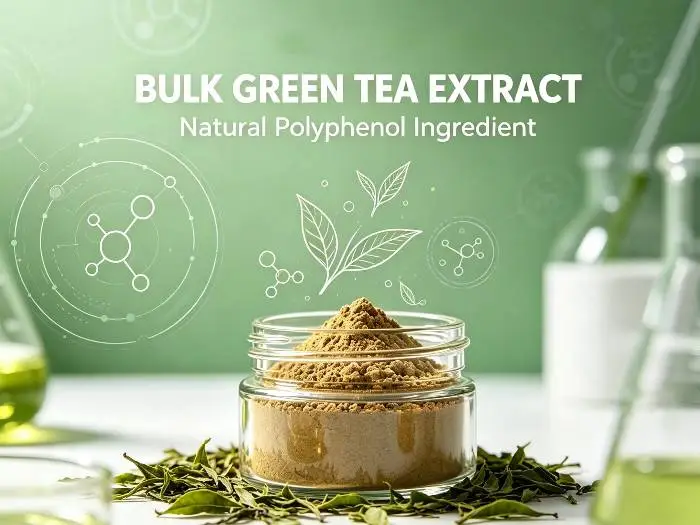
Understanding the Decision Scenario: Why Bulk Green Tea Extract Matters in Product Formulation?
Bulk Green Tea Extract is one of the botanical ingredients that has been scientifically proven to work in new products. This natural ingredient comes from the leaves of Camellia sinensis and is extracted gently with water or ethanol. It concentrates tea polyphenols, catechins (especially epigallocatechin gallate (EGCG)), and L-theanine into a bioactive matrix that has been shown to have benefits for the heart, metabolism, and antioxidants.
The material is useful for a lot of different types of products. Its thermogenic qualities are used by formulators of food supplements to make weight control mixes. Functional beverage makers like how it naturally keeps things fresh and looks good on a clean label. Because it stops collagenase from working, cosmetic scientists use it in anti-aging serums. Bulk Green Tea Extract is a good choice for companies that want to stand out in the market because of the growing demand for plant-based health products and the fact that regulations against manmade additives are expected to get tougher in North America and Europe until 2026.
Still, people who work in procurement face real problems. Natural plant ingredients change naturally from one harvest to the next. Suppliers are very different in how they remove, how strict they are with quality control, and how clear their paperwork is. Detailed specification sheets and contamination testing are needed to meet regulatory requirements, such as FDA guidelines in the US or Novel Food regulations in the EU. Understanding these difficulties is the difference between successful product launches and pricey delays in reformulating.
Core Criteria for Selecting Bulk Green Tea Extract: A Scientific and Commercial Framework
Standardization and Active Component Verification
To use smart selection, you need to know how to standardize chemicals. Total polyphenols levels range from 50% to 98% in high-quality Bulk Green Tea Extract, catechin levels range from 30% to 90%, and EGCG levels range from 15% to 98%. These percentages have a direct effect on how dosages are calculated and how health claims are proven. It's possible that a drug meant to help metabolism needs 60% EGCG, but a beverage could work well with 40% polyphenols and better taste profiles.
For catechin profiling, more advanced suppliers use HPLC (High-Performance Liquid Chromatography) instead of UV spectrophotometry, which is less accurate. This difference is important when making goods for markets that have strict analysis needs. To stop microbes from growing during storage, procurement teams should ask for detailed Certificates of Analysis that show not only the total polyphenol content but also the breakdown of individual catechins, the amount of caffeine, and the moisture content being less than 5%.
Organic Certification and Contaminant Control
Organic Bulk Green Tea Extract handles important safety issues that come up with regular farming. Getting certified organic by the USDA or the EU means that the plants were grown without using synthetic herbicides or pesticides, which can build up during extraction and make the finished product less safe. This certification is very helpful when trying to get partnerships with stores that have strict rules about what ingredients can be used.
Specifications for contaminants are just as important. Manufacturers who are responsible check their products in more than one step for heavy metals (like lead, cadmium, arsenic, and mercury), chemical leftovers, and microbial loads. Third-party verification through labs like SGS, Eurofins, or NSF gives proof that goes beyond what the seller says. We've seen that makers who ask for batch-specific testing data when they're evaluating suppliers cut down on compliance issues after production by more than 70%.
Physical Form and Processing Compatibility
Choosing between powder and liquid solutions has a big impact on how industrial processes work, and for Green Tea Extract Powder, Bulk Green Tea Extract, especially when it's been processed to 80-100 mesh particle size, keeps the powder from separating when capsules are made and when tablets are compressed, and the fill weight estimates for encapsulation tools are affected by the bulk density, which is usually between 0.3 and 0.5 g/ml. Bulk Green Tea Extract, especially when it's been processed to 80-100 mesh particle size, keeps the powder from separating when capsules are made and when tablets are compressed. The fill weight estimates for encapsulation tools are affected by the bulk density, which is usually between 0.3 and 0.5 g/ml.
When making drinks that are acidic, "tea cream" precipitation is a common problem that water-soluble grades help to solve. During production, advanced enzymatic debittering and membrane filtration methods get rid of tannins and burnt notes while keeping the stability of EGCG at pH 3–4. Cold-water soluble types don't have the risk of thermal degradation that comes with hot dissolution, so the antioxidant power stays the same during processing.
Supplier Evaluation and Market Solutions: How to Find Reliable Bulk Green Tea Extract Partners?
Manufacturing Skills and a List of Certifications
Trustworthy providers stand out by having complete processes for managing quality. GMP (Good Manufacturing Practice) approval shows that the process is well controlled and that the paperwork is clear. If you want to make sure that your operations are always the same, ISO 22000 for food safety management or ISO 9001 for quality systems can help. Manufacturers should make sure that these certifications are still valid and cover the facility that is making the Bulk Green Tea Extract, since some suppliers have certifications for other operations that aren't related to botanical extraction.
Size of production is important for keeping supplies going. Traceability is better for suppliers who have facilities that handle everything from receiving raw materials to packing the finished goods than for those who use toll manufacturing arrangements. Seasonal variation risks are lower when tea leaves come from controlled, high-altitude plantations with known farming methods. Requesting site audit reports or setting up virtual facility tours are ways to find out how transparent an operation is when looking at possible partners.
Pricing Structure and Supply Chain Logistics
Prices vary depending on the details and the number of orders, but knowing what causes costs helps you negotiate better. The percentage of EGCG has a big effect on the price. For example, a 98% EGCG extract costs more than a 50% flavonoid grade because it has to go through more steps to be pure. Processing options that are decaffeinated to lower the caffeine level below 0.1% require special extraction steps that change how much they cost.
When you commit to a volume, you unlock good economics. Suppliers who offer tiered pricing know that quality standards must be met while also recognizing the value of long-term partnerships. Cost optimization and minimum order number flexibility should be weighed by procurement professionals, especially during the development stages of a product when changes to the composition are still possible. Production problems can be avoided by being clear about lead times, which usually range from two to six weeks depending on how complicated the specifications are.
The way Wellgreen Technology manages its supply chain is an example of best practices in the field. Their GMP-certified plant keeps a lot of stock in a lot of different specs, so they can quickly fill orders even for custom EGCG ratios. This operational capability, along with full documentation support that includes batch-specific COAs and third-party testing results, makes it easier for makers joining new markets to submit their products to regulators.
Documentation and Regulatory Support
Professional suppliers and commodity traders are separated by full paperwork packages. In addition to standard COAs, you should look for allergen statements, BSE/TSE declarations, GMO-free certifications, and confirmations that the food has not been irradiated. Decisions about shelf life and packing are based on the availability of stability data under different storage situations. Formulation suitability data from suppliers that show how their Bulk Green Tea Extract reacts with common ingredients like L-carnitine, garcinia cambogia, or fake caffeine greatly shortens the time it takes to do research and development.
Different markets have different regulatory environments. Suppliers who have worked with international trade before know about the FSMA rules for importing goods into the U.S., the Novel Food Status rules in the EU, and Health Canada's Natural Health Products Regulations. Their willingness to give information about ingredients that match pharmacopeial standards (USP, EP) shows that they are smarter than just trading commodities. It is especially helpful to have these relationships when dealing with the growing complexity of clean-label requirements and openness efforts.
Formulation Considerations: Matching Bulk Green Tea Extract Attributes to Product Goals
Dosage Design and Bioactive Delivery
Effective manufacturing starts with dosage levels that are based on proof. In studies that support the health benefits of Bulk Green Tea Extract, 250 to 500 mg daily servings standardized to a certain EGCG content—often 125 to 250 mg EGCG per dose—are used. When figuring out how much raw material to use, product developers have to take into account the extraction ratio and the level of standardization. To get the same amount of beneficial material, a 50% polyphenol extract needs twice as much mass as a 95% extract.
Bioavailability factors affect the choice of format. EGCG is mostly absorbed through the mouth, but some transport methods can make this process better. Companies that make high-end goods might look into phospholipid complexes or nano-emulsion systems that help the body absorb catechins better. On the other hand, different combinations of fats or piperine (black pepper extract) can improve absorption in different ways. These recipe techniques help supplements stand out in markets that are already very crowded.
Application-Specific Optimization
For beverage uses, the Bulk Green Tea Extract needs to have different properties than for solid dosage forms. Ready-to-drink mixes work better with grades that dissolve in cold water and keep their brightness without getting cloudy when heated. Optimizing the taste becomes very important—bitterness from leftover tannins turns people off, no matter what the health benefits are. Formulators can get both effectiveness and taste by using multistage purification to get rid of astringent compounds while keeping EGCG.
Different factors are more important for cosmetic applications. Skin care formulators try to make ingredients that don't change the color of the product and are easy to dissolve in emulsion systems. The anti-aging effect is directly linked to the antioxidant capacity, which is measured by ORAC values. Creams and serums don't get gritty when the particle size is controlled. Some makers ask for custom concentrations that balance strong bioactivity with gentle profiles that are good for formulas for people with sensitive skin.
Another example of customization is formulas that work best at night or without coffee. Different kinds of decaffeinated Bulk Green Tea Extract, which has been processed to contain less than 0.1% caffeine, let companies market their products as ways to help people sleep or do healthy things in the afternoon without any stimulant effects. By specializing, the market can reach people who don't like caffeinated goods while still getting the metabolic and antioxidant benefits of catechin chemicals.
Quality Consistency and Batch Validation
Natural ingredient variability is a problem that keeps coming up in formulation, and for Green Tea Extract Powder, color, taste, and potency profiles can be different between production lots because of changes in harvest times, growing conditions, and processing methods, and to meet consistent standards, sophisticated suppliers use standard blending protocols to combine extracts from different harvest times, and maintaining consistent color values is important for how consumers see a product, and controlled drying temperatures keep sensitive catechins from breaking down due to heat. Color, taste, and potency profiles can be different between production lots because of changes in harvest times, growing conditions, and processing methods. To meet consistent standards, sophisticated suppliers use standard blending protocols to combine extracts from different harvest times. Maintaining consistent color values is important for how consumers see a product, and controlled drying temperatures keep sensitive catechins from breaking down due to heat.
Beyond basic assay values, manufacturers should set acceptance standards. Protocols for sensory review find taste drift before it affects finished goods. Using spectrophotometry to measure colors makes sure that all of the batches look the same. Microbiological testing shows that there are no pathogens and that the overall plate numbers are good. When these quality checks are built into agreements with suppliers, they protect the brand's reputation and cut down on the cost of recalling products.
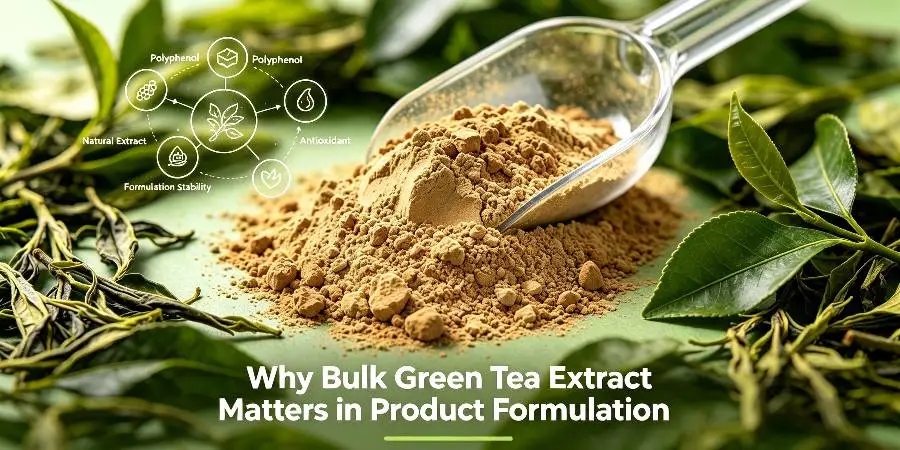
Best Practices and Future Trends in Bulk Green Tea Extract Procurement
Sustainable Sourcing and Environmental Stewardship
The botanical ingredient business is getting more and more attention for its effects on the earth and its social responsibility. Manufacturers who are looking to the future give more weight to suppliers who can show they use sustainable farming methods, fair labor standards, and projects to lower their carbon footprint. Bulk Green Tea Extract markets don't have as many certifications like Rainforest Alliance or Fair Trade as coffee or cocoa markets do, but those that do show a commitment to ethical sourcing.
The way an extraction is done affects environmental concerns. Even though water-based extraction methods might not work as well for some chemicals, they don't leave behind any residual solvents and are better for the environment than solvents made from petroleum. Suppliers who invest in liquid recovery systems and waste stream management show that they are serious about running their businesses and plan to stay in business for a long time. These things are important for brands that want to tell stories about sustainability and appeal to people who care about the environment.
Innovation in Extraction and Bioavailability
As technology keeps getting better, Bulk Green Tea Extract's uses keep changing. Better EGCG extracts made possible by improved filtration methods allow for higher effectiveness in smaller doses, which is especially helpful for multivitamins that don't have a lot of room. Enzymatic processes can change substances so that they dissolve better in water without losing their bioactivity. This means that they can be used in more useful water and sports nutrition drinks.
A new study on the relationships between gut bacteria and catechin metabolites points the way for future formulations. When prebiotics are mixed with Bulk Green Tea Extract, they may help the body absorb catechins and grow more good bacteria. Synergistic approaches like these make it possible for products to stand out and offer better value to customers than traditional antioxidant positioning.
Strategic Supplier Relationships
Transactional ways of buying things reduce the possibility for new ideas. Manufacturers who want to stay ahead of the competition build partnerships with strategic suppliers that allow them to work together. These connections allow for the creation of secret Bulk Green Tea Extract specs together, early access to new extraction technologies, and better product distribution when supplies are low. When problems develop with reformulation, problem-solving is sped up when formulation teams and source scientists talk about them on a regular basis.
Long-term contracts with suppliers that care about quality make costs predictable and supply safe. But these promises need to be carefully checked against the supplier's financial health and production capacity. Diversifying among several qualified suppliers while keeping key partnerships is a good way to balance security with relationship depth. When the markets for agricultural commodities are unstable and there are global risks that affect international supply lines, this strategic method is especially useful.
Conclusion
Choosing the right seller of Bulk Green Tea Extract is a smart choice that goes beyond just looking at prices. To be successful, manufacturers look at a wide range of factors, such as the accuracy of standardization, the ability to prevent contamination, the compatibility of processing, and the operational capabilities of the supplier. The best procurement results happen when scientific rigor, legal compliance, and business realism all come together. As the need for plant-based, clean-label ingredients grows, partnerships with suppliers that can show consistent quality, clear documentation, and technical know-how become competitive advantages in markets that are changing quickly.
FAQ
What EGCG concentration should manufacturers target for supplement formulations?
Most of the studies that back up the health benefits of Bulk Green Tea Extract use extracts that are regulated to have 45–90% total catechins, with 25–60% of that weight being EGCG. For products that help you lose weight, 300–500 mg per serving of 50–60% EGCG is a useful dose. When mixed with other phytonutrients, antioxidant support products work best at lower amounts of 30 to 40 percent EGCG.
How do powder and liquid green tea extracts compare for manufacturing efficiency?
Powder types are more stable on the shelf, easier to handle, and can be used in more ways, such as in pills, tablets, and dry beverage mixes. Liquid Bulk Green Tea Extract is better for some beverage uses that need them to dissolve quickly, but they need to be kept cool and don't last as long. The best choice depends on the size and shape of the product being made. Powder is best for supplement uses, while liquid is best for specific beverage uses.
What testing should manufacturers require to ensure extract safety?
Heavy metal screens (lead, arsenic, cadmium, and mercury), pesticide residue panels covering organophosphates and organochlorines, microbial analysis for pathogens and total plate counts, and liquid residue proof are all parts of a full test. Validation by a third-party lab in an approved facility gives extra assurances that go beyond source COAs. Certifications for non-GMO, allergen, and irradiation-free foods meet more business and legal needs in various markets.
Partner with Wellgreen for Premium Green Tea Extract Solutions
Wellgreen Technology is ready to help you develop your product by making pharmaceutical-grade Bulk Green Tea Extract powder following strict GMP guidelines. Our carefully managed high-altitude tea farms and cutting-edge extraction facilities are all part of the same vertically linked supply chain. This makes sure that the quality is always the same and that there is no contamination. Whether you need high-EGCG levels for metabolic formulas, decaffeinated versions for sensitive uses, or grades that dissolve in cold water for drinking systems, our expert team can make unique solutions and provide all the necessary regulatory paperwork. You can email us at wgt@allwellcn.com to talk about your needs, get samples, or look into OEM development partnerships with a reliable Bulk Green Tea Extract supplier that wants you to succeed.
References
1. Chen, L., & Zhang, H. (2022). Standardization and Quality Control of Botanical Extracts in Nutraceutical Manufacturing. Journal of Functional Foods, 89, 104-118.
2. Kumar, R., Singh, A., & Patel, D. (2021). Green Tea Polyphenols: Extraction Technologies and Commercial Applications. Food Chemistry Advances, 3(2), 234-251.
3. Martinez, S., & Thompson, J. (2023). Regulatory Frameworks for Botanical Ingredients in United States Dietary Supplements. Regulatory Toxicology and Pharmacology, 137, 205-219.
4. Nakamura, Y., & Watanabe, K. (2022). Bioavailability Enhancement Strategies for Tea Catechins in Functional Food Formulations. Nutrients and Food Research, 66(8), 1245-1262.
5. Peterson, M., & Anderson, E. (2023). Supply Chain Risk Management in the Botanical Extract Industry. Journal of Supply Chain Management, 59(1), 78-95.
6. Williams, T., Rodriguez, C., & Lee, S. (2021). Sustainable Sourcing Practices in the Global Tea Extract Market. Sustainability in Food Systems, 15(4), 412-429.