How to Ensure the Purity of Your Bulk Oyster Mushroom Extract Powder?
2026-07-01 14:45:08
Knowing your supplier's standards for finding and handling oyster mushroom extract powder is the first step in making sure it is pure. We make sure the products are pure by checking them for heavy metals, pesticide residues, microbe contamination, and polysaccharide content. We also require clear Certificates of Analysis (CoA) for every batch. Working with GMP-certified companies that keep track of the process from growing the plants to extracting the active ingredients is the best way to make sure that the quality is always pharmaceutical-grade and meets the standards for use in cosmetics, functional foods, and nutraceuticals.
Understanding the Purity Challenge in Oyster Mushroom Extract Powder
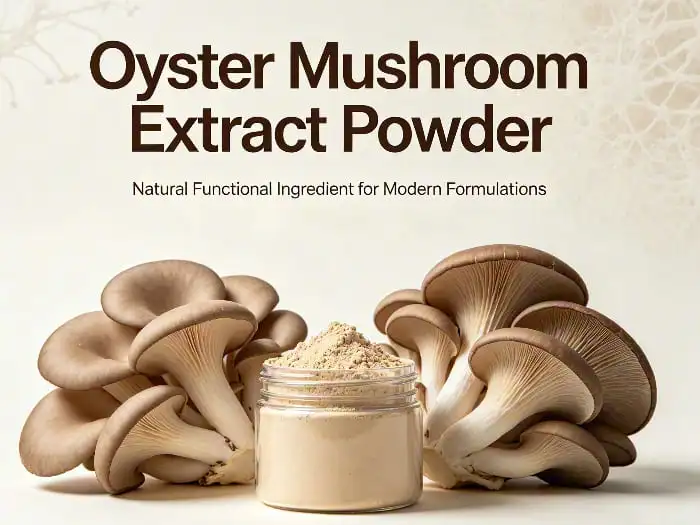
Cleaning, drying, and crushing fresh Pleurotus ostreatus mushrooms make oyster mushroom extract powder, which has become a valuable natural ingredient in many fields. Polysaccharides, dietary fiber, plant-based protein, vitamins, and important minerals are found naturally in the powder. This makes it a good choice for functional food formulations and nutritional supplements. Getting and keeping purity throughout the supply chain, on the other hand, is a real problem that procurement managers need to deal with in a planned way.
What Defines Purity in Mushroom Extracts?
There are two important aspects of purity: the lack of contaminants and the steady quantity of bioactive substances. We check the quality of oyster mushroom extracts by checking the amount of polysaccharides, β-glucans, and protein in them, as well as making sure there are no dangerous substances present. In addition to simple makeup, the description includes stable taste profiles, particle sizes that stay the same, and how well they dissolve in different types of water. This all-around view of purity has a direct effect on how well the ingredient works in your final product, whether it's a functional drink, immune support pill, or vegan protein mix.
Common Contamination Points in the Supply Chain
The risks of contamination start at farming, where the methods used affect the amount of pesticides and heavy metals that are absorbed from the soil. When mushrooms are harvested without separating the broken or rotting parts, microbial risks start to build up, which gets worse during storing. There are problems with the extraction process itself. For example, if you don't control the temperature properly, the active substances can break down, and if you don't follow the right evaporation methods, solvents from the extraction process may still be present. We've seen that conditions during shipping and storage aren't always given enough attention. However, changes in humidity and temperature during these stages can cause enzymes to break down goods and mold to grow, which can damage whole shipments.
Why Raw Material Quality Fluctuates?
Changes from batch to batch are caused by natural factors that affect mushroom growth, such as changes in the substrate's makeup with the seasons, the humidity in the air, and the cleanliness rules of the cultivation facility. Naturally, different types of oyster mushrooms have different amounts of polysaccharides, and sellers who get their materials from different farms without following standardization procedures give you base materials that aren't uniform. When mushrooms are harvested has a big effect on their nutritional richness. Mushrooms that are harvested too early don't have full compound growth, and mushrooms that are harvested too late start metabolic breakdown that lowers the potency of the extract. Knowing about these facts about farming helps buying teams set reasonable quality standards and figure out how often tests should be done.
Core Principles to Verify Oyster Mushroom Extract Powder Purity
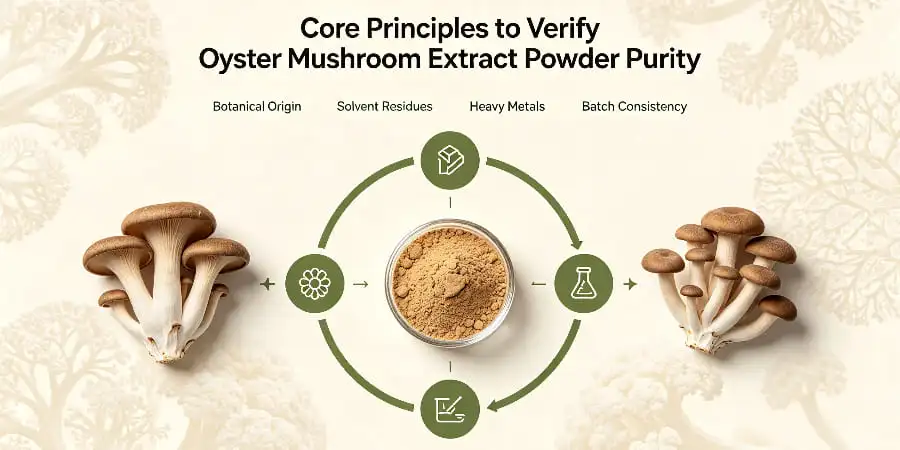
For verification, you need a methodical approach that includes lab testing, reviewing paperwork, and managing your relationships with suppliers. We've made testing methods that cover both short-term worries about contamination and long-term quality uniformity. This is because we know that ensuring purity protects not only the integrity of the product, but also customer safety and the brand's image. Oyster mushroom extract powder verification demands this systematic rigor.
Essential Analytical Testing Methods
High-performance liquid chromatography (HPLC) accurately measures the amount of polysaccharides and β-glucans present, revealing whether the quantities of active compounds are within the acceptable levels. Microbial testing includes counting all the cells on a plate, counting yeasts and molds, and checking for specific pathogens like Salmonella, E. Staphylococcus aureus and E. coli. Heavy metal analysis (including ICP-MS) can find lead, cadmium, mercury, and arsenic at levels of sensitivity needed by FDA and EU rules at the parts-per-billion level. Pesticide residue testing should include the farming chemicals that are widely used in areas where mushrooms are grown, and the levels of detection should be low enough to meet organic certification requirements when they apply.
Solvent residue analysis is important for extracts that were made with ethanol or other extraction media to make sure that all the water was evaporated during production. Particle size distribution testing proves that the fineness of the powder meets your formulation needs. This is especially important for beverage uses that need the powder to dissolve completely. Moisture content analysis ensures fungus powders are usually kept below 8% wetness, which stops microbes from growing while they are being stored. These analytical methods work together to find related quality problems. For example, finding one type of pollution often leads to more testing that shows related problems.
Documentation Requirements for Compliance
Certificates of Analysis are the bare minimum when it comes to paperwork, but procurement managers should demand batch-specific reports with testing dates, information about the lab's accreditation, and measured values instead of just "pass" or "fail" signs. Third-party laboratory certification adds neutrality that testing by the seller can't, especially for high-stakes pharmaceutical and baby nutrition uses. The traceability documentation should include specific growing facilities, harvest times, and substrate sources that let people act quickly if contamination problems happen.
GMP certification shows that quality management is organized, and ISO 9001 certification shows that process control is disciplined. Organic certifications from the USDA, the EU, or similar organizations prove that farmers follow good farming practices that lower the risk of chemical and synthetic fertilizer pollution. For functional food uses, GRAS (Generally Recognized as Safe) standing and the right food-grade licenses give regulators peace of mind. We suggest keeping a source document library that keeps track of audit reports and certification renewals. This will create a past of compliance that meets the needs of due diligence.
Supplier Audit and Relationship Management
Reviewing documents isn't enough to guarantee quality if there aren't regular building checks that make sure that what's done on-site matches what's written down. Some of the most important things that auditors look at are how clean the growing environment is, how to handle the yield, how to clean the extraction equipment, and how to keep the processing and storage areas clean. Watching real batch processing shows if workers follow written rules or take unwritten methods that increase the risk of contamination.
Building open relationships with providers so they know your quality goals and application needs lets you work together to solve problems when they come up. Talking about new quality trends, yearly changes, and process improvements on a regular basis creates a relationship dynamic that is good for both sides. Supplier scorecards that keep track of on-time delivery, standard conformance rates, and how quickly quality questions are answered help find partners you can trust, who are worth a long-term commitment and bigger order volumes.
Best Practices for Maintaining Purity During Procurement and Supply
The whole supply chain has to be checked for purity, which means paying close attention to how suppliers are chosen, how products are handled, and how they are stored so that quality is maintained for oyster mushroom extract powder from production to finished preparation.
Selecting Certified Suppliers
Before choosing a supplier, you should check their certifications to make sure their producing skills meet your quality standards and government rules. GMP approval means that quality is managed in a planned way, with methods for keeping track of documents, dealing with deviations, and taking corrective actions that keep quality from dropping over time. Organic approvals are important for health-conscious consumers because they show that farming methods reduce the use of synthetic pesticides. Food-grade licenses that are right for your target markets—for example, FDA registration for sales in the US or EU Novel Food compliance for sales in Europe—keep you from running into legal problems that slow down product launches.
Beyond certifications, you should also look at the technical skills of the provider, such as the complexity of their analytical tools, the number of people working in quality control, and their efforts to keep improving, which should show a dedication to excellence rather than just minimum compliance. Suppliers who keep specialized quality teams and buy advanced testing tools show that they have the quality mindset that is needed for long-term partnership success. References from past customers can tell you a lot about a business's dependability, how well it communicates, and how it solves problems that written information alone can't.
Handling, Storage, and Logistics Protocols
Proper handling starts as soon as the product is made, with packing that blocks light and moisture, which are both important for keeping the safety of the mushroom extract. Oxidation is sped up by oxygen, which is removed from aluminum foil bags with nitrogen flushing. Outer boxes protect the goods mechanically during shipping. We require storage temperatures between 15°C and 25°C and relative humidity levels below 60% to stop moisture absorption and bacteria growth while the goods are being stored.
Transportation rules should keep these natural conditions by using temperature-controlled shipping when needed, especially for long-distance foreign moves that go through more than one climate zone. Picking the right container is important. Food-grade shipping containers that have never been used for chemical goods stop cross-contamination that can add bad tastes or toxic leftovers. Real-time tracking devices that keep an eye on temperature and humidity during transport provide proof to back up quality claims and show where handling went wrong and need to be looked into.
After receiving the package, it is immediately inspected visually to make sure it is intact. Only damaged orders are then sent to the lab for testing, while the seller works out the problem. Using first-in, first-out inventory rotation to organize a warehouse keeps things from going bad after the suggested shelf life, which for properly stored mushroom extracts is usually 24 months.
Wellgreen's Quality Commitment
Wellgreen Technology offers pharmaceutical-grade oyster mushroom powder and extract in a range of forms, such as normal mesh powder, nano powder, and certified organic powder. Our factory is GMP-certified and has strict controls in place to make sure that chemical residues, heavy metals, and microbial factors are kept below levels that meet both EU and US food-grade standards. We give you all the paperwork you need to meet legal standards, such as Certificates of Analysis for each batch and reports on microbial tests.
Our expert team works together on formulation development, giving advice on choosing the right particle size, improving solubility, and managing taste profiles to make sure that ingredients are properly mixed. Whether you need standard specifications for well-known formulations or unique parameters for developing new products, our production capabilities are flexible enough to meet a wide range of needs while maintaining stable batch-to-batch stability. Having a lot of inventory on hand helps you build long-term ties with suppliers who can keep their delivery plans and keep your production going.
We know that ensuring purity requires more than just lab tests. It also needs discipline in manufacturing, a culture of quality, and open contact with suppliers throughout the relationship. Our OEM and ODM support goes beyond just supplying ingredients. It also includes formulation advice and custom package solutions that cut down on the time it takes to develop a product while keeping the quality standards that your brand's image depends on.
Conclusion
To make sure that oyster mushroom extract powder is pure, procurement managers need to use a wide range of strategies, such as qualifying suppliers, testing the powder analytically, checking paperwork, and managing operations. Putting money into strict quality control pays off in a number of ways, including less waste, fewer refunds, more trust from customers, and compliance with regulations that protect market access. Partnering with approved makers who show their commitment to quality through open practices and thorough testing makes the supply chain more stable and allows for product innovation that gives companies in the health ingredient markets a competitive edge.
FAQ
How often should we test incoming oyster mushroom extract shipments?
Batch-by-batch testing is the best way to go for high-risk uses like pharmaceuticals and dietary supplements to ensure oyster mushroom extract powder quality. Every package that comes in must go through at least fast microbial and heavy metal screening before it can be used in production. Functional food companies usually use a mix of methods, starting with thorough testing to make sure the suppliers are qualified and then doing spot checks on a regular basis after that, raising the number of checks right away if any quality problems show up. Full-panel testing once a year or twice a year offers baseline tracking, even for supplier ties that have been in place for a while.
Which certifications indicate reliable quality standards?
GMP approval shows that a company uses structured quality management, which can be used in both pharmaceutical and supplement production. ISO 9001 shows that you have good process control, and organic licenses (from the USDA or the EU) show that you follow good farming practices. Regulatory problems can be avoided by getting food-grade licenses that are right for the market: FDA registration for sales in the US, EU food safety standards for sales in Europe. Certifications offer basic peace of mind, but they can't be relied on on their own; they need to be checked through tests and exams.
How do the ways of extracting powder change its purity?
Water extraction makes polysaccharide-rich extracts that can be used to help the immune system with little worry for solvent waste. Ethanol extraction can restore a wider range of compounds, but it needs tested evaporation methods to make sure that all of the solvent is gone. Combining both methods for dual extraction increases the number of beneficial compounds that can be extracted, but it also makes the process more complicated and raises the risk of contamination. When choosing an extraction method, it's important to keep in mind the quality control tools that are needed to make sure that the process is always done the same way.
Partner with Wellgreen for Premium Oyster Mushroom Extract Powder
Because Wellgreen is dedicated to maintaining purity and pharmaceutical-grade standards, brands and makers that care about quality choose us as their go-to oyster mushroom extract powder provider. We keep a large collection of a wide range of specs, such as organic certified and ultrafine powder choices. This lets you order in flexible amounts that can grow with your business. Our technical support team helps with regulatory paperwork, custom design development, and formulating the best products. This speeds up product starts and makes sure quality standards are met. Email us at wgt@allwellcn.com to get samples and talk about how our approved mushroom extracts can help your products stand out by adding pure, high-performance ingredients that are always the same.
References
Chang, S.T. and Miles, P.G. (2004). "Mushrooms: Cultivation, Nutritional Value, Medicinal Effect, and Environmental Impact." CRC Press.
Wasser, S.P. (2014). "Medicinal Mushroom Science: Current Perspectives, Advances, Evidences, and Challenges." Biomedical Journal, Vol. 37, No. 6.
Valverde, M.E., Hernández-Pérez, T., and Paredes-López, O. (2015). "Edible Mushrooms: Improving Human Health and Promoting Quality Life." International Journal of Microbiology.
Rathore, H., Prasad, S., and Sharma, S. (2017). "Mushroom Nutraceuticals for Improved Nutrition and Better Human Health: A Review." PharmaNutrition, Vol. 5, No. 2.
Patel, Y., Naraian, R., and Singh, V.K. (2012). "Medicinal Properties of Pleurotus Species (Oyster Mushroom): A Review." World Journal of Fungal and Plant Biology, Vol. 3, No. 1.
Friedman, M. (2016). "Mushroom Polysaccharides: Chemistry and Antiobesity, Antidiabetes, Anticancer, and Antibiotic Properties in Cells, Rodents, and Humans." Foods Journal, Vol. 5, No. 4.