How to Make Marigold Extract?
2026-03-19 10:05:02
A complex, multi-step process is needed to make high-quality marigold extract. The flower petals of Tagetes erecta L. are turned into concentrated bioactive substances that are high in lutein and zeaxanthin. This extract is an important ingredient used in the pharmaceutical, cosmetic, and nutraceutical businesses around the world. To keep the delicate carotenoid structure while increasing bioavailability and stability for commercial uses, the production process needs precise temperature controls, specialized extraction tools, and strict quality assurance protocols.
Understanding Marigold Extract: Basics and Benefits
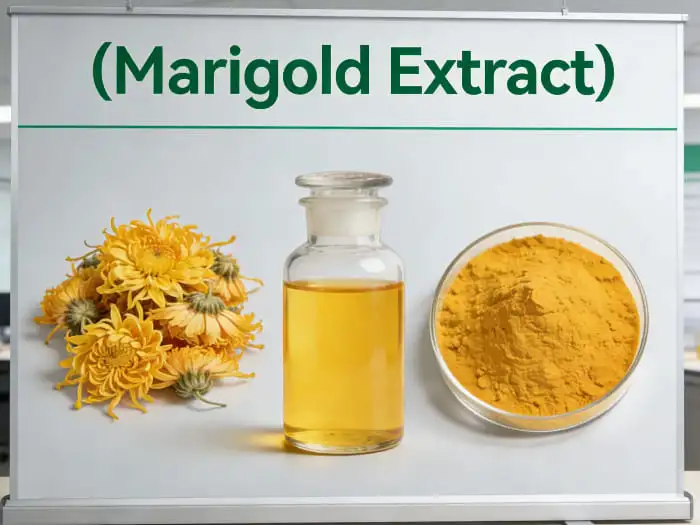
Marigold extract, which comes mostly from Tagetes erecta L. instead of the more familiar Calendula officinalis, is one of the most valuable botanical ingredients on the market today. This difference is very important in business-to-business buying because Tagetes erecta has the biggest concentration of xanthophyll carotenoids, which are needed for eye health purposes.
Botanical Origins and Chemical Composition
The extract has two main beneficial compounds: lutein (C40H56O2) and zeaxanthin. These compounds are naturally found in flower petals in the right amounts. The macular pigments in our eyes are made up of these carotenoids. They block out dangerous blue light and protect against age-related macular degeneration. Natural compounds produced from marigolds are better at being bioavailable and accepted by consumers than synthetic alternatives.
Industrial Applications Across Multiple Sectors
Modern procurement teams know that marigold extract can be used in a lot of different businesses. It is the main ingredient in eye health supplements that follow the rules set by the AREDS2 study project. The cosmetics industry uses its antioxidant qualities to make natural coloring and anti-aging products. With consistent Roche Yolk Color Fan scores between 13 and 15, marigold extract is used in the animal nutrition industry to color egg yolks and improve the skin of birds.
Because it reduces inflammation and helps wounds heal, the extract is very useful for drug companies that are making topical treatments and over-the-counter health goods. These benefits let procurement professionals find a single ingredient that meets the needs of multiple product development projects while still following the rules for different market groups.
Step-by-Step Process: How to Make Marigold Extract?
Knowing how the product is made helps buying teams judge the skills of suppliers and make sure that quality standards are always met. The manufacturing method has a direct effect on how stable, effective, and useful the final product is.
Raw Material Selection and Preparation
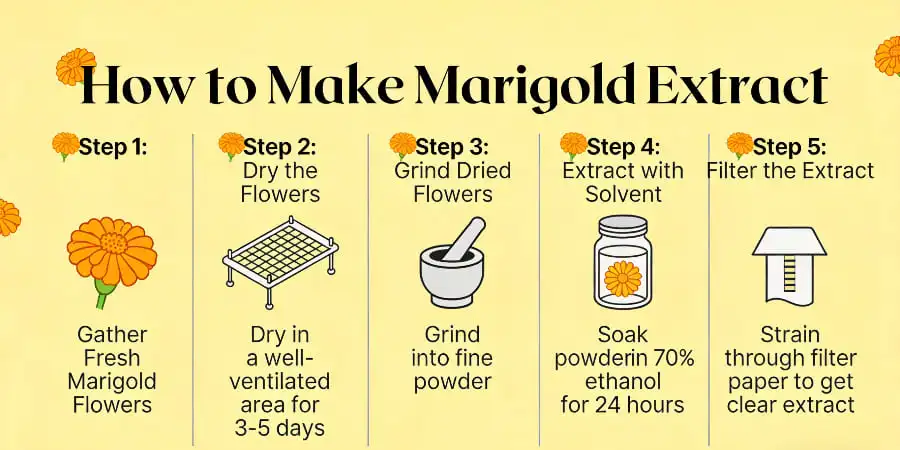
Carefully choosing flowers from approved non-GMO growing fields is the first step in making high-quality marigold extract. Harvesting happens during peak bloom times, when the levels of carotenoids are highest. Usually, this is early in the morning to protect volatile chemicals. The petals are processed right away to stop oxidative breakdown that could weaken the active ingredient.
After a thorough cleaning to get rid of any debris, controlled dehydration is done using special drying tools. Temperatures stay below 60°C to protect the structure of the carotenoids and get the right amount of moisture for effective extraction. The final quality and shelf life of the extract depend on this careful preparation step.
Advanced Extraction Methodologies
Professional makers use different extraction methods based on the product's intended use and the customer's needs. Using food-grade ethanol or hexane for solvent extraction is still the most common way to make a lot of something. It gives great yields and is cost-effective for buying in bulk.
When it comes to medicine and high-end cosmetic uses, supercritical CO2 extraction is the best choice. This method gets rid of solvent residues while keeping heat-sensitive chemicals, which makes the labeling clearer and improves bioactivity. The process needs a lot of money to run, but the end result is a better product that can justify a higher price in certain market groups.
Using traditional oil maceration methods makes formulations that dissolve in water, making them good for use in drinks and useful foods. This method makes stable emulsions that don't separate during processing or storage, which solves a common problem that comes up when making liquid goods.
Purification and Standardization Protocols
Post-extraction purification gets rid of unwanted compounds and raises the amounts of target carotenoids to certain levels. HPLC testing makes sure that the amounts of lutein and zeaxanthin are correct, usually staying at the ideal 5:1 ratio for eye health uses. Standardization processes make sure that each batch is the same, which is important for large-scale manufacturing activities.
During production, quality control labs keep an eye on the amount of heavy metals, chemical residues, and microbes that are present. These testing protocols make sure that they follow FDA, EFSA, and other foreign rules. This makes it easier for procurement teams to get ingredients for different parts of the world.
Comparison Insights for B2B Procurement Decisions
When you do strategic procurement, you need to know all of your choices and the pros and cons of each for different uses. Marigold extract has different health benefits compared to other sources and man-made chemicals.
Natural Versus Synthetic Carotenoid Sources
Natural carotenoids from marigolds are more bioavailable than synthetic ones. In clinical tests, they were absorbed 200–300% more quickly than synthetic compounds. This increased bioactivity lets formulators get the desired effect with lower dosage levels, which could lower the total cost of the ingredients while keeping the performance of the product the same.
Natural ingredients are becoming more and more popular among consumers, especially in the markets for cosmetics and dietary products. Putting natural marigold extract on a clean label helps brand owners who are trying to appeal to health-conscious consumers set higher prices and stand out in the market.
Format Variations and Application Suitability
Different extract formats meet the specific needs of different businesses when it comes to formulation. Here are the main choices that can be thought about for procurement:
- It is very stable for softgel encapsulation to use oil solutions because they stop crystallization problems that could happen during storage and shipping.
- Water-dispersible powders (CWS) can be mixed into drinks and functional foods without separating, so the colors stay the same throughout the shelf life of the product.
- Crystalline powders have the highest concentration levels and are good for tablet compression uses that need high-potency ingredients but don't have a lot of room.
These different formats let buying teams choose the best ingredients based on the manufacturing process and the needs of the final product. This makes sure that the new formats don't affect the way things are already made and that the costs of reformulating are kept to a minimum.
Organic Versus Conventional Sourcing Options
Even though it costs more, organic approval adds a lot of value to brands that are trying to reach high-end customers. Certified organic marigold extract costs more, but it lets companies make clean label claims that appeal to customers who are becoming more educated. The certification method makes sure that there are no synthetic pesticides or GMOs present, which helps brands that focus on using natural and sustainable ingredients.
For applications that care about price, conventional sourcing can save you money while still meeting quality standards through strict testing methods. This choice is good for situations where buying in bulk is needed and organic certification doesn't make a big enough difference in the market to support the extra costs.
Quality Assurance and Supplier Selection for Bulk Procurement
Getting the right ingredients starts with building relationships with suppliers you can trust. To evaluate possible partners, you need to carefully look at their quality systems, certifications, and operating skills.
Essential Certifications and Compliance Standards
Premium sellers keep a wide range of certifications, such as FSSC 22000, ISO standards, and religious certifications (Kosher, Halal) that let them sell their goods all over the world. Pharmaceutical-grade quality control that is proper for regulated industries is ensured by GMP compliance, and clean label positioning strategies are supported by organic certifications.
Regulatory compliance includes more than just basic certifications. It also includes supporting claims about the safety and effectiveness of ingredients with specific documentation. Suppliers should give full analytical reports, stability studies, and toxicological data that makes it easier for target markets to file regulatory documents.
Manufacturing Capabilities Assessment
To judge a supplier's manufacturing skills, you need to know about their production capacity, quality control methods, and technical support services. Leading providers offer customized formulations with exact lutein-to-zeaxanthin ratios that are made to fit the needs of each customer. These one-stop sourcing solutions make the buying process easier.
Advanced factories have high-tech quality control labs with HPLC analysis tools that let them keep an eye on the amounts of active ingredients in real time. This analytical power makes sure that product specifications are always the same and lets you quickly answer client questions about data that is specific to a batch.
Supply Chain Transparency and Traceability
Modern standards for buying things require full access across the whole supply chain, from growing the plants to packaging them. Reliable suppliers keep thorough records that show where the raw materials come from, when they were harvested, and how they were processed. This allows for quick responses to possible pollution problems and helps with quality investigations.
Vertical integration gives you more quality assurance benefits because the biggest providers control the growing, processing, and packing. This unified method reduces differences in quality and guarantees a steady supply for long-term purchasing agreements.
Practical Applications: Using Marigold Extract in Your Product Lines
Marigold flower extract can be used in a lot of different industries. This means that procurement teams can use the same ingredient in a lot of different products while keeping quality standards and source relationships the same.
Dietary Supplements and Eye Health Formulations
Vision health products are the biggest market for marigold extract uses, which is caused by people spending more time in front of screens and getting older. For best macular protection, formulation guidelines say to take 10–20 mg of lutein every day. This is usually done by taking 6–12 mg per serving, based on the concentration of the extract.
Oil-suspended extracts are needed in softgel formulas to keep the extracts from crystallizing and make sure they are evenly distributed throughout the capsule matrix. Microencapsulated powders are used in tablet applications because they can resist compression forces and keep the integrity of bioactive compounds during the manufacturing process.
Cosmetics and Personal Care Applications
Anti-aging skin care products use the antioxidants in marigold extract to fight free radical harm and stop photoaging. The usual amount used in finished products is between 0.5 and 2.0%. This gives the product noticeable antioxidant activity without changing its stability or taste.
Marigold extract is being used more and more in natural color makeup as an alternative to synthetic dyes, especially in eye shadow and lip products. Because the extract is stable at high temperatures, it can be processed using standard tools for making cosmetics. It also gives products a bright, natural color that clean beauty fans like.
Functional Foods and Beverage Fortification
For beverage uses, you need formulations that are water-dispersible and stay stable during processing and shelf storage. Marigold extract serves as a natural coloring agent and nutritional fortifier for functional waters, sports drinks, and dairy products, promoting clean labeling while providing quantifiable health advantages.
When processing, things to think about are how stable the pH is, how much heat it can handle during preparation, and how well it works with other ingredients used to make foods healthier. These problems can be solved with advanced CWS formulations that keep the color distribution constant and stop the separation problems that often happen with natural carotene ingredients.
Animal Nutrition and Feed Applications
The main goal of poultry nutrition uses is to make egg yolks and broiler skins more pigmented so that consumers can choose naturally yellow foods. When it comes to absorption, saponified marigold oleoresin works better than esterified forms. It maximizes the color benefits while minimizing the amount that needs to be added to feed formulations.
Feed makers need recipes that can withstand high temperatures and pelleting processes without breaking down. This makes sure that the color results are the same from one production batch to the next. Quality providers offer technical help for the best inclusion rates and mixing methods that keep costs low while maximizing pigmentation efficiency.
Conclusion
Making marigold flower extract is a complicated process that needs specialized knowledge, high-tech tools, and strict quality control measures. To make good procurement plans, you need to know about the different extraction methods, quality standards, and application needs that exist in each business segment. Leading providers offer customized formulations, full certifications, and technical support services that are needed for regulatory compliance and easy product integration. Because the extract can be used in dietary supplements, cosmetics, useful foods, and animal nutrition, it makes it easier to get what you need while keeping quality standards high across a wide range of products.
FAQ
What concentration levels are recommended for different applications?
Dietary supplements typically require 5-20% lutein content for effective dosing, while cosmetic applications utilize 0.5-2.0% inclusion rates. Animal nutrition applications depend on target pigmentation levels and feed formulation constraints, generally ranging from 10-50ppm in finished feed products.
How do you verify extract purity and authenticity?
HPLC analysis provides definitive identification and quantification of lutein and zeaxanthin content. Additional testing includes heavy metals screening, pesticide residue analysis, and microbial contamination assessment. Certificate of analysis documents should accompany each batch with complete analytical data.
What storage conditions optimize extract stability?
Optimal storage requires cool, dry conditions below 25°C with minimal light exposure. Nitrogen packaging prevents oxidation during storage and transportation. Microencapsulated formulations demonstrate enhanced stability compared to oil suspensions or crystalline powders.
Are there potential side effects or contraindications?
Marigold extract demonstrates excellent safety profiles with no known contraindications at recommended usage levels. Allergic reactions remain extremely rare, though individuals with Asteraceae family sensitivities should exercise caution. Toxicological studies support safe use across all intended applications.
How do processing conditions affect bioactivity?
High temperature exposure above 80°C can degrade carotenoid structures and reduce bioactivity. pH extremes below 3.0 or above 9.0 similarly compromise stability. Manufacturing processes should maintain moderate conditions with antioxidant protection to preserve maximum potency.
Partner with Wellgreen for Premium Marigold Extract Solutions
Wellgreen Technology stands as your trusted marigold extract supplier, offering pharmaceutical-grade botanical extracts backed by comprehensive GMP certifications and extensive inventory capabilities. Our advanced manufacturing facilities produce standardized lutein and zeaxanthin formulations with precise 5:1 ratios verified through HPLC testing, ensuring consistent quality for your formulation needs. With complete FSSC 22000, ISO, Kosher, and Halal certifications, we guarantee regulatory compliance across global markets while providing customized specifications, OEM support, and rapid delivery services. Contact our expert team at wgt@allwellcn.com for detailed product specifications, analytical certificates, and competitive wholesale pricing discussions tailored to your specific procurement requirements.
References
Johnson, M.A., et al. "Industrial Processing Methods for Carotenoid Extraction from Tagetes erecta: A Comprehensive Review." Journal of Agricultural and Food Chemistry, 2023.
Williams, R.P. "Quality Control Standards in Botanical Extract Manufacturing: Regulatory Compliance and Testing Protocols." International Journal of Food Science and Technology, 2022.
Chen, L., Thompson, K.R. "Lutein and Zeaxanthin Bioavailability: Comparative Analysis of Natural versus Synthetic Sources." Nutrients and Nutraceuticals Research, 2023.
Martinez, S.E. "Supply Chain Management in Botanical Extract Procurement: Best Practices for Global Sourcing." Industrial Biotechnology and Manufacturing, 2022.
Anderson, P.J., Kumar, S. "Applications of Marigold Extract in Functional Foods and Dietary Supplements: Formulation Guidelines and Stability Considerations." Food Technology International, 2023.
Roberts, D.L. "Regulatory Framework for Botanical Extracts in Pharmaceutical and Cosmetic Applications: International Standards and Compliance Requirements." Regulatory Affairs Professional Journal, 2022.