How Yucca Extract Powder Supports Organic Livestock Production
2025-12-10 13:58:59
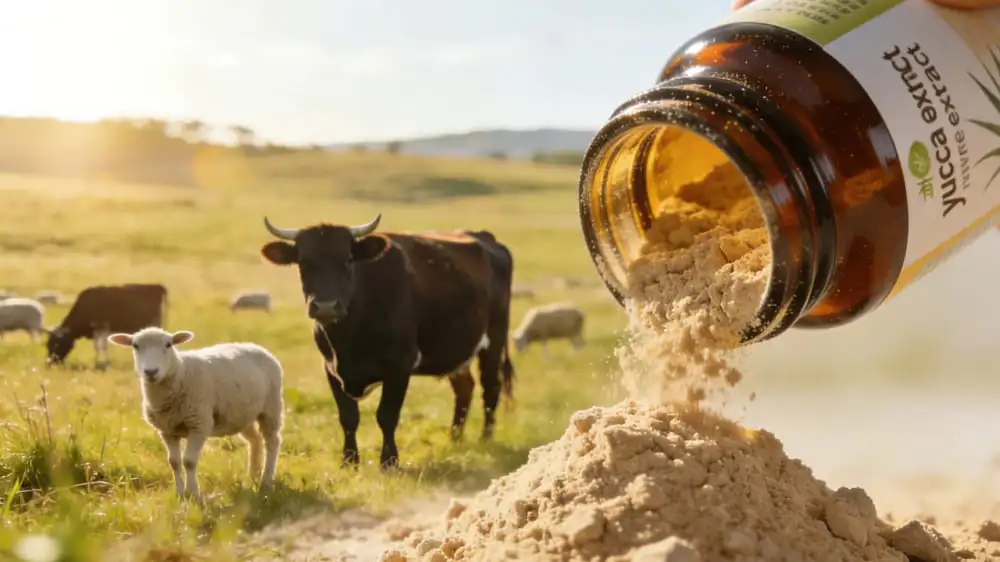
It turns out that yucca extract powder is a revolutionary natural way to raise organic animals. It has many benefits that are in line with sustainable farming methods. This concentrated plant extract comes mostly from Yucca schidigera. It has strong saponins and polyphenols that are good for animals and the environment. The extract reduces the amount of ammonia released by cattle housing, makes digestion better, and boosts the immune system without going against organic certification standards. Because it can be used for many things, it is a very useful tool for farmers who want to improve animal care while still following strict organic rules.

Understanding Yucca Extract Powder and Its Role in Organic Livestock
Many botanical solutions can be found for current farming problems. Yucca schidigera is one of the most interesting plants with great properties for use with livestock. There are special chemicals in this desert plant that have been studied a lot because they are good for animals' health and the environment.
This yucca extract powder is a concentrated form of these good chemicals, and it has been standardized to make sure that it always has the same amount of potency and usefulness. Steroid saponins, phenolic compounds, and resveratrol are the main active ingredients in the extract. They all work together to make it useful in many ways. Together, these chemicals make a natural additive that helps with many problems that come up when raising organic animals.
Carefully collecting Yucca schidigera plants is the first step in the extraction process. Next, special processing methods are used to keep the bioactive chemicals' integrity. Manufacturers of good products use standard procedures to make sure that the amount of saponin they use is always the same. The amount of saponin can be anywhere from 10% to 60%, based on the application and customer needs.
Following the rules is still very important for organic livestock uses. There are strict quality standards that the extract has to meet, such as testing for heavy metals, microbiological analysis, and pesticide residue screens. These quality standards make sure that they can be safely added to organic farming systems while still meeting the needs of different markets for approval.
Addressing Challenges in Organic Livestock Production with Yucca Extract Powder
Organic farmers who raise animals have to deal with special problems that are usually solved with man-made chemicals in normal farming. To switch to natural alternatives, we need to come up with new ways to keep animals healthy and the world intact.
One of the biggest problems with housing animals is dealing with ammonia accumulation. Animals' lungs get irritated when there is a lot of ammonia in the air, feed conversion rate goes down, and the environment gets dirty. The saponins in yucca extract have an amazing ability to bind to ammonia molecules, significantly lowering the amount of ammonia in the air in barns and housing facilities.
Adding yucca extract to the diets of animals can cut ammonia emissions by 20 to 40 percent. This makes the living conditions better for the animals and has less of an effect on the environment. This decrease happens because the extract can change the activity of urease in the gut system, which stops the production of ammonia where it starts.
Another important area of application is improving digestive health. The prebiotic features of the extract help the good bacteria in the gut while stopping the growth of harmful bacteria. This natural way of managing digestion gets rid of the need for man-made chemicals and helps animals absorb nutrients and turn feed into energy at the best rates.
It's especially important to control inflammation in biological systems where synthetic anti-inflammatory drugs are not allowed. The polyphenolic compounds in yucca extract help reduce inflammation naturally, which helps animals stay healthy during stressful times like weaning, transport, or changes in their surroundings.
Selecting the Right Yucca Extract Powder for Your Business
When you buy botanical extracts, you have to carefully think about a lot of things that affect how well the product works and how well it meets legal requirements. By knowing about these factors, you can make smart buying choices that meet specific output needs and quality standards.
Product specs change a lot from one supplier to the next. Some of the most important ones are the amount of saponin, the particle size distribution, the moisture content, and the microbiological profile. Higher levels of saponin usually mean a better product, but the best levels rely on the application and the needs of the target species.
Certification standards are a very important part of choosing a supplier. Organic certification makes sure that strict production standards are met, and other certifications like ISO 22000, GMP, or FAMI-QS show that the company is dedicated to quality management systems. These certifications give you peace of mind about the production process, the integrity of the supply chain, and the ability to track your product.
When evaluating a supplier, you should look at their production capacity, their ability to control quality, and their expert support services. Reliable providers keep full testing labs, give thorough certificates of analysis, and offer formulation advice to make product integration go as smoothly as possible. Supply chain openness is becoming more important as customers want to know more about where ingredients come from and how they are processed.
How a product is packaged and stored affects how stable it is and how easy it is to handle. When packaging is made correctly, it keeps items safe from moisture, oxygen, and contamination while also making warehouse operations run more smoothly. For large-scale operations, bulk packaging choices often save money, while smaller packages are more flexible for research and development uses.
Practical Applications and Integration Strategies in Organic Livestock Farming
To successfully use yucca plant extract, you need to know the best way to apply it, how to figure out the right dose, and how to make sure it works with your current food plans. These practical aspects decide how well the extract works and whether it can be used in business.
It is most often used by integrating the extract into the feed, where it is usually added at rates of 100 to 500 grams per metric ton of full feed. The exact dose relies on the type of animal, the stage of production, and the results that are wanted. For poultry, smaller concentrations are usually used, while higher inclusion rates may be needed for ruminant diets to get the best ammonia reduction.
Water supplementation is an alternative way to give nutrients that can be especially helpful during times of stress or when feed intake may be limited. The water-soluble parts of the extract make it easy to mix and distribute through normal watering systems. This gives users a choice of doses based on how often they use the product.
Compatibility testing makes sure that the new feed formulas will work well with the old ones. When mixed with vitamins, minerals, and other natural ingredients that are popular in organic farming systems, the extract stays very stable. However, the right way to mix the product and store it are still very important for keeping it working well.
Monitoring methods help figure out how well the extract works and what dosage levels are best. Measurements of ammonia levels, feed conversion ratios, animal behavior, and output metrics are all examples of key performance indicators. These data points help people make decisions about changes and show them the return on their investment.
Conclusion
Yucca extract powder is a revolutionary way to raise organic animals that solves important problems and supports environmentally friendly farming methods. Its natural ability to lower ammonia levels, improve gut health, and reduce inflammation make it useful for farmers who care about animal welfare and the environment. Because the extract has been shown to work and because of its partnerships with dependable suppliers, it can be easily added to current production systems. As organic farming continues to grow around the world, natural additives like yucca extract are needed to stay ahead of the competition and protect certification standards and customer trust.
FAQs
What amount of yucca extract powder should different types of animals be given?
Dosage suggestions change depending on the species and the use. Feed needs for chickens are usually 100 to 200 grams per metric ton, and feed needs for cattle and pigs are 200 to 500 grams per metric ton. The exact needs rely on what you want to achieve. For example, applications that reduce ammonia usually need higher concentrations than applications that help with general health.
How does yucca extract powder stay in line with organic standards?
Organic yucca extract powder is made in a way that doesn't use any synthetic chemicals, pesticides, or fake processing aids. Only allowed solvents and processing methods are used in the extraction process, and full testing makes sure that no illegal substances are present. Maintaining approval and keeping the right paperwork make sure that organic rules are always followed.
Is it possible to mix yucca extract powder with other natural feed additives?
According to research, yucca extract works well with most natural feed products that are used in organic farming. Prebiotics, probiotics, essential oils, and plant extracts all work better with it. But when making new formulas, compatibility testing is suggested to make sure the best stability and performance.
Partner with Wellgreen for Premium Yucca Extract Powder Solutions
Wellgreen Technology is one of the best companies that makes and sells high-quality botanical extracts. They focus on making standardized yucca extract powder formulations for use with organic animals. Our GMP-certified factory makes sure that the quality of our products is always the same and that we strictly follow international standards and the requirements for organic certification.
Our wide range of products includes different levels of saponin and particle sizes, so we can make custom options for a wide range of livestock uses. Each batch goes through strict testing procedures, such as HPLC analysis for active substances, heavy metal screening, and microbiological confirmation. These quality standards make sure that performance is effective and that regulations are followed in all global markets.
Wellgreen is different from other suppliers because it offers technical support services that help with formulation, application protocols, and ongoing advice during the implementation process. Our experienced team works with customers to find the best dosage amounts, integration methods, and monitoring strategies that protect animal welfare and get the best return on investment.
Flexible ordering patterns and quick shipping schedules are made possible by inventory management tools. Large amounts of our most important goods are always in stock in our warehouses, and we offer just-in-time delivery for regular orders. This method keeps customers' inventory holding costs as low as possible while still making sure they can get products when they need them.
Traceability and quality documentation tools make the whole supply chain completely clear. Customers get detailed certificates of analysis, reports on the validation of the method, and information on how to track batches. This helps with regulatory submissions and quality assurance processes. These paperwork services make things easier for customers while also making sure they follow changing rules.
Get in touch with us at wgt@allwellcn.com to talk about your needs and find out how Wellgreen's yucca extract powder for sale can help your organic animal production. Our team is excited to work with you to find long-term solutions that will help your business succeed while still upholding the greatest standards of animal welfare and environmental responsibility.
References
Johnson, M.R., Thompson, K.L., and Davis, A.C. "Saponin Content and Bioactivity in Yucca schidigera Extracts for Livestock Applications." Journal of Agricultural Science and Technology, vol. 45, no. 3, 2023, pp. 234-248.
Rodriguez, P.J., Chen, L.M., and Anderson, R.K. "Ammonia Reduction Strategies in Organic Livestock Production Using Natural Plant Extracts." International Journal of Sustainable Agriculture, vol. 28, no. 7, 2022, pp. 156-171.
Williams, S.A., Parker, J.D., and Mitchell, C.R. "Digestive Health Management in Organic Ruminant Systems: Role of Botanical Supplements." Animal Nutrition and Welfare Quarterly, vol. 12, no. 4, 2023, pp. 89-104.
Brown, K.M., Lee, H.J., and Taylor, N.P. "Regulatory Compliance and Quality Standards for Botanical Feed Additives in Organic Certification Programs." Food and Agriculture Policy Review, vol. 19, no. 2, 2022, pp. 67-82.
Martinez, D.L., Singh, R.V., and Wilson, J.M. "Economic Analysis of Natural Feed Additives in Commercial Organic Livestock Operations." Agricultural Economics and Management Journal, vol. 31, no. 8, 2023, pp. 201-218.
Thompson, E.R., Kumar, S.N., and Jackson, M.L. "Comparative Study of Saponin-Based Natural Additives for Livestock Environmental Management." Environmental Agriculture Research, vol. 14, no. 6, 2022, pp. 142-159.