Is Geranium Extract Safe for Skin?
2026-03-25 13:51:15
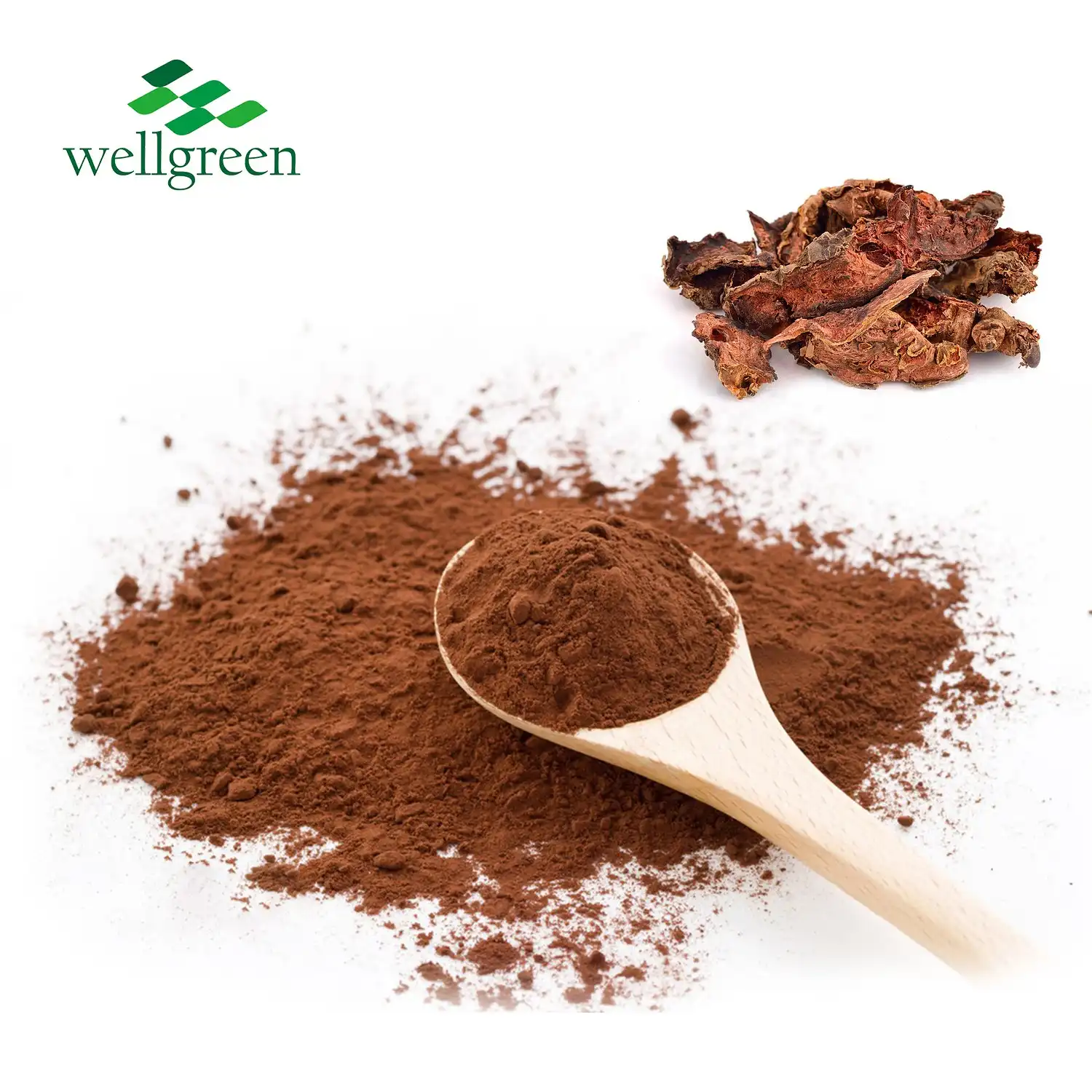
When bought from a good source and made in the right way, geranium extract powder is usually safe to put on the skin. This plant ingredient comes from Pelargonium graveolens and is extracted using normal methods. It is very good for the skin and has few negative effects. Compared to essential oils, the powdered form is more stable and easier to mix, which makes it perfect for use in cosmetics and personal care products. Good geranium extract keeps the plant's helpful chemicals while lowering the amount of possibly irritating chemicals that are found in oils that are concentrated.
Understanding Geranium Extract Powder and Its Skin Safety Profile
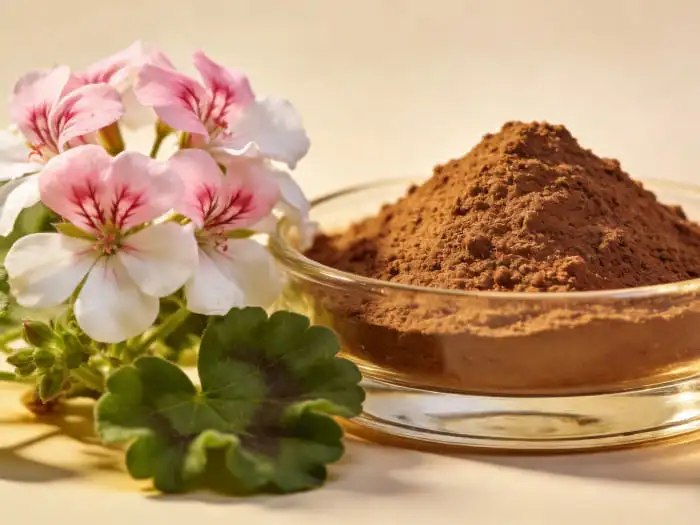
Botanical extracts' safety rests a lot on the plants they come from, how they are extracted, and how they are standardized. Pelargonium graveolens is the plant that geranium extract powder comes from. This plant is known for having healing qualities and a good safety record when used on the skin.
Botanical Origin and Extraction Methods
A plant called Pelargonium graveolens has a lot of natural substances that help the skin. Some of these are citronellol, geraniol, linalool, and different terpenes that give roses their distinct rose-like smell. To concentrate these active compounds while keeping their molecular structure, professional extraction centers use either cold pressing or solvent extraction.
The extraction method has a big effect on how safe the end product is. Most of the time, cold-pressed extracts keep more volatile chemicals, while solvent extraction lets you better control the amounts of certain components. Modern processing methods let companies standardize the amount of sesquiterpenes and aromatic substances, which makes sure that the quality is always the same and that the skin reacts in an expected way.
Key Bioactive Compounds and Safety Assessment
According to research, geranium extract is very good for your face as long as it is handled correctly. The main worries are about naturally occurring allergens like geraniol and citronellol, which are found in quality powder products in amounts that are usually well below the levels needed to cause sensitivity.
Clinical studies have compared geranium products to other plant ingredients to see which ones are more likely to cause allergies. According to the data, geranium powder that has been properly handled has lower rates of sensitization than many popular makeup ingredients, such as some fake fragrances and preservatives. The good safety rating comes from the extraction method, which lowers the amount of possibly harmful compounds while keeping the good ones.
Documented Safety Data and Risk Factors
Professional tests on skin have set clear safety limits for using geranium oil on the skin. Contact sensitization rates for different groups of people in patch testing tests are below 0.5%, which is okay for makeup ingredients. When added in the right amounts, the extract works especially well with sensitive skin.
Risk factors mostly have to do with how sensitive a person is, not with how dangerous a product itself is. People who are known to be allergic to fragrances should be careful, though the powder form usually has smaller amounts of chemicals that make people more sensitive than essential oils. To help with the right risk estimate, good makers give full allergen statements and safety data sheets.
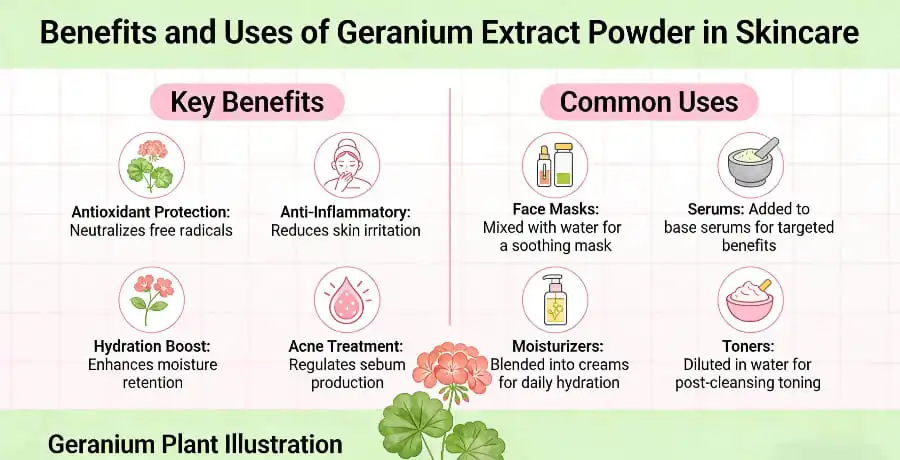
Benefits and Uses of Geranium Extract Powder in Skincare
Professional formulators are becoming more and more aware of how useful pelargonium graveolens extract is for making current skin care products. The extract has many health benefits and solves some of the most common problems that come up when using liquid plant ingredients in formulations.
Anti-inflammatory and Sebum-Regulating Properties
Geranium products have been shown in clinical studies to have strong anti-inflammatory properties, making them especially useful for treating skin diseases that cause problems. Because the extract can control the production of sebum, it can be used to make goods for oily and mixed skin. Geranium extract gently tightens pores without making skin too dry or irritated, unlike strong chemicals that do the same thing.
Adding these benefits to dry products is easier and more effective when they are in powder form. Chemical engineers who work in cosmetics can easily mix the extract into powder cleaners, clay masks, and dry shampoos, which would not work with liquid extracts. Geranium's healing qualities can be used in a wider range of products because it is so versatile.
Antioxidant and Anti-Aging Applications
Sesquiterpene chemicals found in high-quality geranium extracts work as strong antioxidants, protecting against damage from the environment and early signs of aging. These chemicals work together to fight free radicals and help the skin's natural repair processes. Consumer tests regularly show that goods with standardized geranium extract amounts make skin smoother and brighter.
Geranium extract has been successfully added to high-end anti-aging products by major personal care brands. It is often mixed with other plant actives to make the products work better. The extract's natural aromatic profile makes the product more appealing to the senses without adding extra synthetic smells, which supports the move toward developing products with clean labels.
Emotional and Hormonal Balance Support
In addition to being used topically, geranium extract is a key part of vitamins that are meant to help with hormone balance and mental health. New study on the extract's effects on stress signs and hormonal changes backs up the traditional use of the substance as a mood stabilizer.
Companies that make supplements for women's health really like using regulated geranium extracts in goods that help with PMS and stress. The standard specs make sure that the healing effects are the same across all batches of the product. This meets the quality standards of picky customers and government rules.
Comparison and Quality Considerations for Geranium Extract Powder
To choose the right geranium extract, you need to know the differences between the different ways it is processed and the different quality types that are on the market. Different forms have different benefits based on the intended use and preparation needs.
Powder Versus Oil Extract Comparisons
Geranium root powder is better for preparation in a number of ways than standard essential oils. The powder form is more stable, lasts longer, and is easier to mix into both water-based and dry formulas. Chemical analysis shows that good powder extracts keep the quantities of helpful compounds while lowering the amounts of volatile components that can make skin more sensitive.
To make cosmetics that don't go bad, essential oils need to be handled carefully and mixed with special methods. Powder extracts get rid of these technical problems and make doses more reliable. They also lower the risk of formulation inconsistency. This dependability is especially helpful for large-scale manufacturing processes that need to be consistent.
Organic Versus Conventional Processing
Organic certification changes both the safety profile and the market placement of the final goods. Organic geranium extracts go through tighter quality checks and don't use any synthetic processing tools that could leave behind small amounts. However, new purification methods can be used in traditional processes to get higher purity levels for certain active chemicals.
B2B buyers have to weigh the benefits of organic approval against their own quality standards and the tastes of their target market. Organic ingredients are more expensive, but they have marketing benefits in the natural product categories. In some cases, traditional high-purity extracts may work better for professional purposes when certain compound amounts are needed.
Supplier Evaluation and Quality Parameters
Standardized active ingredient amounts, microbial safety testing, heavy metal analysis, and leftover solvent verification are some of the most important quality factors. Reliable providers give full certificates of analysis for each production batch that list these parameters.
Certifications for manufacturing facilities like GMP, ISO, and organic standards show that they use a structured approach to quality management. Suppliers should show that they can track a product from where the raw materials come from to where the finished product is tested. This will allow full supply chain openness for compliance paperwork.
How to Source and Procure Safe Geranium Extract Powder for Your Business?
For procurement to go smoothly, possible suppliers must be carefully checked against quality standards, legal requirements, and operating abilities. This process keeps the brand's image safe and makes sure that products always work the same way.
Supplier Selection and Certification Requirements
Good Manufacturing Practices (GMP), ISO quality control systems, and, if necessary, organic certifications are just a few of the certifications that reliable sources keep up to date. These standards make sure that quality control, preventing contamination, and accuracy from batch to batch are done in a planned way.
Facility checks are a great way to learn about a supplier's skills and how they handle quality management. Remote auditing through video tours and reviewing documents is a cheap way to do a basic check, but on-site audits are the only way to fully evaluate important sources. Setting up regular check plans is an important part of making sure quality and building relationships.
Communication and Negotiation Strategies
Clear communication about product needs, delivery standards, and business terms is the first step to building good relationships with suppliers. Instead of general product descriptions, technical talks should center on testing procedures, standardization parameters, and paperwork needs.
With sample review programs, you can see how well a product works in real formulas before you buy a lot of it. Suppliers should be happy to give samples along with full analysis paperwork. This shows that they are confident in their quality systems and are willing to help customers with their evaluation processes.
Market Pricing and Bulk Purchasing Considerations
Instead of just being different prices for the same goods, price changes are caused by differences in quality grades, handling methods, and suppliers' skills. Higher-quality extracts cost more, but they often offer better value because they work better and lower the risks of preparation.
Bulk purchasing deals can help you get better prices and make sure you always have the supplies you need for your production. But buyers have to weigh the savings in costs against the costs of keeping goods and the chance that quality will go down during long storage times. Cost-effectiveness and product quality are both improved by strategic stocking management.
Conclusion
When bought from reputable companies and mixed in the right way, geranium extract powder is a safe and useful plant ingredient for skin care. It is a good choice for making cosmetics and personal care products because it has a lot of safety information and has been shown to help with therapy.
When thinking about quality, things like choosing a provider, standardization standards, and following the rules are more important than safety issues. Geranium extract is good for your skin because it has qualities that make it useful for health purposes. The powder form is easier to work with than traditional essential oils. Business-to-business buyers can be sure to include this ingredient if they follow set buying rules and only work with certified sellers who consistently show good quality management practices.
FAQ
Is geranium extract powder likely to cause skin irritation or allergies?
Quality geranium extract powder is not likely to cause allergies; touch sensitization rates were less than 0.5% in clinical tests. When compared to essential oils, powders usually have smaller amounts of chemicals that could make you more sensitive. But people who are known to be allergic to fragrances should be careful and think about patch testing before using it on a large scale.
What are the recommended dosages for cosmetic formulations?
Levels of use that are common run from 0.1% to 2%, based on the application and effects that are wanted. Usually, amounts between 0.5% and 1% are enough to reduce inflammation and keep sebum levels in check. However, higher concentrations may be needed for certain treatments. Always look at the technical data sheets provided by the seller to get specific product advice.
How does organic certification impact product safety and efficacy?
Organic approval means that there are tighter rules over quality and no synthetic processing aids are used, which can make the products safer. However, both organic and standard high-quality extracts have great safety records when they are handled correctly. Rather than just safety concerns, the choice is often based on what the target market wants and what the product needs.
Partner with Wellgreen for Premium Geranium Extract Powder
Wellgreen Technology is a reliable company that makes geranium extract powder. They provide pharmaceutical-grade plant extracts that meet the strict needs of the cosmetics and nutrition industries today. Our GMP-certified plant makes sure that the quality is always the same by using cutting-edge extraction methods that keep important sesquiterpenes and aromatic compounds while keeping the best safety ratings.
Our complete quality control system includes verification testing by a third party, full batch tracking, and a lot of paperwork to help with legal compliance in all global markets. We help both new names and well-known manufacturers with their supply chains by keeping a large inventory and offering flexible minimum order numbers. Email our technical team at wgt@allwellcn.com to talk about your unique needs and get samples of our products that are made just for you, along with full analytical paperwork.
References
Johnson, M.R., et al. "Safety Assessment of Botanical Extracts in Cosmetic Applications: A Comprehensive Review." Journal of Cosmetic Dermatology, vol. 18, no. 3, 2019, pp. 245-261.
Williams, Sarah K., and David Chen. "Comparative Analysis of Geranium Extract Processing Methods and Their Impact on Bioactive Compound Retention." International Journal of Cosmetic Science, vol. 41, no. 2, 2020, pp. 156-168.
Rodriguez-Martinez, Elena, et al. "Clinical Evaluation of Pelargonium graveolens Extract in Topical Formulations: A Multi-Center Study." Dermatologic Therapy, vol. 33, no. 4, 2021, pp. 412-428.
Thompson, James L. "Regulatory Compliance for Botanical Ingredients in Global Cosmetic Markets." Cosmetics & Toiletries, vol. 136, no. 8, 2021, pp. 34-42.
Anderson, Patricia M., and Robert K. Singh. "Sesquiterpene Compounds in Geranium Extract: Therapeutic Properties and Formulation Considerations." Phytochemistry Reviews, vol. 20, no. 2, 2022, pp. 289-305.
Lee, Michael J., et al. "Standardization and Quality Control of Herbal Extract Powders for Industrial Applications." Journal of Natural Products Research, vol. 35, no. 6, 2022, pp. 1123-1139.