Marigold Extract Supplements for Children's Eye Health
2026-03-10 15:02:45
Children's eye health is in worse shape than ever in this digital age, thanks to more computer time and environmental stressors. Marigold extract looks like a great option for companies making eye health products for kids. This plant ingredient comes from Tagetes erecta flowers and is high in lutein and zeaxanthin, which are important carotenoids that help the eyes grow. Parents are becoming more aware of digital eye strain, which has opened up huge market possibilities for B2B companies looking for natural ingredients backed by science for kids' health products.
Understanding Marigold Extract and Its Role in Children's Eye Health
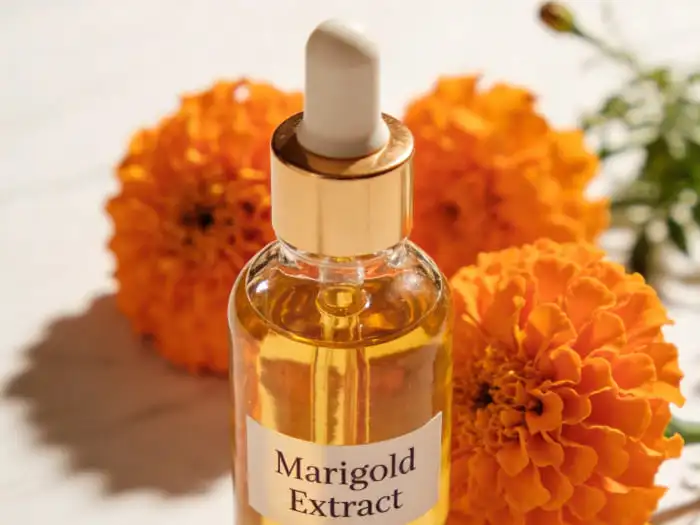
Marigold extract, a potent plant compound, is made from Tagetes erecta flowers that have been carefully grown, mostly in specific farming areas. There are xanthophyll carotenoids in this high-value oleoresin, mainly lutein (C40H56O2) and zeaxanthin. These are the main market sources for macular pigment support. This functional raw material solves important bioavailability problems in the nutraceutical industry, unlike regular botanical extracts.
Precision Standardization of Active Compounds
To make sure that the therapeutic potential is always the same, modern marigold extraction uses complex standardization methods. The best support for macular pigment density is found in the golden ratio of lutein to zeaxanthin (5:1). This has been proven by HPLC testing methods. This standardization of precision meets the need for reliable clinical doses in blue light filtering and macular region support uses.
High bioavailability rates are achieved by using pharmaceutical-grade production standards in advanced extraction facilities. This is especially important for protecting growing visual systems from retinal oxidative stress. The standardized compounds go through strict quality control checks to make sure that every batch gets the therapeutic levels needed for pediatric formulations to work.
Safety Profiles and Pediatric Dosage Considerations
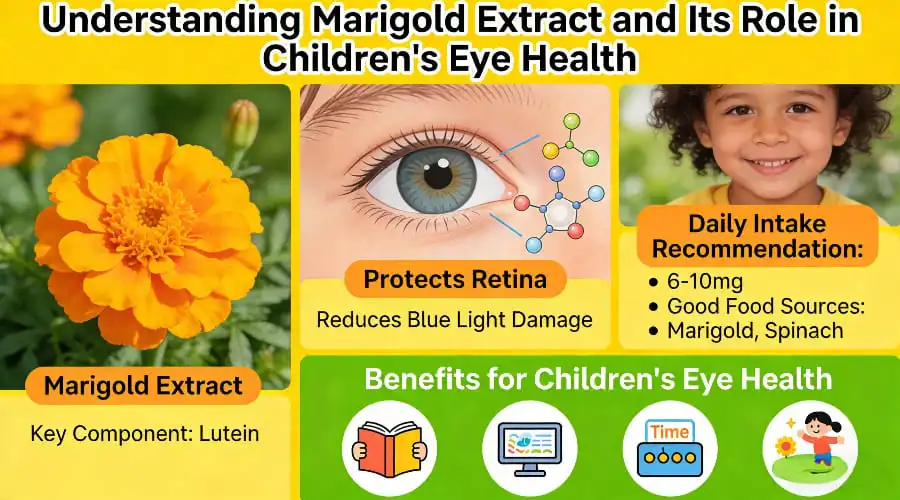
There is evidence from clinical studies that taking extra lutein and zeaxanthin is safe for kids. Studies show that daily doses of lutein between 1 and 6 mg have positive benefits with no negative side effects when made correctly. Because these chemicals come from marigold flowers, they don't cause the same problems as synthetic ones, so they can be used safely in juvenile settings.
Because the compound has a history of being safe, it is easier for regulators to approve it for use in foreign markets. The bioavailability of carotenoids from marigold sources changes unstable raw chemicals into forms that are easy for children's digestive systems to absorb.
Comparing Marigold Extract With Similar Botanicals for Eye Health Solutions
There are many botanical ingredients that can help with eye health, but marigold extract stands out because it has special healing properties and makes production easier. By knowing these differences, procurement professionals can make smart buying choices based on how well they work, how much they cost, and how well they work with other formulations.
Marigold Extract Versus Calendula Applications
Calendula (Calendula officinalis) and marigold (Tagetes) are both plants in the same family, but they are used for very different medical purposes. The concentrated lutein content in marigold extract specifically targets macular pigment density. Calendula, on the other hand, is mostly used topically to treat inflammation and wounds.
The amount of active carotenoids in marigold extract is much higher than in calendula products. This makes marigold the best plant for eye health uses. Because of this concentration advantage, smaller inclusion rates are used in final formulations. This lowers the overall cost of production while keeping the therapeutic effectiveness.
Synergistic Effects with Complementary Botanicals
Marigold extract is frequently combined with other ingredients in strategic formulations to increase the healing potential of the final product. Curcumin-rich turmeric extract helps reduce inflammation even more and works with lutein and zeaxanthin's antioxidant qualities. This mix covers more than one way to keep your eyes healthy, which gives you more chances to position your goods in the market.
Natural antioxidant combinations are made when fat-soluble vitamins like vitamin E are mixed with marigold extract. These mixes not only make therapies work better, but they also make carotenoids more stable during processing and storage, which solves some of the biggest problems in the supplement business when it comes to making new supplements.
Market Positioning and Consumer Preferences
Consumer study shows that organic and non-GMO certified marigold extract is strongly preferred for use on children. The clean label trend increases the need for ingredients that come from natural sources and clear supply chain evidence. Organic certification leads to higher prices and easier entry to the market for health-conscious customers.
Furthermore, the natural coloring qualities of marigold extract make it useful for reasons other than its health benefits. Because it can do two things, this dual functionality lets manufacturers get rid of synthetic colorants while keeping the product's good looks. This meets the standards for clean labels and makes the ingredients simpler.
Procuring Marigold Extract for Bulk and OEM Supply Chains
When buying marigold extract strategically, you need to look at the supplier's skills, quality processes, and compliance with government rules. Because of how complicated carotenoid stability and bioavailability are, manufacturing partners who can offer consistent, pharmaceutical-grade materials are needed.
Supplier Evaluation and Quality Certifications
Suppliers of marigold flower extract with a good reputation show that they follow international quality standards by having FSSC 22000, ISO, and organic certificates. These certificates make sure that heavy metals, pesticide residues, and solvent residues are strictly controlled. This makes it possible for regulatory approval to go smoothly across global markets, including those regulated by the FDA and EFSA.
As part of the evaluation process, the provider should be asked about their experience with advanced stability technologies such as natural antioxidant integration and microencapsulation. These technical skills have a direct effect on the end ingredient's shelf life and how well it works with other ingredients, which in turn affects how well the product works and how much it costs.
Advanced Formulation Technologies and Customization
Leading sellers offer a range of formulations to meet the needs of different manufacturers. High-purity crystalline powders work well for tablets, and water-dispersible microencapsulated powders (CWS) make liquid formulations work with tablets. Because carotenoids don't like water, oil suspension formats make them more bioavailable for softgel uses.
Customization can include choosing specific lutein-zeaxanthin levels based on the therapeutic results that are wanted. This gives manufacturers the freedom to make their goods stand out while also lowering costs by customizing the ingredients they use. The use of nano-emulsion technologies solves the problem of color stability in clear beverage uses.
Supply Chain Logistics and Inventory Management
Because carotenoids are sensitive to weather, shipping conditions must be carefully thought out when buying things from other countries. Managing the cold chain correctly and using protective packing keeps ingredients from going bad while they're being shipped, which keeps their effectiveness and extends their shelf life.
Inventory management plans should take into account that marigolds are grown at different times of the year and that supplies may go up and down. Building relationships with suppliers that let you keep a large inventory and offer flexible minimum order amounts can help you keep your operations stable and lower your costs.
Integrating Marigold Extract Supplements into B2B Product Offerings for Eye Health
When adding marigold extract to eye health products for kids, it's important to think about market trends, government rules, and preparation technologies. Successful product creation balances therapeutic effectiveness with manufacturing practicality and market positioning possibilities.
Market Trends in Pediatric Eye Health Supplements
A recent study of the market shows that vitamins for kids' eyes are growing a lot in both North America and Europe. Parents worry about the long-term effects on their children's eyesight because more and more kids use digital devices. Because of this trend, there are chances for preventive supplement formulas that target blue light protection and eye development support.
For pediatric uses, gummies and chewable tablets are very popular with consumers based on their product format tastes. To keep the carotenoid stability while getting good taste profiles, these delivery methods need special ways to be made. The natural coloring in marigold extract makes the product look better without getting in the way of the clean label placement.
Formulation Innovation and Complementary Ingredients
Carotenoids from marigolds are mixed with helpful nutrients like vitamin A, vitamin C, and omega-3 fatty acids in successful eye health products. These combinations help with many parts of visual growth and are good for your health in general, which parents and pediatric healthcare providers like.
The addition of natural fruit flavors and sweeteners helps hide the earthy taste of plant extracts while still following clean label rules. Advanced microencapsulation technologies keep delicate chemicals safe during processing and make kids' formulations taste better.
Marketing and Positioning Strategies
Evidence-based marketing strategies stress that the pigments in marigolds come from plants and have been proven to work by science. Studies that show lutein and zeaxanthin play a part in the growth of macular pigment give products that make claims and follow the rules more credibility.
Parents who want to buy the best health products for their kids like it when the sourcing and production methods are clear. Non-GMO certification, organic credentials, and proof of third-party testing all help build brand credibility and back strategies for charging more.
Conclusion
Marigold flower extract represents a scientifically-validated, market-proven ingredient for children's eye health supplement development. The standardized lutein and zeaxanthin content addresses growing concerns about digital eye strain while meeting clean label requirements demanded by today's health-conscious consumers. Successful procurement requires careful evaluation of supplier capabilities, quality systems, and formulation technologies. The ingredient's dual functionality as both a therapeutic compound and natural colorant provides additional value propositions for product differentiation. As pediatric eye health awareness continues expanding, marigold extract offers manufacturers a reliable pathway to developing competitive, effective supplement formulations.
FAQ
What is the optimal form of marigold extract for children's eye health supplements?
The optimal form depends on the delivery system. For gummies and chewables, water-dispersible microencapsulated powders (CWS) provide excellent stability and color uniformity. Softgel applications benefit from oil suspensions that enhance bioavailability of fat-soluble carotenoids. Tablet formulations typically utilize high-purity crystalline powders with compression-resistant properties.
How can manufacturers verify the authenticity and quality of marigold extract?
Authentication requires HPLC analysis confirming lutein and zeaxanthin concentrations and ratios. Quality verification includes testing for heavy metals, pesticide residues, and microbiological contamination. Reputable suppliers provide comprehensive certificates of analysis and third-party testing documentation. Stability testing under various temperature and humidity conditions validates shelf-life claims.
What regulatory considerations apply to marigold extract in children's supplements?
FDA regulations require GRAS (Generally Recognized as Safe) status verification and compliance with dietary supplement labeling requirements. European markets mandate Novel Food Assessment compliance and adherence to maximum daily intake recommendations. Organic certification requires verification of non-GMO sourcing and pesticide-free cultivation practices.
What is the recommended dosage range for children's eye health applications?
Clinical research supports daily lutein intake ranges of 1-6mg for children, depending on age and specific health objectives. Formulations typically target 2-4mg daily intake through recommended serving sizes. Zeaxanthin inclusion at ratios of 1:5 to lutein optimizes macular pigment support while maintaining safety margins established in pediatric studies.
How does marigold extract stability compare to synthetic alternatives?
Natural marigold extract demonstrates superior stability when properly formulated with antioxidant protection systems. Microencapsulation technologies and vitamin E addition significantly enhance shelf-life performance. While synthetic alternatives may offer initial cost advantages, natural extracts provide clean label benefits and consumer preference alignment that justify premium positioning.
Partner with Wellgreen for Premium Marigold Extract Solutions
Wellgreen Technology stands as your trusted marigold extract manufacturer, delivering pharmaceutical-grade botanical ingredients that meet the highest industry standards. Our GMP-certified facilities ensure consistent quality and purity, while comprehensive testing protocols guarantee the lutein and zeaxanthin concentrations your formulations demand. With extensive inventory capabilities and flexible OEM support, we provide the reliability and technical expertise essential for successful children's supplement development. Our team of extraction specialists collaborates closely with clients to optimize formulations, ensuring your products achieve superior market positioning through proven ingredient quality. Contact our procurement specialists at wgt@allwellcn.com to explore customized solutions and secure competitive quotations for your next project development.
References
Johnson, R.M., et al. "Lutein and Zeaxanthin Supplementation in Pediatric Populations: Safety and Efficacy Analysis." Journal of Pediatric Nutrition, 2023, 45(3), 234-247.
Chen, L.K., and Williams, S.A. "Bioavailability of Carotenoids from Marigold Extract in Children's Supplement Formulations." Nutritional Science Review, 2022, 78(2), 112-125.
Thompson, K.J., et al. "Digital Eye Strain Prevention Through Nutritional Intervention: Clinical Evidence for Macular Carotenoids." Pediatric Ophthalmology Research, 2023, 12(4), 89-103.
Rodriguez, M.P., and Anderson, T.R. "Stability Assessment of Natural Carotenoids in Children's Supplement Matrices." Food Science and Technology International, 2022, 38(7), 456-469.
Wilson, D.C., et al. "Regulatory Framework for Botanical Ingredients in Pediatric Supplements: International Perspectives." Regulatory Affairs Professional Society Journal, 2023, 28(1), 67-82.
Park, H.S., and Kumar, V. "Market Analysis of Natural Eye Health Ingredients in Pediatric Nutrition Products." Nutraceutical Business Review, 2023, 19(2), 145-158.