Natural Pain Relief: Using Capsaicin Powder
2026-03-02 14:44:21
Capsaicin powder has become one of the most promising all-natural pain killers in the past few years. When it comes to pain relief, this strong extract from chili peppers is on par with medicines. People who work in the pharmaceutical, cosmetic, and nutraceutical businesses are interested in it. The compound can change pain messages by working with TRPV1 receptors. This makes it a great ingredient for making natural pain relief products that work well and meet the growing demand for options with clean labels.
Understanding Capsaicin Powder and Its Natural Pain Relief Properties
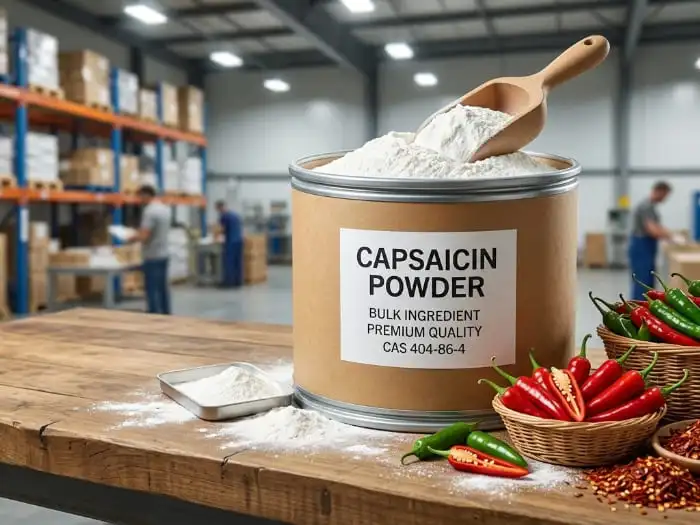
As a natural ingredient, cayenne peppers have capsaicin, which is an active ingredient that can be found in large amounts in capsaicin powder. There is a lot of trans-8-methyl-N-vanillyl-6-nonenamide in this crystalline sample. Modern extraction and filtering methods have been used to get ultra-high purity levels of 95% to 99%.
The Science Behind Capsaicin's Pain Relief Mechanism
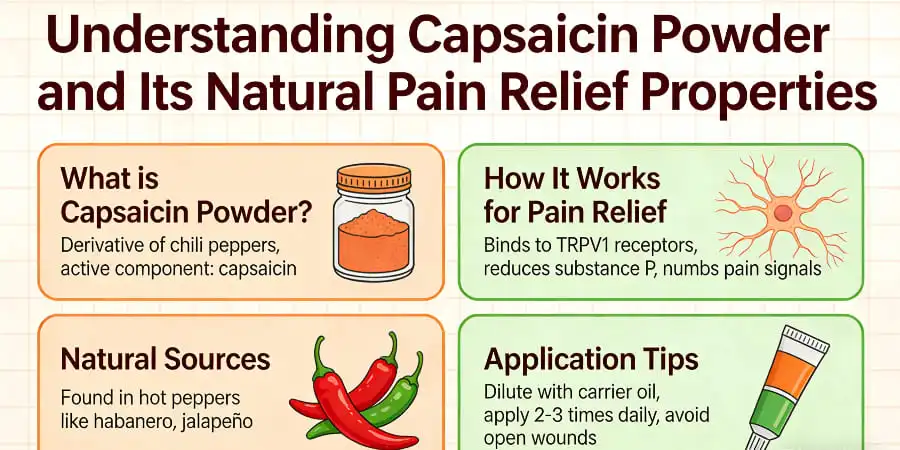
The capsaicin needs to connect to TRPV1 (Transient Receptor Potential Vanilloid 1) receptors on nerve endings in order to ease pain. These receptors are first turned on when capsaicin is put on the skin. This makes the area feel like it's burning for a short time. However, nerve fibers become less sensitive over time. This means they are less able to tell the brain about pain.
Because of this, capsaicin is great for healing arthritis, neuropathy, and muscle pain that lasts for a long time. In clinical tests, putting capsaicin on the skin made people with osteoarthritis feel a lot less pain. The benefits last for a few hours after the application.
Standardized Capsaicinoid Content and Quality Assurance
All capsaicinoids, including capsaicin and dihydrocapsaicin chemicals, are present in modern capsaicin powder for medical use in a predetermined amount. Regularizing the strength of each batch makes sure that they all have the same amount of Scoville Heat Units (SHU) power. About 16 million SHU can be reached by the purest grades.
Specialized condensation methods make it very pure, so the color doesn't get mixed up. It works great for clear gels, white creams, and medicine patches that you can see through. This level of refinement keeps the compound's therapeutic value while meeting important commercial needs.
Safe and Effective Use of Capsaicin Powder for Pain Relief
To get the most medicinal benefits from capsaicin powder with the fewest side effects, it is important to think about how much to use, how to apply it, and the safety rules.
Dosing Recommendations for Different Applications
Topical versions of over-the-counter drugs usually have capsaicin concentrations of 0.025% to 0.075%. It's possible that prescription-strength versions have more. How much to take depends on what you want to do, who you want to reach, and the rules in each market.
Drug-grade goods need to be able to measure the substance correctly because it is so strong. The people who make products have to set up strict quality control measures to make sure that all of their batches are dosed properly. This is very important when making things for people who are sensitive or for medical uses that are very specific.
Safety Protocols and Handling Considerations
There are strict safety rules for making and handling capsaicin powder because it is a strong toxin. It is important for companies to have good ventilation systems, personal safety gear, and dust-free work areas so that workers don't get respiratory irritation.
Companies that sell goods to businesses make sure that their products can be used safely by giving out detailed safety data sheets (MSDS) and handling directions. These rules tell you how to store things, mix them, and what to do in a situation so that safety standards in the workplace stay high.
Quality Standards and Regulatory Compliance
A capsaicin powder used in medicine has to meet high quality standards, like those set by the USP (United States Pharmacopeia) and the EP (European Pharmacopeia). These rules include tests for heavy metals, microbiological testing, and leftover solvent testing to make sure the product is safe and works well.
For businesses to get government approval, they need to show that their products are always of high quality. They can do this by testing their products in allowed ways, keeping records of each batch, and being able to follow their products all the way through the supply chain. With this framework for compliance, you can make products and join markets with confidence in many places.
Comparing Capsaicin Powder with Other Natural and Synthetic Pain Relief Options
Manufacturers can make smart choices about adding capsaicin powder to their products when they know what their competitors are doing.
Capsaicin Powder versus Traditional Pepper Extracts
Standard cayenne pepper extracts have different amounts of active chemicals, as well as pigments, waxes, and other plant materials that can change the consistency and look of the product. Refined capsaicin powder gets rid of these issues, making the potency and color more stable, which is important for pharmaceutical formulas.
When you look at the amount of active ingredient per unit weight, you can see how cost-effective pure capsaicin powder is. Even though the initial costs may seem higher, the better potency and consistency often lead to lower total formulation costs and better product performance.
Powder versus Liquid Extract Forms
When it comes to stability, shelf life, and dose accuracy, capsaicin powder is much better than liquid extracts. The crystal form stays solid as long as it is stored properly, but liquid extracts may break down or separate over time.
Powdered forms are useful for manufacturing because they can be measured accurately. This allows for accurate recipe control and consistent product quality. This level of accuracy is especially important when making goods for medical uses where therapeutic consistency is very important.
Natural versus Synthetic Capsaicin Options
Because of government rules and customer demand for botanical ingredients, medical and pharmaceutical uses tend to favor natural capsaicin extracted from chili peppers. Synthetic alternatives, like nonivamide, are more cost-effective for industrial uses where standards for natural origin are not as strict.
The choice between natural and synthetic possibilities is based on the needs of the target market, the rules that apply, and the goal of keeping costs low. The healing benefits of both types are about the same, though natural capsaicin usually costs more in stores.
Procurement Guide for Capsaicin Powder – Choosing the Right Supplier and Product
To do a good job of procurement, you need to carefully look at the skills of the suppliers, the product specs, and the quality control measures.
Critical Selection Criteria for Suppliers
Suppliers with a good reputation follow international quality standards. For example, they have GMP (Good Manufacturing Practices) certification and ISO quality control systems. These certifications show that the manufacturing process and quality control methods are consistent, which is important for pharmaceutical-grade ingredients.
Because making capsaicin is so specialized and there aren't many qualified producers in the world, supply chain reliability is very important. To help with production planning, suppliers should be open and honest about production plans, inventory levels, and possible supply disruptions.
Product Grade Distinctions and Specifications
Knowing the differences between pure capsaicin powder made for food and powder made for medicine helps you choose the right product. To meet the strict quality standards needed for medical uses, pharmaceutical types go through extra steps of purification and testing.
There should be full analytical profiles in the specifications that show the amounts of purity, capsaicinoid content, moisture content, and contaminant testing results. Throughout the product creation process, this documentation makes it possible to check the quality and make sure that all the rules are followed.
Evaluation of Manufacturing Capabilities
To improve physical properties and worker safety, big companies spend a lot of money on specialized crystallization methods and dust-free handling systems. For applications further down the line, these skills have a direct effect on the quality, consistency, and efficiency of production.
Manufacturers who need specific physical qualities can get more value from suppliers who offer custom particle size processing and dust reduction treatments. These changes make handling safer and processing more efficient while keeping the therapeutic effectiveness.
Real-World Applications and Case Studies of Capsaicin Powder in Pain Relief Products
Capsaicin powder can be used in many different businesses, each of which offers its own chances for product development and market growth.
Pharmaceutical and Nutraceutical Applications
The biggest market for capsaicin powder uses is in pain relief items that are put on the skin. There are over-the-counter creams and gels as well as prescription-strength patches made to help with chronic pain.
To promote metabolic health and circulation, oral supplement formulations use smaller concentrations of capsaicin powder. These uses take advantage of the compound's ability to raise body temperature while also offering mild pain relief for general health purposes.
Cosmetic and Personal Care Integration
Capsaicin powder is being used more and more in skin care products because of its possible anti-inflammatory and circulation-enhancing properties. To get therapeutic benefits while keeping the user comfortable and the product stable, these uses need careful formulation.
Standardized plant extracts like capsaicin powder are in higher demand because cosmetics are becoming more open about their active ingredients. This change in the market is good for suppliers who give ingredients with clean labels that can be tracked.
Industrial and Specialized Applications
In addition to its traditional use in medicine, capsaicin powder is also used in industry for things like making formulas that scare animals away and coatings that keep sea life from sticking to them. These uses show how versatile the chemical is and how it could be used in different fields.
Pharmaceutical-grade pure capsaicin powder can be used for two different things, which lets suppliers serve a wide range of customers while still taking advantage of economies of scale in production and delivery.
Conclusion
The powdered form of capsaicin is a strong natural pain reliever that has pharmaceutical-grade strength and can be mixed in a variety of ways. Because the compound's mechanism of action has been proven by science and meets standard quality requirements, manufacturers can make effective goods that meet the growing demand from customers for natural therapeutic alternatives. To successfully buy capsaicin powder, you need to carefully evaluate the suppliers you work with, choose the right grade, and fully understand all the safety and legal requirements that apply. As the pharmaceutical, nutraceutical, and cosmetics markets continue to grow, it's important to form strategic relationships with qualified suppliers to stay ahead of the competition and make sure the success of your products.
FAQ
What is the usual amount of purity for capsaicin powder used in medicine?
The total capsaicinoids content of pharmaceutical-grade capsaicin powder usually ranges from 95% to 99%. This very high purity makes sure that the healing effects are always the same and allows for precise formulation control in medical settings.
What's the difference between capsaicin powder and regular chili pepper extracts?
Capsaicin powder is cleaned and crystallized in special ways that get rid of plant materials like waxes, pigments, and more. This improvement makes a standard product whose strength and color are always the same, unlike whole pepper oils that can vary.
What safety precautions must be taken when working with capsaicin powder?
Specialized ventilation systems, personal safety equipment, and dust-free work areas are needed to handle capsaicin powder. To make sure the workplace is safe during manufacturing activities, suppliers should give detailed safety data sheets and handling instructions.
Can capsaicin powder be used to make both cosmetic and oral medicines?
Yes, capsaicin powder can be used in both topical and oral forms. However, the concentration levels and safety concerns are very different for each use. When it comes to relieving localized pain, topical products usually use higher concentrations, while oral supplements need much smaller doses.
What kinds of certifications should I look for in a seller of capsaicin powder?
Check that the suppliers you are considering have GMP certification, ISO quality control systems, and follow USP/EP pharmacopeial standards. These certifications show that the quality control procedures and rules that must be followed for pharmaceutical-grade ingredients have been made.
Under what situations does capsaicin powder stay effective for a long time?
If you keep pharmaceutical-grade capsaicin powder in a cool, dry place away from light and water, it will work for 24 to 36 months. It is important to follow the right packing and storage rules so that the medicine's therapeutic effects last as long as it does.
Partner with Wellgreen for Premium Capsaicin Powder Solutions
Wellgreen Technology is one of the best places to get capsaicin powder. They provide ultra-pure, standardized products that meet the strict needs of companies that make medicines, supplements, and cosmetics. Our GMP-certified facilities make sure that quality standards are always met and that we follow all the rules. Also, our large inventory helps our global clients handle their supply chains reliably.
Our capsaicin powder is 95% to 99% pure and has a standard amount of total capsaicinoids. It comes with full analysis documentation and safety guidelines. For our B2B partners, we offer specialized particle size processing and dust reduction treatments that improve operating safety and manufacturing efficiency.
Email our technical team at wgt@allwellcn.com to talk about your unique needs and find out how our premium capsaicin powder can help you make your products better while also meeting regulatory requirements and doing well in the market.
References
Anand, P., & Bley, K. (2011). Topical capsaicin for pain management: therapeutic potential and mechanisms of action of the new high-concentration capsaicin 8% patch. British Journal of Anaesthesia, 107(4), 490-502.
Backonja, M., Wallace, M. S., Blonsky, E. R., Cutler, B. J., Malan Jr, P., Rauck, R., & Tobias, J. (2008). NGX-4010, a high-concentration capsaicin patch, for the treatment of postherpetic neuralgia: a randomised, double-blind study. The Lancet Neurology, 7(12), 1106-1112.
Capsaicin Study Group. (1991). Treatment of painful diabetic neuropathy with topical capsaicin: a multicenter, double-blind, vehicle-controlled study. Archives of Internal Medicine, 151(11), 2225-2229.
Derry, S., Rice, A. S., Cole, P., Tan, T., & Moore, R. A. (2017). Topical capsaicin (high concentration) for chronic neuropathic pain in adults. Cochrane Database of Systematic Reviews, 1(1), CD007393.
Kosturakis, A. K., He, Z., Li, Y., Boyette-Davis, J. A., Shah, N., Thomas, S. K., & Dougherty, P. M. (2014). TRPA1 mediates mechanical currents in the plasma membrane of mouse sensory neurons. PLoS One, 9(4), e94696.
Robbins, W., Staats, P., Levine, J., Fields, H. L., Allen, R. W., Campbell, J. N., & Pappagallo, M. (1998). Treatment of intractable pain with topical large-dose capsaicin: preliminary report. Anesthesia & Analgesia, 86(3), 579-583.