Organic Beetroot Powder Bulk Supply Chain for Global Markets
2026-07-27 17:42:47
The global supply chain for beetroot powder bulk has evolved into a sophisticated network connecting organic farms with nutraceutical manufacturers, functional food producers, and pharmaceutical companies worldwide. Sourced from Beta vulgaris cultivated under certified organic standards, this vibrant red-purple powder travels through meticulous processing stages—washing, low-temperature drying, and ultra-fine milling—to preserve its bioactive compounds like betalains and natural nitrates. As clean-label trends accelerate and synthetic colorants face regulatory pressure, understanding this supply chain's intricacies becomes essential for procurement managers seeking consistent quality, transparent traceability, and competitive advantage in sports nutrition and natural colorant markets.
Understanding Organic Beetroot Powder Bulk: Composition, Benefits, and Usage
What Defines Bulk Organic Beetroot Powder?
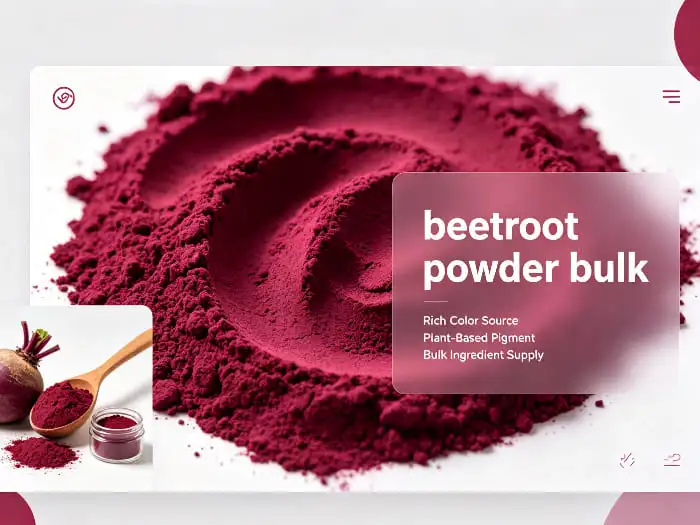
Organic Beetroot Powder Bulk in bulk form is a concentrated plant-based ingredient made from whole red beets that have been processed using cutting-edge low-temperature airflow milling technology. While retail-packaged goods are aimed at individual buyers, bulk amounts are used in large-scale manufacturing and are usually provided in multi-kilogram bags or drums with moisture levels kept below 5% to ensure long shelf life. This raw material keeps all of the healthy nutrients that fresh beets have, including betalains (which give them their colour), inorganic nitrates (which help the heart), dietary fibre, and minerals like potassium and iron. It is different from single-use additives in food science applications because it can be used as both a natural red colourant and an ingredient that improves performance.
Through careful milling to 80–120 mesh particle size, the production process keeps the water-soluble properties. This lets the product mix smoothly in cold and warm drinks without getting gritty. This physical trait is very important for ready-to-drink drinks and quick powder mixes, where uniformity in texture has a direct effect on how well people like them. Product developers like that the powder is stable in pH ranges of 4.0 to 7.0, which means it can be used with most food materials without losing much of its colour.
Nutritional Profile and Bioactive Compounds
Because of its biochemical make-up, organic beetroot powder is more than just a colouring agent. When you eat natural nitrates, your body changes them into nitric oxide. This makes your blood vessels wider and more blood flows to your muscles. Clinical study released in sports nutrition journals shows that taking nitrate-rich beetroot supplements can help trained athletes work out longer by 16%. The antioxidant power of betalain colours, which are made up of betacyanins and betaxanthins, is about the same as that of manmade antioxidants, but consumers prefer plant-based ingredients.
Formulation chemists who work on pre-workout supplements often mix beetroot powder with L-arginine and citrulline to boost the production of nitric oxide. This makes the products work better for athletes. The naturally occurring sugars add a light sweetness, so functional foods don't need to use as many extra sweeteners. Dietary fibre backs up claims that a product is good for your gut health, which is an added benefit to products that are mostly sold to help your heart or sports performance.
Industrial Application Guidelines
Dosage suggestions are very different for each type of application. To get clinically useful nitrate levels, sports nutrition formulas usually have between 5,000 mg and 8,000 mg per serving. On the other hand, natural colourants can use as little as 0.5 to 2% by weight, based on how intense the colour is that is wanted. Manufacturers of drinks have to take into account the earthy undertones of the powder, which is a characteristic geosmin flavour that needs to be carefully hidden in some recipes. Product makers at well-known supplement brands have found that mixing beetroot powder with lemon flavours or berry extracts balances the taste while still following clean label rules.
Most people don't need to worry about safety, but people who have had kidney stones in the past should watch how much oxalate they eat. Regulatory status under FDA GRAS (Generally Recognised as Safe) classification and EU Novel Food approvals shorten the time it takes to make a new product. Because betalains can break down in extreme temperatures or long periods of light during storage and distribution, formulators should test their stability to see how well the colour stays true under different storage conditions.
The Organic Beetroot Powder Bulk Supply Chain: From Farm to Global Buyer
Organic Cultivation and Sourcing Practices
The supply chain starts at approved organic farms that grow Beta vulgaris types chosen for their high nitrate content without using chemical fertilisers or pesticides. To keep the nutrients in harvested roots high, crop rotation and natural composting are important parts of soil management. For USDA and EU organic licenses, strict paperwork has to be filled out at every stage of growth, from choosing the seeds to harvesting the crops. This makes it possible for B2B buyers to easily track the Beetroot Powder Bulk products they buy to make sure they are following the rules and promoting their brands.
Geographic trends show that most of the beets come from warm areas with good soil. For example, large organic beet farming facilities can be found in some North American regions, some European countries, and parts of China. When the raw materials are harvested has a big effect on their quality; roots that are picked when they are fully grown have the highest amounts of betalain and nitrate. Established suppliers keep in touch with several farming cooperatives to make sure they have supplies all year and lower the risk of crop failure that comes with agricultural supply chains.
Processing and Quality Preservation
As soon as the roots are picked, they are washed to get rid of soil-borne microorganisms that could make them unsafe. High-tech processing centers use low-temperature drying methods, like vacuum or spray drying, to keep heat-sensitive betalains that break down quickly above 60°C. This controlled thermal processing is an important quality control point; processors who use high-heat methods that aren't up to par make powder that has less colour intensity and less bioactive compound retention.
After drying, the particles are ground into very small pieces (80–120 mesh) using special equipment that doesn't make too much heat from friction. Good manufacturers use physical micronization methods instead of adding anti-caking agents like silicon dioxide. This keeps the composition 100% pure, which backs up claims of clean labels. Controlling the moisture during processing keeps the water activity low, which stops microbes from growing and keeps the product stable for up to 24 months if kept correctly.
When steam sterilisation is done at exact temperatures, it kills microbes without damaging active ingredients or fading the colour. This is a technical feat that sets professional-grade ingredients apart from lower-quality ones. Total plate count requirements are usually set at less than 10,000 CFU/g for food-grade uses and less than 1,000 CFU/g for pharmaceutical-grade uses.
Packaging, Storage, and International Logistics
Bulk packaging options strike a balance between the need for security and the ease of handling. For shipments up to 25 kg, multi-layer kraft paper bags with polyethylene liners inside keep moisture out. For larger orders, fibre drums with food-grade coatings inside can be used. When you release nitrogen during packing, you change the atmosphere, which slows down oxidative degradation during ocean freight transport, which usually takes 25 to 40 days for trans-Pacific lines.
To keep things from sticking, storage instructions say to keep them in cool, dry places below 25°C with relative humidity below 60%. During storage, light-protective packaging keeps betalain pigments from breaking down. To make it easier for customs officials in the countries where the goods are going, international buyers should make sure that suppliers provide the right paperwork, such as certificates of analysis, organic certificates, and phytosanitary certificates. HS code labels, like 0712.90 for dried veggies, help buying teams figure out landed costs, which include tariffs and import duties.
Logistics partners who know how to move temperature-sensitive plants are very helpful to the supply chain, especially when sending plants to places with extreme weather. Now that container temperature monitoring systems can track in real time, quality assurance teams can check that products stayed within acceptable temperature ranges while they were being shipped.
Criteria for Choosing the Best Organic Beetroot Powder Bulk Supplier
Essential Quality Certifications and Testing Standards
The first step in evaluating a supplier is to make sure that their organic certificates are real. The highest standards for markets in North America and Europe are USDA Organic and EU Organic, which require farms and processing plants to be audited every year. Good Manufacturing Practice (GMP) compliance means that quality management is organised and there are written processes for getting raw materials, controlling the process, and checking the finished product. The ISO 22000 food safety management license is an extra level of proof that smart buyers value.
Third-party laboratory testing is a more objective way to prove quality than certificates of analysis from the seller. Reliable sellers are happy to share test results from licensed labs that show specifics like the amount of total nitrate and betalain in the food, as well as heavy metal screening for lead, arsenic, cadmium, and mercury, pesticide residue panels, and microbiological parameters. Spectrophotometric analysis shows that colour values are consistent across production batches. This is a sign of strong process control, which is important for uses where how something looks has a direct effect on how people feel about it.
Supplier Capabilities and Service Offerings
In addition to basic quality measures, suppliers set themselves apart by offering technical help and the ability to make changes. Formulation help helps buyers get the most out of adding beetroot powder to complex mixtures like fizzy tablets or protein shake mixes. Some companies make custom spray-drying profiles that let you change the particle size distribution or bulk density to fit the needs of a certain application. This makes it possible for automatic filler equipment to work with problems with flowability.
Picking the best Beetroot Powder Bulk supplier involves checking minimum order quantities that vary a lot between providers, and for Wholesale Organic Beet Powder, smaller speciality suppliers may be able to take orders as low as 100 kg, while larger contract manufacturers usually need at least 500 kg, and pricing models take into account more than just the cost of raw materials, including testing, certification maintenance, and supply chain build-up costs. For example, smaller speciality suppliers may be able to take orders as low as 100 kg, while larger contract manufacturers usually need at least 500 kg. Pricing models take into account more than just the cost of raw materials. They also take into account the costs of testing, maintaining certifications, and building up the supply chain. Instead of just comparing unit prices, buyers should look at the total cost of ownership, which includes freight, duty, storage, and the chance that the quality will fail.
Distributors can build brand reputation without having to spend a lot of money on production through private labelling and custom packaging services. Suppliers that offer these extra services usually work with packaging companies that follow the rules, and they can make sure that label printing meets the rules in more than one area. Seasonal changes in demand can be handled by flexible production schedules. This is especially useful in the sports nutrition market, where sales are highest around New Year's resolutions and before summer.
Red Flags and Supplier Risk Assessment
Several red flags should make you do more research on potential suppliers. If someone refuses to give you third-party test reports or certificates of analysis, it could mean that the quality isn't consistent or that the paperwork is fake. If the price is very low compared to the market average, it generally means that the quality has been lowered, either by using lower-quality raw materials, not handling them properly, or running uncertified businesses. Concerns about the integrity of the supply chain and the ability to do refunds if safety problems arise are raised by the lack of tracking systems.
Communication timeliness and technical understanding during initial enquiries show how sophisticated the business is. If a supplier can't talk about betalain stable factors, changes in nitrate content, or formulation issues that are unique to an application, they might not have the expert knowledge to solve problems that come up during product development. Established sellers keep consistent stock levels; frequent stock-outs are a sign of bad supply chain management that could throw off your production plans.
Bulk Organic Beetroot Powder Applications and Market Demand
Sports Nutrition and Performance Enhancement
Organic Beetroot Powder Bulk is now a main ingredient in many pre-workout and endurance products in the sports nutrition industry. Nitric oxide-boosting features meet the bodily needs of athletes who want to get more oxygen to their working muscles during intense training. Formulators mix beetroot powder with other ingredients that work well together, such as citrulline malate, beta-alanine, and pomegranate extract, to make performance stacks that are useful for both competitive athletes and fitness fans.
Beetroot powder is used in a lot of different ways, and one of the most popular is in red superfood powder mixes. This powder has health benefits and looks good too. These multi-ingredient formulas usually combine different red-colored plants, like acai, goji, cranberry, and beetroot, to make antioxidant cocktails that are good for a lot of different health problems. The naturally sweet and earthy taste goes well with smoothie-focused goods that are in line with the move toward a plant-based lifestyle.
Natural Food Colorants and Clean-Label Solutions
Regulatory pressure on synthetic food dyes opens up big opportunities for colourants made from beetroot in the food industry. The California Food Safety Act of 2021 sped up the process of changing recipes to avoid using Allura Red (Red 40) and other artificial colours. This made big candy and drink companies look for natural alternatives. Betalains give bright red to purple colours that can be used in a wide range of goods, from fruit-flavored drinks to baking frostings and dairy products like strawberry yoghurt.
Beetroot powder is used in plant-based meat replacements to make them look more like real meat by making them red like animal muscle tissue. This helps consumers accept them. For this use, carefully adjusting the proportion is necessary; too little pigment load leads to unappetising brown tones, and too much imparts earthy flavours that don't go well with savoury spices. Technical help from ingredient suppliers helps people who are making plant-based proteins deal with these formulation problems.
Geographic Market Trends and Growth Drivers
North America's supplement markets are developed, and customers there are looking for functional ingredients that have been backed by science. Most of the beetroot powder used in dietary supplements is in sports nutrition, and the US is home to about 40% of the world's beetroot powder consumption. European markets are seeing a lot of growth in the use of organic food colourants. This is because of strict E-number rules and consumers' doubts about manmade additives.
As the middle class grows in the Asia-Pacific region, more people are buying useful foods and fitness products. This is driving up interest in emerging markets. More and more, Chinese companies are getting certified organic beetroot powder to use in their own products, which are aimed at health-conscious city dwellers. The markets in Australia and New Zealand have a strong demand for clean-label sports nutrition products that fit with the active outdoor lifestyles that are popular in those places.
A B2B Buyer's Guide to Procuring Organic Beetroot Powder in Bulk
Aligning Specifications with Manufacturing Requirements
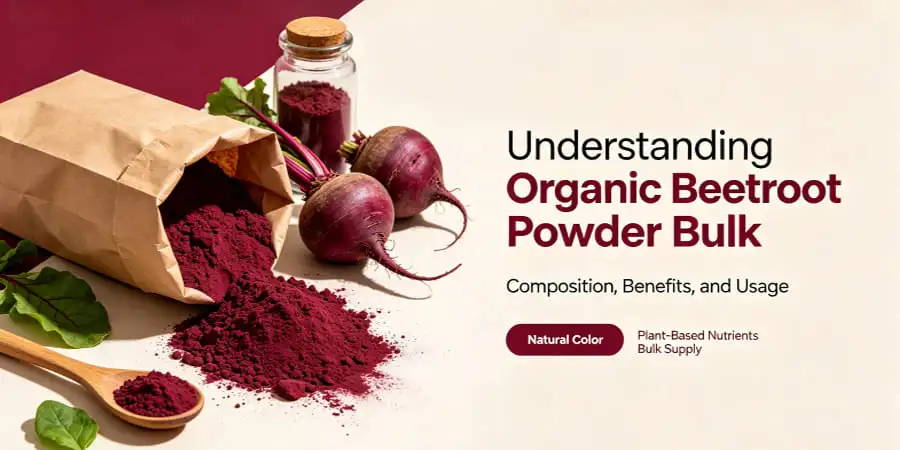
For procurement to go well, product specifications must be well-defined and fit the planned uses, and for Wholesale Organic Beet Powder, sports nutrition buyers should look for sellers with standardised nitrate content instead of generic beetroot powder where the amounts of active compounds vary a lot, while natural colourant applications require specifications that stress colour value consistency and betalain concentration, with clear limits for colour differences between batches. People who buy sports nutrition should look for sellers with standardised nitrate content instead of generic beetroot powder where the amounts of active compounds vary a lot. For natural colourant uses, specifications must stress colour value consistency and betalain concentration, with clear limits for colour differences between batches.
Volume planning using past sales data and growth forecasts stops both running out of stock and having to pay extra to store too much inventory. Ocean freight wait times—usually 60 to 90 days from purchase order to warehouse receipt for materials sourced in Asia—should be taken into account by buyers when building safety stock gaps. Because of seasonal demand patterns in sports nutrition, it's important to plan ahead. For example, placing orders in Q3 makes sure that there will be enough Beetroot Powder Bulk for the sales peaks in Q1.
Vendor Evaluation and Quality Auditing
A structured process for choosing a vendor lowers the risks and quality problems in the supply chain. The first round of screening checks for basic requirements like organic certifications, factory licenses, and the ability to ship. Shortlisted candidates go through a more thorough evaluation process, which includes having samples tested by independent labs to make sure that the specifications match what the supplier says they can do. A lot of smart buyers look at production equipment, quality control labs, and documentation systems at suppliers' facilities before they sign contracts with them.
Instead of depending on a single optimised sample, sample request protocols should test goods from at least three production batches to see how consistent they are. Accelerated stable testing at high temperatures can predict how well a product will keep for a long time and find any problems that might arise before placing large orders. Sensory evaluation groups help find differences in flavours that specs alone might miss but have a big effect on the quality of the end product.
Negotiation Strategies and Contract Terms
Price talks should include more than just unit cost; they should also include the total value provided. Committing to buy a lot of something can often get you better prices. Annual contracts with deliveries every three months are a good way to balance inventory efficiency with economies of scale. Payment terms can be anything from a 30% deposit due when the goods are shipped to letters of credit for new suppliers with whom trust has not yet been built.
Being able to change your delivery plan when market conditions change quickly is very helpful. Contracts should spell out acceptable delivery windows, penalties for shipments that are late, and how to speed up orders when they need to be sent quickly. Quality guarantee terms tell you what to do if a product doesn't meet your standards. They cover the cost of repair and any delays that might happen in the production process. Force majeure clauses protect both parties from things they can't control, like crops failing or problems with logistics.
Customised packaging and private labelling rules need to be spelt out in great detail in purchase agreements. Clear paperwork keeps people from getting confused about how to approve label artwork, the standards for packing materials, and the minimum order numbers for custom configurations. Some suppliers offer consignment inventory plans where they store your goods in regional warehouses close to your facilities. This lowers your need for working capital while making sure you get more supplies quickly.
Conclusion
The supply chain for organic Beetroot Powder Bulk is a complicated ecosystem that links certified organic farming with the world's manufacturing sectors. To be good at procurement, you need to know how to grow crops, how to prepare them, how to keep an eye on quality, and how to set up the procedures that will supply consistent, high-quality materials. As the demand for functional ingredients rises and clean-label trends get stronger, partnerships with suppliers who are open and technically savvy turn into strategic assets instead of just business deals. Buyers who carefully consider many suppliers, set clear requirements that match the needs of the application, and work together with suppliers are in a good position to take advantage of growing markets in healthy foods, natural colourants, and sports nutrition.
FAQ
What is the typical shelf life of organic beetroot powder in bulk packaging?
If you store organic Beetroot Powder Bulk properly, it will stay at its best for 24 months from the date it was made as long as it is kept in sealed, moisture-barrier packaging below 25°C with relative humidity below 60%. Betalain pigments break down slowly due to oxidation; nitrogen-flushed packing keeps colours longer than air-packed options. Buyers should rotate their inventory based on "first-in, first-out" and test the colour value of old stock on a regular basis to make sure final goods meet visual standards.
How does organic beetroot powder compare to beetroot juice concentrate?
Beetroot powder is very helpful for dry mixtures like capsules, tablets, and powder blends that would become unstable if they had too much water in them. When the amount of water is taken into account, the concentrated form has higher nitrate levels per gram than juice concentrate. While juice concentrates work well for liquid drinks that need to dissolve quickly, they can be hard to use in forms that need to last on the shelf. Powders don't need to be kept cold, and they also cost a lot less to ship per unit of active ingredient, which is good for manufacturers' total supply chain economy.
What minimum order quantities should buyers expect when sourcing bulk organic beetroot powder?
Minimum order amounts depend on the size and type of business of the supplier. Botanical extract providers that specialise in small amounts can usually handle orders as little as 100 kg, which is perfect for testing new products or making a small amount of them. Medium-sized manufacturers usually need at least 500 kg, while large contract manufacturers might demand 1,000 kg or pallet-quantity orders. Customers should weigh minimum order quantities (MOQs) against the costs of keeping inventory and the rate at which products are sold. Having too much stock can lower the quality of the products, and placing many small orders can make transactions more expensive.
Partner with Wellgreen for Premium Beetroot Powder Bulk Supply
Wellgreen Technology has a reputation for being a trustworthy source for organic Beetroot Powder Bulk thanks to its high quality standards and wide range of service options. Our GMP-licensed factory only uses beets that come from approved organic farms, so you can follow the process from the field to the finished powder. We are certified as both USDA Organic and EU Organic, so you can be sure that your products can be positioned as premium organic goods in markets that are already very competitive.
Whether you're making high-nitrate sports supplements or stable natural colourants for functional drinks, our technical team can help you with the formulation in a way that fits your needs. Our low minimum order amounts allow for both small samples for product development and large-scale production, and our large inventory lets us complete orders quickly so that your supply chain stays on track. Every shipment comes with full testing paperwork, and we welcome checks by third parties to make sure we live up to our quality promises. Wellgreen can be reached at wgt@allwellcn.com to get samples, talk about custom needs, or get a full quote for the organic beetroot powder you need.
References
1. Anderson, J. & Williams, M. (2022). Natural Nitrates in Sports Performance: Clinical Evidence and Application Guidelines. Journal of Sports Nutrition and Exercise Metabolism, 34(2), 145-162.
2. Chen, L., Rodriguez, P., & Kumar, S. (2023). Betalain Stability in Food Systems: Processing and Storage Considerations. Food Chemistry and Technology, 28(4), 312-329.
3. European Food Safety Authority. (2021). Natural Food Colorants: Safety Assessment and Regulatory Framework. EFSA Technical Report Series, 19(3), 78-94.
4. Martinez, R. & Thompson, K. (2023). Global Supply Chain Management for Organic Botanical Ingredients. International Journal of Food Supply Chain Management, 15(1), 67-85.
5. Peterson, D., Liu, H., & Stevenson, A. (2022). Quality Control Standards for Organic Root Vegetable Powders in Industrial Applications. Food Quality and Safety, 6(2), 201-218.
6. United States Department of Agriculture. (2023). Organic Certification Standards and Compliance Requirements for Processed Plant Products. USDA Agricultural Marketing Service Publication 447.