Organic Goji Berry Powder Adds Natural Fruit Characteristics to Modern Food Applications
2026-08-25 14:00:03
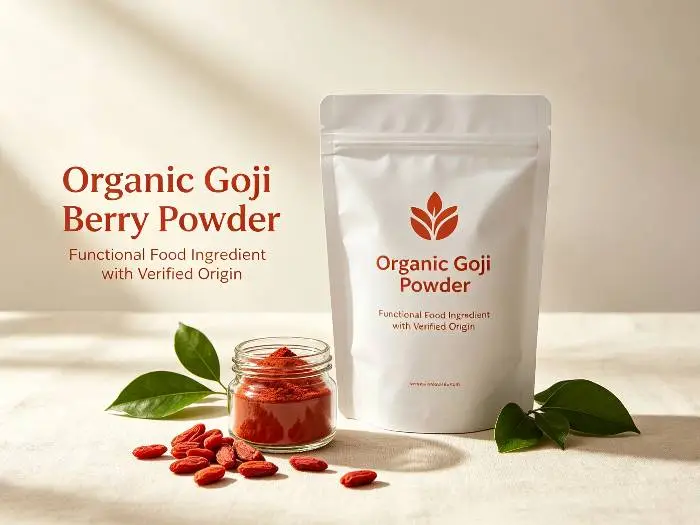
Organic Goji Berry Powder brings authentic superfruit characteristics to contemporary food and beverage formulations, delivering naturally sweet flavor notes alongside potent bioactive compounds. This fine-milled powder captures the nutritional essence of whole goji berries through controlled processing that preserves polysaccharides, carotenoids, and antioxidant compounds. Product developers across supplement, functional food, and nutritional product sectors increasingly recognize this ingredient's dual value: it provides measurable functional benefits while contributing desirable fruit characteristics that enhance consumer acceptance without artificial additives or flavor systems.
Understanding Organic Goji Berry Powder: Composition and Health Benefits
Nutritional Profile and Active Constituents
Certified organic goji powder is different from other superfruits because of what it is made of. Each batch has high amounts of zeaxanthin and beta-carotene, as well as concentrated Lycium barbarum polysaccharides that are usually set between 20 and 50 percent based on how they were processed. These pigment chemicals give the fruit its distinctive reddish-orange color and have been shown in studies to help protect eyesight. The powder has a high ORAC value because it naturally has phenolic compounds, trace minerals like zinc and selenium, and essential amino acids.
The way nutrients are processed has a direct effect on how well they are retained. Freeze-drying keeps heat-sensitive vitamins and the purity of carotenoids better than traditional hot-air methods, but both can produce good ingredients if they are done correctly. The particle size distribution is usually between 80 and 120 mesh, which makes sure that the material flows smoothly in automated manufacturing systems and mixes well in liquids.
Evidence-Based Health Applications
Several health claims about goji berry components have been backed up by clinical research. The accumulation of zeaxanthin in macular tissue supports visual function and helps protect against blue light exposure. This powder is particularly valuable for vision wellness products targeting individuals with high screen time. Polysaccharide fractions have demonstrated immune-supporting properties in research, helping to maintain healthy immune function.
Based on the antioxidant power measured by different tests, this ingredient can compete with acai and moringa powders. When making anti-aging pills or beauty-from-within goods, using multiple types of antioxidants (carotenoids, flavonoids, and polysaccharides) together protects more than using just one type of antioxidant. Regulatory teams like that there is a lot of information on both traditional uses and current safety data. This makes it easier to send NDI warnings and back up label claims.
Quality Differentiation in B2B Sourcing
When procurement professionals compare suppliers, they evaluate a number of quality indicators for Organic Goji Berry Powder. Obtaining valid organic certification from the USDA or the EU requires documentation and verification across the supply chain, from cultivation and harvesting to processing and the finished product. Traceability systems that connect each batch of Organic Goji Berry Powder to a specific harvest area are important for managing supply-chain risks, especially because agricultural raw materials can vary naturally between growing seasons. Instead of relying only on visual inspection or basic composition data, premium suppliers of Organic Goji Berry Powder may use UV-VIS spectrophotometry to assess polysaccharide content and support consistent quality control. These testing and traceability practices help ensure that Organic Goji Berry Powder meets the specifications required for different food and dietary supplement applications.
Microbiological details require extra care because the fruit comes from a tree. The total number of CFU/g on the plates should stay below 10,000, and the same should be done for yeast and mold. Heavy metal tests for mercury, cadmium, lead, and arsenic must meet USP guidelines, with arsenic levels below 1.0 ppm and lead levels below 2.0 ppm. Even for organic goods, checking for pesticide residue is very important because cross-contamination can happen during storage or transport, which can make compliance difficult. Reliable manufacturers give full Certificates of Analysis for each production lot that list these parameters.
Integrating Organic Goji Berry Powder into Modern Food Products
Processing Methods and Ingredient Integrity
From fresh goji berries to finished powder, there are a lot of important control points along the way. Organic farming methods in well-known growing areas provide a basic level of quality, but the time of gathering has a big effect on the amounts of active ingredients. When berries are picked at their most ripe, they have the highest levels of polysaccharides and carotenoids. Handling speed after harvest stops enzymes from breaking down food, which lowers its nutritional value.
The most important processing choice is the drying technology. Sublimation takes away moisture at temperatures below 40°C during freeze-drying. This keeps the chemical structure and nutrients that are sensitive to temperature. The powder that is made has bright colors and great reconstitution properties. Spray-drying is more cost-effective when producing more, but the inlet temperature needs to be controlled to keep the carotenoids from breaking down. To balance cost and quality concerns, some manufacturers use low-temperature air-drying with longer processing times.
The final particle properties are set by the milling processes. Cryogenic grinding makes particles that are finer and less spread out in size, which makes blending more uniform in capsule formulations. Ambient milling works well for many tasks, but it generates more heat, which might have a small effect on volatile substances. The final moisture content should stay below 5% to keep the product from clumping and to make sure it stays stable for 24 months when properly packaged.
Versatile Application Opportunities
Formulation chemists find that this ingredient can be used in a wide range of products with great success. The following examples show how flexible it is:
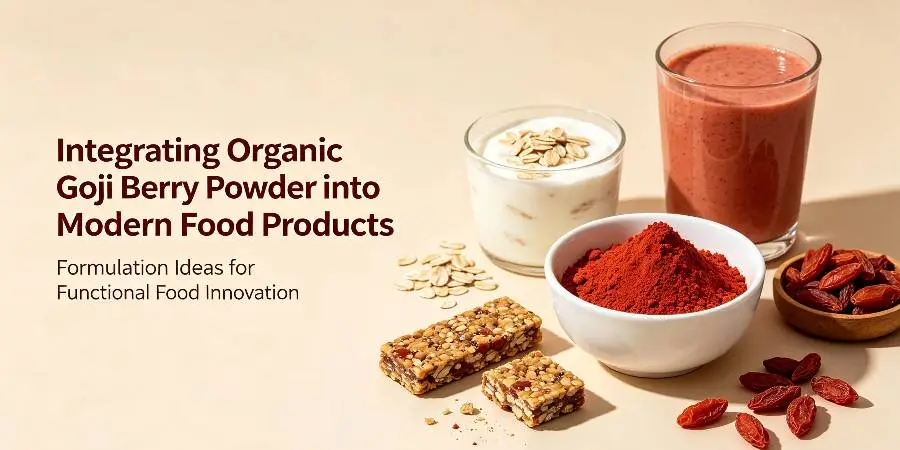
Dietary Supplement Formulations: The powder's natural color and good compression properties make it unnecessary to use manufactured dyes in capsule and pill forms. Serving sizes are typically calibrated to deliver effective polysaccharide levels while maintaining practical capsule counts for consumer compliance. For example, bilberry extract can be used in vision solutions, and ashwagandha can be used in adaptogenic blends. The powder mixes easily with these plants. Its mild sweetness hides bitter ingredients in complex mixtures, making chewables and gummies taste better.
Functional Beverage Development: Specifications that make it water-dispersible allow it to be added to ready-to-drink drinks, protein shakes, and powdered drink mixes. Because fruits are naturally sweet, they don't need as much extra sugar, which helps them stand out as real superfruits. Developers of drinks like the steady color addition that keeps the drinks' appeal over time. When you mix it with other antioxidant sources, you get formulations that work better together and better marketing stories about how they help with overall health.
As an ingredient in snacks and nutrition bars, the powder can be used to make energy bars, granola, and useful snacks healthier and more colorful. It helps textures form because it binds things together, and the fruity notes go well with nuts, seeds, and whole grains. Clean label programs like this ingredient a lot because it can be used instead of fake colors and improve nutritional profiles at the same time. When mixed correctly, the powder can withstand normal baking temperatures and keep working in baked goods.
These different uses show why product developers in many different areas keep adding more certified organic goji powder to their work. The ingredient meets the needs for clean labels, functional benefits, and sensory appeal all at the same time, which are traits of successful modern food products.
Comparing Organic Goji Berry Powder with Alternatives
Organic Versus Conventional Production Standards
Organic and conventional goji powders differ in more ways than just their certification status, and Organic Goji Berry Powder is produced under specific agricultural and processing requirements. Synthetic herbicides are generally prohibited in certified organic farming, so growers of Organic Goji Berry Powder rely on approved ecological and integrated pest management practices, which can require greater agronomic expertise. Instead of synthetic fertilizers, organic cultivation of goji berries can use practices such as cover cropping and composting to support long-term soil fertility. The berries used to produce Organic Goji Berry Powder may therefore have different secondary metabolite profiles depending on cultivation conditions, harvest timing, and processing methods. By selecting properly certified and traceable Organic Goji Berry Powder, manufacturers can better align their products with organic sourcing and quality requirements.
Processing plants that deal with organic materials follow strict separation rules to keep them from mixing with conventional materials. Organic integrity is protected by cleaning, validation, and either specialized equipment or thorough changeover procedures. The certification audit trail goes through every part of the supply chain. This makes the chain more open than usual, which doesn't happen very often in traditional supply chains. This ability to track becomes very useful during quality investigations or events involving pollution.
Different prices represent the fact that organic farming requires more work, costs more to certify, and usually produces less. When doing a procurement analysis, bulk buyers should look at the total cost of ownership instead of just the price per kilogram. Products that are certified as organic usually have higher prices at stores because the ingredients cost more. More and more people are refusing to buy vitamins that aren't organic. This makes the market easier to get into, which makes up for initial price worries.
Benchmarking Against Competing Superfruits
To choose the right ingredients, you need to know how goji powder stacks up against other options like acai and moringa. Because acai berry powder has more anthocyanins, it is better for formulas that want to focus on purple color and special antioxidant placement. But acai's stronger taste makes it less useful in some situations than goji's softer fruit flavor. Moringa powder has a lot of iron and protein, but not as many carotenoids as goji, which makes it a better choice for eye health products.
Patterns of consumer recognition affect how well marketing works. People in both the East and the West know a lot about goji because it has been used in traditional medicine and is a popular superfruit. This acceptance across cultures makes it easier for products to be sold in other countries without having to go through a lot of schooling to educate consumers. Market research indicates significant consumer interest in goji when seeking vision wellness and healthy ageing support. This means that there is a strong natural demand for products that feature this ingredient prominently.
Formulation compatibility is another way to compare things. Because goji powder has a normal pH and no strong reactive chemicals, it can be mixed with sensitive ingredients like enzymes and probiotics. It tastes better because it is naturally sweet, and it doesn't have the astringency that can make some berry powder uses harder. When compared to more exotic fruits with few sourcing options, fruits with a mature supply chain and many qualified suppliers lower procurement risk.
Procurement Guide for Organic Goji Berry Powder: Ensuring Quality and Reliability
Critical Supplier Evaluation Criteria
To choose a skilled seller, you need to carefully look at them from a number of different angles. Verifying the authenticity of the certification is the first step in doing your research. Get current organic certificates and check their validity in databases maintained by the issuing authority. It is expected that suppliers will give facility inspection reports that show they follow GMP and have good quality systems in place. Knowing how much a product can make helps you decide if a potential partner can grow with you and keep things the same.
Testing skills set advanced sellers apart from simple traders. Technical know-how is shown by in-house analytical laboratories that do microbiological testing, spectrophotometric carotenoid analysis, and HPLC polysaccharide quantification. Having third-party tests done by ISO-accredited labs adds to the proof, especially for heavy metals and herbicide residues. Instead of depending on a single specification sheet that might show the best-case situation, ask for multiple batch COAs to check for consistency.
Transparency in the supply chain is now a must for risk management. Suppliers should explain where they get their raw materials, naming specific growing areas and farming cooperatives. Traceability methods that connect finished lots to the original crop batches make it possible to act quickly when there are problems with the quality. Events in the climate, pest outbreaks, and changes in the rules that affect farming areas can all disrupt supplies. For critical formulations, it is smart to have more than one supplier.
Strategic Purchasing Considerations
Purchasing strategy for Organic Goji Berry Powder requires balancing several factors that may compete with one another. Compared with distributor channels, direct relationships with manufacturers of Organic Goji Berry Powder usually offer more competitive pricing and stronger technical support, although minimum order quantities may be difficult to meet during early-stage projects. Distributors provide greater flexibility and faster shipping for smaller orders of Organic Goji Berry Powder, but their additional margins can make the final price less competitive. Online business-to-business (B2B) platforms can make it easier to compare prices and identify potential suppliers of Organic Goji Berry Powder, but buyers should conduct careful due diligence to verify certifications, product specifications, testing documentation, and the actual capabilities claimed by suppliers. A balanced purchasing approach can help businesses secure reliable Organic Goji Berry Powder while controlling costs and supply risks.
Increasing commitments to buy more gives you more negotiating power, but applying strong price pressure may hurt quality. Set clear requirements, such as analytical methods, before asking for quotes to make sure that the bids are comparable. Instead of depending only on specifications, get samples from more than one seller and compare them side-by-side in your real application. Small changes in the way something was processed, the size of the particles, or the amount of water in it can have a big effect on how well it works.
Planning for packaging and operations keeps quality from dropping during shipping. Because the powder absorbs water, it needs to be packed in a way that keeps moisture out. This is usually done with multi-layer foil laminate bags that are flushed with nitrogen. Smaller amounts are better for R&D and test production, while 10–25 kg bulk packaging works well for manufacturing. Harvest rounds change lead times, so forecasting and plans for safety stock are necessary to keep output going.
Future Trends and Opportunities in Organic Goji Berry Powder Applications
Emerging Market Dynamics
People of all ages and income levels are increasingly looking for natural ingredients that can be tracked. Younger consumers put a lot of weight on organic certification and stories about sustainability, seeing these as quality indicators. Because of this change, existing products are being reformulated, and new products are being made that specifically use organic superfruit ingredients. Goji powder is a good choice for brands that want to move away from manufactured chemicals because consumers are skeptical of them. It has a history of being safe and being used for a long time.
Functional food categories are expected to grow quickly, and eye health goods will grow as people around the world spend more time in front of screens. When you combine the benefits of antioxidants, eye health, and a clean label, you get product ideas that are appealing to a lot of different shopping outlets. As more people use nutricosmetic methods to take care of their face, the categories of beauty supplements are also growing. For example, goji's antioxidant compounds and traditional beauty associations back marketing stories.
Changes in regulations in big markets affect how ingredients are used. More and more scrutiny of health claims means that strong proof is needed, which favors ingredients like goji that have a lot of research backing them up. At the same time, the fact that regulators prefer traditional foods to new ingredients makes it easier to get into new markets. Organic certification requirements are getting stricter, which could lower the number of suppliers who meet them while making certified products more competitive.
Strategic Partnership Development
For long-term success, you need to build ties with your suppliers that go beyond just buying things. Working together technically with ingredient makers speeds up innovation when they share their knowledge on formulation and do stability studies that help your specific uses. Co-development of personalized specs, like changing particle sizes or standardizing carotenoid content, makes a difference that can't be found when buying goods in bulk.
Programs for quality assurance should cover how suppliers do business. Beyond just looking at paperwork, audit programs that check farming methods, processing controls, and testing protocols boost trust. The whole supply chain is stronger when people work together to improve quality and fill in any gaps that are found. Clear communication about predictions and changes to specifications helps suppliers plan production well, which cuts down on wait times and boosts service levels.
As the market changes, it rewards quick thinking and knowledge of the ingredients. Companies that learn a lot about how to use organic goji powder in different ways, how to position themselves in the market, and how to build reliable supply partnerships will be able to take advantage of growing functional food markets. When you combine technical differentiation through unique formulations with real organic certification and quality assurance, you can build long-lasting competitive advantages in markets that are getting more and more crowded.
Conclusion
When combined with its functional benefits, clean label compatibility, and authentic superfruit qualities, Organic Goji Berry Powder provides measured value across a wide range of B2B uses. Its nutritional profile, which is high in polysaccharides, carotenoids, and antioxidants, helps with many aspects of health, from eye health to immune health. Processing technology and quality control measures determine how well an ingredient works. This means that choosing a seller is more of a strategic choice than just buying things as they are needed. The ingredient can be used in dietary supplements, functional drinks, and fortified foods. It is also organically certified, which meets the needs of consumers who want more transparency and environmental responsibility. Market trends show that brands that carefully include this ingredient in their product lines will continue to see growth.
FAQ
What specifications should I request when sourcing organic goji berry powder?
Ask for all the necessary paperwork, such as up-to-date organic certificates, a full heavy metal panel, pesticide residue testing, particle size distribution, moisture content below 5%, polysaccharide content standardization, and microbiological specifications. Instead of relying on a single specification sheet, ask for multiple batch COAs to check for consistency. Find out if the amount of carotenoids is tested and standardized. This is especially important if you are making eye health goods where the amount of zeaxanthin is important. Knowing the drying method—air-dried, spray-dried, or freeze-dried—can help you guess how an ingredient will work in your specific situation. Check that the testing methods are in line with standard pharmaceutical methods and not with proprietary methods that haven't been proven to work.
How does organic goji powder perform in beverage applications?
Choosing the right specifications and processing conditions is important for the success of beverage formulation. Water-dispersible grades spread out evenly in liquids, but some settle over time, so it's best to follow the "shake before use" instructions and stir the material up. The natural sweetness of the fruit goes well with protein drinks, and the mild flavor goes well with other botanical ingredients. When the pH is neutral, the color stability is good, but it can change when the pH is very acidic, so you need to test the stability of your formula. Bioactive compounds are usually kept safe during pasteurization as long as temperatures stay below 85°C and exposure times are short. The best results are seen when the powder is hydrated separately before it is added to the end mixture.
What shelf life should I expect from organic goji berry powder?
Organic goji powder that has been properly processed and packaged should keep its quality for 24 months if it is stored in the right way. The powder should be kept in sealed containers that keep out moisture and light, at temperatures below 25°C. Moisture absorption is the main way things break down, causing clumps and possibly allowing microbes to grow, so controlling humidity is very important. Oxidation lowers the amount of carotenoids over time, but this process happens more slowly when oxygen exposure is limited by nitrogen flushing or vacuum packaging. Suppliers should give stable data that shows how polysaccharides, carotenoids, and microbiological factors change over the stated shelf life when stored in a certain way.
Partner with Wellgreen for Premium Organic Goji Berry Powder Supply
Wellgreen Technology has certified Organic Goji Berry Powder that is made according to strict GMP guidelines and is ready to help you with your formulation needs. Our dedicated production facilities make sure that every batch meets USDA and EU organic standards from the time the raw materials are received until they are packaged. For full regulatory trust, we provide thorough scientific documents such as COAs with polysaccharide quantification, carotenoid profiles, heavy metal testing, and microbiological analysis.
As a supplier with a lot of experience in Organic Goji Berry Powder, we can support both small development projects and large-scale production needs with flexible minimum order quantities. Together with your R&D team, our expert team improves recipes by giving stability data and application advice, which speeds up time-to-market. Email our team at wgt@allwellcn.com to talk about your unique needs and ask for samples that show how committed we are to quality. Visit wellgreenherb.com to see our full line of plant extracts and learn how our knowledge of the supply chain can help your business succeed.
References
1. Chang, S. K., & Alasalvar, C. (2016). "Goji berries (Lycium barbarum): Composition, health benefits, and food applications." Trends in Food Science & Technology, 51, 199-213.
2. Amagase, H., & Farnsworth, N. R. (2011). "A review of botanical characteristics, phytochemistry, clinical relevance in efficacy and safety of Lycium barbarum fruit (Goji)." Food Research International, 44(7), 1702-1717.
3. Bucheli, P., Vidal, K., Shen, L., Gu, Z., Zhang, C., Miller, L. E., & Wang, J. (2011). "Goji berry effects on macular characteristics and plasma antioxidant levels." Optometry and Vision Science, 88(2), 257-262.
4. Masci, A., Carradori, S., Casadei, M. A., Paolicelli, P., Petralito, S., Ragno, R., & Cesa, S. (2018). "Lycium barbarum polysaccharides: Extraction, purification, structural characterisation and evidence about hypoglycaemic and hypolipidaemic effects." Food Chemistry, 254, 377-389.
5. Vidović, S. S., Mujić, I. O., Zeković, Z. P., Lepojević, Ž. P., Tumbas, V. T., & Mujić, A. I. (2013). "Antioxidant properties of selected Boletus mushrooms." Food Chemistry, 140(1-2), 558-563.
6. Tang, W. M., Chan, E., Kwok, C. Y., Lee, Y. K., Wu, J. H., Wan, C. W., & Chan, S. W. (2012). "A review of the anticancer and immunomodulatory effects of Lycium barbarum fruit." Inflammopharmacology, 20(6), 307-314.