Oyster Mushroom Extract Powder in Functional Foods
2026-07-13 15:45:24
Oyster mushroom extract powder is a big step forward in the development of functional food ingredients. It gets its bioactive chemicals from Pleurotus ostreatus by extracting and treating them in a special way. This natural ingredient has vitamins, minerals, plant-based protein, carbohydrates, and dietary fiber all in a stable, usable form. As the need for clean labels and plant-based protein alternatives grows around the world, this extract has become a key ingredient for nutraceutical brands, functional beverage makers, and dietary supplement makers looking for high-quality botanical materials that are scientifically supported and fit with changing consumer health priorities.
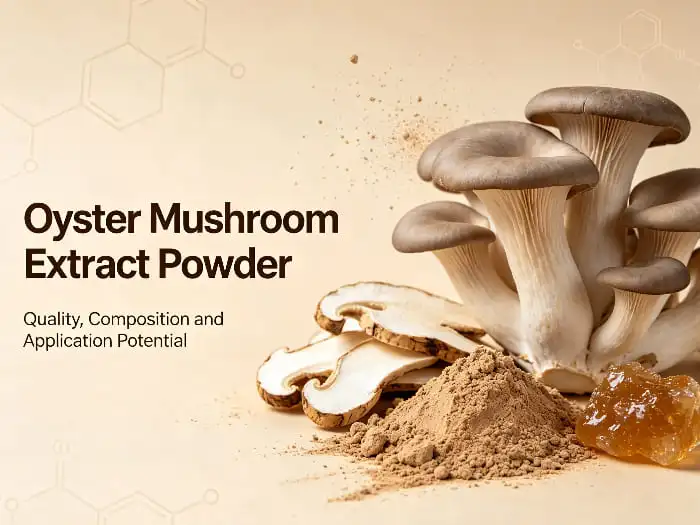
Understanding Oyster Mushroom Extract Powder and Its Functional Role
The first step in the production process is cleaning and grinding fresh oyster mushrooms very carefully to make a natural material that can be used in food. Normal mushroom powders just dry out and grind up whole fruiting bodies. Extraction methods concentrate bioactive components while keeping stability from batch to batch. This difference is very important when making goods that need to have consistent strength and nutritional profiles.
Bioactive Composition and Health Benefits
The product contains many useful chemicals that help with different health issues. Polysaccharides, especially beta-glucans, have been shown to have immune-modulating effects in human studies. This makes them a useful ingredient for making products that help the immune system. The high fiber level helps keep your digestive system healthy and makes you feel full, which makes it a good ingredient for weight loss and gut health products. Because it is made from plants, it meets the growing need for vegan and veggie protein supplements and meal replacement shakes.
Compounds in oyster mushrooms have been shown to be antioxidants, which protect cells from oxidative stress. This research has been reported in nutrition science journals. These results give regulatory managers and product creators the scientific evidence they need to back up promises on labels. Its low-fat and low-calorie profile makes it even more appealing to health-conscious product lines that aim to improve metabolic health and healthy aging.
Practical Application Guidelines
When adding this ingredient to recipes, there are a number of technical factors that affect how well the product works. Particle size has a direct effect on how quickly it dissolves and how it feels in the mouth. Ultra-fine powders work well in drinking systems and capsule formulas, while standard mesh sizes work well in baked goods and protein bars. Working with functional food makers has taught us that the right way to hydrate ingredients keeps them from clumping in liquid uses, and mixing them ahead of time with ingredients that go well together makes taste masking better when it's needed.
The natural umami flavor of the extract gives it a surprising benefit in savory uses. Food technologists have successfully used it as a flavor enhancer in seasoning blends, soup bases, and ready-to-eat meals, reducing reliance on synthetic flavor additives. Formulation teams making goods for North American and European markets, where honesty is key to buying choices, really like this clean-label benefit.
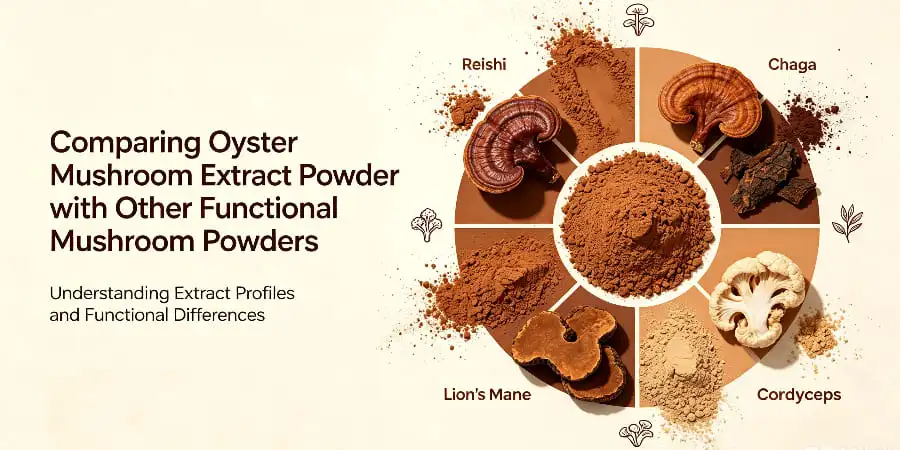
Comparing Oyster Mushroom Extract Powder with Other Functional Mushroom Powders
Procurement teams can make smart decisions about where to get things by knowing how this item is different from other mushroom extracts. There are different bioactive profiles and functional benefits for each species of mushroom, which help with different product marketing tactics.
Oyster Versus Reishi: Functional Distinctions
Reishi mushroom extracts are commonly found in products that help with stress control and sleep. Bioactive triterpenoids in these extracts are thought to have adaptogenic benefits. On the other hand, oyster mushroom products are great for supporting the immune system and adding to food to make it healthier. This is because they are high in protein and fiber, which makes them easier to mix with other ingredients. This makes oyster mushroom extract powder very useful for companies that are making complete health goods instead of vitamins with only one benefit.
A study of the market shows that oyster mushroom ingredients are usually more cost-effective for large-scale useful food uses than high-end specialty mushrooms like Reishi or Lion's Mane. Because it is cheap and doesn't have a strong taste, it's an easy way for brands to start using mushroom-based useful ingredients without turning off customers who aren't used to stronger mushroom flavors.
Powder Versus Liquid Extracts: Manufacturing Considerations
Powder forms are more stable during shipping and storage, and if stored and used properly, they have a longer shelf life. While liquid extracts can help with bioavailability right away in some situations, they can be hard to ship in the cold and work with dry preparation methods. Powder extracts give contract makers who do OEM and private label work more manufacturing options for a wider range of product types, such as pills, tablets, stick packs, and powdered drink mixes.
When choosing powder grades for quick drinks, the water solubility requirements become very important. We offer different particle sizes and levels of solubility to meet the needs of each production process, whether our clients need fast dispersion for cold brew drinks or controlled release for packaging technologies.
Organic Certification Considerations
There are a lot of things to think about when deciding between approved organic and conventional sources. Organic approval sets a high standard and is very popular with North American consumers who are interested in health and natural goods. But traditional choices might offer more stable supply levels and batch access for production plans that involve a lot of units.
Protocols for quality assurance are more important than just having a license. No matter if something is labeled as organic or not, it has to pass strict tests for heavy metals, chemical residues, and microbial contamination to make sure it meets US and EU food-grade requirements. Reliable providers keep clear records, like Certificates of Analysis, microbial testing results, and tracking records, that meet the needs of regulators and quality control teams.
Procurement Guide: How to Source High-Quality Oyster Mushroom Extract Powder?
To do strategic sourcing, you need to know the technical specs, source skills, and quality standards that set premium materials apart from commodity-grade goods. Through talking to procurement leaders and quality assurance managers in the functional and nutraceutical food sectors, we've learned about the most important factors for evaluation.
Defining Technical Requirements
When predicting volumes, it's important to take into account both current production needs and projects to build pipelines. Different suppliers have different minimum order numbers (MOQs). Finding makers with flexible MOQs can help with both trial runs and large-scale production. What kind of certification is needed depends on the market and method of sale. GMP certification makes sure that manufacturing follows quality methods for pharmaceuticals, and ISO certification shows that quality management is done in a planned way.
The product specs should include information about the amount of active compounds, the particle sizes, the extraction ratios, and the solubility factors. Specifications for moisture level in vitamin capsules keep the capsules stable during encapsulation. To keep the stability of the product from batch to batch, beverage apps need to pay close attention to color consistency and taste intensity.
Evaluating Supplier Capabilities
Recent problems with global transport have made supply chain robustness very important. Suppliers who have a variety of cultivation sources and stock backups can keep shipping plans stable even when demand and seasons change. Private labeling adds value for brands that outsource final packaging because it lets them get complete solutions from raw materials to finished goods.
Track records that can be checked are part of evaluating a person's reputation, not just marketing promises. Operational trustworthiness can be judged by looking at references from people in the same industry, audit records from a third party, and relationships with current clients. It's important to have technical support during recipe development. Suppliers with in-house R&D teams can help with stability testing, compatibility studies, and application debugging, all of which speed up the time it takes to get a product on the market.
Cost Optimization Strategies
Pricing depends on a lot of things, like the type of extraction used, the state of the certification, the number of orders, and the way the products are packaged. By understanding these factors, you can come up with negotiation tactics that combine quality control with keeping costs low. Long-term supply deals usually get better terms and make sure that supplies are distributed when the market is tight. You can get bulk savings without having to pay too much for inventory by combining orders for multiple SKUs or working out your purchases with manufacturing partners.
Quality should never be sacrificed to save a little money. There is a much higher chance of adulteration at the lowest price levels, where economic pressure encourages replacement or dilution. Working with trusted suppliers who put testing and openness first saves you money on quality control costs, keeps your brand's image safe, and reduces batch rejects.
Trends and Future Outlook of Oyster Mushroom Extract Powder in Functional Foods
Mushroom-based functional ingredients are becoming more popular because of a number of market trends that are coming together and new technologies that are changing how ingredients are made and how they can be used.
Consumer-Driven Market Expansion
There are more than just meat options in the plant-based movement. It includes whole nutrition theories. More and more, people are looking for protein sources that offer useful benefits in addition to their basic macronutrient value. This mix is found in oyster mushroom extract powder, which gives you plant-based protein, immune-boosting chemicals, and prebiotic fiber that supports overall health stories.
Priorities for clean labels have changed how ingredients are chosen. Products with natural ingredients that have been treated as little as possible work better than those with man-made chemicals and parts. This desire is perfectly met by natural mushroom extracts, which work without any chemical changes or artificial processing aids. When brands use these products, their ingredient lists are simplified, which makes customers more likely to believe the brand and buy it.
Innovation in Extraction Technologies
Improvements in the ways that beneficial compounds are extracted increase the yield and keep the compounds intact. Modern processing methods improve the extraction of polysaccharides while keeping the purity of the proteins and keeping the flavors bland. These changes make it possible to use mushrooms in more situations and in sensitive mixtures that weren't able to use regular mushroom parts before. Mushroom products can now be added to heat-sensitive probiotic mixes, fizzy tablets, and clear beverage systems without any technical problems.
Sustainability concerns are becoming more and more important when choosing where to get ingredients. Compared to conventional farming, growing mushrooms needs much less space, water, and energy, which is very good for the earth. Using agricultural waste streams for farming makes circular economy models that brands that care about the environment like. When procurement teams look at supplier ties, they should look at sustainable practices as a way to set a company apart from competitors and improve brand positioning and relationships with stakeholders.
Regulatory Landscape Evolution
Regulatory rules for functional food ingredients are still changing, especially when it comes to marking and proving health claims. Suppliers who are proactive spend money on clinical study and scientific paperwork to back up the benefits of their ingredients. This gives partners strong claim support. To keep up with changes in regulations, you need to work together with sellers who keep an eye on global standards and make sure you're following the rules in many places.
Expectations of transparency go all the way through supply lines. Blockchain tracking systems and digital documents platforms make it possible to check where data comes from, how it's processed, and how it works in real time. These technologies meet the needs of consumers who want authenticity while also meeting government standards for food safety documents. Using these verification systems in procurement methods lowers risks and boosts brand trustworthiness.
Quality Assurance and Risk Management in Oyster Mushroom Extract Powder Procurement
To keep a product's identity, quality checks and reducing supply chain risks need to be done in a planned way. Common weaknesses in getting botanical ingredients need strategic management methods.
Authenticity and Quality Verification
Misidentifying species and purposely switching species pose big risks in mushroom products. Analytical testing is necessary because visual inspection alone is not a reliable way to tell the difference between powdered materials. DNA barcoding, microscopic research, and chemical fingerprinting are all ways to check the name of an ingredient. Heavy metal screening (for example, lead, cadmium, mercury, and arsenic), pesticide residue analysis, and microbial pollution assessment (for example, yeast, mold, and pathogen identification) should all be part of full testing panels.
Each batch must have a Certificate of Analysis that lists the test results and how they compare to the standards that have been set. Adding third-party verification testing to new materials is an important quality control step that goes beyond accepting paperwork from the seller. This investment stops problems that cost a lot of money later on, like recalling batches, breaking the law, and damaging the brand.
Supply Chain Risk Mitigation
Geographic concentration makes areas more vulnerable to problems in other areas. When weather events, changes in regulations, or organizational problems affect certain areas, suppliers with different sourcing places can keep things running smoothly. Cost-effectiveness and the need for backup stock to keep production plans safe during supply interruptions should be balanced in inventory management strategies.
When it comes to customs and import compliance, it's important to pay attention to the accuracy of paperwork, tax classifications, and the rules that apply to the final market. Experienced providers can handle these problems quickly and easily, but buyers should check for themselves that compliance is met. Realistic wait times for things like production, quality testing, shipping, and clearing customs keep planners from making mistakes that stop factory operations.
Building Sustainable Supplier Relationships
Transactional buying doesn't work as well as long-term friendships based on openness and shared responsibility. Regular contact about expected demand, design needs, and quality standards helps providers make the best use of their resources and give priority to partners they can trust. Scheduled facility audits, which can be done by the company itself or by outside inspectors, make sure that quality systems and production processes are working properly while also helping the company understand how things work better.
Performance measures should keep track of how often deliveries are made on time, how well specifications are followed, how accurate paperwork is, and how quickly questions or problems are answered. These measures find ways to make things better and help with deciding which suppliers to evaluate. Collaboration in fixing problems makes relationships stronger while dealing with the problems that always come up in global supply chains that are very complicated.
Conclusion
Oyster mushroom extract powder has proven to be a useful and scientifically proven ingredient that can be used in a wide range of functional food and nutritional products. Because it has beneficial carbohydrates, plant-based protein, dietary fiber, and a clean label, it fits well with market trends that are growing. When you do strategic buying, you need to pay close attention to quality checks, the skills of the suppliers, and technical standards that make sure all product formulations work the same way. The market for this ingredient is still going strong, thanks to people's desire for natural health solutions and the fact that extraction methods and application development are always getting better.
FAQ
What dosage ranges work effectively in functional food formulations?
The usual participation rates depend on the use and the useful benefits that are wanted. Dietary products that claim to help the immune system usually have 500 to 2000 mg per dose. In functional drinks and protein shakes, they might make up 1 to 5 percent of the total formulation weight. This is done by combining the functional benefits with cost and taste concerns. Dosing should be based on the health benefits that are wanted and the scientific research that backs up promises of effectiveness.
How can I identify high-quality oyster mushroom extract powder?
Some signs of quality are thorough testing records from a third party, clear extraction ratio standards, and clear information on where the product came from. Premium materials have uniform grain sizes, the right amount of wetness (usually less than 8%), a neutral color, and no unpleasant smells. Suppliers should show that their products meet food-grade standards by giving thorough Certificates of Analysis, bacteria testing results, and heavy metal screening reports.
Are there safety concerns or potential side effects?
Oyster mushroom extract powder has a generally good safety profile, with few known side effects in scientific journals. People who are allergic to mushrooms should be careful. If you have a specific health problem or are taking medicine that interacts with this ingredient, you should talk to a doctor or nurse first. Safety tests are done on high-quality goods from reliable sources to make sure they are free of contaminants and meet government standards for possible contaminants.
Partner with Wellgreen for Premium Oyster Mushroom Extract Powder Supply
As a specialized plant extract powder producer, Wellgreen Technology's goal is to provide high-quality organic ingredients for nutraceutical and functional food uses. Our GMP-certified production sites keep strict quality standards during the whole process of growing, extracting, and processing. We offer a range of specifications, such as standard powder, ultra-fine grades, and approved organic types that can be used in a wide range of formulations.
Our wide range of services supports OEM, ODM, and private label partnerships, and our minimum order amounts are flexible enough to fit both product creation and large-scale production. Each batch goes through a lot of tests to look for pesticide residues, heavy metals, microbial contamination, and active ingredient proof. There is full paperwork, such as a COA and microbial reports. Our expert team helps clients with formulation development, making sure that ingredients work well together and the result works well.
We guarantee reliable shipping schedules that support your production timelines by keeping a lot of goods on hand and having established supply chain networks. Wellgreen has become a reliable provider of oyster mushroom extract powder for brands that care about ingredient integrity and operating dependability because we are dedicated to being open, providing the best quality products, and working together with our customers. Email our team at wgt@allwellcn.com to talk about your unique needs, ask for samples, or find out how our services fit in with your product development goals.
References
Chen, J., & Seviour, R. (2007). Medicinal importance of fungal beta-(1→3), (1→6)-glucans. Mycological Research, 111(6), 635-652.
Patel, Y., Naraian, R., & Singh, V. K. (2012). Medicinal properties of Pleurotus species (oyster mushroom): A review. World Journal of Fungal and Plant Biology, 3(1), 1-12.
Ruthes, A. C., Smiderle, F. R., & Iacomini, M. (2015). Mushroom heteropolysaccharides: A review on their sources, structure and biological effects. Carbohydrate Polymers, 130, 180-193.
Valverde, M. E., Hernández-Pérez, T., & Paredes-López, O. (2015). Edible mushrooms: Improving human health and promoting quality life. International Journal of Microbiology, 2015, 376387.
Wasser, S. P. (2014). Medicinal mushroom science: Current perspectives, advances, evidences, and challenges. Biomedical Journal, 37(6), 345-356.
Zhang, Y., Mills, G. L., & Nair, M. G. (2002). Cyclooxygenase inhibitory and antioxidant compounds from the mycelia of the edible mushroom Grifola frondosa. Journal of Agricultural and Food Chemistry, 50(26), 7581-7585.