
Shilajit Extract Provides Natural Sourcing Options for Manufacturers
2026-09-15 14:29:54
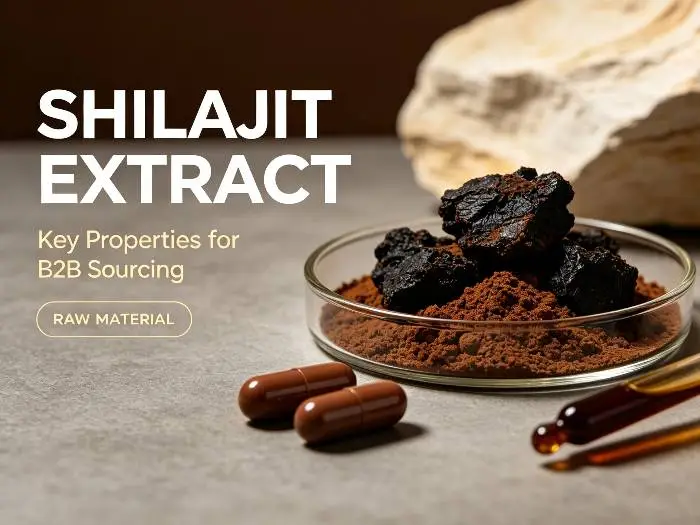
Manufacturers across the nutraceutical, pharmaceutical, and functional food sectors are increasingly turning to Shilajit extract as a reliable, science-backed ingredient. Sourced from high-altitude mountain regions including the Himalayas and Altai, this mineral-organic exudate delivers standardized Fulvic Acid content alongside humic acid and over 80 trace ionic minerals. For B2B procurement teams, the appeal goes beyond traditional herbal supplements — it lies in consistent assay levels, verifiable sourcing, and adaptable formats that support large-scale formulation across capsules, powders, and functional blends.
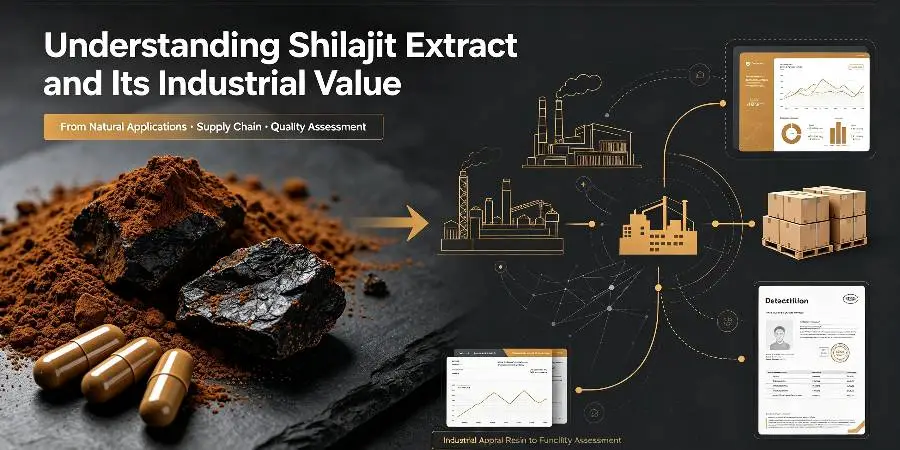
Understanding Shilajit Extract and Its Industrial Value
What Makes This Mineral-Organic Exudate Unique?
As most people know, Shilajit Extract is not a plant extract. Over many centuries, it is made when organic plant matter slowly breaks down under the pressure of high-altitude rock layers, creating a thick, bioactive complex. Fulvic Acid, Humic Acid, and Dibenzo-alpha-pyrones (DBPs) are its main active ingredients. They play important roles in mineral movement, antioxidant defense, and cellular energy production. A 2019 study in the Journal of Ethnopharmacology revealed that standardized Fulvic Acid fractions from Himalayan Shilajit showed strong mitochondrial support activity. This supports the use of Fulvic Acid in energy and health products.
The industry value for makers is based on two things: biological potency and formulation flexibility. The extract works well in sports nutrition, brain health mixes, anti-aging skin care ingredients, and general health supplements. It works well with other plant-based ingredients like ginseng, ashwagandha, and adaptogenic mixes. This makes it easy to add to complicated mixtures without changing their stability profiles.
Comparing Sourcing Options for Shilajit Extract in B2B Procurement
Natural vs. Processed Forms: What Procurement Teams Need to Know?
Even though it is real, raw Shilajit Extract resin is hard to work with on a large scale. It's not good for direct use in production because of its viscosity, irregular strength, microbial load, and heavy metal contamination from volcanic soils. These problems can be fixed by using purified extract powder that has been extracted using either water or hydro-ethanol. This powder separates the key active ingredients and gets rid of any artificial soil contaminants.
Purchasing managers should look at their sourcing options in light of the following factors:
- Standardized powder (for example, 50% Fulvic Acid): The best way to make capsules and tablets. Free-flowing, easy to measure, and safe while stored as long as the moisture level stays below 5%. This is Wellgreen's main requirement, and it's also the style that supplement brands ask for the most.
- Resin format: This is preferred by brands that want to highlight the raw reality of their functional drinks or high-end vitamins that are based on resin. Needs more handling equipment, but it supports a "whole-food" positioning.
- OEM finished capsules: Good for private-label brands that want a full, market-ready product but don't have the ability to encapsulate their own products.
Shilajit is different from adaptogens like ashwagandha or rhodiola because it has a mineral framework instead of just organic acid content. There is no other single-source nutrient that comes in a normal powder form that has both Fulvic Acid and ionic minerals in the same profile. That level of detail is important for product developers who are making formulas that are different.
Evaluating and Selecting Reliable Shilajit Extract Suppliers
Key Criteria That Determine Supplier Quality
To find the right supplier for Shilajit Extract, you need to look at more than just basic certifications. When doing supplier audits, B2B buyers, especially QA leaders and regulatory managers, should put these things at the top of their lists:
- Heavy metal testing: Lead, arsenic, mercury, and cadmium must be analyzed by ICP-MS. There is a natural risk of pollution from geological layers in Himalayan mineral exudates. Suppliers who are following the rules give Certificates of Analysis (CoA) that show amounts that are below the EFSA and Prop 65 limits.
- PAHs and environmental pollutants: Polycyclic aromatic hydrocarbons are a particular problem in carbonaceous mineral materials. Each batch is tested against EU or USP limits by suppliers you can trust.
- Microbiology compliance: Total Plate Count, Yeast/Mold, E. coli, and Salmonella screening make sure that the material is cGMP-grade, which is especially important for oral drug forms.
- Batch consistency documentation: Purchasing leaders who are in charge of long-term supply relationships need to see proof of stable Fulvic Acid assays from batch to batch, not just one CoA.
- Certifications: Organic, GMP, ISO 9001, and HACCP certifications show that the infrastructure and process are mature. Third-party checks are an independent way to confirm quality claims that are made by the company itself.
Wellgreen Technology uses a GMP-certified factory and allows full tracking from where the raw materials come from to the finished Shilajit Extract. Wellgreen is set up to meet the needs of nutraceutical brands and pharmaceutical clients who need a steady supply with no lead-time breaks. They do this by keeping a lot of goods on hand and delivering quickly.
Best Practices for Integrating Shilajit Extract into Your Product Line
Formulation Considerations Across Dosage Categories
When adding a mineral-organic complex to a finished product, it's important to pay close attention to label compliance, dose accuracy, and compatibility. According to clinical research, the recommended daily dose for energy and brain functions is usually between 200 and 500 mg of a standardized Shilajit Extract. However, formulation teams should make sure that the amounts they use are in line with what they say they can do.
Here are the main things that product makers should think about when integrating their products:
- Assay matching: Once you've mixed Fulvic Acid with other active ingredients, make sure that the Fulvic Acid assay (for example, 50%) matches the planned active load for the whole recipe. Wellgreen offers custom specs ranging from 10% to 60% Fulvic Acid. This lets brands get the exact amount of potency they want without having to change their formulas to fit a set specification.
- Compatibility profiling: The chelating qualities of Fulvic Acid can affect how minerals or fat-soluble ingredients work together. Before deciding on the final blend ratios, formulation teams should do a compatibility screening.
- Label and regulatory alignment: In the US market, Shilajit-based products must follow FDA 21 CFR Part 111 (cGMP for dietary supplements) and make accurate claims about their structure and function. Avoid using wording about effectiveness that sounds like a drug claim without any proof.
All of these things lower the number of times a formula needs to be changed and protect the reputation of the brand. When brands work with suppliers that offer more than just raw materials, they tend to get their products to market faster and with fewer problems with compliance.
Future Trends and Opportunities with Shilajit Extract Sourcing
More and more people want bioactives that can be tracked and come from sustainable sources. Grand View Research predicts that the global market for nutraceutical ingredients will reach $91.1 billion by 2027. Mineral-organic complexes are becoming more popular in high-end wellness categories. In this environment, high-assay Fulvic Acid Shilajit Extract is moving from being a niche adaptogen to being used in many energy and longevity products.
New developments in low-temperature extraction and nano-dispersion technologies are making active parts more bioavailable. This means that they can be used in functional drinks and skin serums that dissolve in water. Vegan approval is also becoming more important as people and brands look for ingredients that come from plants or minerals that fit with lifestyle labels. As regulators around the world become stricter on the accuracy of natural ingredients, suppliers who invest in licensing infrastructure now will have an edge in the market.
Conclusion
Shilajit Extract is one of a kind when it comes to natural bioactive ingredients. Its mineral-organic makeup, regular Fulvic Acid level, and wide range of uses make it a key ingredient for companies making science-based product lines. For buying teams, the choice comes down to a provider that can consistently deliver in bulk, source information that can be checked, and quality controls that can be written down. When those conditions are met, this ingredient really adds value to supplements, useful foods, and personal care products.
FAQ
How is Fulvic Acid content verified in bulk Shilajit extract?
HPLC analysis is used by reliable suppliers to check the levels of Fulvic Acid in the assay. This method tells the difference between real Fulvic Acid and synthetic organic acid adulterants, which are sometimes used to make test results look better than they really are. Always ask for HPLC-validated CoAs along with proof from a third-party lab.
What heavy metal standards apply to US-market Shilajit products?
Prop 65 limits the amount of lead, arsenic, cadmium, and mercury that can be in products sold in California. On a national level, the USP and NSF boundaries serve as guides. Instead of just using their own testing, suppliers should show ICP-MS test reports from approved third-party labs.
What forms are available for bulk B2B orders?
Standardized powder (usually 50% Fulvic Acid), resin format, and OEM finished capsules are the main types that can be bought in large quantities. Wellgreen can make unique Fulvic Acid specifications from 10% to 60%, based on the needs of the product.
Can this extract be combined with other botanical actives?
Yes. You can mix it well with amino acids, adaptogens, and mineral complexes. Before going into mass production, compatibility testing should be done to make sure the product is stable and to keep it from reacting with chelation-sensitive ingredients by accident.
Source Quality Ingredients from a Certified Shilajit Extract Manufacturer
Wellgreen Technology delivers standardized Shilajit Extract powder with verified Fulvic Acid assay (50% standard; 10%–60% customizable), full heavy metal and PAH testing documentation, and GMP-certified manufacturing. Whether you need bulk powder, resin format, or OEM capsule solutions, our team supports your sourcing from specification to delivery. Connect with us at wgt@allwellcn.com or visit wellgreenherb.com to request a catalog or sample inquiry today.
References
1. Agarwal, S. P., et al. — Journal of Ethnopharmacology, 2007.
2. Bhattacharyya, S., et al. — Phytotherapy Research, 2009.
3. Stohs, S. J. — Journal of Medicinal Food, 2014.
4. Grand View Research — Nutraceutical Ingredients Market Report, 2023.
5. European Food Safety Authority (EFSA) — Scientific Opinion on Safety of Shilajit, 2021.
6. Carrasco-Gallardo, C., et al. — Evidence-Based Complementary and Alternative Medicine, 2012.