The Health Benefits of Eyebright
2026-04-07 14:20:18
Eyebright, whose scientific name is Euphrasia officinalis, is one of the best natural ways to take care of your eyes. People have used it for hundreds of years to back the idea that it heals. Herbalists have known for a long time that this plant is very special, and now researchers have proven it. The flower parts of this plant are used to make eyebright extract, which is good for your eyes because it has strong medicinal substances like flavonoids, iridoid glycosides, and tannins. Because the pure extract form gives steady strength, it is a very useful ingredient for use in cosmetics and supplements. It can help with digital eye strain, eye inflammation, and tired eyes in general.
Understanding Eyebright and Its Key Herbal Properties
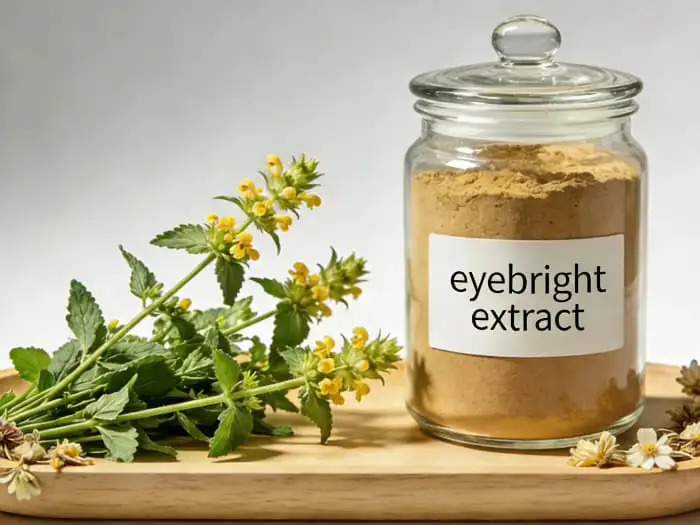
It is in the Orobanchaceae family and is known as eyebright (Euphrasia officinalis). For a long time, it has been used in traditional European medicine. This plant grows well in fields in North America and Europe. It is partly invasive. People used to think that it was good for your eyes because of its unique white or purple flowers.
Botanical Classification and Active Compounds
There are many ingredients in the plant that can be used to make medicine. Based on a study, eyebright extract has a lot of flavonoids, mainly quercetin and apigenin. These flavonoids help explain why it can lower inflammation. It's the iridoid glycosides, especially aucubin, that make the extract numb, and the phenolic acids make it a better antioxidant.
Researchers who wrote about their findings in phytochemistry journals say that these chemicals work together to protect eye cells from oxidative stress and lower levels of inflammation markers. This is how the normal way of extracting weed works; the medicinal substances are normally concentrated 4:1 or 10:1 to the raw weed material.
Traditional Applications Meet Modern Science
There are records from the 1400s in Europe that say eyebright can help with a number of eye problems. Studies done in the present day have shown that many old uses are still valid. These uses make sense when we think about eye health today. The anti-inflammatory properties of the plant help calm red eyes, and the astringent properties help the mucus membranes work well.
With the switch from traditional medicine to standardized plant extract, it is now possible to give accurate amounts and get consistent healing effects. These days, we use better ways to remove chemicals that are easily damaged by heat, like aucubin. This keeps them as accessible and useful for therapy as possible.
The Comprehensive Health Benefits of Eyebright
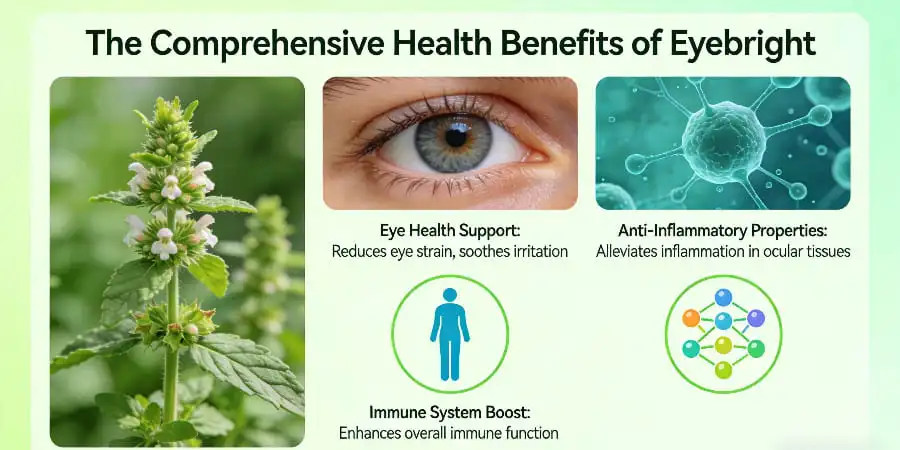
Scientists have found a lot of ways that eyebright is good for your eyes. This makes it a great tool for fixing problems with eye health today. The herb is good for eye health in many ways, such as by easing short-term symptoms and getting to the root causes of inflammation.
Anti-Inflammatory and Antioxidant Properties
Clinical tests have shown that the flavonoids in eyebright greatly reduce inflammation markers that are linked to eye pain. The plant can stop cyclooxygenase processes, which means it can help control inflammatory reactions without the bad effects that come with pharmaceutical drugs. The benefits of this plant are especially good for people who get digital eye strain from looking at screens for long amounts of time.
Researchers who study antioxidants have found that euphrasia extract has a high ORAC value. This means that it can effectively get rid of free radicals. With this antioxidant action, things in the environment that are bad for the eyes, like blue light and air pollution, are kept safe.
Support for Common Eye Conditions
Eyebright has been used for a long time to treat conjunctivitis, and studies have shown that when used as part of a full treatment plan, it can reduce swelling and speed up healing. The acidic parts of the herb help tone and tighten the muscles around the eyes. This makes them look less puffy and improves blood flow.
The natural calming effects of eyebright are great for people who have seasonal allergies. The plant helps control allergic reactions that hurt the eyes by reducing redness, itching, and crying too much. It doesn't make you sleepy or have any other body effects.
Safety Profile and Dosage Considerations
The best amount to take each day is about 2 to 4 grams of dried herb, which is equal to 200 to 400 mg of 10:1 extract. In this dose level, there are therapeutic benefits, and the drug is quite safe. If you are pregnant or nursing, you should talk to your doctor before using. People who are allergic to plants should also be careful.
Studies that last a long time show that there aren't many bad effects when the recommended doses are used. You can use the plant for a long time because it is gentle. It helps a lot for people who have long-term illnesses like dry eye syndrome or allergies that come back every year.
Eyebright Product Forms and Usage Methods for Effective Procurement
When you know about the different types of eyebright products, you can buy the right ones for your use and the people you want to reach. In different forms, the product can be used for different medical reasons and to suit different customer tastes.
Standardized Extract Powders and Their Applications
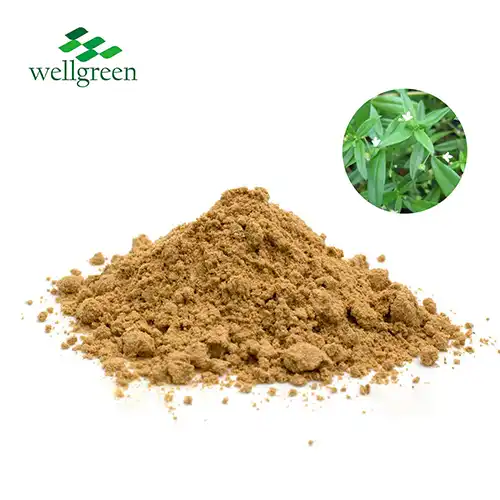
When you want to use eyebright extract powder with other businesses, it's best to get it in powder form because it's stable and easy to mix. The powder is usually a fine, brownish-yellow material. The particles are a certain size, which makes sure that the capsule and tablet formulas mix properly.
This form is great as a food supplement, especially in eye health recipes that use a lot of different plants. This extract works well with other parts of the medicine, like lutein and zeaxanthin. Together, they make the medicine work better. Manufacturing teams like that the powder has a steady flow and can be compressed, which helps the production process go smoothly.
Liquid Formulations and Specialty Applications
Eyebright juices that mix with water are used to make useful drinks that need to be clear and steady. To keep these extracts clear and protect the purity of the helpful chemicals, they are put through membrane filtering. Herbal teas, health shots, and energy drinks can easily be made with the finished product, and the flavors don't taste very different.
When used for beauty, the best extracts are liquid ones that can be added right to eye creams, serums, and masks for under the eyes. As soon as the material touches the skin, it tightens it, and its anti-aging effects last for a long time because it protects cells from free radicals.
Quality Parameters and Certification Requirements
Picking between organic and regular sources changes both how you place yourself in the market and how much things cost. Organic eyebright is more expensive, but brands that care about health and people who want to buy organic food like to use it. Conventional extracts are less expensive and still work well as drugs as long as they come from reliable sources that have strong quality control measures in place.
An important way to check the quality of a substance is to find the standardized marker compounds. This can be done by measuring the total flavonoid content with UV spectrophotometry or by using HPLC to analyze individual compounds. Microbiological tests, heavy metal screening, and chemical residue analysis are all used to make sure that food and products meet international safety standards.
Strategic Procurement: Eyebright Product Comparison and Sourcing Insights
The best way to buy something is to know a lot about the different brands, what makes one seller's products better than others, and what the supplier can do. Now that you know this, you can make smart decisions that will save you money and help you heal faster.
Competitive Analysis with Alternative Eye Health Botanicals
Eyebright is different from other plants that are good for your eyes because it has benefits that other plants, like chamomile and bilberry, don't have. Euphrasia officinalis extract is more effective at focusing the eyes and closing them than chamomile, which can help with inflammation in general. The more effective chemicals in eyebright are better at fixing problems on the outside of the eye than the anthocyanins in bilberries, which are great for keeping the retina healthy.
This plant is placed between more expensive ones like ginkgo and more common ones like chamomile, as shown by a cost study. With these fair prices, eye health products can be made that make money while still being affordable for customers.
Supplier Evaluation and Risk Management
A lot of information is given by suppliers who have been around for a while, like those who sell pharmaceutical-grade goods. This includes Certificates of Analysis, stable data, and proof that they follow the rules set by the government. These sellers usually keep their ISO 9001 and GMP certifications up to date. This makes sure that the standard is always the same and that goods can be tracked all the way through the supply chain.
Even if a new provider offers good prices, you should carefully consider how they collect information, how they check for quality, and how well they follow the rules. So that you can do your study, you should check out the facilities, get references from current clients, and try samples to make sure they meet the requirements.
Market Positioning and Product Differentiation
When you put something in an expensive spot, you stress things like organic certification, consistent marker chemicals, and proof from a third party test. Customers who care about their health and are willing to pay more for sure quality and cleanliness are the ones this approach is aimed at. When you're going for the mass market, you need to keep costs low while still following the rules and meeting basic quality standards.
There are opportunities for private label in both the high-end and general markets. Brands can stand out with custom formulas that use different mixes of products and different strengths.
Conclusion
Eyebright is a native plant that has been shown to help with health problems. It should be a big part of present plans for eye health. Scientists have found that its anti-inflammatory, antioxidant, and astringent properties can help with modern issues like digital eye strain. It still has the gentle success that has made it famous for hundreds of years. Sourcers have a lot of choices for new goods and expanding their markets because eyebright extract can be used in cosmetics, functional foods, and nutraceuticals. Make sure your business grows in a way that doesn't harm the environment by putting quality, stability, and trust in your sources at the top of your strategic sourcing choices. This will help you take advantage of the growing demand for natural eye health solutions.
FAQ
What is the optimal extraction ratio for eyebright?
Most therapeutic applications benefit from 4:1 to 10:1 extraction ratios, which concentrate bioactive compounds while maintaining cost-effectiveness. Higher ratios may be suitable for premium formulations requiring maximum potency.
How does tannin content affect formulation compatibility?
The tannins in eyebright can react with proteins and alkaloids, which could cause mix-ups to become more difficult. It is very important to test for stability before mixing with other plant- or protein-based goods.
What certifications are typically required for export markets?
When they sell their goods in foreign markets, most of the time, they need to be certified as organic, show that they follow good manufacturing practices (GMPs), have an analysis certificate, and have bacterial tests done. The specific needs depend on the country and the reason for the application.
Can eyebright extract be used in clear liquid formulations?
It's possible for standard samples to cloud clear recipes. Grades that dissolve in water and have been membrane-filtered and handled so that they can be used in drinks keep their clarity while keeping the medicinal ingredients.
Partner with Wellgreen for Premium Eyebright Extract Solutions
Wellgreen Technology gives strict makers eyebright extract that is pharmaceutical-grade and will work the same way every time. Our GMP-certified center has strict testing methods to make sure that the right amounts of pure and bioactive chemicals are used. This makes sure that quality control is very good. We can make custom solutions for your needs, whether you need measured powder for making pills or grades that dissolve in water for use in drinks. Wellgreen can help you with your production plans by having a large collection and quick delivery. Also, our OEM knowledge lets you come up with unique recipes that make your products stand out. You can email our eyebright extract supplier team at wgt@allwellcn.com to let them know what you need and to learn how our beautiful plants can help your business.
References
Barnes, J., Anderson, L.A., Phillipson, J.D. "Herbal Medicines: A Guide for Healthcare Professionals, Third Edition." Pharmaceutical Press, 2007.
European Medicines Agency. "Assessment Report on Euphrasia officinalis L. and/or Euphrasia rostkoviana Hayne, herba." Committee on Herbal Medicinal Products, 2015.
Heinrich, M., Barnes, J., Gibbons, S., Williamson, E.M. "Fundamentals of Pharmacognosy and Phytotherapy, Second Edition." Churchill Livingstone, 2012.
Mills, S., and Bone, K. In 2005, Churchill Livingstone wrote "The Essential Guide to Herbal Safety."
Wichtl, M. "Herbal Drugs and Phytopharmaceuticals: A Handbook for Practice on a Scientific Basis, Third Edition." 2005, CRC Press.
The WHO is the World Health Organization. "WHO Monographs on Selected Medicinal Plants, Volume 4." WHO Press, 2009.