What are the Common Certifications for Quality Apple Powder?
2026-03-20 13:59:00
When looking for apple powder to use in production, business-to-business buyers have to deal with a lot of different quality standards that make sure the product is safe, consistent, and follows all the rules. Food safety standards like HACCP and ISO 22000, as well as specialty certifications like Kosher, Halal, and Non-GMO proof, are some of the most common types of certifications. Others are FDA registration and GMP (Good Manufacturing Practice). These credentials are important quality indicators that protect both producers and end customers and make foreign trade run more smoothly.
Understanding the Importance of Certifications in Apple Powder Procurement
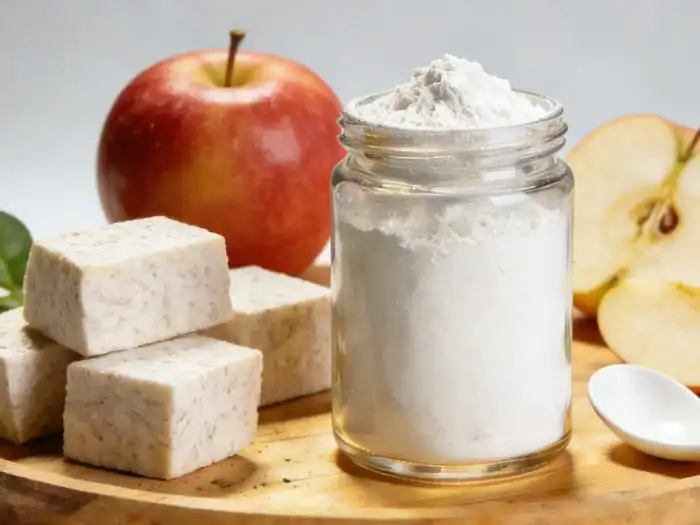
In the global market we live in now, licenses are the most important way for purchasing managers and product creators in the pharmaceutical, nutraceutical, and functional food businesses to make sure the quality of the products they buy. When looking at different sources, certificates show that the ways they make things meet international standards for safety, purity, and being able to be tracked.
There are many problems in the buying world that certifications help solve. Variability in raw materials is still a problem, since apple sources can have very different phytonutrient profiles, wetness levels, and contamination risks. Different sellers also use very different processing methods, which affects how well the end product dissolves, how long it lasts on the shelf, and how well bioactive compounds stay in it. Regional differences in regulations make things even more complicated, especially for businesses that operate in more than one market and have to follow rules that may clash or overlap.
Tough certification standards make the whole supply chain clear, so buyers can follow goods from the farm to the final packing. This ability to be tracked is very important when dealing with worries about consumer safety or regulatory questions. Another important benefit is that the quality is always the same because authorized sellers usually follow standard procedures that keep changes in taste, color, and nutritional content to a minimum from batch to batch.
Protecting a brand's image may be the most important long-term benefit of getting certified. In a time when product recalls can wipe out businesses overnight, approved sellers add another layer of protection against risk. Maintaining a license requires a lot of paperwork and quality control systems. These make sure that people are held accountable, which lowers the chance of contamination or quality problems that could hurt the brand's reputation.
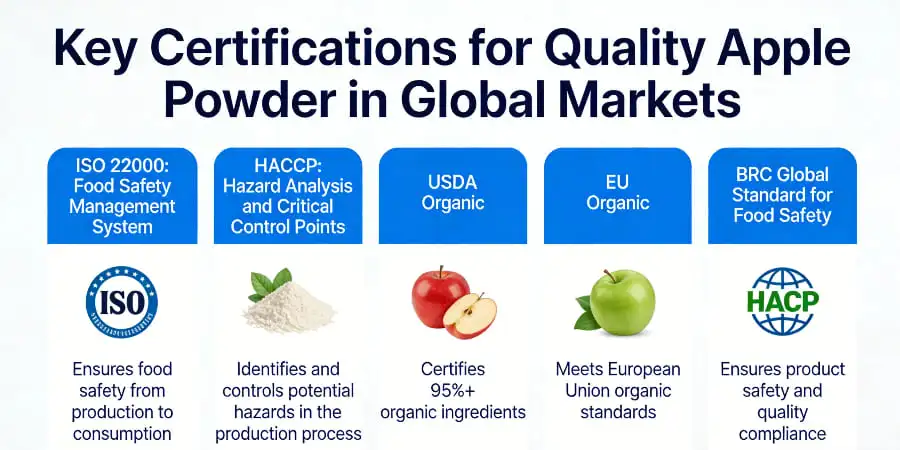
Key Certifications for Quality Apple Powder in Global Markets
There are several important types of certification for fruit powder ingredients, and each one covers a different part of product quality and legal compliance. Knowing about these groups helps buying teams come up with complete guidelines for evaluating suppliers.
Food Safety and Manufacturing Standards
Food safety approvals are the basis for all choices about where to get ingredients. HACCP (Hazard Analysis and Critical Control Points) approval shows that sellers have put in place organized ways to find and manage possible biological, chemical, and physical risks during production. This approval is especially helpful for apple extract powder that will be used in functional foods or dietary supplements where the risk of contamination needs to be kept to a minimum.
ISO 22000 is a more complete system for managing food safety that combines HACCP concepts with other quality management methods. The suppliers who have this certification have shown that they can regularly provide safe goods while also following all the rules in foreign markets.
BRC (British Retail Consortium) Global Standards certification is based on what retailers want and is now required for sellers who want to work with big retail groups. This certification covers more than just food safety. It also covers quality management, building standards, and methods for keeping an eye on products.
Organic and Natural Product Certifications
Different markets have different requirements for organic approval. For North American markets, USDA Organic is the most important norm. As part of this approval, sellers must show that the apples they use were grown without the use of synthetic pesticides, herbicides, or genetic change. As part of the certification, organic handling methods must be used throughout the whole process. This makes sure that the finished powder stays organic.
EU Organic certification rules are different, but they do the same thing for European markets. Many companies that want to sell their products all over the world get both certificates to make sure they can get into a lot of markets without having to change their products.
COSMOS certification has become more important in the beauty business. For example, apple extract powders are used as active ingredients in skin care products. This standard is mostly about natural and organic materials used in cosmetics. It talks about things like sustainability and the effect on the environment, along with rules for purity.
Quality Management and Purity Verification
GMP certification makes sure that factories keep the right rules over the work areas, how employees are trained, how equipment is maintained, and how records are kept. Pharmaceutical applications must follow GMP guidelines, while nutraceutical and food applications gain from the higher quality guarantee that GMP guidelines offer.
ISO 9001 certification covers a wider range of quality management systems and shows that suppliers have put in place methods for ongoing growth and monitoring of customer happiness. This certification shows that the company is mature and dedicated to long-term quality achievement.
Non-GMO Project verification addresses growing consumer concerns about genetic modification in food items. Even though apples aren't usually genetically changed, this approval gives consumers more confidence in clean labels and information.
How to Verify Apple Powder Certifications and Supplier Credibility
Verification methods keep buyers safe from fake papers and make sure that certifications really do match how things are done. The system for checking should include a number of different validation methods so that full profiles of suppliers can be made.
Documentation Authentication
Official certification groups keep open databases where buyers can check the validity of certificates, see how long they are good for, and see what they cover. These databases keep sellers from giving out old or fake paperwork and make sure that any certifications they say they have actually cover the goods being bought.
Certificate of Analysis (COA) evaluation gives information about quality factors that are unique to each batch. Suppliers who are honest will give you a COA that includes tests for bacteria, pesticide residues, heavy metals, and nutritional makeup. The fact that COA data stays the same across multiple runs shows that quality control methods are strong.
Physical Verification and Auditing
Site audits and facility inspections offer the most thorough way to check, which let buyers see how production really works and how quality control is put in place. These visits find out if certification claims are backed up by operations and help find quality risks that paperwork alone might not pick up.
Third-party inspection services provide objective facility assessments when direct visits prove impractical. These services hire trained inspectors to check that they are following the rules for getting certified and the best ways to do things in the business.
Reputation and Reference Verification
Industry references from existing customers provide valuable insights into a supplier's work beyond just making sure they meet certification requirements. Customers who have been with a business for a long time usually expect steady high-quality delivery and helpful customer service.
Case studies and application examples demonstrate supplier expertise in specific market segments. Suppliers who can provide detailed application guidance and technical support are usually more valuable than those who only deal in commodities.
Comparing Certified Apple Powder Types for Different B2B Applications
Different businesses have different quality standards and legal settings, so they need different certification requirements for each application. Knowing these differences helps you choose a seller and write product specifications that are more relevant to your needs.
Nutraceutical and Dietary Supplement Applications
Dietary supplement applications often require the highest purity standards, with certifications addressing heavy metal content, microbial contamination, and standardization of active compounds. Apple juice powder that is meant to be used in supplements usually goes through extra tests to look for allergens and the risk of cross-contamination from shared production facilities.
The supplement industry increasingly demands organic certifications and clean-label positioning. Organic apple powder costs more, but it has business benefits that often make up for it by making the product more appealing to customers and retailers.
Food and Beverage Manufacturing
Food-grade certifications focus on how consistent the taste is, how long it lasts, and how well it works with other foods. When using apple powder in beverage applications, it's important to pay close attention to how well it dissolves and how long the color stays the same at different pH levels and storage temperatures.
Kosher and Halal certifications expand market access for food applications, particularly in global markets where religious dietary requirements influence purchasing decisions. These certifications require ongoing supervision and documentation that demonstrates compliance with religious dietary laws.
Cosmetic and Personal Care Applications
Cosmetic-grade apple powder must meet more stringent purity requirements than food-grade materials, with particular attention to preservative systems and microbiological control. COSMOS certification specifically addresses natural cosmetic ingredients and has become essential for suppliers targeting the natural beauty market.
Sustainability certifications gain increasing importance in cosmetics, where consumer awareness of environmental impact influences purchasing decisions. Fair Trade and Rainforest Alliance certifications demonstrate commitment to responsible sourcing practices.
Maximizing ROI by Choosing Certified Apple Powder Suppliers
Strategic supplier selection based on certification profiles creates measurable business advantages that extend beyond immediate quality benefits. The investment in certified suppliers typically generates positive returns through risk reduction, market access expansion, and operational efficiency improvements.
Risk Mitigation and Compliance Benefits
Certified suppliers provide documented quality systems that reduce the risk of product recalls, regulatory violations, and supply chain disruptions. The cost of quality failures often exceeds the premium paid for certified ingredients, making certification compliance a sound risk management strategy.
Regulatory compliance becomes increasingly complex as companies expand into global markets. Suppliers holding multiple international certifications simplify market entry by providing ingredients that meet diverse regulatory requirements without reformulation.
Market Access and Competitive Advantages
Certifications enable access to premium market segments where quality claims command higher pricing. Clean-label positioning, organic claims, and specialized certifications differentiate products in crowded marketplaces where consumers increasingly scrutinize ingredient quality and sourcing practices.
Retailer acceptance often depends on supplier certifications, particularly for major retail chains that require specific food safety and quality standards. Certified suppliers facilitate retail partnerships by meeting buyer requirements without additional qualification processes.
Operational Efficiency and Partnership Benefits
Leading certified suppliers typically offer enhanced technical support, including application guidance, formulation assistance, and regulatory compliance documentation. This support reduces internal R&D costs and accelerates product development timelines.
Supply chain reliability improves when working with certified suppliers who have demonstrated consistent quality delivery and robust operational systems. Reduced incoming inspection requirements and fewer quality issues create operational efficiencies that offset certification premiums.
Conclusion
Selecting properly certified apple powder suppliers represents a strategic investment in product quality, regulatory compliance, and market competitiveness. The certification landscape encompasses food safety standards like HACCP and ISO 22000, organic credentials including USDA and EU Organic, quality management systems such as GMP and ISO 9001, and specialized certifications for specific applications. Verification processes must combine documentation authentication with physical auditing and reference checks to ensure certification validity. Application-specific requirements vary significantly between nutraceutical, food, and cosmetic markets, demanding tailored certification strategies. The investment in certified suppliers typically generates positive returns through enhanced product quality, expanded market access, reduced compliance risks, and improved operational efficiency.
FAQ
What certifications are most important when sourcing apple powder for dietary supplements?
GMP certification ranks as the most critical requirement for supplement applications, ensuring manufacturing facilities maintain pharmaceutical-grade quality controls. Additional essential certifications include HACCP for food safety, organic credentials for clean-label positioning, and Non-GMO verification for consumer transparency. Heavy metal testing certification and microbial safety documentation provide additional quality assurance for sensitive supplement formulations.
How can I verify that a supplier's organic apple powder certification is legitimate?
Verify organic certifications through official certification body databases such as the USDA Organic Integrity Database or equivalent regional systems. Request current certificates with valid expiration dates and confirm that the certification scope covers apple powder specifically. Conduct facility audits or hire third-party inspection services to verify that organic handling practices match certification claims.
What's the difference between food-grade and cosmetic-grade apple powder certifications?
Cosmetic-grade certifications require stricter purity standards and preservative system controls compared to food-grade requirements. COSMOS certification specifically addresses natural cosmetic ingredients, while food-grade focuses on safety for oral consumption. Cosmetic applications often demand additional allergen testing and packaging requirements that exceed food industry standards.
Partner with Wellgreen for Certified Apple Powder Solutions
Wellgreen Technology stands as your trusted apple powder manufacturer, combining advanced GMP-certified facilities with comprehensive quality assurance systems that exceed international standards. Our spray-dried and freeze-dried apple powder maintains exceptional polyphenol content and pectin retention while delivering superior solubility and batch-to-batch consistency. With complete certification portfolios including organic, kosher, and food safety credentials, extensive inventory management, and dedicated technical support, we streamline your procurement process while ensuring regulatory compliance across global markets. Experience the Wellgreen advantage through our OEM customization capabilities, rigorous testing protocols, and responsive customer service. Contact our team at wgt@allwellcn.com to discuss your specific requirements and discover how our certified apple powder for sale can enhance your product formulations.
References
International Organization for Standardization. "ISO 22000:2018 Food Safety Management Systems - Requirements for Any Organization in the Food Chain." Geneva: ISO Press, 2018.
United States Food and Drug Administration. "Current Good Manufacturing Practice in Manufacturing, Packing, or Holding Dietary Ingredients and Dietary Supplements." Federal Register 72, no. 121 (2007): 34752-34958.
British Retail Consortium. "Global Standard for Food Safety Issue 8: A Worldwide Food Safety Initiative." London: BRC Trading Ltd., 2018.
European Commission. "Commission Regulation (EU) 2018/848 on Organic Production and Labelling of Organic Products." Official Journal of the European Union L 150 (2018): 1-92.
Cosmetic Organic and Natural Standard Association. "COSMOS Standard: Requirements for Organic and Natural Cosmetics." Brussels: COSMOS AISBL, 2020.
Non-GMO Project. "Non-GMO Project Product Verification Program Manual: Version 16." Bellingham: Non-GMO Project, 2019.