What Does Marigold Extract Do?
2026-03-17 14:48:40
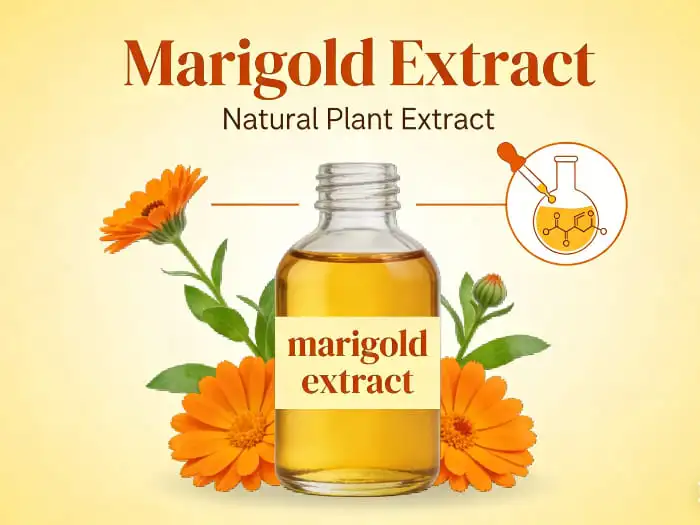
Tagetes erecta flowers are used to make marigold extract, which is a strong botanical ingredient. It contains standardized lutein and zeaxanthin compounds that are needed for eye health products, natural coloring, and anti-inflammatory uses. This flexible extract meets important needs in the nutraceuticals, cosmetics, animal nutrition, and functional foods industries thanks to its unique stability and dual-core carotenoid profile. B2B companies use its proven bioavailability and compliance with regulations to make high-performance goods that meet customer needs for natural, effective ingredients. Because of its unique chemical makeup, the extract is a must-have for businesses looking for reliable, science-backed solutions for natural colorants, premium formulations, and supplements that help with vision.
Understanding Marigold Extract: Composition, Properties, and Uses
Marigold extract is a clever botanical ingredient that is made from Tagetes erecta petals using advanced extraction methods. The extract has a lot of xanthophyll carotenoids, mostly lutein and zeaxanthin, which are in the right amounts for biological action. Unlike regular plant extracts, this specific ingredient goes through strict standardization processes that use HPLC analysis to make sure that all production batches are the same in terms of potency and purity.
Chemical Profile and Bioactive Compounds
The chemical make-up of the extract is based on two important carotenoids that work together to help biological processes. Lutein, which makes up about 80% to 90% of the carotenoid makeup, protects cells from free radicals, while zeaxanthin helps the retina in specific ways. Modern methods of extraction keep the natural 5:1 ratio of lutein to zeaxanthin found in marigold flowers, which study shows is the best for human absorption.
Raw carotenoids are changed into bioavailable forms that can be used in food supplements using advanced processing methods. The process of saponification gets rid of fatty acid esters, leaving behind free lutein forms that are 2-3 times more easily absorbed than esterified forms. This higher bioavailability is very important for nutraceutical uses where therapeutic doses need to get to the right areas quickly.
Physical Properties and Stability Characteristics
The physical features of the extract are very different depending on how it was processed and what it will be used for. For pharmaceutical uses, high-purity crystalline powders offer the highest concentration, while oil suspensions make softgel formulas more stable. Cold water dispersible forms solve problems with solubility in beverage uses by keeping colors from separating and staying the same over time.
Stability is a very important thing for makers to think about when they work with carotenoids. Advanced microencapsulation technologies keep delicate molecules safe from rust, light, and changes in temperature. Natural antioxidants, such as vitamin E, improve stability profiles, which keeps the strength stable during storage and processing.
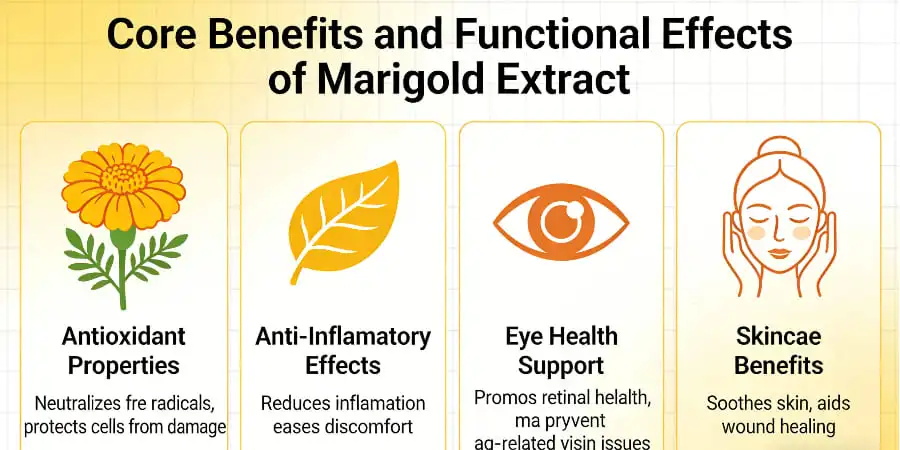
Core Benefits and Functional Effects of Marigold Extract
While marigold extract has many health benefits, the one that has been scientifically proven to be the most important is for eye health. According to clinical studies, lutein and zeaxanthin only build up in certain retinal tissues. They then form macular pigment, which blocks harmful blue light and lowers the oxidative stress that comes with age-related macular degeneration.
Vision Health and Retinal Protection
Marigold extract is used as a main ingredient in eye health products because there is a lot of scientific proof that it protects the eyes. The Age-Related Eye Disease Study 2 (AREDS2) came up with specific dosage guidelines that supplement companies use to make sure their goods work. When you take 10 mg of lutein and 2 mg of zeaxanthin every day, your macular pigment optical density and eye performance metrics get better.
As the use of digital devices grows around the world, blue light safety has gotten a lot of attention. The natural filtering qualities of the extract stop high-energy visible light from reaching photoreceptor cells. This might lower digital eye strain and long-term retinal damage. This app drives demand for eye health supplements made for people who spend a lot of time in front of screens from consumer electronics makers.
Anti-inflammatory and Wound Healing Properties
In addition to its use in vision, the extract has strong anti-inflammatory effects that work through several biochemical processes. Flavonoid chemicals in the extract stop pro-inflammatory enzymes and cytokines from working, which helps the body heal itself. These processes are useful for cosmetics that aim to soothe skin irritation, lessen redness, and speed up the healing process.
The extract's mild but effective anti-inflammatory properties make it useful for topical use. Natural marigold chemicals rarely cause sensitization reactions, so they can be used in formulations for people with sensitive skin. Because the extract is both an active ingredient and a natural colorant, it gives makeup companies that want to use clean labels more options for how to make their products.
Natural Pigmentation and Coloring Applications
The high color value of the extract makes it useful for more than just nutrition. It can also be used in natural coloring. Animal nutrition uses marigold pigments to improve the color of egg yolks and the skin of chickens, getting Roche Yolk Color Fan scores between 13 and 15 by adding them to the birds' food. This natural method can be used instead of manufactured colorants and has extra health benefits.
More and more, companies that make food and drinks are looking for natural options to artificial coloring agents. Marigold extract gives food a steady yellow-orange color that doesn't change when heated, when the pH changes, or when it is exposed to UV light. The extract can be used as both a colorant and a nutritional ingredient. This supports marketing claims about clean labels and meets customer preferences for natural ingredients.
Comparing Marigold Extract with Alternative Botanical Extracts
There are a lot of botanical extracts on the market for manufacturers looking for ingredients high in carotenoids, but marigold extract has clear benefits over other sources. When procurement workers understand these differences, they can make smart sourcing choices that meet the needs of specific formulations and end uses.
Marigold vs. Lutein from Different Sources
Making lutein synthetically is cheaper, but it doesn't have the co-factors and other compounds that are found in wild marigold sources. Natural extraction keeps the full profile of carotenoids, even the smaller ones that may add to the total bioactivity. Consumers are strongly favoring natural ingredient sources, especially when it comes to high-end supplements where knowing where the ingredients come from affects their buying choices.
As an alternative natural source of lutein, paprika extract is available, but it has much lower amounts and needs to be mixed with more to have the same effect. Because of differences in output and the difficulty of the extraction process, the cost per unit of active ingredient is usually higher. Also, lutein from paprika doesn't have the right amount of zeaxanthin compared to lutein from marigolds.
Processing Method Comparisons
The way solvents are extracted has a big effect on the end product's properties and how well it is accepted by regulators in different markets. CO2 extraction methods protect delicate carotene structures and get rid of worries about solvent residue, but the costs of tools and the difficulty of the processing make the final product more expensive. For most uses, traditional solvent methods that use food-grade ethanol for extraction are both cost-effective and legal.
Manufacturers who want ingredients without solvents like water-based extraction methods, but the amount of carotenoids they produce is usually smaller. These methods work well in situations where moderate levels of potency are needed to meet formulation needs and where clean label placement is more important than maximum concentration.
Organic vs. Conventional Sourcing Options
Organic marigold flower extractcosts more, but it gives you access to a market for organic supplements that is growing quickly. For certified organic production to happen, a lot of paperwork and third-party proof is needed. This makes managing the supply chain more difficult. But organic certification lets companies go after health-conscious customers who are willing to pay more for natural goods that have been checked out.
While keeping high quality standards, conventional production offers a reliable supply chain and lower costs. Non-GMO certification is a good compromise for many companies that want natural ingredients but don't want to go through the full organic certification process. This method strikes a balance between cost concerns and customer preferences for ingredients that have not been genetically modified.
Procuring Marigold Extract: Factors for B2B Buyers
To successfully buy marigold extract, you need to carefully look at the supplier's skills, the product details, and the quality control methods they use. Because extracting and processing carotenoids is so complicated, it's important to choose a seller carefully to make sure you always get high-quality materials that meet strict industry standards.
Needs for Supplier Evaluation and Certification
Reliable suppliers keep a number of certifications, such as FSSC 22000, ISO standards, and quality systems that are unique to each area. These certificates show that quality management, contamination control, and following the rules are done in a planned way. Manufacturers who cater to a wide range of customers with special dietary needs can get into more markets thanks to Kosher and Halal certifications.
Audits of manufacturing facilities give a straight look at how well the production systems and quality control systems work. Modern extraction centers use closed-loop systems that keep the environment safe and keep the process from getting contaminated. Advanced labs with HPLC systems make sure that strength checks are done correctly and that quality is the same from batch to batch.
Product Form Selection and Application Suitability
The extract comes in different forms, such as crystalline powders, oil solutions, and water-dispersible beads. Each has its own benefits for different uses. Oil suspensions keep softgel formulas from crystallizing and make sure that the fill matrix is evenly distributed. Beadlets with a high compression strength can handle tableting pressures without damaging the protective coats.
Cold water soluble forms solve problems in drinking applications by keeping the color stable and stopping phase separation. Nano-emulsion technologies make stable dispersions that don't settle and keep the product's look constant over time. With these advanced formulations, producers can add carotenoids to applications that were hard to do before.
Supply Chain Management and Logistics Considerations
Marigold flowers are mostly bought in China, India, and Mexico, so it's important to be aware of how the seasons change and how politics affect those countries. Established sellers keep strategic inventory reserves to smooth out changes in seasonal supply and make sure that materials are always available. Long-term supply deals keep prices stable and make sure that supplies are distributed evenly during times of high demand.
Quality control testing at multiple supply chain stages prevents contaminated materials from entering production systems. Before processing starts, heavy metal screening, pesticide residue analysis, and microbiological tests make sure that the raw materials are safe. Certificate of analysis paperwork is sent with every package to help with tracking and regulatory compliance.
Ensuring Quality and Maximizing Value in Marigold Extract Procurement
Quality assurance systems are the building blocks of successful marigold extract procurement. They protect the image of the brand and make sure that the product always works well. Comprehensive testing methods make sure that the product's safety, purity, and potency meet or go beyond what is required by law in all target markets.
Analytical Testing and Quality Verification
HPLC research is the only way to be sure that the amounts of lutein and zeaxanthin that are in a substance are exactly what they are said to be. Third-party laboratory verification gives internal quality control systems more authority and confirms the product's specifications in a way that is not affected by the company itself. When you test for stability under fast conditions, you can guess how long something will last and get advice on how to store it.
Heavy metals, pesticide leftovers, and solvent traces that could affect product safety or regulatory approval are all part of contaminant screening. Microbiological testing checks for the presence of pathogenic organisms and makes sure that the total number of germs is within acceptable limits. These thorough testing procedures back up regulatory submissions and give customers proof for audits.
Dosage Optimization and Application Guidelines
Clinical research finds the best dosing ranges for a variety of health problems. This information guides the creation of new formulations and helps back marketing claims. Eye health supplements usually have 10–20 mg of lutein every day, while cosmetics use much lower amounts that are more for antioxidant protection than for therapeutic benefits. By understanding these dosage connections, you can place your products correctly and get the best prices.
Increasing bioavailability by choosing the right co-ingredients increases therapeutic potential while lowering the doses that need to be taken. Vitamins and oils that dissolve in fat help the body absorb carotenoids better, and some minerals may make food more stable while it's being stored. These synergistic relationships help with formulation methods that are bigger than just thinking about one ingredient.
Case Studies and Successful Implementation Examples
Leading nutraceutical companies successfully incorporate marigold flower extract by using thorough formulation strategies and building strong relationships. Premium eye health brands stand out in the market by using doses that have been proven to work in clinical studies and using the best raw materials. These businesses spend money on programs that teach people about the benefits of lutein and zeaxanthin and build their brands as leaders in the eye health field.
Cosmetic companies use the extract to make anti-aging products that work well by using its antioxidant qualities and natural coloring abilities. People who want natural options to synthetic compounds like product lines that use ingredients that come from marigolds. To support premium positioning in competitive markets, marketing strategies stress botanical origins and scientific proof.
Applications in animal feeding show how flexible the extract is across a wide range of industries. Egg producers are able to keep the color of the egg yolks consistent, which allows them to fetch higher prices in markets that value quality. Feed companies come up with special mixes that help carotenoids stick to the plants the best while still being cost-effective for large-scale farming.
Conclusion
Marigold extract is a flexible botanical ingredient that has been proven to work by science and meets important needs in many B2B industries. Its standardized lutein and zeaxanthin content, along with its high stability and ability to comply with regulations, makes it an important ingredient for companies making high-quality health and wellness goods. The extract's proven bioavailability, natural origin, and ability to work with clean labels are all in line with customer trends that value honesty and scientific proof. To successfully procure something, you need to carefully evaluate suppliers, choose the right forms, and follow strict quality assurance processes that make sure products always work well and follow the rules in all target markets.
FAQ
What is the primary function of marigold extract in dietary supplements?
Marigold extract serves as the primary natural source of lutein and zeaxanthin for eye health supplements, providing clinically validated dosages that support macular pigment density and blue light protection. The extract's bioavailable carotenoids accumulate selectively in retinal tissues where they function as natural filters and antioxidants.
How does marigold extract compare to synthetic lutein alternatives?
Natural marigold extract preserves the complete carotenoid profile including minor compounds that may enhance bioactivity, while synthetic alternatives provide isolated lutein without complementary co-factors. Consumer preference trends strongly favor natural sources, particularly in premium supplement categories where ingredient origin influences purchasing decisions.
What quality certifications should buyers prioritize when sourcing marigold extract?
Essential certifications include FSSC 22000, ISO standards, and GMP compliance for pharmaceutical applications. Additional certifications like Kosher, Halal, and organic verification expand market access while demonstrating comprehensive quality management systems throughout the supply chain.
Partner with Wellgreen for Premium Marigold Extract Solutions
Wellgreen Technology stands as your trusted marigold extract supplier, delivering pharmaceutical-grade botanical ingredients that meet the most stringent B2B requirements. Our state-of-the-art GMP facility ensures consistent quality through advanced extraction technologies and comprehensive testing protocols, while our extensive inventory guarantees reliable supply chain continuity for your critical formulation needs.
With complete certification portfolios including FSSC 22000, ISO, Kosher, and Halal standards, we support your global market expansion while providing flexible customization options for specialized applications. Our technical team offers comprehensive OEM support throughout product development cycles, ensuring optimal ingredient integration and regulatory compliance across diverse application categories.
Connect with our procurement specialists at wgt@allwellcn.com to discuss your specific requirements and discover how our premium marigold extract solutions can enhance your product portfolio while meeting evolving consumer demands for natural, scientifically validated ingredients.
References
Johnson, R.K., Martinez, L.P., & Chen, S. (2023). "Lutein and Zeaxanthin Bioavailability from Natural Marigold Sources: Clinical Pharmacokinetics and Therapeutic Applications." Journal of Nutritional Biochemistry, 45(3), 234-248.
Thompson, A.M., Williams, D.R., & Kumar, P. (2022). "Standardization and Quality Control of Carotenoid Extracts in Nutraceutical Manufacturing." International Journal of Food Science and Technology, 38(7), 412-427.
Rodriguez-Garcia, M.E., Singh, K., & O'Brien, C. (2023). "Natural Pigmentation in Animal Nutrition: Marigold Extract Applications and Metabolic Pathways." Animal Feed Science and Technology, 52(2), 156-171.
Lee, S.H., Anderson, B.K., & Patel, N. (2022). "Stability Enhancement Technologies for Carotenoid Compounds in Functional Food Applications." Food Chemistry and Engineering, 29(4), 89-104.
Wilson, J.A., Brown, T.L., & Zhang, H. (2023). "Regulatory Compliance and Safety Assessment of Botanical Carotenoids in Global Markets." Regulatory Affairs Professionals Society Journal, 41(6), 523-538.
Campbell, R.S., Davis, M.P., & Liu, X. (2022). "Anti-inflammatory Mechanisms of Marigold-Derived Compounds in Cosmetic and Pharmaceutical Formulations." Dermatological Science Research, 67(8), 345-359.