What is Agaricus Bisporus Used For?
2026-04-29 19:18:48
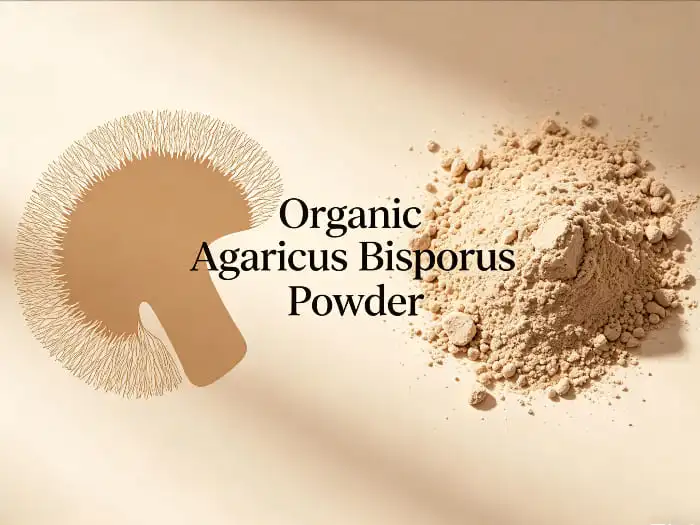
Agaricus bisporus, which is also called the button mushroom, white mushroom, or table mushroom, is used in many different businesses for different things. We get organic agaricus bisporus powder from mushroom fruiting bodies that have been grown in an organic way. This powder is widely used in immune-boosting supplements, functional foods, natural taste enhancers in cooking, and pet food formulations. This clean-label ingredient is very popular with companies that want to use sustainable raw materials with consistent quality profiles that are backed by science. It is high in beta-glucans, proteins, dietary fiber, and important minerals.
Understanding Organic Agaricus Bisporus Powder and Its Uses
Defining the Product and Production Process
The Agaricus bisporus fruiting bodies that are used to make button mushroom powder were carefully chosen and grown in approved organic conditions. To make the product, mature mushrooms are picked when they are at their healthiest. They are then dried in a way that keeps the bioactive chemicals intact. The dried mushrooms are then ground up into a fine powder with controlled particle sizes that can be used in a number of different products.
Fresh mushrooms need to be kept cool because they are mostly water, but the dried powder form can be stored for a longer time and has more concentrated nutrients. This way of processing is very different from extract production, which usually uses solvent extraction to separate out particular compounds. The whole fruiting body powder keeps all of the naturally occurring nutrients, like beta-glucans, ergothioneine, and amino acids. This makes it very useful for formulators who want full nutritional profiles instead of just a few active ingredients.
Industrial Applications Across Sectors
Because button mushroom powder can be used in many different ways, it is widely used in many manufacturing fields. Food companies use its natural umami flavor molecules to lower the amount of sodium in snacks, soup bases, and ready-to-eat meals while keeping the taste satisfying. The powder has a neutral color and a weak flavor, so it can be easily added to products without changing their look or taste.
For immune wellness products, nutraceutical businesses make capsules and tablets with standardized beta-glucan content. Because the powder works well with other botanical ingredients, it is a great addition to wellness blends that focus on metabolic health, brain health, and general energy. Manufacturers of drinks have started to look into how it could be used in functional drinks, like protein shakes and meal replacements, where its high nutritional value can work well with other ingredients.
Compounds from mushrooms are used in personal care products because they are antioxidants and can be put on the skin. The natural polysaccharides in the agaricus bisporus extract make skin care products more moisturizing, and because it is mild, it can be used in products for people with sensitive skin. Pet food companies are adding it to more and more high-end recipes because they know that pets need immune system support and digestive health benefits that are similar to those humans get.
Nutritional Profile and Health Benefits
The nutritional density of button mushroom powder is very high, as shown by its compositional study. Beta-glucans make up a big part of the polysaccharide content; their amount varies from 15 to 25 percent, based on how they are grown and processed. In clinical studies, these structural polysaccharides have been shown to have immunomodulatory effects that support the activity of natural killer cells and improve the immune system's general surveillance systems.
The protein content is usually between 20 and 30 percent by weight, and it has the right amount of all the necessary amino acids. This makes the powder very useful for plant-based nutrition uses that need a variety of proteins. The fiber in food helps prebiotic activity, which supports good gut microbiota communities that affect health across the body. Minerals like selenium, potassium, copper, and phosphorus are present and help the body do many biological tasks.
According to studies published in reputable journals, eating Agaricus bisporus on a daily basis may help the body's natural defenses against inflammation by working as an antioxidant. Ergothioneine is a special protective amino acid that is found in high amounts in mushrooms. It protects cells from oxidative stress. Because these benefits have been proven by science, the ingredient is a good choice for companies that want to make functional products that meet customer standards for both safety and effectiveness.
How to Use Organic Agaricus Bisporus Powder Effectively?
Recommended Dosages and Preparation Methods
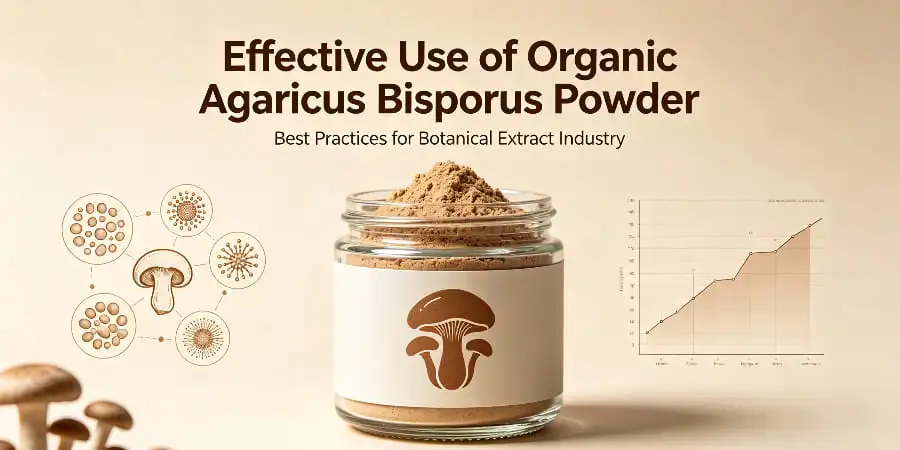
Formulation experts who work with button mushroom powder usually add doses of 500 mg to 3000 mg per serving, but this depends on the health benefit they want to achieve and the format of the product. The higher part of this range is often used for immune support to make sure that enough beta-glucan gets to the cells, while lower concentrations may be needed for flavor enhancement to get the right sensory effects without overpowering other ingredients.
It is very easy to mix the powder with water or fat-based solutions as long as the right mixing methods are used. Manufacturers who work with beverage applications can benefit from pre-hydration procedures that let the powder fully absorb water before it is mixed in. This keeps the powder from clumping and makes sure that it is evenly distributed throughout the product matrix. Compressing supplements into tablets needs the right binding agents and testing to make sure they don't fall apart, while putting supplements into vegetable capsules is a simple way to take them.
Storage and Quality Retention Practices
To keep the quality of the agaricus bisporus extract while moving large amounts of it, external factors need to be taken into account. The substance is hygroscopic, which means it easily takes in water from the air when the humidity level is above 60%. To keep bioactive compounds intact throughout the lifespan of a product, procurement managers should ask for storage in climate-controlled warehouses that keep the relative humidity between 40 and 50% and the temperature below 25°C.
The type of packaging has a big effect on how stable something is over time. Multi-layer laminated bags that are resistant to moisture are good for protecting up to 25 kg of goods, while fiber drums with polyethylene liners are better for bigger shipments. Because light breaks down some nutrients, it is better to use opaque packaging materials than clear ones. If you follow the first-in, first-out rule when rotating your goods, it will stay fresh for longer. In ideal conditions, it will last 24 months.
Safety Considerations and Organic Advantages
Based on clinical safety data, button mushrooms are usually well tolerated by a wide range of people. Rarely, bad responses have been reported, mostly stomach pain in people who eat too much or are allergic to certain fungal proteins. To make sure customers are aware, manufacturers should tell customers how much to eat and include standard safety statements on product labels about mushrooms.
There are more differences between organic and standard powders than just the amount of pesticides they contain. To get organic approval, growers must follow strict rules that say they can't use synthetic fertilizers, GMO substrates, or chemical pest control. Third-party testing on organic batches regularly shows lower heavy metal accumulation compared to conventionally grown alternatives. This is an important thing to keep in mind for products that will be used every day for a long time. This quality assurance benefit is especially useful for regulatory managers who are looking at ingredient specs for markets with strict contaminant limits, like meeting California Proposition 65 or EU maximum residue level rules.
Procurement Guide for Organic Agaricus Bisporus Powder
Identifying Reputable Suppliers Globally
To find high-quality button mushroom powder, you need to do your research on all of the possible suppliers. North America and Europe, with their well-established infrastructure for organic certification, are two of the most important production areas. New suppliers in Asia have low prices, but they need to be carefully checked to make sure they meet the standards of the target market for organic certification and manufacturing facilities.
When looking at possible partners, procurement directors should ask for reports on facility audits, customer references from well-known names, and proof of quality management systems. Site tours give you important information about production scale, processing technology, and quality culture that you can't get from reading paperwork alone. Supply lines need to be open and honest, and suppliers who talk to customers about crop conditions, harvest times, and possible supply changes are a good example of this.
Different suppliers have very different minimum order numbers. For test orders, they are usually 100 kg, while for regular production runs, they are 500–1000 kg per pallet. Building relationships with providers who offer flexible order terms makes it easier to develop new products and keep an eye on inventory levels. Some manufacturers offer toll processing services that turn mushrooms supplied by customers into powder based on specific particle size or moisture content requirements. This gives brands with particular formulation needs more ways to customize their products.
Strategic Cost Management
Knowing how prices change in the market helps buyers get better deals while still keeping quality standards. Organic certification premium usually adds 20 to 40 percent more to the price of regular organic Agaricus bisporus powder. This is because organic farming methods have higher compliance costs and usually lower returns. Seasonal patterns of harvesting affect both supply and price. Buying in bulk during peak production times could save buyers money if they have enough storage space.
Transportation costs are a big part of the total landed cost, especially for foreign shipments that need to be moved with care because of temperature. When compared to less-than-container shipping, combining orders to get full container loads saves more money on freight. When you sign a long-term supply deal with committed volume thresholds, you can often get better prices and better information about demand, which helps suppliers plan.
When negotiating payment terms, it's important to keep both cash flow management and seller relationships in mind. Longer payment terms are better for working capital, but many smaller, more specialized sellers would rather have shorter terms or partial deposits that lower their financial risk. Building trust through on-time payments and clear communication about demand predictions builds goodwill that is useful when sellers have to divide their limited inventory among competing customers because of shortages.
Supplier Reliability and Support Services
Value-added services are what set exceptional sellers apart from commodity vendors, going beyond just providing products. Product development times are sped up by technical support teams that help with formulation problems, suggest the best ways to incorporate certain materials for certain uses, or provide data from stable tests. Regulatory support, such as help with ingredient declarations, allergen statements, and health claim substantiation paperwork, makes it easier for product development teams to follow the rules in places where regulations are complicated.
Metrics for measuring delivery success need to be closely watched. Over 95% of deliveries happen on time, orders are filled correctly, and customers are informed ahead of time about possible delays. These are all signs of operational success and a customer-centered culture. Drop-shipping directly to co-manufacturers or staged deliveries that match production schedules are some of the flexible logistics options that help buyers with lean supply chains handle their inventory better.
Helping customers after the sale includes fixing problems with quality, giving them paperwork for checks, and answering their technical questions. Suppliers who see the success of their customers as important to their business plan spend money on relationship management tools that go beyond the initial sales. This way of working together is especially helpful when the market changes, when making new applications, or when new rules come out that affect the specs of ingredients.
Conclusion
Button mushroom powder has become a flexible ingredient that meets a wide range of needs in the food, personal care, and supplement industries. It has a lot of good nutrients, a clean label, and health benefits that have been proven. This makes it a good choice for people who want natural, long-lasting health remedies. For buying to go well, suppliers need to be carefully evaluated based on things like certifications, consistent quality, and the ability to work with others beyond just a transactional perspective. The market is growing steadily, which is good news for brands that use this ingredient's many benefits by coming up with new products and being honest about their quality standards.
FAQ
What distinguishes organic from conventional mushroom powder?
Organic certification guarantees cultivation without synthetic pesticides, chemical fertilizers, or genetically modified substrates. This results in cleaner residue profiles and typically lower heavy metal accumulation. Organic farming practices also support soil health and environmental sustainability, aligning with clean-label consumer preferences increasingly important in supplement and functional food markets.
How should manufacturers verify beta-glucan content?
Reputable suppliers provide certificates of analysis documenting beta-glucan levels using validated analytical methods such as enzymatic-gravimetric assays or HPLC techniques. Independent third-party laboratory testing offers additional verification for quality-critical applications. Specification agreements should clearly define testing methodologies and acceptable ranges to ensure consistency across shipments.
Can mushroom powder cause allergic reactions?
While rare, some individuals exhibit sensitivity to fungal proteins. Products containing mushroom ingredients should include appropriate allergen labeling. Manufacturers targeting sensitive populations may want to implement dedicated production lines preventing cross-contamination with common allergens, particularly in facilities processing multiple botanical ingredients.
Partner with a Trusted Organic Agaricus Bisporus Powder Supplier
Wellgreen Technology specializes in manufacturing premium-quality mushroom extracts backed by comprehensive certifications and rigorous quality control. Our GMP-certified facility produces organic Agaricus bisporus powder with verified beta-glucan content, complete heavy metal and pesticide screening, and batch-to-batch consistency that meets the exacting standards of pharmaceutical and nutraceutical manufacturers. We maintain substantial inventory enabling rapid fulfillment, offer flexible minimum order quantities supporting both product development and full-scale production needs, and provide technical support throughout your formulation process. Our commitment to sustainability extends from organic cultivation partnerships to eco-conscious packaging solutions. Whether you're developing immune support supplements, functional beverages, or innovative food products, our team brings decades of botanical extraction expertise to support your success. Contact our technical specialists at wgt@allwellcn.com to discuss your specific requirements, request certificates of analysis, or arrange a sample evaluation that demonstrates the Wellgreen quality difference.
References
Muszyńska, B., Grzywacz-Kisielewska, A., Kała, K., & Gdula-Argasińska, J. (2018). Anti-inflammatory properties of edible mushrooms: A review. Food Chemistry, 243, 373-381.
Roncero-Ramos, I., & Delgado-Andrade, C. (2017). The beneficial role of edible mushrooms in human health. Current Opinion in Food Science, 14, 122-128.
Valverde, M.E., Hernández-Pérez, T., & Paredes-López, O. (2015). Edible mushrooms: improving human health and promoting quality life. International Journal of Microbiology, Article ID 376387.
Hetland, G., Johnson, E., Lyberg, T., & Kvalheim, G. (2011). The mushroom Agaricus blazei Murill elicits medicinal effects on tumor, infection, allergy, and inflammation through its modulation of innate immunity and amelioration of Th1/Th2 imbalance. Advances in Pharmacological Sciences, Article ID 157015.
Royse, D.J., Baars, J., & Tan, Q. (2017). Current overview of mushroom production in the world. In Edible and Medicinal Mushrooms: Technology and Applications, Wiley-Blackwell, pp. 5-13.
Smith, J.E., Rowan, N.J., & Sullivan, R. (2002). Medicinal mushrooms: their therapeutic properties and current medical usage with special emphasis on cancer treatments. University of Strathclyde, Cancer Research UK Special Report.