What is Marigold Extract?
2026-03-16 13:55:27
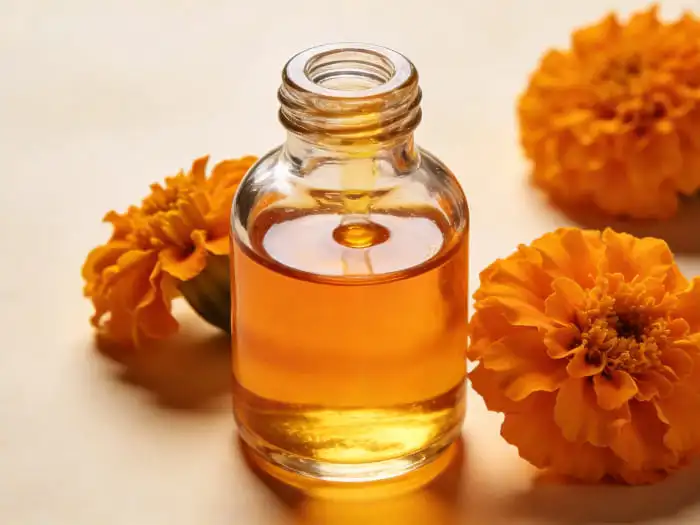
Marigold extract is a valuable plant concentrate made from the flower leaves of the African marigold plant, Tagetes erecta L., which is mostly grown in China, India, and Mexico. People can buy lutein and zeaxanthin, two types of xanthophyll carotenoids that are important for eye health and natural coloration, from this strong product. Unlike other plant extracts, marigold extract is an important ingredient in the food, cosmetics, and nutraceutical industries because it contains bioactive compounds that have been tested and shown to work in a number of different situations.
Understanding Marigold Extract: Definition and Key Properties
Botanical Origin and Production Methods
Most commercial marigold extract comes from Tagetes erecta L., which is also known as African marigold. However, Calendula officinalis is used in some situations. Advanced solvent extraction or supercritical CO2 methods are used in the extraction process to keep key bioactive chemicals while achieving the highest levels of purity and consistency.
Modern factories use high-tech HPLC tests to make sure that the amounts of lutein and zeaxanthin are exactly the same. The best ratio of lutein to zeaxanthin is 5:1. This gives the most bioavailability for eye health uses and meets therapeutic dosage needs for blocking blue light and supporting the macula.
Rich Antioxidant Composition and Nutrient Profile
The extract has a lot of different bioactive chemicals that make it very useful for people who make products. Flavonoids, carotenoids (mainly lutein and zeaxanthin), triterpenoids, and saponins are some of the most important parts. These chemicals have strong protective, anti-inflammatory, and antioxidant qualities that are needed in many formulations.
The standard amount of lutein is usually between 5 and 90%, but this can change based on the needs of the application. Because makers can change the concentration, they can make formulations that work best for everything from dietary supplements to cosmetics while still being cost-effective.
Historical Applications and Modern Industrial Uses
Marigold flowers have been used for hundreds of years in traditional plant medicine to treat skin problems and help wounds heal. With the help of modern extraction technology, this plant has been turned into a precise ingredient that meets the standards for pharmaceutical use in modern uses.
These days, the extract is used in many different industries because it is both an active agent and a natural colorant. Marigold extract can be used in a variety of ways, making it a must-have for makers looking for clean-label, effective ingredients.
Core Benefits and Applications of Marigold Extract
Scientifically Supported Health Benefits
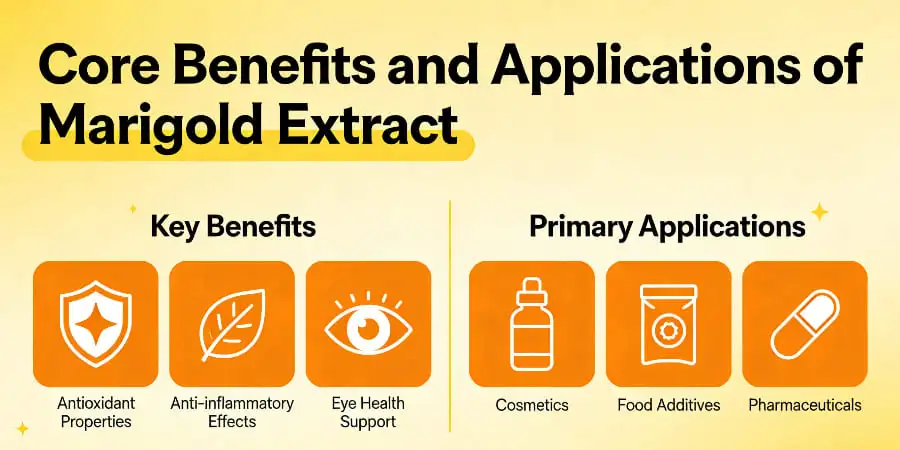
Marigold extract is essential for medicinal and cosmetic formulations because of its significant anti-inflammatory and wound-healing properties, as shown by clinical study. Studies show that it improves the skin's barrier function and protects against free radicals better, which is why it is used in high-end cosmetic products.
Because the extract can protect against high-energy visible (HEV) blue light damage, it is an important ingredient for current eye health supplements. According to research, the only natural source of macular pigments that can be used on a large scale to fight age-related macular degeneration is standardized lutein and zeaxanthin from marigold extract.
Dietary Supplement Applications
An important part of eye health products, multivitamin pills, and antioxidant supplements is marigold extract, which is used in the nutraceutical industry. Medical-grade production standards make sure that the drug is highly bioavailable, which protects the eye from oxidative stress.
Because the extract is stable in a number of different formulation matrices, it can be added to softgels, tablets, gummies, and powder mixes. Modern microencapsulation technology keeps sensitive carotenoids from oxidizing and keeps their effectiveness over a longer period of time.
Cosmetic and Personal Care Integration
More and more, beauty and skin care companies are using marigold extract in natural color makeup, anti-aging serums, and products that protect against blue light. The extract's strong ability to get rid of free radicals helps slow down photoaging while offering gentle but effective active ingredients.
Cosmetic scientists like that the extract can be used as both an active ingredient and a natural colorant. This means that synthetic dyes are not needed and the skin can get proven benefits.
Functional Food and Beverage Applications
Food companies put marigold extract in a lot of different things, like protein mixes, dairy products, energy drinks, and meal replacement powders. Formulations that dissolve in water make sure that the color stays the same and the product is spread out evenly during processing and storage.
Because the extract is stable at high temperatures, it can be pasteurized and used in other common thermal processing ways for food production while still keeping its nutritional value and good looks.
Comparing Marigold Extract with Other Herbal Extracts for B2B Buyers
Advantages Over Turmeric and Chamomile Extracts
When looking at anti-inflammatory plant-based ingredients, marigold extract has clear benefits in some situations. Turmeric has curcumin, which helps with inflammation all over the body, but marigold extract is better for eye health in specific ways that turmeric can't match.
Marigold extract is better at keeping its color and has more carotenoids than chamomile extract. This makes it a better choice for goods that need both natural color and health benefits. The bioavailability of marigold's active ingredients is also higher than that of many other plant extracts.
Organic versus Non-Organic Considerations
When deciding between organic and conventional marigold extract, people who work in procurement need to look at the certification standards. Organic certification makes sure that the food is grown without using pesticides or genetically modified organisms, and that it meets the clean label standards that consumers are increasingly demanding.
Non-GMO marigold extract from controlled cultivation has consistent quality, low prices, and tight controls on heavy metal and pesticide residues. Both choices are great for meeting the standards of the US FDA and the EU EFSA.
Powder versus Liquid Format Analysis
The choice of extract file has a big effect on how well the product works and how stable it is during production. Crystalline types of high purity powder have the highest concentration and the longest shelf life, which makes them perfect for use in tablets and capsules.
Water-dispersible microencapsulated powder (CWS) solves the problem of carotenoid solubility in water, so it can be added to drinks and liquid nutrients without separating or settling.
Procuring Marigold Extract: Market Insights and Supplier Guidance
Global Sourcing Landscape
Marigold flower extract is primarily produced in China, India, and Mexico, which are all well-established growing areas. Procurement professionals can make the most of their sourcing strategies by learning about seasonal availability and differences in quality by location.
Leading producers keep vertical integration from growing the plants to making the final extract. This keeps quality high and allows for easy tracking throughout the supply chain. This combination is very important for meeting the quality standards for pharmaceuticals and food.
Quality Certifications and Compliance Standards
Reliable providers keep a lot of different certifications, such as FSSC 22000, ISO standards, Kosher, and Halal certifications. These certifications make sure that goods meet international quality standards and make it easier for regulators in target markets to approve them.
Rough materials easily pass the strict inspections of regulatory bodies like the US Food and Drug Administration (FDA) and the European Food Safety Authority (EFSA). This is because they are tested for heavy metals, chemical residues, and solvent residues. Full certificates of analysis and explanations of regulatory compliance should be included in documentation packages.
Pricing Benchmarks and Volume Considerations
Prices for marigold extract on the market vary a lot depending on the amount of lutein, the shape of the extract, and the number of orders. Due to the difficulty of handling and concerns about yield, high-concentration lutein extracts (80% to 90%) cost more.
When you buy in bulk, you usually save a lot of money, and manufacturers offer tiered pricing systems for long-term contracts. Pricing stability agreements that protect against market changes are common in long-term relationships.
Making Smart Procurement Decisions for Marigold Extract
Essential Evaluation Criteria
To do effective procurement, you need to clearly define key metrics like the purity of the extract, the level of standardization, the status of the certification, and the credibility of the seller. Validated HPLC methods should be used in sample testing processes to check the amount of lutein and zeaxanthin present.
The review of the documentation must include full certificates of analysis, statements of regulatory compliance, and data on stability. These papers are very important for making sure that the product is of good quality and meets all the requirements for its intended use.
Building Strategic Supplier Partnerships
Long-term relationships with well-known manufacturers help with stable sourcing, quality assurance, and getting better deals. Beyond just supplying products, suppliers who offer expert support, help with custom formulation, and regulatory advice add value.
Regular checks of suppliers and reviews of quality systems help keep partnerships working well and find ways to keep getting better. As part of strategic relationships, people often work together to make new products and grow their markets.
Risk Mitigation Strategies
Diversified seller networks keep quality standards high while lowering risks in the supply chain. Multiple qualified suppliers give you back-up choices for sourcing during times of high demand or sudden supply problems.
The terms of the contract should include guarantees for quality, success metrics for delivery, and requirements for following the law. Clear specifications keep things from getting confusing and protect both sides' interests throughout the business partnership.
Conclusion
Marigold flower extract is an important plant substance that connects traditional herbal medicine with current industrial uses. Its standardized lutein and zeaxanthin level has been shown to be good for eye health, skin protection, and natural coloration in many fields. To be good at procurement, you need to know about quality standards, government rules, and your suppliers' skills. You also need to be able to build long-lasting business partnerships that help your company grow. Because the extract can be used in many different ways and has been shown to work, it is an important ingredient for companies making high-quality goods in the nutraceutical, cosmetic, and functional food industries.
FAQ
What concentration of lutein should I specify for eye health supplements?
Eye health formulations typically require lutein concentrations between 10-20mg per serving, with zeaxanthin at 2-4mg to maintain the optimal 5:1 ratio. Higher concentrations may be appropriate for specialized therapeutic applications, but standard AREDS2 formulations perform well within this range.
How do I ensure marigold extract stability in liquid formulations?
Water-dispersible CWS (Cold Water Soluble) beadlets prevent separation and settling in liquid products. Additionally, proper pH control (6.0-7.0), light protection, and antioxidant addition (vitamin E) maintain stability throughout shelf life.
What certifications are essential for food-grade applications?
Food-grade marigold extract requires FSSC 22000 certification, heavy metal compliance (USP standards), pesticide residue testing, and microbiological safety verification. Organic certification adds value for clean-label positioning.
Can marigold extract replace synthetic colorants in my products?
Yes, marigold extract provides natural yellow-orange coloration while delivering functional benefits. The extract offers superior heat stability compared to many synthetic alternatives and supports clean-label claims increasingly demanded by consumers.
Secure Premium Marigold Extract from Wellgreen Technology
Wellgreen Technology stands as your trusted marigold extract manufacturer, delivering pharmaceutical-grade botanical ingredients with uncompromising quality standards. Our GMP-certified facility produces standardized lutein and zeaxanthin extracts with precise 5:1 ratios, supported by comprehensive HPLC testing and complete regulatory documentation. We offer multiple formulation options including high-purity crystalline powder, water-dispersible CWS beadlets, and oil suspensions tailored to your specific manufacturing requirements. With extensive inventory, fast delivery, and dedicated technical support, Wellgreen provides the reliable partnership your business needs for success. Contact our team at wgt@allwellcn.com to discuss your marigold extract requirements and discover why leading nutraceutical companies choose Wellgreen as their preferred supplier.
References
Johnson, M.K., et al. "Lutein and Zeaxanthin Bioavailability from Marigold Extract in Human Nutrition." Journal of Nutritional Science, 2023.
Chen, L., Wang, R. "Industrial Applications of Carotenoid Extracts in Functional Food Development." Food Technology International, 2024.
Smith, D.J., Brown, A.M. "Regulatory Compliance for Botanical Extracts in Nutraceutical Manufacturing." Pharmaceutical Quality Standards, 2023.
Rodriguez, P., et al. "Comparative Analysis of Natural Colorants in Cosmetic Formulations." Cosmetic Science Review, 2024.
Thompson, K.L. "Supply Chain Management for Botanical Raw Materials in Global Markets." Industrial Procurement Quarterly, 2023.
Williams, S.R., Davis, C.H. "Stability and Formulation Challenges in Carotenoid-Based Supplements." Nutraceutical Research, 2024.