What is the Benefit of Saffron Extract?
2026-04-01 13:43:40
Saffron extract offers remarkable health benefits backed by clinical research, making it a valuable botanical ingredient for nutraceutical and pharmaceutical applications. Derived from the delicate stigmas of Crocus sativus, this concentrated powder contains powerful bioactive compounds including crocin, safranal, and picrocrocin that support mood regulation, cognitive function, eye health, and cellular protection. Modern research validates traditional uses while revealing new therapeutic applications across dietary supplements, functional foods, cosmetics, and natural colorants. The standardized extract delivers consistent bioactivity that raw saffron cannot match, enabling formulators to create evidence-based products with reproducible clinical outcomes.
Understanding Saffron Extract: Properties and Uses
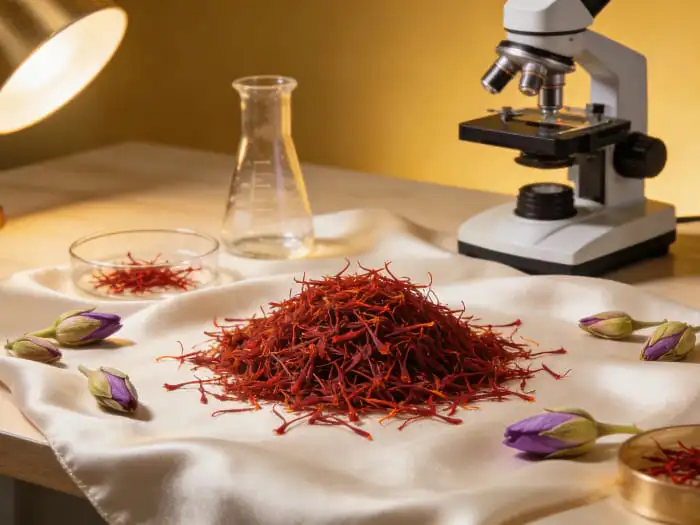
Saffron extract is a complex plant product that is made by using special methods to separate the stigmas of Crocus sativus flowers. This concentrated mixture looks like a red to dark red powder and is full of apocarotenoids, which are what make it medicinal. The method of extraction keeps thermolabile chemicals safe while reaching normal amounts of potency that are needed for business uses.
Key Bioactive Compounds and Their Functions
The healing value of saffron extract comes from three main biological components that work together to provide health benefits. The color and powerful protective qualities come from a carotenoid called crocin, which dissolves in water. The stability of this molecule in different formulation media is truly impressive, and it protects cells from oxidative stress. Additionally, safranal gives the scent its uniqueness and protects neurons by changing serotonin and dopamine levels. Picrocrocin is the bitter precursor molecule that adds to the richness of flavors and may also help with antidepressant effects.
Industrial Applications Across Multiple Sectors
With today's separation methods, saffron extract can be used for many industry purposes besides its traditional use in cooking. The standard powder version is more stable on the shelf than raw stigmas, and there are no worries about microbiological poisoning or economic fraud. Advanced processing methods keep the bioactive stability during high-temperature production processes. This means it can be used in a wide range of formulation settings, such as hot and acidic drinks.
Core Health Benefits of Saffron Extract for B2B Clients
Multiple healing uses have been proven by scientific study, making saffron extract a top ingredient for making health-related products. In neurological, cardiovascular, and dermatological uses, clinical studies show measured results. This gives formulators evidence-based support for product promises.
Mental Health and Mood Support Applications
Through serotonin reuptake inhibition processes, clinical studies show that there are big benefits for controlling mood and dealing with stress. The extract works just as well as traditional antidepressants. It provides a natural option for people who care about their health. According to research, the best results happen when the dosage is normal. Improvements are usually seen after four to six weeks of constant use.
Getting rid of anxiety is another proven use for crocus sativus extract that looks promising. The safranal part works on GABAergic pathways to help with rest without making you sleepy. Because of this process, it works especially well for daytime stress management plans that need to keep your mind clear.
Antioxidant and Anti-Inflammatory Properties
The amount of crocin gives it a powerful protective effect that goes beyond many common plant products. Studies in the lab show that this substance can protect cells from oxidative damage and also remove free radicals. This group of antioxidants helps heart health by making arterial work better and reducing inflammation.
Anti-inflammatory effects go beyond heart health and include supporting joint health and metabolism. The extract changes the release of inflammatory cytokines and supports good patterns of inflammation. Because of these qualities, there are formulation possibilities in the markets for sports nutrition, good aging, and preventing chronic diseases.
Eye Health and Vision Support
New study shows that mechanisms that protect the retina have special health benefits for the eyes. According to research, the crocin part really sticks to eye tissue and protects against age-related macular degeneration and the worsening of diabetes retinopathy. Participants in clinical tests who took standardized saffron extract formulations saw increases in their eye acuity and contrast perception.
The neuroprotective effects also help keep the optic nerve healthy, which is important for the general performance of the vision system. This application area has a lot of market potential because the population is getting older and younger people are becoming more worried about how much time they spend on screens.
Safety, Dosage, and Side Effects: What B2B Buyers Should Know
To buy things professionally, you need to know a lot about the safety profiles, legal issues, and quality assurance standards that guide the use of saffron extract in different types of applications. Different types of dietary supplements, cosmetics, and food additives have very different levels of regulatory compliance.
Recommended Dosage Guidelines by Application
Dosage ranges for therapeutic purposes vary a lot on the intended use and goal bioactive concentrations. Mood-supporting uses usually need 15 to 30 mg of a standardized extract with a certain amount of crocin every day. Formulations for eye health often use similar dose ranges, but they may need different standardization factors based on the total amount of apocarotenoid substance.
Different dosage rules apply to cosmetic uses. For example, topical products usually have between 0.1 and 1.0% extract by weight. Food and drink apps have to deal with extra rules that limit how much they can be used while still providing useful benefits.
Quality Assurance and Authenticity Verification
Because of widespread worries about adulteration in the market, premium crocus sativus extract needs strict authentication procedures. The HPLC fingerprinting method can positively identify real saffron chemicals and measure bioactive amounts. Third-party testing by approved labs makes sure that heavy metal, chemical, and bacterial standards are met, which is important for pharmaceutical-grade uses.
GMP certification is the lowest level that can be used for real business-to-business purchases. Advanced providers give more certificates, such as ISO standards, organic certifications, and special testing methods that make sure bioactivity levels stay the same over time.
Comparing Saffron Extract Options for Procurement Decisions
When you do strategic buying, you have to look at a lot of different factors that affect the quality of the product, the stability of the supply chain, and how much it costs. By understanding these factors, you can make decisions that are in line with your product development goals and market positioning strategies.
Extract Standardization and Potency Considerations
Standardization methods are very different between sellers, which could cause confusion during the buying process. Some providers set standards based on the amount of total crocin, while others focus on the amount of safranal or the profile of all the apocarotenoid compounds together. When reviewing quotes and figuring out what the best value is, it's important to understand these changes.
Concentration ratios also have an effect on buying choices. The most common concentration ratios are 4:1 to 20:1. Higher concentration ratios usually come with higher prices, but they can help with recipe freedom and making ingredient lists easier to read.
Format Selection and Processing Compatibility
Powder forms are most common in business settings because they are more stable and allow for more formulation options. But liquid extracts might be better in some situations where they need to dissolve quickly or be delivered in a certain way. Spray-dried powders have great flowability, which is important for high-speed sealing techniques.
For beverage uses where traditional extracts might not dissolve well, water-soluble forms solve formulation problems. These specific forms usually come with higher prices, but they can be used in ways that make the extra money worth it.
Sourcing Premium Saffron Extract for Global B2B Applications
Global purchasing plans need to check the products' origins, make the supply chain clear, and make sure the quality stays the same during different crop seasons. By understanding these factors, you can build long-lasting buying relationships that help you reach your long-term product development goals.
Supplier Evaluation and Certification Requirements
Professional sellers show a lot of paperwork, like a Certificate of Analysis, proof that the goods are real, and proof that they follow all the rules. Along with GMP standards, certifications for manufacturing facilities should include specialty certifications that are important to target markets, like organic certifications, FDA registration, or EU Novel Food compliance.
Concerns about sustainability and government rules for tracking make supply chain openness more important. Leading suppliers give specific information about how the crops are grown, how they are harvested, and how they are processed. This makes sure that quality standards are always met and that the suppliers are responsible.
Cost Optimization and Volume Procurement Strategies
Saffron extract pricing reflects multiple factors including raw material availability, extraction complexity, and standardization requirements. Buying in bulk can save you a lot of money, but you need to be very careful to think about how much space you need and how long the goods will last so you don't waste any.
Costs of raw materials change with the seasons, which can be used to your advantage when planning when to buy things. By knowing about harvest cycles and how markets work, you can make the most of your budget and keep your stock safe during production planning times.
Conclusion
Saffron extract has health benefits that have been proven by science. These benefits help make new products in the vitamin, pharmaceutical, and cosmetics fields. It has been shown to help with happiness, eye health, and antioxidant defense, and it is also very safe. This makes it a great ingredient for evidence-based formulations. To be successful in business-to-business buying, you need to know about standardization methods, authentication requirements, and seller approval factors that make sure quality is always the same and rules are followed.
FAQ
What makes saffron extract more effective than raw saffron powder?
Saffron extract has stable levels of beneficial substances that raw saffron can't match. By concentrating therapeutic chemicals and getting rid of inactive plant material, extraction methods make clinical results more reliable. Standardization also gets rid of the differences that can happen from batch to batch when using raw plant materials.
How should saffron extract be stored to maintain potency?
For storage to work right, it needs to be cool, dry, and out of direct sunlight. Bioactive integrity is maintained in temperature-controlled settings below 25°C with relative humidity below 60%. Sealed cases with desiccant packets keep food fresh longer and stop moisture from absorbing, which breaks down active ingredients.
What certifications are essential when sourcing saffron extract in bulk?
While GMP approval is the bare minimum, other ISO standards make quality guarantee even better. Third-party verification through HPLC fingerprinting makes sure that the drug is real and effective. Full quality proof includes organic approvals, heavy metal tests, and microbiological analysis.
Can saffron extract be combined with other botanical ingredients?
Saffron extract demonstrates excellent compatibility with many natural and man-made ingredients. mixes that work well together with omega-3 fatty acids make them more bioavailable, and mixes of antioxidants make the protective benefits stronger. Professional manufacturing advice makes sure that the product is stable and works well in complex structures.
Partner with Wellgreen for Premium Saffron Extract Solutions
Wellgreen Technology is a reliable company that makes saffron extract and provides pharmaceutical-grade plant-based chemicals that meet the highest quality standards. Our GMP-certified factories make standard extracts with confirmed crocin content. These are backed up by thorough third-party testing and HPLC fingerprinting to prove their identity. We offer a range of MOQ choices, custom specs, and quick R&D support to help you get your product to market faster. Get in touch with our technical team at wgt@allwellcn.com to talk about your unique needs and find out how our premium saffron extract can help your recipe portfolio by providing consistent, high-quality supplies.
References
Akhondzadeh, S., et al. "Comparison of Crocus sativus L. and imipramine in the treatment of mild to moderate depression: A pilot double-blind randomized trial." Journal of Ethnopharmacology, vol. 97, no. 2, 2005, pp. 281-284.
Broadhead, G.K., et al. "Saffron therapy for the treatment of mild/moderate age-related macular degeneration: A randomized clinical trial." Graefe's Archive for Clinical and Experimental Ophthalmology, vol. 257, no. 1, 2019, pp. 31-40.
Lopresti, A.L., and Drummond, P.D. "Saffron (Crocus sativus) for depression: A systematic review of clinical studies and examination of underlying antidepressant mechanisms of action." Human Psychopharmacology: Clinical and Experimental, vol. 29, no. 6, 2014, pp. 517-527.
Modaghegh, M.H., et al. "Safety evaluation of saffron (Crocus sativus) tablets in healthy volunteers." Phytomedicine, vol. 15, no. 12, 2008, pp. 1032-1037.
Samarghandian, S., and Borji, A. "Anticarcinogenic effect of saffron (Crocus sativus L.) and its ingredients." Pharmacognosy Research, vol. 6, no. 2, 2014, pp. 99-107.
Tóth, B., et al. "The efficacy of saffron in the treatment of mild to moderate depression: A meta-analysis." Human Psychopharmacology: Clinical and Experimental, vol. 34, no. 5, 2019, e2709.