What You Need to Know about Soapnut Extract?
2026-04-10 14:00:02
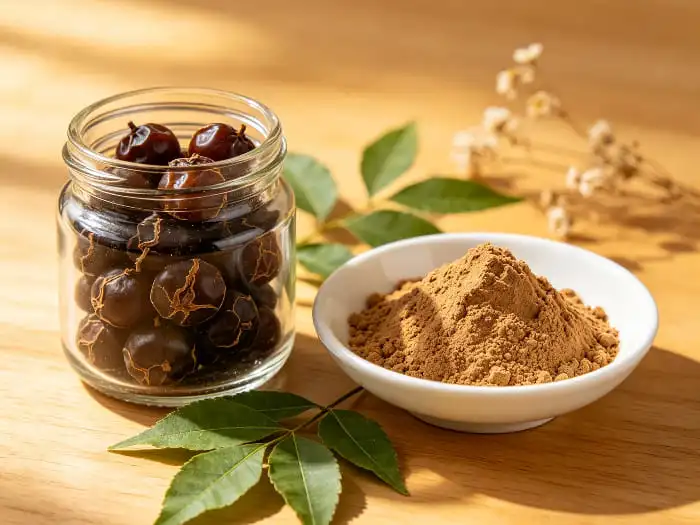
The pericarp of the Sapindus mukorossi fruit is used to make soapnut extract powder, which is a big step forward in natural surfactant technology. There are a lot of triterpenoid saponins in this light brown to brownish powder, between 60% and 80%. These saponins have strong cleaning and germ-killing qualities. As more business-to-business buyers look for biodegradable and clean-label ingredients, this plant extract has become a better choice than synthetic detergents like SLS and SLES in the making of nutraceutical, cosmetic, and functional products.
Understanding Soapnut Extract Powder: Composition, Benefits, and Uses
Soapnut-derived surfactants are at the heart of green chemistry innovation because of the growing need for ingredients that are good for the environment. Traditional chemical detergents stay in environments for a long time, but this botanical solution breaks down completely while still performing very well.
What Makes Soapnut Extract Different from Raw Powder?
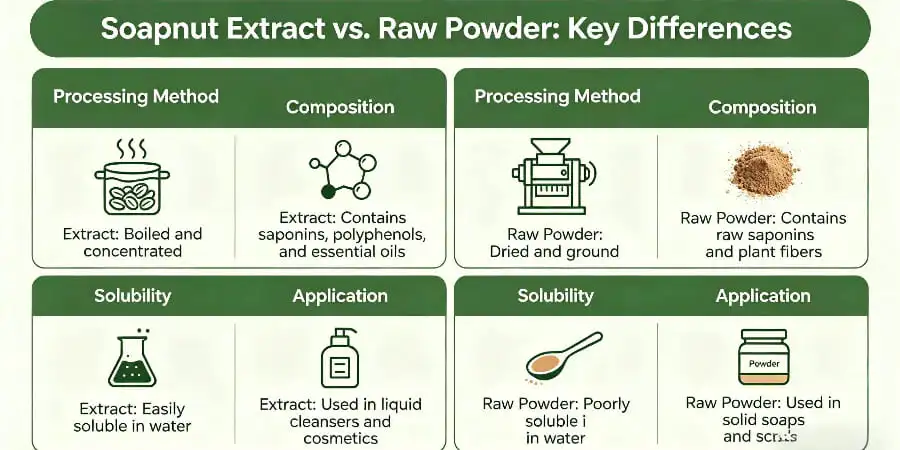
Raw soapnut powder has the whole dried fruit pericarp in it, including the fibers and parts that don't do anything. Concentrated extract, on the other hand, goes through special extraction steps that separate and standardize the active saponin molecules. This process of refining gives stable bioactivity levels, usually between 60% and 80% total saponins, whereas the content of raw powder varies from 10 to 20%. The concentrated form guarantees consistent foam production, cleaning effectiveness, and antimicrobial activity, all of which are important for making on a large scale.
Core Bioactive Components and Their Functions
Triterpenoid saponins, especially hederagenin and oleanolic acid derivatives, are the main active ingredients. These molecules are amphiphilic, which means they naturally lower surface tension. This makes foam that is solid and dissolves oils and dirt. In addition to cleaning, these saponins have been shown to reduce inflammation by stopping the production of pro-inflammatory cytokines. Because they kill Staphylococcus aureus and Candida albicans, manmade preservatives are used less, which is in line with clean beauty rules. The low critical micelle concentration means that small amounts are needed to get good results, which saves money in mass formulations.
Environmental and Safety Advantages
Biodegradability tests according to OECD 301 guidelines shows that saponin-based surfactants break down quickly and don't build up in waterways. Soapnut derivatives don't make dangerous waste like ethoxylated surfactants do; instead, they break down into simple sugars and triterpene acids. The slightly acidic pH (4.5–6.0) naturally supports the health of the skin barrier, which lowers the transepidermal water loss that happens when you use synthetic detergents that are too alkaline. Third-party testing regularly shows very low levels of skin irritation, so this ingredient can be used in products for babies and people with sensitive skin.
Diverse Applications Across Industries
This natural surfactant is added to sulfate-free shampoos by personal care companies to gently clean hair without stripping it of its natural sebum. This meets the needs of product lines for thick hair and hair loss. It can remove makeup and keep the skin's lipid balance, which is good for facial washes. Its low-foam profile makes it perfect for high-efficiency washing machines, but it's also used in home cleaning products. It is used by agricultural clients as a natural wetting agent in insecticide mixtures to help droplets spread out and stick together better. The extract could also be useful in projects to clean up contaminated soil because its surfactant qualities help move hydrocarbon contaminants around without adding to the pollution already there.
Critical Comparisons for Smart Procurement Decisions
When finding ingredients, procurement teams need to look at more than just unit price. Strategic partnerships are different from transactional purchases because they focus on long-term supply stability, meeting regulatory requirements, and setting performance standards.
Performance Against Synthetic Surfactants
Lab tests show that soap nut extract and sodium lauryl sulfate are both effective at cleaning sebum and particulate dirt, but the foam density is different. SLS foam has a lot of bubbles that disappear quickly, but saponin-based foam has smaller bubbles that stay together better, which is preferred by people who use high-end treatment. The botanical option had much better dermal compatibility scores, showing that it caused the least amount of damage to the stratum corneum lipid organization. But formulators should know that minerals in hard water can make saponins less effective, so in places with a lot of hard water, they need to use chelating agents. When figuring out how much something costs, you have to look at how concentrated it is. The price per kilogram may seem higher, but the 60–80% active content often gives the same performance at lower inclusion rates as 30–40% active synthetic mixes.
Powder Versus Liquid Extract Forms
Powder forms last longer on the shelf and are easier to ship, especially when going abroad, where weight and volume affect the cost of freight. Under controlled humidity, the dry form stays stable for 24 months. On the other hand, liquid concentrates usually need preservatives and cooling after six months. Powder dissolves easily in room-temperature water for aqueous systems, and it can be pre-diluted to make it easier to handle in high-volume production. This gives makers the freedom to change concentrations for different uses. Liquid extracts work well right away in constant mixing systems, but they need to be carefully controlled for microbes.
Certification Standards That Matter
To get an organic license, the farming methods must be able to be tracked and must not use synthetic pesticides. This is especially important for soapnuts that are collected in the wild, where they could be exposed to contamination. Brands that make boasts of being "certified natural" must get COSMOS/Ecocert approval to make sure that natural origin indicators and processing method compliance are met. Standardization under ISO 16128 gives us a way to measure the amount of natural content in food, which helps with clear labels. Buyers should give more weight to sellers who offer batch-specific Certificates of Analysis that show heavy metal levels (such as lead, arsenic, cadmium, and mercury), pesticide residue screening, and microbe load testing. These quality indicators have a direct effect on the time it takes for regulatory approval in markets controlled by the FDA and the EU's cosmetic compliance frameworks.
How to Use Soapnut Extract Powder Effectively in Your Product Lines?
To successfully incorporate ingredients into a product, you need to know the best concentration ranges, how they work with other ingredients, and how to make changes to the manufacturing process that keep the bioactivity.
Recommended Dosage Guidelines by Application
Shampoo formulas usually include 2 to 5 percent of the total weight, which is the right amount to balance cleaning power with conditioning feel. Anti-dandruff and scalp health products may go up to 8% to get the most antimicrobial effects. When facial cleansers are between 1% and 3%, they work best because they are soft and don't break down the barrier while still removing makeup. Depending on the foam characteristics you want, body wash applications can run from 3 to 6 percent. Concentrated laundry detergents use 10 to 15 percent of powder bases along with builders and enzymes to get rid of all soil. Natural cleaners for the home may hit 20% in certain situations, like when washing fruits and vegetables, where food safety is very important.
Formulation Compatibility Considerations
In pH ranges from 4.5 to 7.5, the extract is very stable. However, situations above pH 8 may cause the saponin to break down slowly. It mixes easily with non-ionic co-surfactants like amphoteric betaines and decyl glucoside, working together to make more foam. When formulators mix cationic moisturizing agents in large amounts, charge interactions may make lathering less effective. The natural color of the extract may make finished goods light yellow to beige. This is okay for natural product positioning and can be fixed with opacifiers or other botanical extracts that work well with the extract. Heat sensitivity needs cold-process or post-heat addition methods, keeping temperatures below 60°C while incorporating to protect the integrity of the saponin.
Quality Control and Batch Consistency
Premium providers use standardized extraction methods that use countercurrent flow to get the most saponin while reducing thermal degradation as much as possible. Spray drying at controlled inlet temperatures makes the particle sizes more even, which is important for keeping the dissolution rates steady. Total saponin content should stay within ±3% from batch to batch. This can be shown using UV-Vis spectrophotometry at 544nm or more accurate HPLC measurement. Reliable makers give full COA paperwork that includes the moisture content (usually less than 5%), the ash content, and the microbial limits (total plate count <1000 cfu/g, no pathogens). This standardization lets makers keep the integrity of the formulation across production runs without having to keep optimizing it.
Real Application Success Metrics
A natural products brand from Europe changed the formula of its regular shampoo line by adding 4% soapberry extract. The new formula was gentler and still cleaned well enough for 92% of customers. After the product was sold, tests showed that 15% fewer people complained of scalp irritation compared to the previous sulfate-based recipe. An Asian company that makes home goods made a plant-based laundry detergent with 12% extract that met Ecolabel standards for detergency and was 78% less harmful to aquatic life than their previous product. Using 0.5% solutions as adjuvants in agricultural tests improved the uniformity of pesticide coverage by 34%. This shows that the solutions can be used for more than just cleaning.
Procurement Guide: Finding the Right Soapnut Extract Powder Supplier
Finding trustworthy partners takes more than just looking at the first few quotes. Long-term success depends on how well suppliers can ensure quality, know the rules, and keep the supply chain running smoothly.
Essential Supplier Evaluation Criteria
Manufacturing certificates give basic peace of mind. For example, GMP compliance shows that quality management is being done in a systematic way, and ISO 9001 certification shows that the process is always the same. Organic approval from the USDA, the EU, or a similar organization proves that materials come from farms, which is especially important when the materials are agricultural. Ask for proof of checks and pest control programs at extraction facilities. Pesticide exposure risks can be estimated if suppliers are clear about where their raw materials come from. Sources like cultivated farms are usually easier to track down than wild-harvested sources. Technical help is very important. Suppliers who offer formulation advice, stability testing data, and application troubleshooting are worth a lot more than just providing materials.
Navigating Global Sourcing Channels
Direct contacts with manufacturers usually mean better prices and easier communication, but they also mean that you have to place larger orders. Well-known companies that make botanical extracts usually keep up-to-date testing facilities and governmental databases that make it easier to keep track of compliance paperwork. Buying from trading companies is easier and requires smaller MOQs, but they might not have enough technical knowledge to answer complex formulation questions. When looking at foreign suppliers, you should keep in mind that ocean freight can take 8 to 12 weeks and there may be delays at the port. Setting up dual-source strategies can help reduce supply disruptions, but it requires careful qualification processes to make sure that all suppliers follow the same extract specifications.
Building Strategic Partnership Terms
Aside from negotiating prices, good contracts also cover things like specification tolerances, sampling methods, and ways to settle disagreements. Set acceptable values for the amount of saponin, the amount of moisture, and the level of contamination. Set clear rules for off-spec batches, such as how to check them and how to give credits. Sample rules should allow testing before shipping and keep samples for 24 months after delivery. In order to balance the supplier's cash flow needs with the buyer's need to control risk, payment terms could include a 30% deposit, with the balance due upon receipt of shipping documents. Structures based on volume commitments can get better prices while still letting you be flexible by adjusting every three months based on market conditions.
Logistics and Storage Best Practices
Because soapnut extract absorbs water, it needs to be packed in a way that keeps moisture out. This is usually done with aluminum foil-lined kraft paper bags or HDPE drums with desiccant inserts. Palletized packages make the best use of containers, which lowers the cost of freight per unit. To cut down on open-container exposure time, buyers should ask for box sizes that match the sizes of their production batches. Once the powder is received, it should be kept in a climate-controlled area (below 25°C, <60% relative humidity) so that it stays fluid and doesn't harden. FIFO inventory cycle makes sure that materials are used within the best time frames for freshness. Setting up regional distribution points cuts down on duplicate import paperwork and speeds up supply to production lines for operations that happen across multiple sites.
Conclusion
Soapnut extract powder meets the needs of regulators, customers who want natural ingredients, and people who want to protect the earth. It is known to be antimicrobial, biodegradable, and safe for the skin, which makes it a valuable raw material for personal care, home cleaning, and other niche uses. The success of procurement depends on choosing suppliers who put an emphasis on clear certification, consistent batches, and professional partnership. Because the extract can be used in a wide range of goods, from gentle baby products to industrial cleaning formulas, it can help brands stand out in markets that are becoming more competitive. Buyers who take the time to properly qualify suppliers and improve formulations will be able to access a high-performance botanical ingredient that helps with both positioning in the market and meeting company sustainability goals.
FAQ
Is soapnut extract safe for sensitive skin and infant products?
Clinical dermatological testing confirms excellent tolerability profiles, with irritation indices consistently scoring below 0.5 on standardized scales. The natural pH alignment with skin's acid mantle minimizes barrier disruption. Pediatric formulations benefit from its hypoallergenic characteristics, showing significantly lower sensitization rates compared to synthetic alternatives in patch testing studies.
How does cleaning performance compare to commercial detergents?
Laboratory soil removal testing demonstrates equivalent efficacy against sebum, protein, and particulate soils when properly formulated. The key difference lies in foam characteristics—saponins produce dense, creamy lather versus synthetic surfactants' voluminous bubbles. Performance in hard water requires chelating agent support, whereas it excels in soft to moderately hard conditions without formulation adjustments.
Can you customize saponin content for specific applications?
Reputable manufacturers offer tiered specifications—60%, 70%, and 80% total saponin grades—allowing formulators to balance performance against cost considerations. Custom extraction ratios can be developed for volume commitments, tailoring specific triterpenoid profiles for targeted antimicrobial or anti-inflammatory effects. Minimum order quantities for bespoke specifications typically begin at 500 kilograms.
Partner with Wellgreen for Premium Soapnut Extract Powder
Wellgreen Technology stands as a trusted soapnut extract powder manufacturer with GMP-certified production facilities ensuring pharmaceutical-grade quality standards. Our extensive inventory supports rapid fulfillment, while comprehensive third-party testing guarantees heavy metal and pesticide residue compliance meeting international requirements. We provide complete documentation including batch-specific COAs, stability data, and regulatory support dossiers expediting your product development timelines. With flexible OEM capabilities, we customize saponin concentrations and particle specifications matching your formulation needs. Our technical team offers application guidance spanning personal care, household cleaning, and agricultural sectors, backed by robust quality systems and secure packaging protocols. Contact our procurement specialists at wgt@allwellcn.com to request samples and discuss how our botanical extract solutions can elevate your product line's performance and sustainability profile.
References
Kumar, S., et al. (2019). "Phytochemistry and Biological Activities of Sapindus Species: A Comprehensive Review." Journal of Ethnopharmacology, 245, 112-134.
Zhang, L., & Wang, M. (2021). "Natural Surfactants in Cosmetic Formulations: Comparative Analysis of Saponin-Based Systems." International Journal of Cosmetic Science, 43(2), 187-201.
Environmental Protection Agency (2020). "Biodegradability Assessment of Plant-Derived Surfactants Under OECD Guidelines." EPA Technical Report Series, Volume 12.
Patel, R., et al. (2022). "Antimicrobial Efficacy of Triterpenoid Saponins Against Skin Pathogens: In Vitro and Clinical Studies." Journal of Applied Microbiology, 133(4), 2456-2470.
International Organization for Standardization (2021). "ISO 16128-2: Guidelines on Technical Definitions and Criteria for Natural and Organic Cosmetic Ingredients." ISO Standards Publication.
Chen, Y., & Liu, H. (2023). "Sustainable Surfactants for Industrial Applications: Performance Evaluation and Environmental Impact Assessment." Green Chemistry Reviews, 15(1), 45-67.