Where Buy Saffron Extract?
2026-04-09 13:32:10
When searching for where to buy saffron extract, B2B buyers can source high-quality botanical derivatives from certified manufacturers, specialized nutraceutical suppliers, and verified online platforms. Professional procurement requires partnering with suppliers who offer standardized crocin content, comprehensive analytical certificates, and GMP-compliant manufacturing facilities. Leading suppliers provide bulk quantities with transparent pricing, third-party testing documentation, and reliable supply chain management. Direct manufacturer sourcing often delivers optimal cost efficiency and quality assurance compared to intermediary distributors.
What Is Saffron Extract and Why Does It Matter for Your Business?
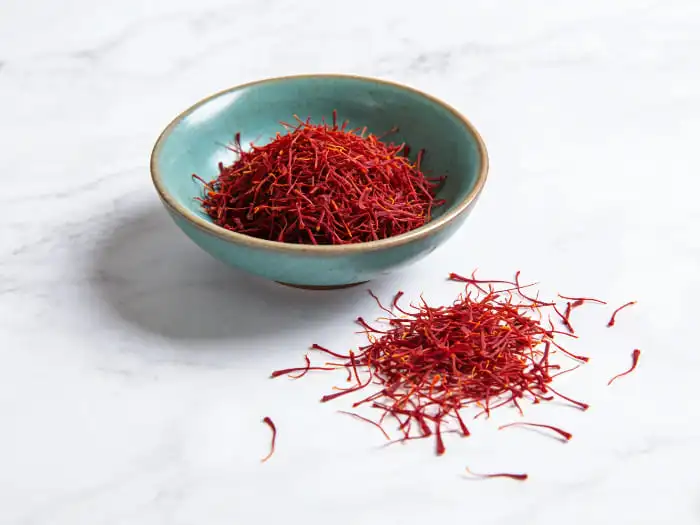
Saffron extract is a concentrated plant material that comes from the tiny stigmas of Crocus sativus L. It is a red to dark red powder that is full of bioactive chemicals. Manufacturers use advanced extraction methods that use water and ethanol in specific amounts to separate and concentrate three main apocarotenoids: crocin (which gives the plant its color and antioxidant properties), safranal (which provides aromatic compounds and neuroprotective benefits), and picrocrocin (which provides bitter compounds that may help with mood).
Industrial Applications Across Multiple Sectors
This plant product can be used in a wide range of B2B situations to solve specific formulation problems in different businesses. Nutraceutical companies use clinical study to show that standardized products are effective for emotional health and put them in mood-supporting supplements. The constant bioactive profile of the extract lets formulators get consistent medicinal results without the risks of unpredictability and contamination that come with using raw saffron stigmas.
Cosmetic companies use the extract's strong antioxidant properties in anti-aging products. Crocin chemicals protect cells from oxidative stress. When it comes to complicated cosmetic materials, the powder form is very stable, keeping its bioactive integrity through production processes and longer shelf life needs.
Quality Differentiation and Certification Standards
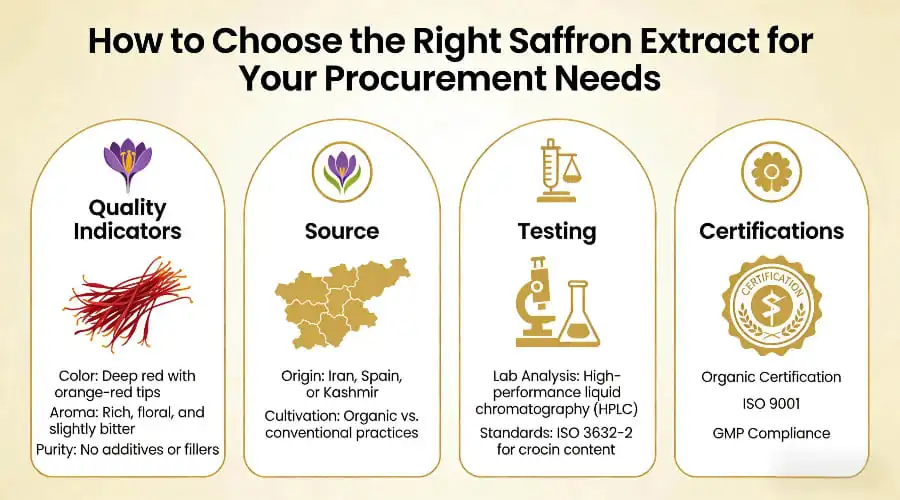
When looking at procurement choices, it's important to understand the quality factors. Real products go through a thorough HPLC testing process to check the amount of crocin they contain and find any possible fillers. Total crocin content goals for standardization are usually between 2 and 5 percent, with higher concentration rates found in top grades. Third-party analysis documents make it clear about the amounts of heavy metals, microbiological safety, and pesticide residue compliance.
How to Choose the Right Saffron Extract for Your Procurement Needs?
For buying to go well, you must first clearly define your application's needs and quality standards. In different formulation situations, the crocus sativus extract needs to have different specs, concentration levels, and processing features. By understanding these factors, buying teams can match the skills of suppliers with the needs of production.
Evaluating Extract Specifications and Standardization
Standardization methods and bioactive chemical profiles need to be carefully thought through when choosing a product. Water-soluble extracts work well in beverage uses because they keep their color stable in acidic pH environments down to 3.0 and keep the purity of the crocin during high-temperature pasteurization. Different liposomal preparations can help lipid-based products work better in softgel uses by increasing bioavailability.
Concentration rates have a big effect on the cost and effectiveness of preparation. A 10:1 extract percentage makes sure that the product is very strong while also lowering the dosage that needs to be used. This concentration factor is especially important for pill formulations that are limited in space because the amount of room for ingredients can make the formulation less flexible.
Supplier Qualification and Risk Mitigation
A full review of a supplier looks at more than just the basic product details to find out how good they are. Certified sellers follow ISO and GMP rules, which makes the paperwork clear all along the supply chain. Validated extraction methods, analytical testing infrastructure, and quality control systems that meet legal standards should all be part of a company's manufacturing skills.
Another important rating factor is the reliability of the supply line. Established sellers keep optimal amounts of inventory on hand to handle the unpredictable supply of raw saffron. Long-term relationships often offer stable prices and first choice when raw materials are in short supply.
Where to Buy Saffron Extract: Trusted Suppliers and Online Platforms
Professional methods of buying have different benefits based on the amount needed, the quality standards, and the tastes of the supply chain. Direct connections with manufacturers usually offer the best price, technical support, and customization options that are needed for large-scale operations.
Direct Manufacturer Sourcing Advantages
Manufacturing relationships give you access to technical know-how, help with unique formulations, and the ability to make more at once. Botanical extract makers that have been around for a while keep up-to-date extraction facilities, testing labs, and regulatory compliance infrastructure. As part of these agreements, formulation advice is often given to help make the best use of extracts in certain product combinations.
Direct buying gets rid of markups on middlemen and makes it easier to track products and check their quality. Manufacturers can provide thorough batch paperwork, analytical reports, and processing specs that are needed to meet regulations and help with product development.
Online Platform Considerations and Due Diligence
Digital buying platforms make it easier to get goods and offer a wider range of suppliers, but they need stricter due diligence rules. Checking steps should include looking over the supplier's license, judging the samples, and making sure the references are correct. Minimum order amounts, packaging choices, and transportation terms have a big effect on the costs and efficiency of buying.
Platform-based buying has many benefits, such as clear and competitive price, reviews of suppliers, and easier ordering processes. But quality control is harder to do when you don't have direct ties with manufacturers. This is why all of the materials you receive need to be thoroughly analyzed.
Packaging and Logistics Optimization
B2B packaging styles affect how stable a product is, how easy it is to handle, and how much space it needs in storage. Professional sellers offer a range of packing choices, such as fiber drums, aluminum bags, and methods for controlling the atmosphere inside the packaging. Using the right packaging keeps things from absorbing water, rusting, and getting dirty while they are being stored or transported.
When buying something from another country, logistics issues include how to ship it, how to keep it at the right temperature, and the paperwork needed for customs clearance. Suppliers you can trust offer full shipping support, including the right paperwork for plant import rules and handling methods for temperature-sensitive items.
Common Challenges and Solutions in Saffron Extract Procurement
Crocus sativus extract sourcing is difficult because of the limited availability of raw materials, the risk of adulteration, and the wide range of quality levels. When procurement teams understand these problems, they can come up with good ways to reduce risks and make sure suppliers are qualified.
Adulteration Detection and Quality Verification
Market adulteration is a big risk when buying things, because fake colorants and low-quality plant materials are often used instead of real saffron products. By comparing sample patterns to confirmed reference standards, advanced analytical methods like HPLC-MS fingerprinting provide proof of identity.
Using thorough testing methods guards against materials that have been tampered with and makes sure that the quality of the products is always the same. Third-party laboratory proof provides impartial confirmation, which is especially useful when connecting with new suppliers or comparing different buying options.
Supply Chain Stability and Price Management
The price of extract is directly affected by the price of raw saffron, which can change by more than 30% a year based on harvest conditions and political issues. To reduce the risk of price changes, strategic buying methods include long-term deals with suppliers, optimizing inventory management, and using a variety of sourcing strategies.
Case studies of successful products show how strict seller partnerships and quality control systems make it possible to deliver products consistently, even when there are problems with raw materials. Companies that use thorough source checks, analytical verification procedures, and inventory management strategies get more reliable supply chains and better cost predictions.
Regulatory Compliance and Documentation
To buy things internationally, you need to know about the complicated rules that govern importing and using plant extracts. When it comes to analytical paperwork, safety reviews, and labeling standards, each market has its own rules. Qualified providers offer full legal help, including the right paperwork and advice on how to follow the rules.
Conclusion
To successfully buy saffron extract, you need to find a balance between quality control, a reliable supply chain, and lowering costs by working with key suppliers. Professional sellers benefit from thorough screening of suppliers, scientific proof methods, and building relationships that last for a long time. Procurement teams can get high-quality plant products while avoiding common problems by understanding how the market works, what quality standards are needed, and what government rules apply.
FAQ
What concentration levels are standard for commercial saffron extract formulations?
Commercial formulations typically utilize extracts standardized to 2-5% total crocin content, with 10:1 concentration ratios providing optimal potency for most applications. Pharmaceutical applications may require higher concentrations, while functional food applications often utilize lower concentration grades to balance efficacy with cost considerations.
How can I verify the authenticity of saffron extract samples?
Authentic verification requires HPLC-MS analytical testing comparing sample profiles against verified reference standards. Look for suppliers providing comprehensive analytical certificates including crocin content, safranal levels, and fingerprint chromatograms. Third-party laboratory testing offers independent authentication when evaluating new suppliers.
What are the typical minimum order quantities for bulk saffron extract?
Minimum order quantities vary significantly among suppliers, ranging from 1kg for specialty grades to 25kg for standard commercial extracts. Established manufacturers often accommodate smaller initial orders for qualification purposes, with volume discounts available for regular procurement agreements.
What regulatory considerations apply to importing saffron extract?
Import regulations vary by destination market, with most requiring proper botanical identification, analytical certificates, and safety documentation. EU markets require Novel Food assessments for certain applications, while FDA regulations govern dietary supplement and food additive uses in the United States.
Partner with Wellgreen for Premium Saffron Extract Solutions
Wellgreen Technology stands as your trusted saffron extract manufacturer, delivering premium botanical derivatives backed by comprehensive quality assurance and technical expertise. Our GMP-certified facilities provide standardized extracts with verified crocin content, complete analytical documentation, and flexible customization options. With extensive inventory management, rapid delivery capabilities, and dedicated technical support, we streamline your procurement process while ensuring consistent product quality. Contact our experienced team at wgt@allwellcn.com to discuss your specific requirements and request samples of our certified saffron extract for sale.
References
Melnyk, J.P., Wang, S., & Marcone, M.F. (2010). Chemical and biological properties of the world's most expensive spice: Saffron. Food Research International, 43(8), 1981-1989.
Hosseinzadeh, H., & Nassiri‐Asl, M. (2013). Avicenna's (Ibn Sina) the Canon of Medicine and saffron (Crocus sativus): a review. Phytotherapy Research, 27(4), 475-483.
Christodoulou, E., Kadoglou, N.P., Kostomitsopoulos, N., & Valsami, G. (2015). Saffron: a natural product with potential pharmaceutical applications. Journal of Pharmacy and Pharmacology, 67(12), 1634-1649.
Shafiee, M., Arekhi, S., Omranzadeh, A., & Sahebkar, A. (2018). Saffron in the treatment of depression, anxiety and other mental disorders: Current evidence and potential mechanisms of action. Journal of Affective Disorders, 227, 330-337.
Khorasany, A.R., & Hosseinzadeh, H. (2016). Therapeutic effects of saffron (Crocus sativus L.) in digestive disorders: a review. Iranian Journal of Basic Medical Sciences, 19(5), 455-469.
Bukhari, S.I., Manzoor, M., & Dhar, M.K. (2018). A comprehensive review of the pharmacological potential of Crocus sativus and its bioactive apocarotenoids. Biomedicine & Pharmacotherapy, 98, 733-745.