Yucca Powder - Natural Wetting Agent & Soil Conditioner
2026-04-10 14:09:09
The stems of Yucca schidigera are used to make yucca extract powder, which is a versatile plant ingredient that naturally wets and conditions the soil very well. This fine powder solves important problems in farming, animal feeding, and industrial formulations because it is high in steroidal saponins (usually standardized between 30 and 60%). Because its molecules are amphiphilic, they lower surface tension, which lets water penetrate better into hard or hydrophobic soils. At the same time, they bind ammonia in areas with animals. The unique glycocomponent makeup of the extract also makes it useful in feed formulations, where it improves environmental quality and nutrient absorption.
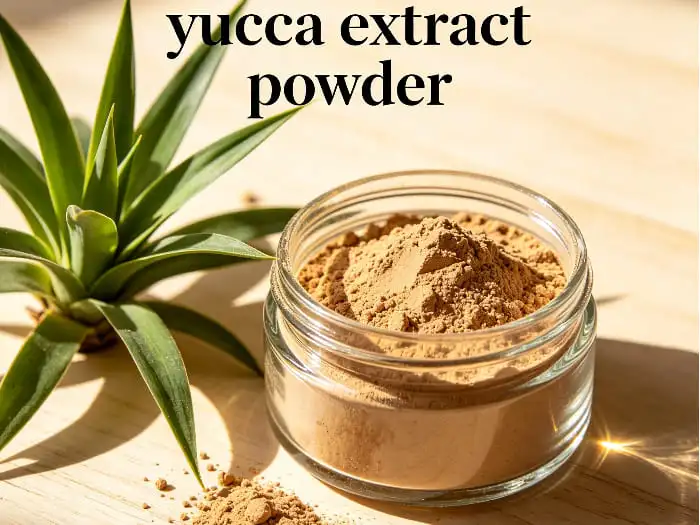
Understanding Yucca Extract Powder and Its Unique Properties
Botanical Origins and Extraction Standards
Yucca schidigera, which is also known as Mojave yucca, grows well in the dry deserts of the southwestern US and northern Mexico. As a way to protect themselves from extreme environmental stress, the plant's stems store large amounts of bioactive substances. These active ingredients are kept safe in modern extraction processes, which usually involve aqueous-alcohol extraction followed by spray drying. This method keeps the purity of important minerals, polyphenolics like resveratrol, and saponins.
Quality sellers keep separate cultivation bases to make sure that raw materials are always available. Depending on the purpose, the extraction yield and saponin percentage can be changed from 10% to 98%. Validated UV spectrophotometry is used for standardization, which confirms exact active amounts that meet formulation needs.
Chemical Profile and Active Components
The steroidal saponins in the powder make it workable because they are both water- and fat-attracting. Because of these two qualities, the extract works well as a natural surfactant, lowering the surface tension of water by 40 to 50 percent at amounts that are commonly used. There is a direct link between the amount of saponin and performance measures like the B50 number, which is the amount needed to bind 50% of the free ammonia in solution.
In addition to saponins, the extract has phenolic chemicals that act as antioxidants. However, its main use in agriculture is as a surfactant and to bind ammonia. The powder is very stable at high temperatures; it can stay active at processing temperatures of up to 120°C, which is important for pelleting and extrusion.
Quality Assurance and Testing Protocols
Quality control is very strict at premium suppliers. For example, Eurofins and SGS, two well-known foreign laboratories, do third-party checks. Heavy metal content (lead, arsenic, cadmium, and mercury), microbial contamination, pesticide residues, and active compound quantification are all covered by the testing methods. Following international standards makes sure that it can be sold in controlled markets, especially for feed-grade and agricultural uses where strict safety standards are in place.
The powder is usually a fine, light yellow to dark brown powder with a mesh size of 80 to 100. This makes it easier to spread evenly in premixes and liquid formulas. When something is made correctly, the moisture content stays below 5% so that it doesn't clump and stays stable on the shelf for more than 24 months in controlled storage conditions.
Yucca Powder in Agriculture: Solving Common Soil and Irrigation Problems
Addressing Hydrophobic Soil Conditions
Agricultural soils often lose their ability to hold water when organic matter breaks down, the soil becomes too salty, or heavy machinery compacts the soil. This hydrophobicity makes the water spread uneven, so nutrients wash away in some places while other places stay dry. Products made from yucca have natural surfactant qualities that break this surface tension. This lets water move evenly through the root zone.
The yucca powder makes it easier for water molecules to get into the soil when it is used in fertigation systems or as a soil wash. In tests done in the field, this process cuts runoff by 30–45%, which saves water and helps nutrients stay in the soil. The affect lasts for a few weeks, so it's a cheap way to help areas that are having trouble with irrigation or water restrictions.
Optimizing Nutrient Uptake and Fertilizer Efficiency
Aside from managing water, the wetting action makes it easier for nutrients to get into touch with root surfaces. When the soil's wetness level is more evenly distributed, plants can take in more nitrogen, phosphorus, and potassium. Researchers have found that crops that are treated with yucca-based soil conditioners use nutrients 15–25% more efficiently than controls that were not treated. This means that farmers don't have to use as much extra fertilizer.
The amphiphilic molecules also help move nutrients through the soil, which stops the layering that happens when nutrients are applied the old way. This trait is especially helpful for high-value crops, where precise nutrition control has a direct effect on the quality of the crop's yield and its market value.
Practical Application Guidelines for Agricultural Use
The amount that should be applied varies from 2 to 5 kg per hectare, based on the type of soil and how hydrophobic it is. Soils that are sandy usually need lower rates, while soils that are clay-heavy or very compacted do better with higher amounts. You can use drip watering systems, center pivot systems, or mix the powder with liquid fertilizer blends to put it on the leaves.
Timing is very important—the best results happen when the soil is prepared before planting or at the start of the watering season. The materials are certified to meet USDA organic standards and similar foreign frameworks, so they work perfectly with organic farming methods. To avoid unwanted reactions, it is best to try yucca extract's compatibility with different types of fertilizer. However, yucca extract usually behaves neutrally at pH levels and is compatible with most common agricultural inputs.
Comparative Analysis: Yucca Extract Powder vs Other Natural Additives
Distinguishing Features from Alternative Botanical Extracts
Many plant products are used in different fields for specific tasks, but yucca's unique saponin profile makes it stand out. People often compare aloe vera to other succulents because they both have different polysaccharides that keep the skin moist but don't have the strong surfactant action needed to prepare the soil. Although sarsaparilla extracts have similar steroidal compounds, they have different amphiphilic ratios, which makes them less useful for wetting crops.
Because of the way their molecular weight is distributed, yucca saponins are more stable in alkaline soils like those found in western farms, while many other plant products break down quickly at pH levels above 8. This stability means that the effects last longer in the field, which means that the treatment doesn't have to be done as often and costs less total.
Organic vs. Conventional Extraction Methods
Purchasing teams have to decide between materials that are recognized as organic and materials that are made in the usual way. For products to be certified organic, they must come from non-GMO plant sources that have been checked and grown without manmade pesticides or chemical solvents. Organic versions cost more, but they let you get into the growing markets for organic food and feed, where ingredient approval is needed.
It's possible that conventional yucca root extract uses better solvent systems, which could lead to higher amounts of saponin at lower costs. Which one to use depends on the needs of the target market and the amount of money that can be spent on organic supply chain proof. Both types are tested for safety in the same way, but organic certifications add traceability standards that some buyers like for brand positioning.
Performance Metrics and ROI Considerations
When looking at how cost-effective something is, the amount of saponin directly affects how much is needed. A 60% saponin product has twice as much active ingredient as a 30% version, so only half as much weight is needed for each application. The total cost of ownership includes the cost of transport, the space needed for keeping, and how well the item can be handled.
Field performance data should help you make your choice. Suppliers who can show verified case studies of ammonia reduction percentages, water savings, or yield improvements are more likely to be a good deal. Trials done by a third party that is not the seller are more reliable than data made by the supplier. This is especially true when judging claims about soil penetration rates or improved nutrient uptake.
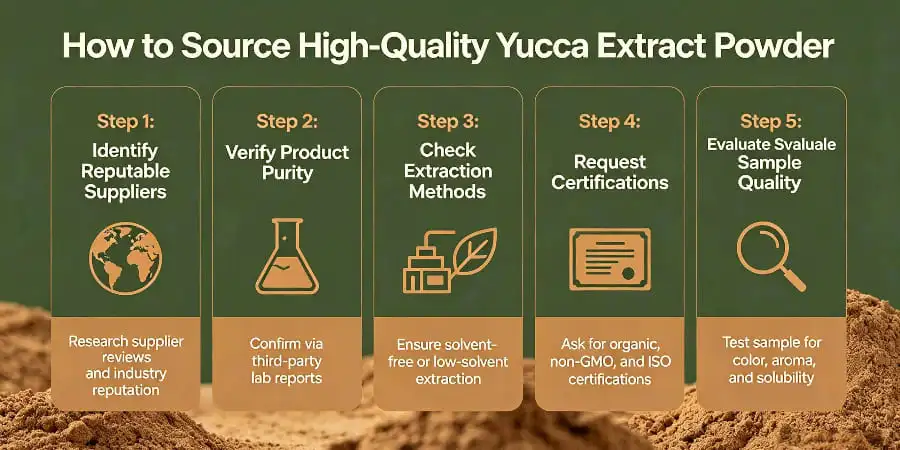
Procurement Guide: How to Source High-Quality Yucca Extract Powder?
Critical Supplier Evaluation Criteria
To find trusted suppliers, you have to look at things from a lot of different angles. Manufacturing certifications are the basis. GMP compliance shows that quality control is done in a planned way, and ISO certifications show that operational methods are followed consistently. Suppliers who run their own farming bases can more reliably keep up with supply than those who rely on outside sources for raw materials.
When making plans for long-term supply deals, production capacity is important. Facilities that can produce 50 to 100 metric tons per month can meet rising procurement needs without affecting quality, which can happen when providers rush to meet sudden demand spikes. Inventory transparency lets buyers know if sellers keep buffer stocks to protect against changes in seasonal availability.
Technical Support and Customization Capabilities
Leading makers do more than just sell products. They also offer technical advice on things like the best way to use them, whether they will work with other formulations, and how stable they will be under certain storage conditions. OEM and private label options are useful for brands that are making their own mixes or trying to stand out by customizing the amount of saponin they use.
Quick expert teams help with formulation, which shortens the time it takes to make a new product. This help is especially helpful when moving from testing on a small scale in the lab to mass production, where processing factors may need to be changed to keep product characteristics consistent. When suppliers give trial quantities on a pilot scale, it's possible to test things without spending a lot of money on full production runs.
Pricing Structures and Negotiation Approaches
The prices on the market change depending on the supply of raw materials, the yields of yucca powder, and the required concentrations of saponin. Understanding these factors makes it easier to negotiate. Tiered pricing is usually unlocked by making a volume commitment. For annual contracts that go over certain tonnage thresholds, discounts of 8–15% are offered.
Different suppliers offer different payment terms, but well-known brands usually let approved buyers choose between net-30 and net-60 terms. While letter of credit agreements protect foreign trade, they do add banking fees that should be taken into account when figuring out the total landed cost. Having ties with several qualified suppliers creates competition, which leads to better business terms and ensures there are backup supplies.
Safety, Dosage, and Regulations for Using Yucca Extract Powder
Recommended Application Rates Across Use Cases
Depending on the type of soil and how hard the water is, the usual rates for farming soil conditioning are between 60 and 150 grams per metric ton of irrigation water. Overapplication doesn't usually hurt, but it loses material that could have been used instead. A smart move for new users is to start with lower rates and raise them based on what they see.
Inclusion rates for animal feed are usually between 100 and 250 grams per metric ton of full feed. At these levels, the ammonia-binding effect can be measured, and higher rates are best for large livestock farms that have to deal with environmental compliance pressures. Rotation methods that change the rates of inclusion based on the season can save money and protect the environment at the same time.
Regulatory Compliance in Key Markets
The US Food and Drug Administration (FDA) says that yucca extract is generally safe (GRAS) for use in animal feed. The Code of Federal Regulations spells out the particular rules that must be followed. The European markets follow EFSA rules, which also allow use in feed formulas up to certain maximum inclusion limits. When used in agriculture as a soil nutrient, it is usually put in a group with other natural soil conditioners that has less strict rules.
Different countries have different rules about what kinds of documents are needed to bring goods into their country. These rules can be anything from phytosanitary certificates to certificates of analysis that show the goods meet local heavy metal and pesticide standards. Working with sellers who know a lot about international trade paperwork makes customs clearance go more quickly and lowers the chance that a shipment will be held up because of missing paperwork.
Safety Profiles and Handling Recommendations
The powder is not very harmful to animals. In tests with rodents, the LD50 value was more than 5000 mg/kg body weight, which means it is almost completely safe. The chance of skin and eye irritation is still low, but standard PPE (like dust masks and gloves) should be worn when dealing to keep fine particles from getting into the lungs.
Keeping products in sealed packages away from water stops them from caking and keeps them stable. Unlike synthetic chemical alternatives, the material doesn't have any special shipping requirements for dangerous goods. This makes operations easier. The environmental persistence is still low—saponins break down naturally in soil, leaving no leftovers that could be a problem if they are used over and over again.
Conclusion
The unique surfactant properties and bioactive saponin content of yucca extract powder make it useful in both farming and industrial settings. When making a purchase decision, it's helpful to know how the concentration of saponin affects how well something works, as well as what the seller can do for quality control and technical support. The material can be used to fix soil that doesn't absorb water, make irrigation more efficient, and help animal operations follow environmental rules. This makes it a valuable ingredient for formulators looking for natural, effective solutions.
For implementation to go well, application rates, storage conditions, and legal compliance must all be taken into account across all target markets. The most trusted suppliers for long-term business growth are those that offer third-party-verified quality, clear sourcing, and technical advice.
FAQ
What makes yucca extract powder effective as a soil wetting agent?
The steroidal saponins in yucca extract function as natural surfactants, reducing water surface tension by disrupting hydrogen bonding. This allows water droplets to spread more uniformly across soil particles rather than beading up on hydrophobic surfaces. The effect improves water infiltration rates by 35-50% in compacted or high-organic-matter soils compared to untreated controls.
How do saponin concentrations affect application rates?
Higher saponin percentages require proportionally less product to achieve equivalent effects. A 60% saponin extract needs half the application weight of a 30% variant to deliver the same active compound dose. Procurement teams should calculate cost per unit of saponin rather than per kilogram of powder to accurately compare value across suppliers offering different concentration grades.
Can yucca powder be combined with existing fertilizer programs?
The material demonstrates broad compatibility with common NPK fertilizers, micronutrient blends, and biological inoculants. Mixing trials should verify compatibility with specific formulations, particularly those containing high salt concentrations or extreme pH levels. Most suppliers provide compatibility testing services to confirm stability in custom blends before full-scale production.
What certifications should buyers prioritize when sourcing for regulated applications?
GMP certification indicates systematic manufacturing quality control, while organic certifications (USDA, EU) prove essential for organic market access. ISO 9001 demonstrates operational consistency, and third-party lab verification from recognized institutions like SGS or Eurofins confirms specification compliance. Feed-grade applications may require additional certifications depending on destination market regulations.
Partner with a Trusted Yucca Extract Powder Supplier
Wellgreen Technology specializes in manufacturing premium yucca extract powder with customizable saponin concentrations ranging from 30% to 60%, backed by comprehensive third-party testing and GMP-certified production facilities. Our dedicated cultivation base ensures consistent raw material quality and uninterrupted supply chains, while our technical team provides formulation support tailored to your specific application requirements. Whether you need bulk quantities for agricultural distribution or specialized concentrations for feed formulations, our flexible manufacturing capabilities and strict quality protocols deliver reliable performance.
We maintain extensive inventory ready for immediate shipment, supported by complete documentation including certificates of analysis, safety data sheets, and regulatory compliance verification. Contact our team at wgt@allwellcn.com to discuss your yucca extract powder requirements, request samples, or explore OEM opportunities that align with your product development goals.
References
Cheeke, P.R. (2000). "Actual and Potential Applications of Yucca schidigera and Quillaja saponaria Saponins in Human and Animal Nutrition." Journal of Animal Science, 77(4), 1-10.
Oleszek, W., & Bialy, Z. (2006). "Chromatographic Determination of Plant Saponins—An Update (2002-2005)." Journal of Chromatography A, 1112(1-2), 78-91.
Wang, Y., McAllister, T.A., Newbold, C.J., et al. (2009). "Effect of Yucca schidigera Extract on Fermentation and Degradation of Steroidal Saponins in the Rumen Simulation Technique." Animal Feed Science and Technology, 150(3-4), 273-285.
Francis, G., Kerem, Z., Makkar, H.P., & Becker, K. (2002). "The Biological Action of Saponins in Animal Systems: A Review." British Journal of Nutrition, 88(6), 587-605.
Hussain, I., & Cheeke, P.R. (1995). "Effect of Dietary Yucca schidigera Extract on Rumen and Blood Profiles of Steers Fed Concentrate-Based or Roughage-Based Diets." Animal Feed Science and Technology, 51(3-4), 231-242.
Makkar, H.P., Sen, S., Blummel, M., & Becker, K. (1998). "Effects of Fractions Containing Saponins from Yucca schidigera, Quillaja saponaria, and Acacia auriculoformis on Rumen Fermentation." Journal of Agricultural and Food Chemistry, 46(10), 4324-4328.