Apigenin Extract Benefits: A Complete Guide to Its Natural Advantages
2026-06-24 14:04:45
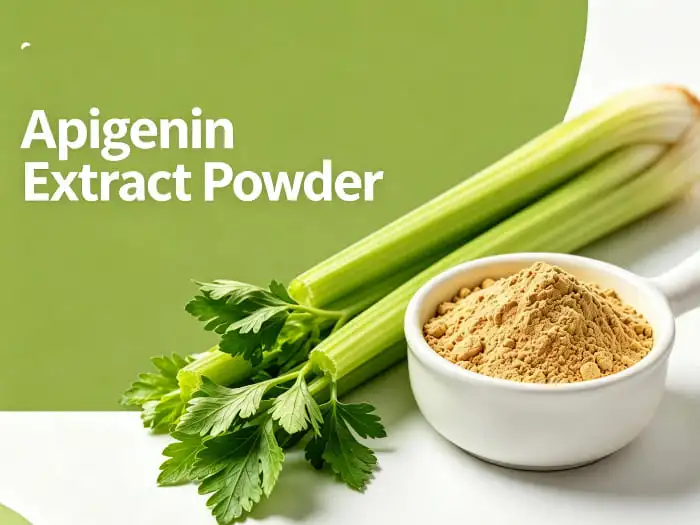
Apigenin extract is a new way to make natural health products that offer concentrated medicinal benefits from plants like celery, chamomile, and parsley. This standard flavonoid molecule is used as an important ingredient in many modern food supplements, cosmetics, and medicines because it is very pure (often hitting 98% assay) and always works well as a medicine. The extract solves important problems in product creation by allowing for consistent dosing, better bioavailability compared to raw plants, and strict quality control that meets international production standards. As people look for natural ways to deal with stress and sleep problems and clean-label anxiety relief, our guide looks at why this flavone has caught the attention of procurement professionals looking for scientifically proven alternatives to manmade chemicals.
Understanding Apigenin Extract: Nature, Mechanism, and Uses
What Defines High-Quality Apigenin Powder?
The process of turning plant matter into a pharmaceutical-grade powder uses advanced extraction technology to remove the active aglycone structure (4',5,7-trihydroxyflavone, CAS 520-36-5) from the complex plant tissues. Instead of using rough plant powders that don't always work, modern extraction uses solvent systems like ethanol or supercritical CO2 and then crystallization to get amounts above 98%, which can be proven by HPLC analysis. This process of refinement gets rid of photo-sensitizing chemicals and farming waste while keeping the purity of the molecules. The fine yellow powder that is made has certain physical qualities, such as a melting point close to 345°C, low water solubility that needs special delivery methods, and high stability when stored properly. Because of these features, it can be put inside capsules, pressed into tablets, or mixed into healthy drink mixtures when mixed with the right solubilizers.
Biological Mechanisms Driving Therapeutic Effects
At the cellular level, this flavonoid works in a number of ways that pharmaceutical experts find very interesting. The substance binds to benzodiazepine receptors on GABA-A channels and changes the behavior of neurotransmitters to help people relax without making them sleepy or dependent, which can happen with synthetic anxiety medications. At the same time, its hydroxyl groups are very good at getting rid of free radicals, stopping oxidative stress chains that cause inflammation and cell age. New study on aging shows that it helps keep nicotinamide adenine dinucleotide (NAD+) levels high, which is important for mitochondrial activity and DNA repair. This three-way mechanism—anxiolytic, antioxidant, and NAD+ preservation—gives formulators making the next generation of wellness products that target stress resilience, cognitive health, and metabolic optimization new ways to place their goods.
Industrial Applications Across Product Categories
This botanical substance can be used in a lot of different types of industry. Nutritional companies put it in pills for evening rest. They usually mix it with magnesium threonate and L-theanine to get into the $52 billion market for sleep aids. Cosmetic scientists use its benefits for the face in anti-aging serums, where it protects against UV damage and helps the body make collagen. Because functional drinks are lipophilic, they face some technical problems that can be solved with nano-emulsion technology or cyclodextrin complexing. Pharmaceutical companies that are looking for natural solutions to anxiety medicines use GMP-certified materials in their research products. As interest in men's health supplements grows, so does the need for products that combine this extract with zinc and fenugreek to help keep hormones in balance. To get clinically useful absorption rates, each application needs to pay close attention to bioavailability enhancement techniques, such as liposome encapsulation, co-administration of black pepper extract, or phospholipid complexing.
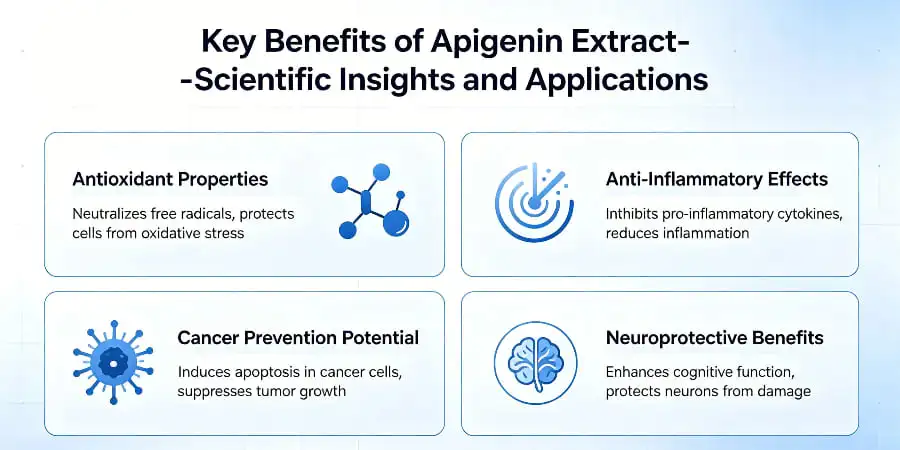
Key Benefits of Apigenin Extract: Scientific Insights and Applications
Anti-Inflammatory and Antioxidant Properties
Apigenin extract has been shown in clinical studies to reduce the levels of pro-inflammatory cytokines like TNF-alpha and interleukin-6. This makes it useful for formulas that target chronic low-grade inflammation linked to metabolic syndrome and rapid aging. ORAC readings show that the antioxidant power is about the same as quercetin's. It stops reactive oxygen species from damaging cell walls. Studies in phytotherapy journals show that it can protect liver cells that have been exposed to chemicals and lower signs of oxidative stress in nerve tissue. Product makers can use these qualities to find new ways to place their products in the longevity nutrition area, where people are looking for natural antioxidants more and more. When creating with standardized extracts backed by COA paperwork, brands aimed at busy adults and older people can use peer-reviewed evidence to back up claims of cellular protection.
Sleep Support and Anxiety Reduction
Animal models and tests with real people have both shown that the substance does interact with receptors in the central nervous system. Unlike melatonin, which controls diurnal rhythms, this plant substance works by improving GABAergic regulation to shorten the time it takes to fall asleep and make sleep better without making you feel sleepy the next day. A study that looked at how people felt about their sleep quality found that taking 50–200 mg 30–60 minutes before bedtime had real effects. The stress-relieving benefits show up as lower cortisol levels in reaction to stressors and higher HRV scores in people who are worried. Many people who are wary of pharmaceutical sleep aids are interested in claims about "non-habit forming relaxation support" that are backed up by this body of evidence. Formulation teams can make unique goods by mixing this extract with minerals like magnesium glycinate or botanicals like passionflower that work well with it. This can help with both the mental and physical parts of sleep problems.
Emerging Research in Cellular Health and Longevity
Because it stops CD38 from working, the substance is an important part of anti-aging plans that focus on making NAD+ work better. As cells get older, the activity of the CD38 enzyme rises, breaking down NAD+ faster than it can be made. The apigenin extract helps keep NAD+ pools high, which is needed for sirtuin activation and mitochondrial production, by blocking this enzyme. This process works with NMN and nicotinamide riboside vitamins, which could make them work better. Preclinical studies also show positive impacts on signs of cellular aging and the autophagy processes that get rid of damaged proteins. Human longevity studies are still going on, but early users in the biohacking community have made a lot of people want to buy. Premium longevity stacks can be set apart by manufacturers who combine high-purity materials with clear third-party testing reports and teaching content that explains the scientific reasoning behind NAD+ preservation strategies.
Dosage, Side Effects, and Safety Considerations for B2B Clients
Recommended Dosing Across Delivery Formats
To set the right dosage amounts, you have to find a balance between studies on effectiveness, safety margins, and the realities of production. As of now, research shows that 50 mg per dose can help with anxiety, while sleep aids usually have 100 to 150 mg. Up to 200 mg may be mixed with other nootropics in high-performance brain mixes. Powder forms allow for personalized doses, but the slightly bitter taste of the substance makes them hard to swallow. Capsule delivery is still the standard for most dietary supplements because it lets manufacturers make accurate claims about their products' strength and gives them a longer shelf life when used with the right fillers. Spray-drying with carrier matrices or microencapsulation technology is used to make water-dispersible forms that are needed for beverage uses. To make sure the product stays intact throughout its distribution lifespan, procurement teams must talk about stability testing data and describe particle size standards (usually at least 80 mesh, with micronized versions giving better dissolution).
Understanding Safety Profiles and Interaction Risks
Toxicological tests show that the substance is generally safe, with LD50 values that show low immediate toxicity. Studies on human tolerance show that doses up to 800 mg daily have few negative effects. At higher doses, some people report mild stomach pain. However, formulators need to let people know about possible reactions with CYP450 enzyme substrates, especially medicines that are broken down through CYP1A2 pathways. There are theoretical worries about what might happen when you mix certain GABAergic chemicals or sedatives with them. This is why people who take prescription sleep aids or anti-anxiety drugs need clear label warnings. If a company wants to sell its products in Europe, it needs to make sure they follow new food laws. In the US, on the other hand, they need to follow FDA GRAS status factors and DSHEA labeling requirements. To make it easier for regulators to accept documents, documentation packages should include heavy metal analyses (lead <0.5ppm, arsenic <0.2ppm), bacteria limits according to USP standards, and allergen statements.
Quality Control Standards for Manufacturing Excellence
To get stability from batch to batch, you need strict analytical methods that go beyond just checking for purity. Following ICH instructions for HPLC method confirmation is important. Use the right reference standards and more than one detection wavelength to be sure of the identity and rule out any impurities. Specifications for the amount of moisture in the material (usually less than 1% loss on drying) keep it from breaking down while it's being stored, and particle size distribution research makes sure that the material dissolves evenly. As well as stability tests showing potency retention under accelerated conditions (40°C/75% RH), suppliers who offer CoA paperwork should also provide retention samples for a third party to check. The difference between naturally extracted materials and manufactured replacements has a big effect on how the market is positioned and how prices are set. Natural extraction from chamomile leaves costs more but lets marketers make "clean label" claims, while synthetic production is cheaper for pharmaceutical uses that need total purity. To make the best choices about where to get ingredients, procurement pros have to weigh these trade-offs based on target groups, regulatory landscapes, and brand positioning strategies.
Sourcing and Procurement Guide for Apigenin Extract: What B2B Buyers Should Know
Evaluating Supplier Credibility and Manufacturing Standards
Finding trusted sources for botanical ingredients that are safe for use in medicine requires more than just comparing prices. Suppliers who have been checked out should keep their GMP certifications up to date from reputable auditing bodies. This shows that they have controlled production settings that keep products from getting contaminated and allow for full tracking from receiving the raw materials to packaging them up at the end. To figure out how mature your operations are, ask for building audit records and allergen control measures. Origin of manufacturing has a big effect on how people think about quality and how prices are set. For example, Chinese producers control global supply chains with low prices and large production facilities, while European extractors charge higher prices for organic certification and non-GMO proof. US-based producers make it easier for local brands to follow the rules and save time on logistics. Check a supplier's research and development (R&D) skills by seeing how quickly they respond to technical support requests, how willing they are to help with custom formulations, and how willing they are to create new transport systems. Suppliers that offer open minimum order amounts during the launch phase of a product and clear ways to scale up as volume grows are good for long-term relationships.
Critical Certifications and Testing Protocols
Full documentation packages set professional-grade sellers apart from commodity dealers. ISO 9001 quality control systems, organic certifications (USDA, EU) if you want to sell clean-label goods, and kosher/halal verification if you want to serve certain groups are all important certifications. Ask for allergen statements that prove the lack of common sensitizers and identification checks using FTIR or mass spectrometry. Heavy metal tests should look for the "big four": lead, arsenic, cadmium, and mercury, and the levels of finding should be low enough to follow California Prop 65. Total plate count, yeast/mold screening, and disease screening (E. coli, Salmonella) are all necessary parts of microbial research. When looking at different extraction methods, it's important to check for ethanol remains that are less than 5000ppm, which is what most standards require. Pesticide screening screens should include organophosphates and organochlorines that are relevant to areas where chamomile is grown. Being clear about the country where raw plants come from lets people figure out the risks associated with farming methods and environmental pollutants. When suppliers offer spectral data files and chemical fingerprints, it shows that they are good at analysis, which is linked to consistent manufacturing.
Conclusion
The careful addition of highly pure plant flavonoids to modern health products is an example of how traditional herbal knowledge and modern analytical science can work together. This in-depth study shows how standardized material at 98% assay levels solves important industry problems like bioavailability, dosing accuracy, and regulatory compliance. It also provides measurable benefits for brain health, oxidative stress management, and cell longevity. Manufacturers who make products for the sleep health and anxiety control markets, which are growing quickly, can gain a competitive edge by using ingredients that have been scientifically proven to work. To make sure that products stay true throughout the world's complicated supply lines, buyers have to carefully look at what suppliers can do, how they record their work, and what standards they follow for making products. As more people look for natural options that come from clear sources and have been proven to work in clinical trials, this botanical apigenin extract is becoming an important part of the next generation of health products made by forward-thinking companies.
FAQ
What is the optimal daily dosage for general wellness applications?
Doses backed by research range from 50 mg for mild relaxation to 150 mg to improve the quality of sleep. Most food supplement formulas contain between 100 and 120 mg per dose. Due to limitations in format, functional beverage uses may use smaller doses (30–50 mg), while intense stress management programs sometimes include up to 200 mg per day. Technologies that improve bioavailability, like liposomal release or co-administration of black pepper extract, may let you get good results with lower doses. Before finishing dosage suggestions, manufacturers should do pilot studies that test specific formulation patterns and target populations.
Can this compound interact with prescription medications?
There may be reactions with medicines that are broken down by CYP1A2 enzyme pathways, which could change how quickly some antidepressants, antipsychotics, and heart drugs are cleared from the body. The compound's GABAergic activity suggests that it might have additive effects when mixed with benzodiazepines or sleep aids, so you should be careful and talk to a doctor. Because of vitamin K antagonistic pathways, blood-thinning drugs like warfarin may not work as well as they used to. Standard warnings should be put on product labels telling people to talk to their doctors before using along with prescription drugs. This would protect both end users and makers from liability issues.
How can buyers verify authentic high-purity material?
Ask for detailed Certificates of Analysis that include HPLC chromatograms that show retention times that match verified reference standards, peak purity analyses that show there are no co-eluting chemicals, and assay estimates that are based on external standardization. Verification by a third party through independent labs boosts trustworthiness; for important quality factors, choose ISO 17025 accredited facilities. A close look should reveal the typical pale yellow color and fine crystalline structure. An organoleptic test should pick up on smells that point to degradation or contamination. Get to know providers who are happy to give you retention samples and make it easier for auditors to visit your manufacturing facilities.
Partner with Wellgreen for Premium Apigenin Extract Supply
Wellgreen Technology has become a reliable source of apigenin extract for vitamin brands, pharmaceutical makers, and functional food manufacturers in both North America and Europe. Our GMP-certified factory has strict quality control systems that make sure the products are at least 98% pure. This is proven by approved HPLC methods and thorough testing routines that look for heavy metals, microbiological contaminants, and pesticide residues. We offer flexible OEM and ODM support for custom recipe creation, such as water-dispersible grades for use in beverages and micronized forms that improve the bioavailability of capsules. Wellgreen makes it easier to buy things that meet strict quality standards by keeping a large inventory that guarantees a steady supply for long-term partnerships and by providing full paperwork packages that include COAs and third-party verification reports. For approved producers, our technical team offers free formulation advice and sample materials. Email our procurement experts at wgt@allwellcn.com to talk about your unique needs and get full product specs that are made to fit your application.
References
Salehi B, Venditti A, Sharifi-Rad M, et al. "The Therapeutic Potential of Apigenin." International Journal of Molecular Sciences, 2019, examining comprehensive pharmacological mechanisms.
Gupta S, Afaq F, Mukhtar H. "Selective Growth-Inhibitory, Cell-Cycle Deregulatory and Apoptotic Response of Apigenin in Normal versus Human Prostate Carcinoma Cells." Biochemical and Biophysical Research Communications, 2001.
Walle T, Otake Y, Brubaker JA, et al. "Disposition and Metabolism of the Flavonoid Chrysin in Normal Volunteers." British Journal of Clinical Pharmacology, 2001, providing comparative bioavailability data.
Sloley BD, Urichuk LJ, Tywin C, et al. "Comparison of Chemical Components and Antioxidants Capacity of Different Chamomile Species." Journal of Agricultural and Food Chemistry, 2001.
Zhao L, Wang JL, Liu R, et al. "Neuroprotective, Anti-amyloidogenic and Neurotrophic Effects of Apigenin in an Alzheimer's Disease Mouse Model." Molecules, 2013, addressing neurological applications.
Salehi B, Venditti A, Sharifi-Rad M. "Apigenin in Cancer Therapy: Anti-cancer Effects and Mechanisms of Action." Cell and Molecular Biology, 2019, consolidating oncological research perspectives.