Why Eucommia Ulmoides Extract is Gaining Popularity in the European Market?
2026-06-24 14:04:43
In Europe, Eucommia ulmoides leaf extract has become a very popular health and fitness element. This plant product comes from the Eucommia tree's bark and leaves. It has a lot of active ingredients, such as chlorogenic acid, flavonoids, and lignans. European companies are becoming more aware of its possibilities for use in sports nutrition, heart health goods, and formulations for joint health. The extract's scientific support and the growing demand for plant-based useful ingredients make it a smart choice for brands that want to set their products apart in a market that is already very competitive.
Understanding Eucommia Ulmoides Leaf Extract: Composition and Health Benefits
The Eucommia ulmoides tree has been used in traditional medicine for hundreds of years, but modern science now gives European B2B buyers the proof they need. The phytochemical matrix in this Eucommia ulmoides leaf extract is very complex, and it has measured health benefits across many body systems.
Active Constituents and Chemical Profile
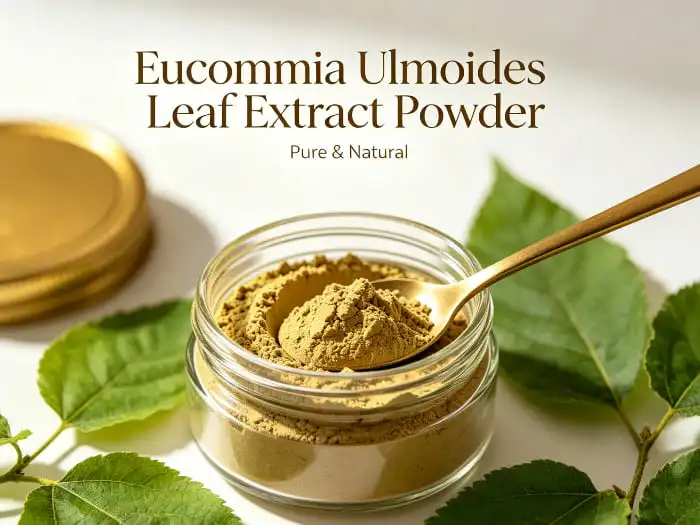
The extract works because of a few main groups of compounds. The main marker ingredient is chlorogenic acid, which is usually standardized between 1% and 5% in commercial samples. As a strong antioxidant, this pigment gets rid of free radicals that speed up the aging process and cause inflammation. Pinoresinol diglucoside is a lignan substance that is only found in Eucommia ulmoides. It has mild but long-lasting effects on the operation of blood vessels. The flavonoid part, which includes quercetin and kaempferol, adds to these effects by having extra anti-inflammatory benefits. The geniposidic acid and other iridoids help protect the liver, and the unique Eucommia ulmoides gum offers structure elements that may help keep connective tissue healthy.
Documented Health Applications
Clinical study backs up a number of therapeutic uses that are important to the growth of modern supplements. Studies show that taking supplements on a daily basis may help keep blood pressure in a healthy range by relaxing blood vessels and lowering peripheral resistance. The extract improves bone structure by encouraging osteoblast growth while stopping osteoclast activity. This makes it useful for formulas that support bone health. Another proven use is for joint relief, as the anti-inflammatory chemicals lower the levels of inflammatory mediators that cause arthritis and joint damage. The extract can lower oxidative stress and boost endurance, which makes it useful for athletic healing goods and the growing sports nutrition market. Managing lipid profiles, which includes lowering cholesterol and fat levels, is part of the circulatory support that goes beyond blood pressure.
Bridging Traditional Use with Modern Standards
European buyers like items that have been used in the past and are still useful today. Eucommia ulmoides has been used in ancient systems for thousands of years, which is proof that it is safe, and new drug studies meet the standards of proof that regulatory bodies expect. This two-way approval speeds up product development because brands can use both common sense and peer-reviewed research to support their recipe. Because the extract works in more than one way, formulators can use it to address a wide range of health issues with just one plant ingredient. This makes supply lines and label claims easier.
Why Is Eucommia Ulmoides Extract Trending in the European Market?
Several market forces working together are speeding up the use of this plant extract in European health areas. Knowing about these changes helps buying teams carefully place their product lines.
Consumer Preference for Plant-Based Solutions
Natural ingredients are consistently more popular with European customers than fake ones. Market study shows that chemically synthesized products don't do as well in terms of buy intent and brand loyalty as clean-label goods with recognizable botanical ingredients. Eucommia ulmoides leaf extract is the right choice for this because it is a one-ingredient option that communicates naturalness and tradition. Because the extract can be used for joint health, heart health, and sports performance, brands can make product lines that are all based on the same plant theme. This builds brand loyalty and trust among customers.
Regulatory Environment and Compliance
Even though the European legal system for botanical supplements is strict, it makes it easy for goods to follow the rules. Eucommia ulmoides extract falls into well-known groups for traditional plant medicines and food supplements, as long as the companies that make them keep the right quality records. The safety rating of the extract, which has been proven through a lot of traditional use and current toxicology studies, makes it easier for regulators to approve it. Manufacturing that is GMP-certified and comes with full certificates of analysis meet legal standards and give European officials the traceability they need. This regulatory flexibility cuts down on time-to-market compared to new ingredients that need long safety dossiers.
Scientific Validation and Efficacy Studies
Eucommia ulmoides's health benefits are being supported by more and more proof thanks to ongoing study. Modern research uses advanced methods like randomized controlled trials, biomarker analysis, and molecular investigations that are in line with European scientific standards. This growing body of study lets brands make claims that are backed up by evidence while still following the rules. This helps goods stand out in crowded markets. Standardized extracts with confirmed active compound content make it possible for clinical results to be repeated. This builds customer trust by making sure that products always work the same way.
Product Format Innovation
Eucommia ulmoides leaf extract is now available from manufacturers in a number of different forms to meet a wide range of application needs. Traditional capsules and tablets are common ways to take food supplements, and micronized powders can be mixed into functional drinks and protein mixes. Botanical extract dispersibility has been a problem in the past, but water-soluble formulations solve that problem, opening up new possibilities in ready-to-drink goods. This variety of formats lets brands pick the best delivery methods for their target groups and routes of distribution, like sports nutrition shops, online stores, and pharmacies.
Cross-Sector Application Potential
The extract is useful for more than just supplements; it can also be used in makeup and healthy foods. Formulators of skin care products use its antioxidant qualities for topical use in anti-aging goods. Functional food companies put it in protein bars and recovery snacks, and drink companies put it in wellness drinks for people with busy lives. This ability to be used in many different areas gives sellers economies of scale and gives makers a wide range of ways to make money. OEM and private-label makers can save time and money by using the same botanical ingredient in a variety of products. This makes managing supplies and relationships with suppliers easier.
How to Choose High-Quality Eucommia Ulmoides Leaf Extract for B2B Purchases?
Buying Eucommia ulmoides leaf extract needs a set of organized factors for evaluation that make sure the quality of the product, compliance with regulations, and success of the recipe. Setting clear selection criteria protects the purity of the supply chain and the performance of the final product.
Active Compound Verification
Active element study is the first step in judging quality. High-performance liquid chromatography is still the best way to check the amount of chlorogenic acid present, and trustworthy providers will give you HPLC chromatograms along with certificates of analysis. Not only should the main marker molecule be specified, but also the full phytochemical profile, since the effectiveness is increased by interactions between different parts working together. Consistency in compound ratios from batch to batch shows stable source and processing methods, which lowers variation in formulation. Buyers should ask suppliers for retention samples so that they can be tested by a third party when buyers are checking out new suppliers or looking into quality issues.
Contaminant Screening and Safety Parameters
Standards for the European market require thorough tests for contaminants. Inductively coupled plasma mass spectrometry study of heavy metals must show that levels of arsenic, lead, mercury, and cadmium are still well below the strict EU standards. Pesticide residue screening that looks for hundreds of compounds guards against chemical contamination in agriculture. This is especially important for eucommia extract powders from farmed sources. Microbiological safety is ensured by tests like total plate count, yeast and mold counting, and virus screening. Using gas chromatography to look at solvent residues makes sure that extraction solvents like methanol or ethanol stay within accepted limits. These safety standards must be met in order to enter the European market, and sellers who provide full test records show that they are committed to quality.
Certification Requirements
Third-party approvals are an independent way to check that factory standards are met. GMP approval means that a company follows good manufacturing practices for things like building layout, process controls, and record-keeping. Organic approval is appealing to high-end customers, but it requires that all parts of the supply chain use approved organic farming methods. ISO standards for quality management systems show that a company is dedicated to improving all the time and following the rules. Halal and Kosher certifications help you reach more customers when you're trying to reach certain groups of people. European buyers should make sure that the extracts' certifications are still valid and cover the specific factory that makes the Eucommia ulmoides leaf extract. Companies that make products at more than one location may only have certificates for some of their facilities.
Source Material Considerations
The plant source has a big effect on the makeup and effectiveness of the extract. Leaf-derived extracts usually have more chlorogenic acid and better sustainability ratings than bark extracts because collecting leaves lets trees keep growing. Traditional methods of getting bark raise worries about sustainability because they hurt or remove trees. It is important for buyers to know if the trees their providers use were cut down in the wild or in a forest. Getting supplies from forests is more consistent and easier to track. The location of the plant affects its phytochemical profile, with some growth areas producing stronger material. Suppliers who have direct ties to growth sites make the supply chain more clear and can provide proof of farming practices when needed for regulatory submissions.
Supplier Evaluation Criteria
Beyond product standards, the success of a relationship depends on how well the supplier can do their job. Size and capacity of factories affect how reliable a supply chain is. Older factories are better able to keep up with rising demand without lowering quality. Product creation times are cut down with technical support services like formulation help, stability data delivery, and regulation paperwork. Flexible minimum order numbers work for both new brands trying market ideas and well-known companies that need large amounts. Clear contact and quick customer service help solve problems quickly and keep work schedules intact. Long-term relationships with suppliers give you a competitive edge by letting you negotiate prices, give you priority during shortages, and work with them to create new products.
Conclusion
Eucommia ulmoides leaf extract is a great chance for European companies that make health products to use natural ingredients that have been proven to work in a variety of ways. It has been shown to help with joint health, heart health, and athletic healing, which are all big trends in consumer fitness. Its long history of use also gives marketers confidence in its safety and authenticity. The extract is becoming more widely available in standardized, approved forms that meet European quality standards. This makes it easier to make new products and follow the rules. Consistent quality and dependable supply are guaranteed by strategic buying that focuses on active ingredient verification, contaminant screening, and source capabilities. As more scientific study is done and more people learn about it, the market for Eucommia ulmoides leaf extract is likely to continue to grow in the vitamin, functional food, and sports nutrition sectors.
FAQ
When looking at Eucommia ulmoides leaf extract buying, European business-to-business buyers often ask specific questions about product specs, legal status, and application parameters.
What are the recommended dosage ranges for supplement formulations?
Doses of 500 to 1,000 mg of standardized Eucommia ulmoides leaf extract per day are common in clinical studies. However, the best doses rely on the health problem and the strength of the extract. Joint health products usually use 600 to 800 milligrams every day, while heart health products might suggest the same amounts spread out over several doses. Higher amounts, up to 1,500 milligrams, are sometimes used in sports nutrition apps before and after workouts. Formulators should think about the standardization level because more chlorogenic acid means that less overall extract dose is needed to keep active chemical delivery. Dosage suggestions may be affected by regulatory advice in target markets. Brands should talk to regulatory experts when writing label instructions.
What potential side effects should be communicated to end users?
Eucommia ulmoides leaf extract has been tested on humans and has been shown to be very safe. Adverse effects are very rare at the suggested doses. Some people may feel mild stomach pain when they first start taking supplements. This usually goes away as they keep taking them or the dose is changed. Because the extract has mild hypotensive effects, people who are taking blood pressure medicines should be careful and talk to a doctor before using it. Following standard precautionary rules for plant products, women who are pregnant or nursing should not take supplements unless specifically told to do so by a doctor. There have been no reports of any major drug interactions, but because the extract has effects on the heart, there may be interactions with blood thinners. Clear conversation about safety builds trust with customers and lowers worries about risk.
How can buyers verify extract authenticity and quality?
Authentication starts with doing research on the provider, checking their manufacturing qualifications, certification status, and name in the industry. Asking for full certificates of analysis with each batch is a good way to show the quality, but they should be backed up by regular independent tests. Third-party labs that specialize in botanical research can prove someone's name using methods like DNA barcoding, microscopic study, and chromatographic fingerprinting. When you compare test results from different runs, you can see patterns of stability that show that the quality systems are reliable. Supplier checks, which can be done directly or by third-party inspectors, give you a look at how things are made and how quality is controlled. Building relationships with suppliers who are open and willing to be inspected builds trust more than with suppliers who don't want to be inspected.
Source Premium Eucommia Ulmoides Leaf Extract from Wellgreen Technology
Wellgreen Technology offers plant products that are safe enough for use in medicines and are made to meet the strict standards of the European market. Our GMP-certified factories make Eucommia ulmoides leaf extract in a range of standardization grades, from basic ratio extracts to special formulas with 5% chlorogenic acid that has been confirmed by HPLC analysis. We keep a lot of quality records, like certificates of analysis, heavy metal screening, pesticide residue tests, and microbe safety reports, to make sure we follow all the rules for entering the EU market. During product development, our expert team helps with formulation, provides stability data, and gives regulatory advice. We also have variable minimum order amounts to suit both new names and well-known makers. Wellgreen is a trusted company that can provide you with Eucommia ulmoides leaf extract. They can quickly turn around your order and communicate with you, whether you need bark extract, leaf extract, or custom specs for private-label development. Email our team at wgt@allwellcn.com to get samples, talk about unique standardization needs, or look into relationship options that can help you reach your product innovation goals faster.
References
Zhang, R., Liu, Z.G., Li, C., Hu, S.J., Liu, M., Wang, Z.L., & He, Y. (2019). "Pharmacological and Toxicological Effects of Eucommia ulmoides Bark and Leaf Extracts: A Comprehensive Review." Journal of Ethnopharmacology, 234, 446-465.
Hosoo, S., Koyama, M., Watanabe, A., Ishida, R., Hirata, Y., Irie, K., & Koshino, H. (2017). "Preventive Effect of Eucommia leaf extract on Aortic Media Hypertrophy in Wistar-Kyoto Rats Fed a High-Fat Diet." Hypertension Research, 40(6), 546-551.
Li, Y., Wang, G., Liu, J., & Ouyang, L. (2015). "Quinovic Acid Glycosides from Eucommia ulmoides Oliver and Their Bioactivities." Natural Product Research, 29(20), 1974-1977.
Jin, X., Amitani, K., Zamami, Y., Takatori, S., Hobara, N., Kawamura, N., & Hirata, T. (2010). "Ameliorative Effect of Eucommia ulmoides Oliv. Leaves Extract (ELE) on Insulin Resistance and Abnormal Perivascular Innervation in Fructose-Drinking Rats." Journal of Ethnopharmacology, 128(3), 672-678.
Kwon, S.H., Ma, S.X., Hong, S.I., Kim, S.Y., Lee, S.Y., & Jang, C.G. (2016). "Eucommia ulmoides Oliv. Bark. Attenuates 6-Hydroxydopamine-Induced Neuronal Cell Death through Inhibition of Oxidative Stress in SH-SY5Y Cells." Journal of Ethnopharmacology, 181, 1-7.
Hirata, T., Kobayashi, T., Wada, A., Ueda, T., Fujikawa, T., Miyashita, K., & Ikeda, T. (2011). "Anti-obesity Compounds in Green Leaves of Eucommia ulmoides." Bioorganic & Medicinal Chemistry Letters, 21(6), 1786-1791.