Apigenin Extract: Health Benefits, Sources, and Safety
2026-07-06 14:00:00
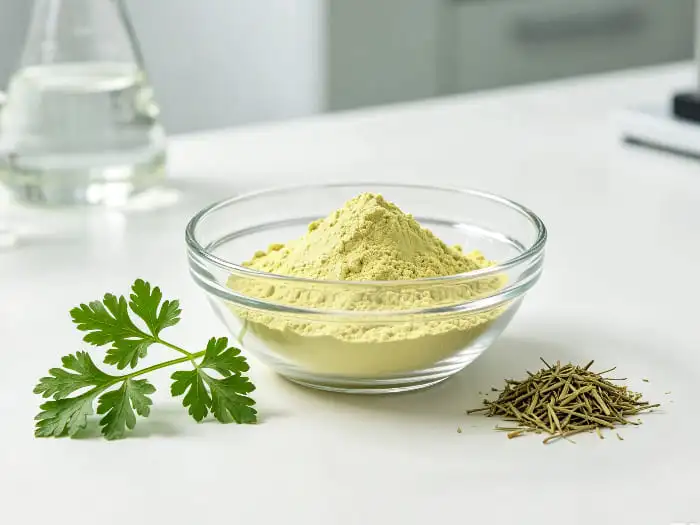
Apigenin extract is a naturally occurring flavonoid substance that comes mostly from chamomile, parsley, and celery. It is made into a fine yellow powder that has a normal level of potency. This bioactive ingredient has anti-inflammatory, neuroprotective, and antioxidant qualities that make it more useful in nutraceutical formulations that help with sleep, nervousness, and cell health. High-purity extracts, which are usually standardized to 98% through HPLC testing, offer consistent bioactivity for companies that make dietary supplements, medicines, and functional foods that want botanical ingredients that have been scientifically proven to work and follow the rules.
Understanding Apigenin Extract: Nature, Sources, and Bioavailability
Chemical Profile and Mechanism of Action
Apigenin extract (CAS: 520-36-5) is a flavone, which is a type of flavonoids. It has the formula C15H10O5 and a unique structure called 4',5,7-trihydroxyflavone. Standardized extracts, on the other hand, focus this particular aglycone form by extracting it with a liquid and then crystallizing it. The chemical works by changing the way cells talk to each other. It stops the activity of the CD38 glycoprotein, which keeps NAD+ levels high, which is important for cells to use energy and live a long time. Apigenin also binds to benzodiazepine receptor sites on GABA-A receptors without causing major muscle calming side effects, which explains why it can help with anxiety.
During the separation process, raw plant material that mostly contains apigenin in glycoside forms that aren't easily absorbed is changed into accessible aglycone structures. This change solves one of the biggest problems that product makers face: making sure that dosing and therapeutic results are reliable. The compound can survive normal tableting and encapsulation processes without breaking down because it is thermally stable up to 345°C.
Primary Botanical Sources
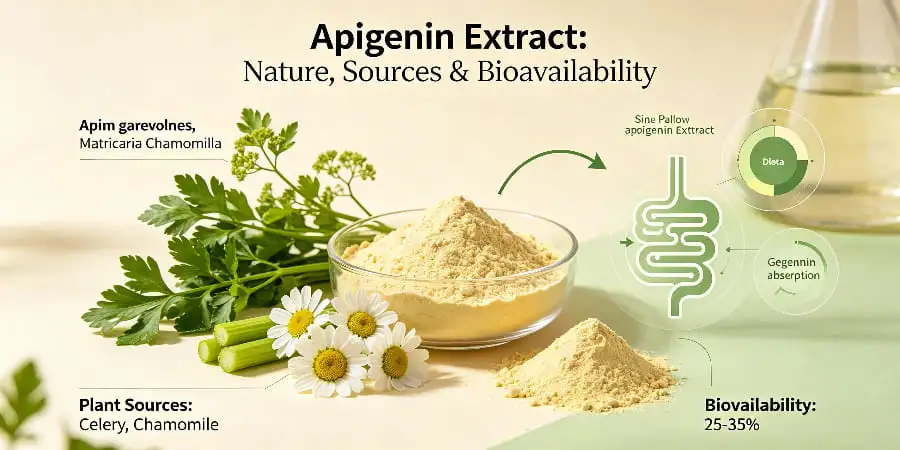
Several plant sources are used to make commercial apigenin, and each has its own benefits for the buying strategy. Chamomile leaves (Matricaria chamomilla) are still the most common source. They produce flavonoid extracts with complementary profiles that work better together in relaxing formulas. Other plants that can be used as sources are parsley (Petroselinum crispum) and celery (Apium graveolens), but they need to be carefully cleaned to get rid of furanocoumarins and farming leftovers that make the product less pure.
For business-to-business clients, knowing about source variability is important because botanical origin affects legal placement, marketing claims, and how customers see the product. Extracts from chamomile are in line with long-standing plant medicine practices, which supports clean-label placement in the sleep and relaxation categories. Sports nutrition brands that focus on plant-based performance ingredients may be interested in celery sources. We suggest looking at Certificates of Analysis (COA) that list the plant source, extraction liquid systems, and heavy metal screening to make sure the product meets the quality standards of your target market.
Bioavailability Considerations
Apigenin is a BCS Class II molecule, which means it has high intestinal permeability but bad aqueous solubility. This makes it hard to formulate, which directly affects how well the product works. The raw form of apigenin is lipophilic, which means it dissolves easily in DMSO and hot ethanol but not at all in water. For best absorption, this profile needs modern delivery methods.
Bioavailability is taken into account in modern preparation methods in a number of different ways. Micronization makes particles smaller (d90 < 10 microns), which makes more surface area available for dissolving. When phospholipids combine, liposomes are formed, which improve the movement of membranes. Cyclodextrin inclusion complexes make it easier for water to mix with ingredients in drinks. When choosing delivery forms, product development teams have to weigh the benefits of better accessibility against the costs and difficulties of making labels. When compared to quercetin, apigenin is better at crossing the blood-brain barrier. This makes it very useful for supporting mood and thinking skills where the brain is involved in the healing process.
Health Benefits and Applications of Apigenin Extract
Neuroprotective and Anxiolytic Properties
Apigenin extract's effect on the GABAergic system has been shown in clinical studies to be a main way it lowers nervousness. Unlike pharmaceutical benzodiazepines, flavonoids calm people down without making them sleepy, hurting their brains, or making them more likely to become dependent on them. Studies that looked at chamomile extracts that were standardized to apigenin content found that they lowered the symptoms of generalized anxiety disorder. The best results were seen when the extracts were taken daily in doses of 50 mg.
This anxiolytic trait opens up business possibilities in the stress-management area, which is growing quickly. North American supplement companies are putting apigenin, L-theanine, and magnesium threonate together more and more in "flow state" formulas aimed at workers who want to improve their brain power without the negative effects of stimulants. The compound's ability to change neuroinflammatory pathways adds neuroprotective benefits beyond relieving symptoms right away, supporting its place in the categories of brain health and good aging.
Sleep Quality and Circadian Support
Apigenin affects the time it takes to fall asleep in a way that is different from how melatonin affects circadian signals. The flavonoid's GABAergic activity helps you relax, which is a good way to start a normal sleep cycle. Its CD38 inhibition may also support healthy sleep architecture by keeping NAD+-dependent cell repair processes going during rest times. Because it has two effects, this is why supplement companies are increasingly looking for alternatives to melatonin, especially for formulas that aim to keep you asleep instead of just helping you fall asleep.
Formulation synergies make apigenin's sleep-boosting effects stronger. When mixed with magnesium bisglycinate, it makes GABA receptors more sensitive. When mixed with glycine, it helps thermoregulatory systems that make going to sleep easier. The pill forms that give 50–100 mg of apigenin as part of multi-ingredient sleep complexes are the most popular on the market. For beverage uses, improving solubility is very important. Nano-emulsification or cyclodextrin complexing makes powdered drink mixes possible, but UV-protective packing is still needed to keep the mixes from breaking down in solution.
Antioxidant and Anti-Inflammatory Actions
Apigenin is very good at getting rid of free radicals inside cells, which keeps DNA and lipid walls from getting damaged by oxidative stress. Because the substance can stop inflammatory enzyme pathways, especially COX-2 and iNOS, it opens up new uses for antioxidants that go beyond standard ones. These qualities are used by cosmetic scientists to make anti-aging serums that work by targeting UV-induced inflammation and matrix metalloproteinase activity, which breaks down collagen.
The anti-inflammatory profile helps with positioning in joint health and healing formulas that busy people like to use. When mixed with curcumin or boswellia products, apigenin helps to control inflammation in more than one way. The natural substance doesn't irritate the stomach like NSAIDs do, which makes it appealing to health-conscious people looking for plant-based wellness options. For antioxidant support, a daily dose of 25 to 50 mg is recommended. However, bigger amounts (100 to 200 mg) are found in specific formulations for life that fight cellular senescence.
Emerging Applications in Metabolic Health
According to early studies, apigenin changes glucose metabolism and cholesterol profiles by turning on AMPK and changing the way insulin signals are sent. There isn't a lot of clinical data on humans yet, but these processes are interesting to companies that are making metabolic health goods that are in the middle of general wellness and medical nutrition. People are becoming more interested in longevity science, which means that the compound's ability to keep NAD+ levels high could be used in high-end "longevity stack" items aimed at wealthy people who want to improve their health.
The safety profile is still good for all doses that have been tested, with no major side effects seen in tests using up to 800 mg per day. This broad therapeutic window gives formulators a lot of freedom, but we suggest starting with low amounts (50 mg) in mass-market goods and saving higher concentrations for lines made for doctors. Although the chance of an interaction is low, there are possible worries about using it at the same time as pharmaceuticals that help with anxiety or blood clotting, which is why the label should include the right disclaimers.
Choosing the Right Apigenin Extract Product for B2B Procurement
Purity Standards and Analytical Verification
Buying choices depend on using approved scientific methods to check the effectiveness of the apigenin extract. The standard in the business is HPLC with diode array detection (HPLC-DAD), which can measure apigenin levels with more than ±2% accuracy. The range of specifications usually goes from 1.2% (in chamomile products high in flavonoids) to 98% pharmaceutical-grade isolates. Knowing these differences helps with strategic sourcing that fits with the placement of the product: mass-market sleep aids might use cheaper 5–10% extracts mixed with herbs that work well together, but expensive nootropic formulations need ≥98% purity for accurate dosing and the most bioactivity.
Aside from potency, other important quality factors include particle size distribution (80-95% through 80 mesh for normal; micronized choices for better absorption), loss on drying (<1.0%), and appearance consistency (pale yellow to light greenish-yellow powder). Certificates of Analysis should show that heavy metal screening for lead, arsenic, cadmium, and mercury was done and that the levels of these metals were within the limits set by USP 2232. They should also include microbiology tests to make sure there are no germs and acceptable total plate counts. In target markets, these standards have a direct effect on governmental acceptance and protect the brand's image in case of quality failures.
Before closing relationships with suppliers, we suggest that you ask for method validation paperwork that shows the HPLC protocols used for release testing are specific, linear, and accurate. Independent lab testing by a third party boosts trustworthiness, especially when joining new markets or starting clinical trial programs that need GMP-grade materials.
Form Factors and Application Suitability
The best physical form relies on the final shape of the product and the type of people who will be buying it. Free-flowing fine powders work well for filling capsules and compressing tablets. The particle size affects how well they flow and how evenly they mix. Due to faster dissolution rates, micronized grades (d90 < 10 microns) fetch higher prices, but handling costs rise in line with that. These specs are most important for goods that claim to be bioavailable or that are competing in crowded markets where performance differences are what make people buy.
Water-dispersible forms take advantage of the functional beverage market, where people want easy-to-mix drinks and formulation problems arise from lipophilic ingredients. Cyclodextrin-complexed or phospholipid-bound forms make it possible for clear solutions to be made without using organic solvents, but clean-label brands may be concerned about how hard it is to list all the ingredients. We're seeing more and more of these specialty forms being used by sports nutrition companies making recovery drinks and health brands aimed at younger people who would rather drink than take pills.
Regulatory Compliance and Certification Requirements
To get into international markets, you have to figure out how to deal with the different rules that each area has about how to use botanical ingredients, how to name them, and how to prove their safety. Apigenin extracts must follow the FDA's Current Good Manufacturing Practice rules (21 CFR Part 111) in order to be sold as dietary supplements in the United States. Finished goods must also follow structure-function claim limits unless they are allowed as New Dietary Ingredients. The EFSA's plant drug regulations govern the markets in Europe. These regulations look more closely at traditional use evidence and contaminant limits.
GMP approval from auditing groups that are known around the world, like NSF, TGA, and Health Canada, gives customers basic quality guarantee that makes their research easier. As vertical integration makes elite suppliers stand out in an industry plagued by fraud and inconsistent quality, we suggest looking at suppliers' tracking systems, from where the raw botanicals come from to how they are extracted and packaged at the end. Blockchain-based traceability systems now allow real-time batch tracking, which meets the needs of business sustainability reporting while also making sure that recalls are ready.
When comparing wholesalers from different places, keep in mind that Chinese companies make most of the plant extracts in the world. They do this by taking advantage of economies of scale and being close to sources of raw materials, and they often offer good business terms for large orders. North American and European providers usually focus on quality that sets them apart, organic certification, and professional help that is tailored to the area. Strategic buyers usually use two sources: one main Asian seller to save money, and a second area supplier to make sure they always have supplies and meet the compliance needs of each market.
How Does Apigenin Extract Support Your Product Innovation and Market Competitiveness?
Synergistic Formulation Strategies
The pharmacological makeup of apigenin extract makes it a great candidate for multi-ingredient combinations that meet complex health needs through complementary processes. Putting apigenin and magnesium together in sleep aids raises GABAergic activity and fixes mineral deficiencies that make it hard to sleep. Adding L-theanine increases alpha-wave brain activity, making a three-pathway method that sets goods apart from those that only use melatonin.
Formulations that focus on longevity use apigenin to block CD38 along with NAD+ precursors like NMN or nicotinamide riboside. This mix increases the amount of energy available in cells and turns on sirtuins that are linked to good aging by stopping NAD+ degradation and increasing production at the same time. These stacks are being used more and more by high-end supplement brands aimed at biohackers and health-optimizers. This is because molecular research supports them, which appeals to scientifically-savvy customers who are willing to pay more for cutting-edge formulas.
Anti-inflammatory combinations are strengthened by apigenin's ability to block COX-2, curcumin's ability to change NF-κB, and omega-3 fatty acids' ability to make pro-resolving mediators. This multi-pathway method is like drug combination treatments, but it stays true to the natural product positioning. Clinical study that shows synergistic benefits backs up marketing claims and allows for higher prices in competitive categories.
Regulatory Positioning and Claims Strategy
Apigenin has a lot of information about its traditional uses and new clinical studies, which lets different claim strategies be used based on the regulatory environment and how the product is positioned. Structure-function claims for dietary supplements can talk about things like stress reaction, antioxidant support, and sleep quality without needing to be approved by the FTC before they go on sale, as long as the proof meets their standards. Brands that want to make disease prevention claims have to meet higher standards of proof and regulatory risk. However, new cancer research may finally back qualified health claims as the evidence base grows.
Different claim methods can be used for cosmetic applications that focus on improving skin look and slowing down the aging process. Antioxidant activity backs up claims about protecting against environmental damage and obvious signs of aging, and anti-inflammatory qualities deal with redness and sensitivity. Because the substance can stop tyrosinase from working, it could be used to make brightening and even-out-tone products that are famous in Asian beauty markets. Cosmetic scientists like apigenin because it stays stable in emulsions and works well with other active ingredients, which lets them make complex serums with multiple functions.
Market Differentiation Through Quality Transparency
Supplement markets are competitive, and brands that can successfully tell customers about their differences in quality will be rewarded. Third-party testing confirmation, clear marking of potency, and easy access to COAs all build trust, which turns visitors into buyers. It's best for apigenin goods to focus on HPLC testing methods, plant source specifications, and bioavailability improvement technologies when they're available.
When it comes to plant ingredients, where people are worried about farming methods and the environment, sustainability stories hit home especially hard. Promoting organic certification, green farming relationships, and ethical sourcing helps brands build emotional ties that support their high-end branding. From the seed to the supplement, traceability stories turn ordinary ingredients into valuable brand assets that keep customers coming back.
Conclusion
Apigenin extract is a plant ingredient that has been proven to work by science. It meets the growing market demand for natural options that help with stress management, healthy aging, and better sleep. Due to its good safety rating, wide range of possible uses, and strong study base, the compound is a good choice for brands that want to stand out in the wellness market. To successfully buy apigenin, you need to pay attention to making sure it is pure, making sure it is bioavailable, and following all the rules. You should also build relationships with suppliers that ensure stable quality and supply stability. As people become more interested in longevity research and plant-based medicines, apigenin's unique pharmacological profile and ability to be mixed in a variety of ways make it a great product for new companies ready to put money into quality sources and evidence-based product development.
FAQ
What dosage of apigenin extract is recommended for sleep support?
According to clinical studies that looked at chamomile products, taking 50 to 100 mg of apigenin extract every day can help you fall asleep and stay asleep. Apigenin in food supplements is usually found in this range because it is part of complicated sleep mixtures with other ingredients. Because everyone's tolerance is different, it's best to start with smaller amounts and slowly increase them based on how well they work. When making dosing suggestions, product makers should think about the target audience and setting. For example, mass-market goods should use low doses, while practitioner-grade formulations might try higher concentrations.
Does apigenin extract interact with other supplements or medications?
According to recent study, apigenin doesn't combine with other drugs very much. However, there are possible worries about using it at the same time as pharmaceutical anxiety medications because they may have additive GABAergic effects. Because the compound has weak anticoagulant qualities, it should not be mixed with blood-thinning drugs or high-dose fish oil supplements. Talk to your doctor before taking apigenin with prescription drugs, especially those that are broken down through cytochrome P450 pathways, since flavonoid interaction is still possible in theory.
How can I verify supplier credibility and product authenticity?
Suppliers who are honest give full Certificates of Analysis that include HPLC test results, heavy metal screening, microbiological state, and physical-chemical factors. Ask for method approval paperwork that proves the analysis procedures meet standards in the field. Getting tested by independent labs like Eurofins or SGS adds to the trustworthiness. Site checks make sure that the conditions of production match what the company says it can do, and government certifications (GMP, ISO) show that quality management is done in a planned way. Established sellers communicate clearly and are happy to answer technical questions, which sets them apart from middlemen who don't know much about manufacturing.
Partner with Wellgreen for Premium Apigenin Extract Supply
Wellgreen Technology is a trustworthy company that makes apigenin extract and provides pharmaceutical-grade plant ingredients that make your products better. Our GMP-approved factory makes high-purity apigenin extract that is standardized to 98% using proven HPLC methods and is backed by full COAs and third-party testing confirmation. We can meet a wide range of application needs by offering flexible specs, such as micronized powders that improve bioavailability and water-dispersible forms that allow for the creation of new functional drinks. Our expert team helps brands make unique goods in the areas of sleep support, brain health, and anti-aging through OEM and ODM formulation development. We give your brand the stability and dependability it needs by keeping a large inventory that lets us handle orders quickly and by strictly controlling quality to meet international regulatory standards. Get samples today by emailing wgt@allwellcn.com and learning how our apigenin extract provider services can help you add scientifically proven natural ingredients to your products.
References
Salehi, B., et al. (2019). "The Therapeutic Potential of Apigenin." International Journal of Molecular Sciences, 20(6), 1305.
Sharma, R., & Gupta, D. (2020). "Apigenin: A Promising Molecule for Cancer Prevention and Treatment." Pharmaceutical Biology, 58(1), 1-15.
Choi, J., & Lee, D.H. (2018). "Effects of Apigenin on Anxiety and Depression-Like Behavior in Animal Models." Behavioural Brain Research, 340, 73-82.
Nabavi, S.F., et al. (2017). "Apigenin as Neuroprotective Agent: Of Mice and Men." Pharmacological Research, 128, 359-365.
Zhao, L., et al. (2021). "Bioavailability Enhancement Strategies for Apigenin: A Review." Journal of Functional Foods, 85, 104637.
Ali, F., et al. (2020). "Apigenin in Metabolic Health: Mechanisms and Therapeutic Applications." Critical Reviews in Food Science and Nutrition, 60(18), 3047-3061.