Apple Cider Vinegar Powder Benefits for Supplement Brands
2026-02-25 13:43:06
Supplement companies that want to cash in on the growing health market can use organic apple cider vinegar powder as a game-changing ingredient. This new powder form has all the health benefits of regular apple cider vinegar, but it doesn't have any of the problems that come with making liquid apple cider vinegar, like stability issues, high shipping costs, and problems with the recipe. Supplement companies can make it easier for people to lose weight, keep their digestive systems healthy, and speed up their metabolism by adding high-quality organic apple cider vinegar powder to their products. This way, customers can get these benefits without having to deal with the unpleasant taste and smell of liquid versions.

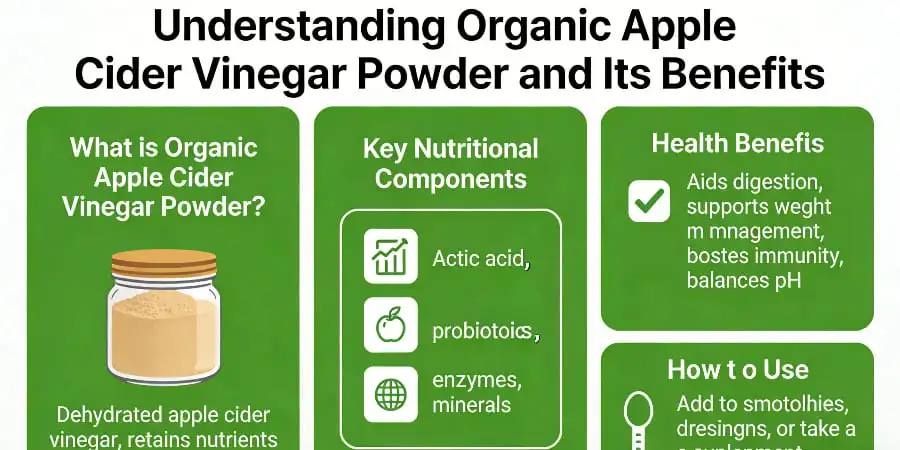
Understanding Organic Apple Cider Vinegar Powder and Its Benefits
The Science Behind ACV Powder Production
Spray drying is a complicated process that turns liquid vinegar into a stable, airy powder. This is how organic apple cider vinegar powder is made. The bioactive substances in regular liquid vinegar, like acetic acid, polyphenols, and helpful enzymes, are kept safe by this manufacturing method. Organic apples start the fermentation process. They go through alcoholic fermentation first, then acetic acid fermentation. This makes the vinegar flavor that people know and trust.
The powder form keeps the same amount of acetic acid, usually between 5% and 10%, so the strength stays the same from batch to batch. This standardization is very important for supplement makers who need to make sure their labels are true and their products work. Unlike liquid vinegar, whose acidity levels can change naturally, powder formulas always give the same results that meet government standards and customer expectations.
Health Benefits Driving Market Demand
According to research, apple cider vinegar powder helps the body in a number of ways that are in line with current fitness trends. Acetic acid has been shown in studies to help control blood sugar by making cells more sensitive to insulin and lowering blood sugar spikes after meals. This mechanism makes it very appealing for supplement brands that want to target metabolic health and weight control.
Additionally, the powder has antioxidants that help keep cells healthy and may also improve heart health. The polyphenolic chemicals that come from the apple provide extra benefits on top of the main acetic acid component. Another major benefit is better digestive health, as apple cider vinegar has long been linked to supporting healthy gut function and nutrition.
How to Choose High-Quality Organic Apple Cider Vinegar Powder for Supplement Brands?
Critical Quality Parameters for Procurement
To choose high-quality apple cider vinegar powder, you need to carefully look at a number of quality markers that have a direct effect on how well the finished product works. The most important thing is to check the standard acetic acid level using the certificate of analysis. Authentic providers give testing results for each batch that show consistent levels of potency and make sure they follow the rules set by regulators.
Organic approval status is another important requirement for brands that want to reach high-end customers. The USDA Organic and EU Organic certifications help clean-label positioning tactics and give products access to high-value retail channels. These certificates prove that the apples came from farms that didn't use any artificial fertilizers, pesticides, or herbicides. This meets the growing demand from customers for natural foods.
Moisture content analysis is necessary to keep powders from clumping and to make sure they can flow easily during production. Powder of good quality usually keeps its moisture level below 5%. This keeps it from clumping, which can mess up automated filling equipment and make the result less consistent. The results of microbiological tests should show that the levels of harmful bacteria, yeast, and mold are within the safety limits that have been set.
Carrier Type Considerations
The carrier method used to make powder has a big effect on both how well it works and how cleanly it is labeled. Traditional carriers for maltodextrin are very stable and good at letting things flow, but they might not work with all clean-label manufacturing goals. Other carriers, like organic gum acacia or options made from tapioca, allow for cleaner label positioning while still keeping the necessary functional properties.
Procurement teams should choose a carrier based on the needs of the target market and how well it works with other formulations. Products that are meant to be ketogenic or low-carbohydrate supplements may need certain types of carriers that add as few carbs as possible. In the same way, allergen-free formulations need carriers that don't use common allergens like ingredients made from corn or wheat.
Supply Chain Transparency and Documentation
In the market for cider vinegar extract, professional suppliers are set apart from commodity suppliers by complete paperwork packages. Good suppliers give full traceability paperwork, like apple source confirmations, processing center certifications, and reports from third parties testing the apples. This paperwork is necessary to follow the rules set by the government and helps protect the brand during possible quality investigations.
Because apple cider vinegar comes from farming, the findings of heavy metal tests need extra attention. The amounts of lead, arsenic, mercury, and cadmium in food supplements must not be higher than the allowed limits. Also, testing for pesticide residues makes sure that promises of organic certification are in line with what the product actually is made of. This keeps brands safe from possible regulatory problems.
Incorporating Organic Apple Cider Vinegar Powder into Supplement Products
Overcoming Liquid Formulation Challenges
Traditional liquid apple cider vinegar is hard to make for a number of reasons that powder versions solve well. Because liquid vinegar is very acidic, it can make some formulations less stable, especially those with alkaline ingredients or chemicals that are sensitive to pH. The powder form gets rid of these compatibility worries while keeping the integrity of the bioactive ingredient.
Another big benefit of powder formulas is that they can control taste and smell. Because liquid apple cider vinegar has a sharp, acidic flavor, it often needs complicated masking methods that make the formulation more difficult and cost more. Powder forms have less of an effect on the senses, so makers can get good taste profiles with few flavoring additions.
When you compare powder integration processes to liquid integration processes, you can see that the liquid integration processes are more efficient. Powdered ingredients can be easily added to dry mixing processes without the need for special handling tools or processing systems that don't rust. This compatibility lowers the need for expensive equipment and makes it easier for factories that make more than one product to plan their production schedules.
Successful Application Examples
Giving apple cider vinegar powder to gummy supplements has been one of the most popular ways to use it. That's because the powder form doesn't mess with the gelling processes that liquid acids do, so makers can get the texture and stability they want. Apple cider vinegar powder is often mixed with other ingredients that work well together, like B-vitamins, chromium, or green tea extract, to help the metabolism in a more complete way.
The powder has great flow and compressibility qualities that make it useful for capsule and tablet applications. Standard doses are usually between 500 mg and 1000 mg per serving, which gives you a good amount of acetic acid while keeping the capsule size sensible. Because the powder is low hygroscopic, it doesn't have the stability problems that come with other acidic ingredients when they get wet.
Ready-to-mix beverage uses use the powder's ability to disperse to make formulas that are easy to use. Apple cider vinegar powder is often mixed with fiber, electrolytes, or botanical extracts in these goods, which are aimed at detox and cleansing markets. The right recipe makes sure that the substance dissolves quickly without forming too much sediment or causing separation problems.
Comparative Analysis: Organic Apple Cider Vinegar Powder vs Other Options
Organic Certification Premium Value
Organic apple cider vinegar powder is more expensive than regular varieties because consumers believe it more and it's better for the environment. To get organic approval, you have to show a lot of proof about how you farm, how you process food, and how honest your supply chain is. This openness helps brands stand out and says that higher prices are okay in markets with a lot of competition.
Market study shows that organic positioning has a big effect on people's decisions to buy, especially among health-conscious groups that are typical supplement buyers. The certification also gives supplement brands access to special shopping channels that have strict rules about organic products. This means that supplement brands may have more chances to get their products to customers.
Powder vs Liquid Performance Comparison
Powder formulations are much better than liquid ones because they are easier to store and carry. Apple cider vinegar in liquid form is mostly water, which adds to the cost of shipping and the room needed to store it. Powder formulas cut down on shipping costs and increase the shelf life from 12 months for liquids to 24 months for powders.
Powder has clear benefits in automated production settings where manufacturing integration is possible. To make liquid acids, you need special pumping systems, tools that won't rust, and close pH monitoring all the way through the production process. Standard dry ingredient handling systems can handle powdered ingredients without any changes to the tools or extra safety checks.
When it comes to product creation, powder formulations give you a lot more freedom than liquid ones. Powder lets you precisely control the dose, makes flavoring easier, and works with a variety of delivery forms. These benefits shorten the time it takes to bring a new product to market and lower the cost of formula creation.
Capsule vs Powder Formulation Considerations
Direct powder uses are cheaper to make than pre-encapsulated options and give you more freedom in how you make the product. When you buy powdered ingredients, you can make your own blends, get the best amount, and combine them with other ingredients that work well together. This method helps brands stand out by putting them in a unique formulation setting.
Bioavailability profiles are similar for both powder and capsule delivery methods, and active compounds are released effectively during regular digestion in both. When added to liquid delivery systems or chewable forms, the powder form may have a slight speed edge when dissolving.
When you buy powder directly instead of finished capsules, you have better control over the quality. When working with powder ingredients, manufacturers have full control over the testing methods, storage conditions, and handling procedures. This control helps complete quality assurance programs work better and lowers the risks in the supply chain.
Procurement Strategies for Organic Apple Cider Vinegar Powder in Bulk
Supplier Selection and Verification Process
To find suitable suppliers of bulk apple cider vinegar powder, you need to carefully check their manufacturing skills, quality control systems, and compliance with regulations. Suppliers that have been around for a while usually keep GMP-certified facilities with full quality management systems that help them produce products consistently. Site audits or inspection records from a third party can tell you a lot about how things are really made and how quality control is done.
Assessing a supplier's certification collection shows how committed they are to quality and following the rules. In addition to organic certifications, suitable suppliers often have other credentials as well, like ISO 9001 quality management, HACCP food safety, or regional certifications that help them sell their goods in markets around the world. These licenses show that quality control is done in a planned way, which lowers the risk of buying something.
Verification of references from customers gives useful information about how well and reliably a seller works. Established suppliers are happy to give procurement teams customer references from similar industry applications. This lets them check the quality of delivery, technical support, and the possibility for a long-term relationship. This research turns out to be very important for important choices about buying ingredients.
Pricing Structure and Volume Optimization
Volume-based pricing systems usually give big cost savings to well-known supplement makers whose demand patterns are easy to predict. Suppliers often have tiered pricing that rewards orders with bigger quantities, but the minimum order amounts required by each supplier are very different. By understanding these frameworks, you can plan your purchases in a way that saves money on ingredients.
Manufacturers with well-known product lines can benefit from contract price arrangements that keep costs stable and give them peace of mind. A lot of the time, annual contracts include ways to protect prices, give priority when supplies are low, and be flexible with shipping times that make managing inventory easier. These plans are especially helpful for ingredients that are only available at certain times of the year.
When is the best time to buy something, because the price of agricultural commodities changes the price of apple cider vinegar powder. Knowing about seasonal trends and crop conditions helps you make smart buying decisions that keep your supply safe and keep ingredient costs low. Professional sellers give information about the market that helps with planning when to buy things.
Logistics and Quality Assurance Integration
The way a product is packaged has a big effect on how well its quality is kept during storage and travel. Professional suppliers use packaging methods that keep out moisture and use the right gas-flush or desiccant protection to keep quality from dropping. These investments in packaging are necessary to keep the powder's flowability and stop microbes from growing during long storage times.
For foreign shipments, you need to have certificates of analysis, copies of organic certifications, safety data sheets, and import paperwork that is specific to the country. Experienced suppliers keep complete paperwork packages that make it easier for goods to clear customs and follow rules in the countries where they are going.
To check the quality of a product after it arrives, you need to follow set testing procedures and use the right analysis tools. Some important factors are the amount of water in the material, the distribution of particle sizes, the acetic acid assay, and the microbial testing. Creating standard operating procedures for inspecting incoming ingredients makes sure that quality control is always the same and lets you find possible quality problems quickly.
Conclusion
Organic apple cider vinegar powder is a strategic ingredient that can help supplement companies with a number of problems they are currently having. The powder form is more stable, easier to make, and gives you more options for how to make the medicine compared to liquid forms. It still has the health benefits that make people want it. For quality procurement, you need to carefully evaluate suppliers, look over all of their paperwork, and set up a method for quality control. When apple cider vinegar powder is successfully added to supplement formulas, it can give companies a competitive edge by making their products work better, cutting down on production costs, and making them more popular with customers. As the market for natural, effective health products grows, organic apple cider vinegar powder can be a useful addition to supplement lines that are on the cutting edge.
FAQ
Is organic apple cider vinegar powder safe for people with diabetes?
New research shows that apple cider vinegar powder may actually help people with diabetes by making it easier for them to control their blood sugar. The acetic acid can help make insulin work better and lower blood sugar spikes after meals. But people with diabetes should talk to their doctors before starting any new supplements, especially if they are on blood sugar medicines that might combine with vinegar's effects on glucose levels.
What are the most common side effects of taking apple cider vinegar powder?
When taken in the amounts that are suggested, apple cider vinegar powder is well tolerated by most people. Some people may have mild digestive problems, especially when they first start taking the substance. Starting with lower doses and slowly raising them can help keep stomach irritation to a minimum. Due to less acidity and better pH balancing, powdered vinegar usually doesn't cause as many digestive problems as liquid vinegar.
How should companies that make apple cider vinegar powder figure out the best dose for their products?
Depending on the amount of acetic acid and the health benefits that are wanted, standard dosing is usually between 500 mg and 1500 mg per dose. When setting dosage guidelines, manufacturers should look at the standardized acetic acid content and try to get about 25–50 mg of acetic acid per dose. Product labels should make it clear how much acetic acid is in the product so that customers can understand the strength levels and doctors can make good suggestions.
What kinds of tests do organic apple cider vinegar powder imports have to pass?
Different countries have different rules about what goods can be imported, but in most cases, they need to be checked for heavy metals, pesticide residues, microbes, and organic certificates. The FDA makes sure that food supplement rules are followed, which includes having the right labels and safety paperwork. Before exporting, suppliers may need to meet extra requirements for new food tests or special certification protocols in European markets.
Partner with Wellgreen for Premium Organic Apple Cider Vinegar Powder Solutions
Wellgreen Technology is a reliable company that makes organic apple cider vinegar powder and provides top-notch quality to supplement brands all over the world. Our GMP-certified factory makes sure that the standard of our products stays high and our prices stay low for bulk purchases. We offer full technical support, complete documentation packages, and flexible minimum order numbers starting at 1 kilogram to meet the needs of all kinds of businesses.
Our organic apple cider vinegar powder has a consistent amount of acetic acid, great flow properties, and long-lasting shelf stability that will make your industrial processes run more smoothly. For your next supplement formulation project, email our team at wgt@allwellcn.com to get product samples, thorough specifications, and personalized quotes.
References
Johnston, C.S. & Gaas, C.A. "Vinegar: Medicinal Uses and Antiglycemic Effect." MedGenMed: Medscape General Medicine, vol. 8, no. 2, 2006, pp. 61-65.
Petsiou, E.I., Mitrou, P.I., Raptis, S.A. & Dimitriadis, G.D. "Effect and Mechanisms of Action of Vinegar on Glucose Metabolism, Lipid Profile, and Body Weight." Nutrition Reviews, vol. 72, no. 10, 2014, pp. 651-661.
Budak, N.H., Aykin, E., Seydim, A.C., Greene, A.K. & Guzel‐Seydim, Z.B. "Functional Properties of Vinegar." Journal of Food Science, vol. 79, no. 5, 2014, pp. R757-R764.
Khezri, S.S., Saidpour, A., Hosseinzadeh, N. & Amiri, Z. "Beneficial Effects of Apple Cider Vinegar on Weight Management, Visceral Adiposity Index and Lipid Profile." Clinical Nutrition, vol. 37, no. 4, 2018, pp. 1194-1201.
Darzi, J., Frost, G.S., Montaser, R., Yap, J. & Robertson, M.D. "Influence of the Tolerability of Vinegar as an Oral Source of Short-Chain Fatty Acids on Appetite Control and Food Intake." International Journal of Obesity, vol. 38, no. 5, 2014, pp. 675-681.
Launholt, T.L., Kristiansen, C.B. & Hjorth, P. "Safety and Side Effects of Apple Vinegar Intake and its Effect on Metabolic Parameters and Body Weight." European Journal of Nutrition, vol. 59, no. 6, 2020, pp. 2273-2289.