Bulk Green Tea Extract Manufacturing: From Tea Leaves to Standardized Powder
2026-08-06 13:51:34
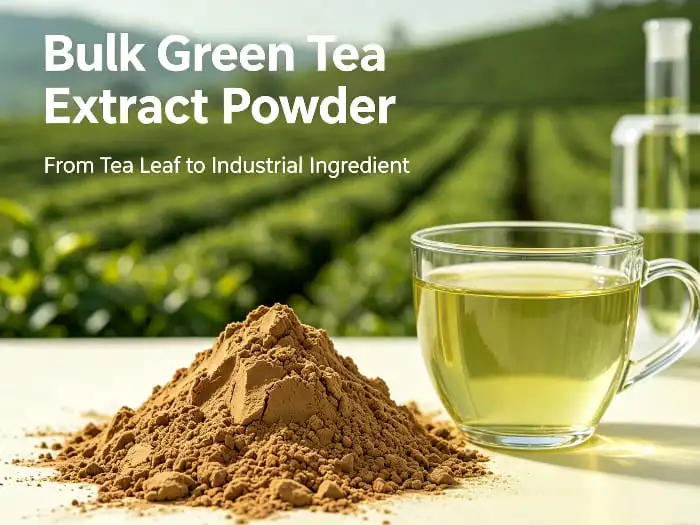
Bulk Green Tea Extract represents a concentrated phytochemical matrix derived from the dried leaves of Camellia sinensis through carefully controlled water or ethanol extraction processes, followed by filtration, concentration, purification, and spray drying. This standardized botanical ingredient is rich in tea polyphenols, catechins—particularly epigallocatechin gallate (EGCG)—and L-theanine, delivering robust free-radical scavenging, antioxidant, metabolic support, and cardiovascular protection. As clean-label and plant-based wellness trends surge across North America and Europe, green tea extract powder has become a cornerstone ingredient for nutraceutical formulations, functional beverages, cosmetics, and OEM applications.
Understanding Bulk Green Tea Extract: From Leaf to Extract
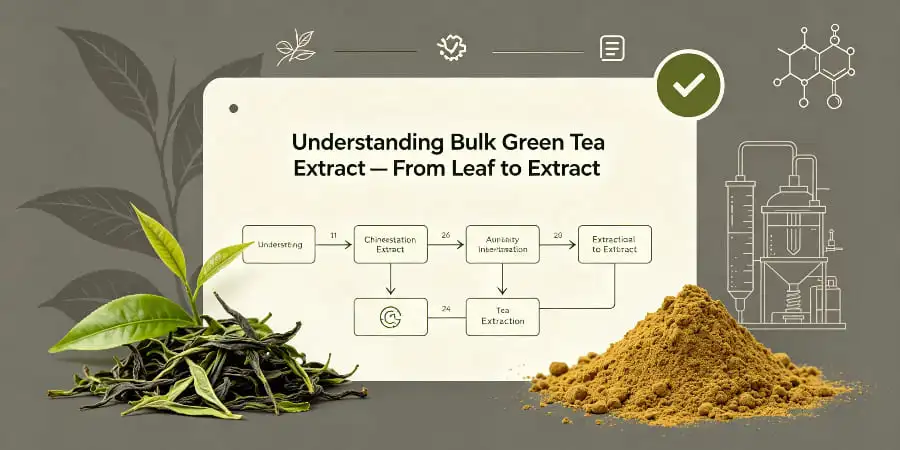
There are a lot of carefully controlled steps that happen between fresh tea leaves and Bulk Green Tea Extract powder. These steps affect the quality and bioactivity of the final product.
Sourcing and Raw Material Selection
When something is made well, it's good. Green tea extracts that are grown in controlled tea gardens at high elevations are the best. This is because the environment makes it easy for polyphenols to build up. We only buy our leaves from organic farms that don't use any man-made chemicals or herbicides. Regulatory managers and quality assurance teams are less worried about the risks of farming leftovers because of this. The type of plant—whether Camellia sinensis var. black tea or var. assamica—changes the catechin profiles. EGCG levels are usually higher in Chinese types.
Harvesting and Pre-Treatment
It's very important when you pick. There are more antioxidants in spring yields than in summer harvests. The leaves are quickly dried out and cooked (steamed or pan-fired) after being picked to stop the oxidizing enzymes from doing their job. This keeps the unique flavor of the green tea that hasn't been fermented. We stop the breakdown of catechins in this step so that the finished extracts keep their light yellow-green color.
Extraction Methods and Their Impact
In commercial production, there are three main ways to extract the oil, and each one is better for certain situations:
Water Extraction breaks down antioxidants while taking out as little caffeine as possible by controlling the temperature of the water. With this method, you can make extracts that are safe to eat and drink. It's easy to name them, and they don't leave any solvent waste behind. The process usually takes place between 80°C and 95°C. When this is done, the catechins are taken out while still being stable at high temperatures.
Ethanol Extraction uses food-grade ethanol as the solvent. This leads to higher amounts of lipophilic substances and higher polyphenol ratios. A lot of attention is paid to the levels of solvent that are still present to make sure that the finished goods meet USP and EP standards for medical uses. The best supplements that need the largest quantity of EGCG to work are those that are made this way.
Supercritical CO2 Extraction is the best way to get extracts that are certified organic and very pure. When CO2 is heated and pressed very hard, it changes into a supercritical state that can carefully get rid of certain chemicals without using soaps or chemicals. There is no chance of liquid waste with this method, but it costs a lot of money. The extracts are very pure and can be used in drugs and cosmetics.
Concentration, Standardization, and Drying
The liquid is removed and then concentrated through vacuum evaporation, and for Green Tea Extract Powder, this keeps the thermolabile catechins safe, and as part of standardization, batches are mixed to get exact polyphenol levels, such as 50%, 80%, or 98% total polyphenols, and this makes sure that the formula stays the same from batch to batch, which is important for accuracy, and the concentrated liquid is turned into a fine powder with controlled particle size (usually 80–100 mesh) by spray drying it, which makes it easier to mix and contain and spreads it out more evenly in drinks. This keeps the thermolabile catechins safe. As part of standardization, batches are mixed to get exact polyphenol levels, such as 50%, 80%, or 98% total polyphenols. This makes sure that the formula stays the same from batch to batch, which is important for accuracy. The concentrated liquid is turned into a fine powder with controlled particle size (usually 80–100 mesh) by spray drying it. This makes it easier to mix and contain and spreads it out more evenly in drinks.
Quality Factors and Standardization in Manufacturing
People who buy things need to know the technical details of what makes up premium-grade Bulk Green Tea Extract powder when they compare different providers.
Purity and Active Constituent Standardization
Total polyphenols (50–98%), total catechins (30–90%), and EGCG (15–98%) are some of the conditions that high-quality extracts must meet. This multi-level standardization makes it possible for very precise formulation control. A pill to help you lose weight might need 45% EGCG to speed up your metabolism, while a beauty product might need 60% total catechins to shield your skin from free radicals. These products have caffeine levels that range from less than 0.1% in decaffeinated forms to 10% in natural energy formulas, so they can be used for a lot of different things.
Testing Methodologies for Compliance
The ways we test have been tried and tested and meet world drug standards. The HPLC method finds the amount of each type of catechin, the UV spectrophotometry method finds the amount of total polyphenols, and the ICP-MS method can find heavy metals down to the parts per billion level. USP [2021] guidelines are used to test for microbes. These guidelines prove the presence of yeast, mold, pathogens, and general plate numbers. Verification by a third party, like SGS, Eurofins, or NSF, gives you peace of mind about allergy testing, GMO status, and pesticide residues. This is a very important piece of proof for the FDA and the EU Novel Food Regulation.
Organic Certification and Clean-Label Attributes
To show that organic green tea extract powder meets the standards set by the USDA NOP or the EU 834/2007, you can show that it can be fully tracked from approved tea farms to processing. Organic certification means that not only can foods be grown without using pesticides, but also tools used in making must use natural enzymes instead of clarifying agents made by humans. Many brands want to sell to health-conscious people who want to know where their goods come from. This approval solves a big problem for those brands.
Batch Consistency and Sensory Profile Management
Every growth season is a little different when it comes to natural plant products. Common mixing methods and temperature-controlled drying help us solve this problem. These methods keep the color values stable (as shown by absorption spectroscopy) and lower the amount of astringency. After several steps of cleaning, the bitter alkaloids and tannins are taken out. What's left are extracts with neutral to mild flavors that can be used in clear drinking situations where the bitterness of tea would be unpleasant.
Key Benefits and Usage Considerations
Bulk Green Tea Extract can be used in many ways and has clear benefits in all of them because it has flavonoids in it.
Antioxidant and Metabolic Support
A lot more antioxidant power is packed into EGCG than into vitamin C. Because of this, it is a good natural safeguard for food and keeps cells safe from oxidative stress. In metabolic health formulas, catechins help thermogenesis, which is how the body burns calories and keeps weight in check. EGCG is often found in goods for metabolic health and sports nutrition because studies have shown it to help the body burn more fat while working out.
Application Across Industries
Dietary Supplements leverage standardized extracts used in pills, tablets, and softgels to make sure that the right amount of catechins is always taken. Each dose usually has 250 to 500 mg of catechins. Decaffeinated types are great for nighttime mixes that use melatonin or magnesium with green tea to help people sleep without making them feel jittery.
Functional Beverages incorporate water-soluble grades so they don't form precipitates or "tea cream" when ready-to-drink forms are made in acidic pH settings (pH 3–4). Membrane filtration gets rid of the proteins that make them cloudy, so they stay clear.
Cosmetic Formulations utilize green tea extract because it stops collagenase and elastase from doing their jobs. This keeps the proteins that make up skin structure from breaking down. Low-color beauty grades stop creams and serums from turning brown over time, so they look good for a long time.
Pet Nutrition increasingly incorporates green tea extract as an antioxidant in high-quality pet treats and supplements. This helps older pets deal with oxidative stress.
Dosage Guidelines and Safety Considerations
A daily dose of 250 mg to 750 mg is good for your health in general. In metabolic support programs, higher amounts (up to 1500 mg EGCG equivalent) have been tried. Rules for how things can be controlled are different in different places. Dietary supplements can make structure-function claims in the US because of DSHEA rules, but concentrated goods need Novel Food clearance in the EU because of EU rules. It should be clear on the package how much caffeine is in it, especially for people who are sensitive to it.
Comparing Green Tea Extract with Alternative Ingredients
What makes Bulk Green Tea Extract different from other products that do the same thing helps buyers pick the best ingredients.
Green Tea Extract vs. Matcha Powder
Whole leaves that have been ground into a powder on a stone are used to make matcha. It has all the vitamins you need, like fiber and chlorophyll. However, catechin bioavailability is still not always the same, and it's not easy to make things more even. Concentrated extracts regularly provide catechins and have been shown to work, which makes them better for goods that need to know exactly how much to use. Because of its bright color and unique flavor, it can be used in cooking. Extracts of it can help with health problems without making the food taste bad.
Organic vs. Non-Organic Sources
Organic approval eases worries about chemical exposure, and it also supports the clean-label position. Sources that aren't organic may pass tests for chemical residue, but being organically certified doesn't help them in the market. The prices show how much it costs to grow different kinds of plants. Some types of extracts, like organic ones, cost more than others because they are certified and people want them.
Powder vs. Encapsulated Forms
When you buy bulk powder, you can mix it with ingredients that work well together, like garcinia cambogia, caffeine, or L-carnitine, and for Green Tea Extract Powder, this gives you more control over how your product is made, and it is easier for brands that don't make their own products to use encapsulation, but it is harder to change dosages, and how well capsules work is based on how easily powder flows, which can be seen by a mass density of 0.3 to 0.5 g/ml. This gives you more control over how your product is made. It is easier for brands that don't make their own products to use encapsulation, but it is harder to change dosages. How well capsules work is based on how easily powder flows, which can be seen by a mass density of 0.3 to 0.5 g/ml. Particle sizes need to be spread out evenly so that high-speed capsule filling doesn't have problems with bridges or caps.
Procurement Considerations for Strategic Sourcing
To pick the right service, you need to think about a lot of practical and technical aspects that will affect how the relationship will work in the long run.
Supplier Qualification Criteria
It is best to give attention to manufacturers who have current GMP certification, ISO 9001 quality management systems, and HACCP food safety practices. Every year, a third party checks our building to make sure that the process controls meet the standards for pharmaceuticals and that these certifications are still valid. Systems that link finished batches to the tea fields where they came from make it easy to fix any quality problems quickly, which keeps the brand's image safe.
Minimum Order Quantities and Pricing Structures
MOQs for normal specs are usually between 25 kg and 100 kg, and as the number of orders goes up, price breaks become available. For calls for custom standards, the minimums may need to be larger to cover the costs of analysis creation and batch validation. Clear prices should take into account the different quality levels of the raw materials, the method of extraction (water, ethanol, or CO2), and the certification fees (halal, organic, or kosher).
Packaging and Logistics Optimization
Pharmaceutical-grade HDPE drums with double-sealed lids keep hygroscopic powders safe while they are being shipped. Nitrogen cleaning lowers the risk of oxidation when sending over long distances. We can pack your items in a way that fits your needs, with branded labels and bundles of paperwork for each lot. These make it easy for facilities at the destination to get the things and make sure they are good.
Technical Support and Formulation Assistance
Having access to skilled tech teams speeds up the process of making new goods. How does Bulk Green Tea Extract mix with other plant-based ingredients? We test its stability at different pH and temperature levels and help you figure out the best way to mix it into drinks. Working together in this way cuts down on the number of R&D rounds and failed formulations.
Conclusion
As well as strict quality control, you need to have a very good idea of what the end product needs to do in order to make standardized green tea extract powder from fresh tea leaves. People who buy this kind of ingredient should look for suppliers who can show clear traceability, full testing capabilities, and technical teamwork. As the trend toward clean labels grows and rules change, the best way to make sure you're following the rules and your formulas work is to work with companies that have GMP facilities, certified organic sourcing, and validated standardization protocols. The right Bulk Green Tea Extract source will help you come up with new ideas and make sure that the quality of every batch is kept up. They will be like an extension of your research and development team.
FAQ
What minimum order quantities should I expect when sourcing bulk green tea extract?
Most of the time, MOQs for Bulk Green Tea Extract are between 25 kg and 100 kg, but this can change based on the way of extraction and the need for standardization. Standard types with common amounts of polyphenols, like 50% or 80%, usually need smaller minimums. For specific needs, like forms without caffeine or with a certain amount of EGCG, you might need at least 100 kg to cover the costs of analytical research and batch validation.
How can I verify the quality and purity of green tea extract before committing to large orders?
You should ask for a full Certificate of Analysis (COA) for each batch of production. This should include HPLC chromatograms for catechin profiling, heavy metal testing via ICP-MS, pesticide residue screening, and microbial analysis. When a lab like SGS or Eurofins checks something that isn't part of the company, you can trust it. Good providers, like Wellgreen, often send test samples with results so that your own quality control teams can look at them before you place larger orders.
Are there regulatory considerations specific to importing green tea extract into the United States?
This supplement must have the right Supplement Facts labels and follow current good manufacturing practices (cGMP) when green tea extract is used in it. This is because it's an extra food. A certain amount of chemicals can be left on foreign goods, and claims that they are organic must be backed up by USDA NOP approval. The Federal Food, Drug, and Cosmetic Act tells the FDA how to handle cosmetic applications in a certain way. The main points of these rules are safety and the right way to list ingredients.
Partner with Wellgreen for Premium Green Tea Extract Supply
Wellgreen Technology is a business that only makes Bulk Green Tea Extract. They make everything in-house, from controlling where the tea comes from to making the powder, and their factories are GMP-certified. Standardization that can be changed (50–98% polyphenols, 15–98% EGCG, and decaffeinated options), tools for various extraction methods, and thorough testing that meets FDA and EU standards are some of the technical skills we have. We have a lot of stock on hand so that orders can be met fast. We also offer open OEM/ODM services and different ways to package your items.
Our commitment isn't just to supply; it also includes a real business relationship. Whether you're making anti-aging cosmetics, functional drinks full of antioxidants, or supplements that help your metabolism, our formulation scientists can help you with compatibility data, stability studies, and application advice. Send us an email at wgt@allwellcn.com to see examples, talk about your specific needs, or get full quotes. You can see all of our plant-based products at wellgreenherb.com. You can find certification paperwork, product specs, and expert tools there to help you decide what to buy.
References
1. McKay, D.L. & Blumberg, J.B. (2002). The role of tea in human health: An update. Journal of the American College of Nutrition, 21(1), 1-13.
2. Cabrera, C., Artacho, R., & Giménez, R. (2006). Beneficial effects of green tea—A review. Journal of the American College of Nutrition, 25(2), 79-99.
3. Chacko, S.M., Thambi, P.T., Kuttan, R., & Nishigaki, I. (2010). Beneficial effects of green tea: A literature review. Chinese Medicine, 5, 13.
4. Vuong, Q.V., Bowyer, M.C., & Roach, P.D. (2011). L-Theanine: properties, synthesis and isolation from tea. Journal of the Science of Food and Agriculture, 91(11), 1931-1939.
5. Perva-Uzunalić, A., Škerget, M., Knez, Ž., Weinreich, B., Otto, F., & Grüner, S. (2006). Extraction of active ingredients from green tea (Camellia sinensis): Extraction efficiency of major catechins and caffeine. Food Chemistry, 96(4), 597-605.
6. Ananingsih, V.K., Sharma, A., & Zhou, W. (2013). Green tea catechins during food processing and storage: A review on stability and detection. Food Research International, 50(2), 469-479.