How Do Buyers Choose the Right Bulk Bergamot Extract Supplier?
2026-08-06 13:51:37
Choosing the right supplier for Bulk Bergamot Extract demands more than just competitive pricing—it requires understanding standardization levels, verifying purity credentials, and aligning product specifications with your formulation demands. Procurement teams must evaluate suppliers based on their testing transparency, regulatory compliance track record, and ability to deliver consistent quality across production batches. The complexity of sourcing bergamot polyphenolic fractions for cardiovascular health supplements, or furanocoumarin-free extracts for cosmetic applications, means that supplier selection directly impacts product efficacy, regulatory approval timelines, and market acceptance.
Understanding Bulk Bergamot Extract and Its Market
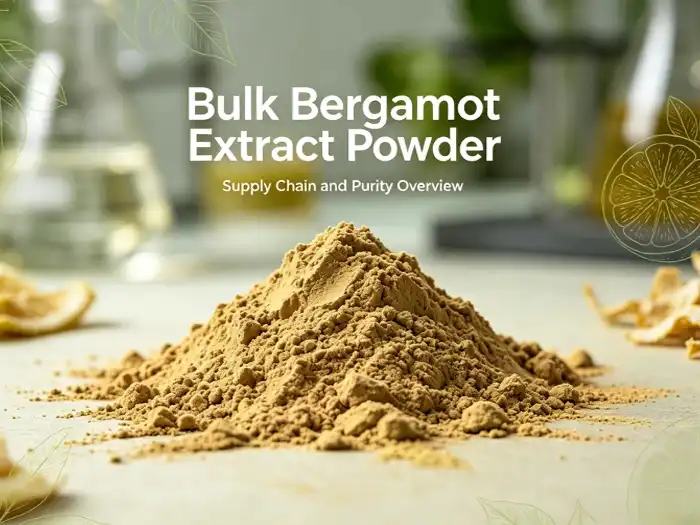
Bulk Bergamot Extract is a high-quality plant-based ingredient that comes mostly from the fruit Citrus bergamia Risso, which is grown in Calabria, Italy, and is known for producing fruits with high levels of active flavonoids. Manufacturers separate the Bergamot Polyphenolic Fraction (BPF) using a gentle water-ethanol extraction process and then chromatographic purification. The BPF contains bioactive compounds like neohesperidin, naringin, and neoeriocitrin. Because these antioxidants naturally stop HMG-CoA reductase from working, bergamot extract can be used as a "natural statin alternative" in cholesterol-lowering supplements.
The global business-to-business market for bergamot extract is growing quickly. This is because more and more people want cardiovascular support products with clear labels and clear information about where the ingredients come from. Standardized bergamot extracts are better than synthetic cholesterol-lowering agents because they work in more than one way to lower LDL cholesterol while keeping HDL cholesterol the same. Plus, they don't cause muscle pain like pharmaceutical statins do. Because it can do two things, it's appealing to nutritional companies that are making heart health goods for health-conscious people 45 and older.
Market Applications Across Industries
Manufacturers of food supplements and nutraceuticals prefer bergamot extracts that are defined to contain 25%, 38%, or 40% BPF, which can be proven through HPLC analysis. Pharmaceutical developers use highly pure extracts as active ingredients in over-the-counter heart medicines. This requires strict controls over heavy metals and tested extraction methods. For anti-aging serums, the beauty industry likes bergapten-free extracts because they use the antioxidant qualities of citrus flavonoids without the phototoxicity risks. At the same time, companies that make functional drinks add water-soluble bergamot powder to health drinks. This means that they need to come up with modified formulas that keep the light citrus scent without being too bitter.
North America and Europe's current regulatory environments stress the need for proof of origin, screening for over 500 pesticide residues, and following pharmacopoeial standards for solvent residues. Suppliers who can provide full chain-of-custody documents from harvesting to extraction become valuable partners for buyers who care about quality.
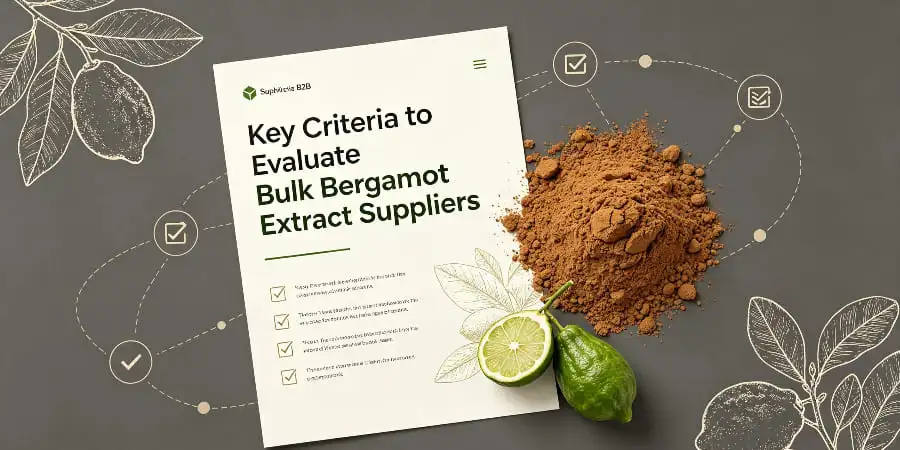
Key Criteria to Evaluate Bulk Bergamot Extract Suppliers
Quality Assurance and Certification Standards
Analytical confirmation of identity and potency is the first step in strict quality control. Suppliers with a good reputation use HPTLC fingerprinting to make sure that compounds like melitidin and brutieridin are present. These are compounds that are only found in real bergamot and not in cheaper citrus alternatives like grapefruit or pomelo extracts. This fingerprint analysis is the main way to stop economic adulteration, which is a problem that keeps happening in markets for high-value Bulk Bergamot Extracts.
GMP-certified factories make sure that the extraction processes follow tested methods. This keeps the difference in flavonoid content between batches to a minimum. ISO certifications show dedication to quality management systems, and organic certifications (USDA Organic, EU Organic) meet the needs of brands aiming for high-end health markets. Buyers should ask for Certificates of Analysis for recent production batches to make sure that the total amount of steviol glycosides meets the goals set by the manufacturer and that the number of microbes is still within acceptable limits (total plate count below 1,000 CFU/g and no harmful organisms like Salmonella and E. coli.
Supply Reliability and Production Capacity
Bergamot trees are grown according to the seasons, and the fruit is mostly picked between November and February. If suppliers keep enough goods on hand, they can fill orders all year long without lowering the quality of their products by rushing the extraction process or choosing the wrong raw materials. Different manufacturers have very different minimum order amounts. Some allow trial orders of 10 to 25 kilograms for product development, while others need commitments of 100 kilograms or more for regular supply deals.
When planning production schedules, being clear about lead times is very important, and for Pure Bergamot Powder Supplier, European sellers usually give shipping windows of two to three weeks for stock items, but for custom standardizations or specialized processing (like bergapten removal), times may be extended to four to six weeks, and logistics skills, such as managing the cold chain correctly and using packaging that doesn't let moisture in, keep the extract's chemical stability and physical flowability while it's being shipped across international borders. European sellers usually give shipping windows of two to three weeks for stock items. However, for custom standardizations or specialized processing (like bergapten removal), times may be extended to four to six weeks. Logistics skills, such as managing the cold chain correctly and using packaging that doesn't let moisture in, keep the extract's chemical stability and physical flowability while it's being shipped across international borders.
Pricing Structures and Payment Security
The price of standardized Bulk Bergamot Extract on the market depends on a number of factors, such as the BPF dosage, the organic certification status, the particle size requirements, and the difficulty of the processing. Higher levels of standardization cost more because they need more raw materials and more steps to clean them up. Organic-certified extracts usually cost 20–30% more than regular grades. This is because they are grown in limited ways and processed on separate lines to avoid cross-contamination.
There are different ways to pay, such as a letter of credit for first-time buyers and net-30 or net-60 terms for partnerships that have been around for a while. Trade assurance programs on verified B2B platforms protect payments and guarantee quality, which lowers financial risk during the early stages of evaluating suppliers. Price breaks that are clear, like separating the costs of raw materials, processing fees, certification costs, and logistics charges, help procurement teams compare offers to market standards and negotiate more effectively.
Technical Support and After-Sales Service
In addition to being business partners, top sellers also act as scientific partners who offer formulation advice for specific uses. This includes quantity suggestions based on clinical research, checks to see how well it works with other active ingredients, and information on how stable it is in different store conditions. When unexpected formulation problems come up, it's easier to solve them when there are responsive communication channels, preferably with technical representatives who speak English fluently and know U.S. regulatory requirements.
Sample strategies for providing goods show that the supplier is sure of the quality of the goods. Manufacturers with a good reputation will gladly send 50–100 gram samples for initial testing, and sometimes they'll even cover the small cost of shipping. This lets research and development teams try how well the substance dissolves, check its taste and smell, and make sure the analysis requirements are met before committing to large-scale production. Supporting documentation for regulatory submissions, such as allergen statements, BSE/TSE certificates, and country-of-origin declarations, makes the product registration process easier for staff.
Comparing Bulk Bergamot Extract Types and Their Impact on Supplier Selection
Extract Standardization Levels
How well Bulk Bergamot Extract works and how much to use depend on how concentrated the bergamot polyphenolic part is. Extracts that are standardized to 25% BPF are basic standards that can be used in mixtures where bergamot is one of several active ingredients. These less-standardized goods usually have better flowability and are easier to process further down the line, but they need higher dose amounts to meet treatment goals.
Higher standards at 38% or 40% BPF are for high-end supplement brands that put a lot of emphasis on potency and dosing that is backed by research. These concentrated grades are often used in clinical studies that show cardiovascular benefits, which makes them better for products that make specific health claims. Tighter regulation also makes batch-to-batch stability better, which is very important for brands that need to stick to strict quality standards across multiple production runs. Suppliers who can make custom standardizations between these common grades have advanced chromatographic skills and can adapt to different manufacturing processes.
Organic Certification Considerations
Organic bergamot oils are popular with brands that want to sell natural goods and with people who want to eat foods that don't contain pesticides. For certification purposes, the fruits must come from orchards that have used organic farming methods for at least three years, and these orchards must be inspected every year to make sure they are following the rules. Processing plants must keep their equipment and record-keeping systems separate so that they don't come into contact with regular materials.
How you place your target market has a big impact on the cost-benefit analysis of organic certification, and for Bulk Bergamot Extract, brands that charge higher prices in health food stores and wellness-focused online stores can handle higher costs of raw materials and still make good profits, while value-oriented brands aiming for mass-market retail may find that standard extracts, which go through strict testing for pesticide residue, offer enough quality guarantee at more affordable prices. Brands that charge higher prices in health food stores and wellness-focused online stores can handle higher costs of raw materials and still make good profits. On the other hand, value-oriented brands aiming for mass-market retail may find that standard extracts, which go through strict testing for pesticide residue, offer enough quality guarantee at more affordable prices. Buyers should ask for multi-residue screening results that show pesticide levels well below the legal limits. This is especially important for chemicals like imidacloprid and chlorpyrifos that are widely used in citrus farming.
Physical Form and Processing Enhancements
The power of powder to flow has a big effect on how efficiently capsules and tablets are made. Naturally, citrus extracts have hygroscopic sugars that make them clump when they are in humid places or for a long time. Advanced providers use microencapsulation or silica covering to make powders that flow freely and keep particle sizes between 80 and 120 mesh. This property of not caking is important for automated equipment because it stops feeding problems and production downtime.
Another important property for beverage applications is how well it dissolves in water. When added to water, standard spray-dried powders may become cloudy or settle to the bottom. Specialized processing makes grades that dissolve completely in cold water, making solutions that are clear even at higher concentrations. These high-end grades don't need any extra solubilizers or emulsifiers, which makes formulas simpler and helps with the clean-label positioning.
Citrus polyphenols are naturally astringent, which can make functional drinks and chewable vitamins taste bad. Debittered formulas get rid of this problem. Instead of changing the taste with chemicals, physical processing methods keep the natural notes while getting rid of harsh tannin-like traits. This improvement makes it easier for flavor houses to hide sharpness, which lowers the overall cost of creation and makes it easier for consumers to accept during taste testing.
Step-by-Step Guide to Selecting the Ideal Bulk Bergamot Extract Supplier
Define Application-Specific Requirements
To start, procurement plans need to have clear technical specs that match how the product is positioned and how it will be regulated. Cardiovascular supplement makers need extracts that have been shown to inhibit HMG-CoA reductase and have been tested on humans in published clinical trials to back up their claims of effectiveness. Cosmetic makers look for bergapten-free approvals that can be checked with GC-MS analysis to make sure there are no phototoxic furanocoumarins present. Manufacturers of drinks need stability data that shows how well the flavor and color stay the same over normal shelf life times when kept in the fridge.
By setting these factors up front, you can screen Bulk Bergamot Extract suppliers more efficiently than if you looked at all of your options. Ask for detailed product spec sheets that show not only average values but also assured lowest levels of active chemicals and highest levels of contaminants. By comparing these specs to formulation goals, you can find providers whose standard products are very close to what you need, so you don't have to pay a lot for custom processing.
Conduct Supplier Pre-Qualification
Verifying someone's background keeps you safe from fake licenses and false promises about their abilities that sometimes show up in markets for botanical extracts. Check the authenticity of claimed certifications by asking for certificate numbers and checking directly with the organizations that issued them. For example, accredited GMP auditors, organic certifiers, and ISO registrars keep public databases that can be searched by company name. Check the supplier's business licenses and export documents to make sure they are legal in their home country.
Ask for information about the facility, such as its production capacity, specifications for its extraction equipment, and the quality control laboratory's capabilities. For accurate strength testing, you must use modern HPLC systems with tried-and-true methods. ICP-MS equipment is required for full heavy metal screening. Even if the price is good, you should be wary of suppliers who won't give you facility information or who try to avoid answering sensible due diligence questions.
Request and Evaluate Product Samples
Examining a physical example shows things that can't be seen by looking at paperwork alone. As soon as you get it, look it over and make sure the colors are all the same, the particles are all the same size, and there are no strange materials. Moisture content testing makes sure that the food is dried and packaged correctly; results below 5% mean that the food will stay stable on the shelf. For soluble grades, reconstitution tests should show full dispersion within certain time frames without any residue formation.
Work with your quality control lab to prove the name of the sample by comparing it to authenticated reference standards using HPTLC. Quantitative HPLC analysis should make sure that the levels of standards given are within acceptable ranges, which are usually within ±10% of the values given. If the first results show big differences, ask for new samples from different production lots to find out if the problem is specific to one batch or a problem with the quality control system as a whole.
Trained sensory panels do organoleptic assessments, which look at taste and smell qualities that are important for products that people will buy, and for Pure Bergamot Powder Supplier, bergamot extract should have mild, nice citrus notes that aren't too medicinal and don't have any off-flavors that suggest rust or contamination, and keep track of these evaluations by making scorecards that can be used for fair comparisons when samples come from more than one possible supplier. Bergamot extract should have mild, nice citrus notes that aren't too medicinal and don't have any off-flavors that suggest rust or contamination. Keep track of these evaluations by making scorecards that can be used for fair comparisons when samples come from more than one possible supplier.
Negotiate Terms and Establish Agreements
Unit pricing is only one part of commercial negotiations. Other things that are talked about are payment schedules, agreements for exclusivity, and ways to guarantee quality. Volume-based price tiers encourage bulk purchases while tiered commitment structures allow for freedom in response to changes in demand. Set clear limits on the accepted ranges of variation and include ways for prices to be adjusted if the cost of raw materials changes a lot during long-term supply deals.
Quality guarantee clauses should spell out what to do if the materials you receive don't meet the requirements. For example, you could offer a full replacement, a partial credit, or quick retesting of a sample. Include ways to keep samples and store them in a controlled way so that problems can be looked into if they happen during testing of the finished product or processing that comes after. When production delays or product recalls could put your company at risk of big financial losses, these protections are very helpful.
The technical help should say how long it will take to answer questions about formulation and give you access to stable data or regulatory documents. Some suppliers give strategic customers their own technical account managers who keep them informed about when raw materials are harvested, when they will be processed, and about changes to regulations that could affect the status of ingredients in key markets.
Why Trust Matters: Identifying Reputable Bulk Bergamot Extract Manufacturers and Brands
Wellgreen Technology has built a good name for itself by consistently investing in high-quality infrastructure and technical skills that help buyers of Bulk Bergamot Extract deal with the problems they face. We keep the openness that procurement professionals need when looking for new sources by running a GMP-certified facility with full chain-of-custody paperwork from the trees in Calabria to the final packing. Our special bergapten-removal technology fully gets rid of phototoxicity concerns. This was proven by batch testing that showed undetectable amounts of furanocoumarin, which is important for cosmetic uses that have to pass strict safety tests.
The company's multi-sugar microencapsulation process gets rid of the caking problem that citrus extracts have for good, making powders that flow easily and work reliably in high-speed capsule filling operations, even when humidity levels are high. This new idea directly cuts down on production waste and downtime for supplement companies that work in a variety of climates. The product specifications include standardizations for 25% to 40% BPF that have been checked using validated HPLC methods. Buyers with specific formulation goals can also get custom standardizations.
Comprehensive contamination screening goes above and beyond what is normally done in the business. For example, pesticide residue analysis looks at more than 500 compounds, heavy metal testing using ICP-MS includes new toxins like cadmium and arsenic, and PAH screening looks at pollution risks related to processing. These strict rules make sure that extracts meet the strictest safety standards around the world, such as the California Prop 65 rules and the European Union's pollution limits. Making products with only food-grade ethanol and clean water takes away any worries about residual extraction solvents, as the final products have levels that are much lower than the maximums allowed by pharmaceutical standards.
Flexible minimum order quantities start at 25 kilograms for initial trials and can be increased to multi-ton supply agreements as products become commercial successes. This is helpful for buyers who are working with contract manufacturers or creating their own formulations. There are technical documentation packages that help with regulatory submissions in many places. These packages include allergen declarations, GMO-free certifications, BSE/TSE statements, and shelf-life validation studies. Customer service teams that are responsive know how important it is to meet production deadlines, so they process regular orders within 48 hours and keep extras of popular specifications in case demand goes up unexpectedly.
Conclusion
Analytical proof of standardization levels, manufacturing quality systems, organizational dependability, and the ability to work with technical partners are just a few of the factors to consider when choosing a provider for Bulk Bergamot Extract. Procurement workers should give more weight to suppliers who are open about their testing methods, ready to provide samples for verification, and have a history of success in your business. Thoroughly qualifying suppliers is an investment that pays off in the form of consistent product quality, confidence in regulatory compliance, and formulation support that cuts down on the time it takes to get new products on the market.
FAQ
What minimum order quantities should buyers expect when sourcing bergamot extract?
Minimum order amounts are very different depending on the size of the seller and the specifics of the product. Trial orders of 10 to 25 kilograms are common for established makers to take for product development reasons. This lets R&D teams do stability studies and customer testing before committing to commercial volumes. For standard specifications, routine supply agreements usually need at least 50 to 100 kilograms. For custom standardizations or specialized processing, sourcing Bulk Bergamot Extract in large volumes may require commitments of 250 kilograms to cover the costs of setting up the production line.
How can buyers verify the authenticity and purity of bergamot extract samples?
The first step in authentication is HPTLC fingerprinting, which compares the sample to verified reference standards and confirms the presence of melitidin and brutieridin, which are chemicals that are only found in real bergamot. Quantitative HPLC analysis should be used to make sure that the BPF numbers given are within ±10% of the true values. Third-party lab testing is an unbiased way to make sure of something. Reliable suppliers allow independent testing and give enough samples for buyer-directed testing. Ask for Certificates of Analysis from the most recent production batches and compare the lot numbers with the numbers of materials that have been shipped.
What safety considerations apply when formulating with bergamot extract?
When applied to the skin before going outside in the sun, natural bergamot includes furanocoumarins like bergapten that are phototoxic. For cosmetic uses, bergapten-free extracts must be used, which can be proven by a GC-MS study that shows undetectable amounts. At the recommended doses, dietary supplements usually don't pose too many safety concerns. However, there could be interactions with statin drugs because they both work to block HMG-CoA reductase. Women who are pregnant or nursing should talk to their doctors before taking botanical supplements. This is standard language for warnings.
Partner with Wellgreen for Premium Bulk Bergamot Extract Supply
Wellgreen can help you get Bulk Bergamot Extract because they offer standard BPF formulas with strengths ranging from 25% to 40%, along with full analytical paperwork and regulatory compliance certifications. Our manufacturing is GMP-certified, which means that the quality is the same across all production runs. Our expert team also helps with formulations for nutraceutical, medicinal, cosmetic, and functional food uses. We keep enough of the most-requested specs in stock to quickly fill orders, and our flexible minimums allow for both first-time tries and long-term supply relationships.
Contact our purchasing agents at wgt@allwellcn.com to get full product details, sample availability, and personalized quotes that take into account your exact volume needs and delivery dates. As a Bulk Bergamot Extract producer with a lot of experience, we know the technical and legal challenges your projects face. We can help you find ways to streamline your supply chain while still meeting the high-quality standards that your brand's image requires. Visit wellgreenherb.com to see our full line of botanical extracts and learn why top brands trust Wellgreen to provide consistent, legal, and reasonably priced raw materials.
References
1. Mollace, V., et al. (2019). Hypolipidemic and hypoglycemic effects of bergamot polyphenols: From animal models to human studies. Fitoterapia, 139, 104401.
2. Navarra, M., et al. (2015). Effects of bergamot essential oil and its extractive fractions on SH-SY5Y human neuroblastoma cell growth. Journal of Pharmacy and Pharmacology, 67(8), 1042-1053.
3. Risitano, R., et al. (2014). Flavonoid fraction of bergamot juice reduces LDL-cholesterol in human cells through an improved lipid metabolism. Journal of Functional Foods, 11, 420-426.
4. Toth, P.P., et al. (2016). Bergamot reduces plasma lipids, atherogenic small dense LDL, and subclinical atherosclerosis in subjects with moderate hypercholesterolemia. Frontiers in Pharmacology, 6, 299.
5. Dugo, P., et al. (2012). Determination of oxygen heterocyclic components in citrus products by HPLC with UV detection. Journal of Agricultural and Food Chemistry, 60(23), 5683-5690.
6. Ferlazzo, N., et al. (2016). Safety and efficacy of a novel bergamot polyphenolic fraction delivered in film-coated tablets for dyslipidemia treatment. Phytotherapy Research, 30(5), 832-838.