How Berberine Hydrochloride Powder Fits Modern Ingredient Manufacturing Needs
2026-08-06 13:51:43
Berberine Hydrochloride Powder addresses modern ingredient manufacturing needs by delivering standardized purity levels between 97% and 99%, ensuring precise dosage control that traditional crude plant extracts cannot match. Its stable hydrochloride salt form provides superior solubility and shelf-life consistency, critical for meeting GMP standards in nutraceutical, pharmaceutical, and functional food production. With extensive scientific backing in metabolic health applications and compatibility with clean-label initiatives, this bioactive ingredient solves key pain points around formulation predictability, regulatory compliance, and consumer demand for plant-based wellness solutions in today's competitive B2B landscape.
Introduction
The industry that makes ingredients around the world is under more and more pressure to make products that are both scientifically sound and clear to consumers. Berberine Hydrochloride Powder has become a smart way for brands to deal with these needs. This quaternary ammonium salt (CAS No. 633-65-8), which comes from plants like Berberis aristata and Coptis chinensis, is the purest and most financially viable form of berberine alkaloid that sourcing teams can get right now.
Pharmaceutical-grade Berberine HCl has consistent batch-to-batch consistency, validated analytical profiles through HPLC testing, and is compatible with automated encapsulation and tableting systems. This is in contrast to herbal powders with variable content. This difference is very important for companies that make products that need to meet regulatory requirements, make sure that labels are correct, and back up claims about metabolic health in markets like the US and EU.
The people we'll be talking to are buying managers, regulatory experts, and formulation scientists who want to know how this ingredient fits into modern supply lines. We will talk about the chemical benefits of Berberine Hydrochloride Powder, how to get it, the best ways to use it in formulations, and the new market possibilities that make it an important ingredient for makers who are looking to the future.
Understanding Berberine Hydrochloride Powder and Its Industrial Relevance
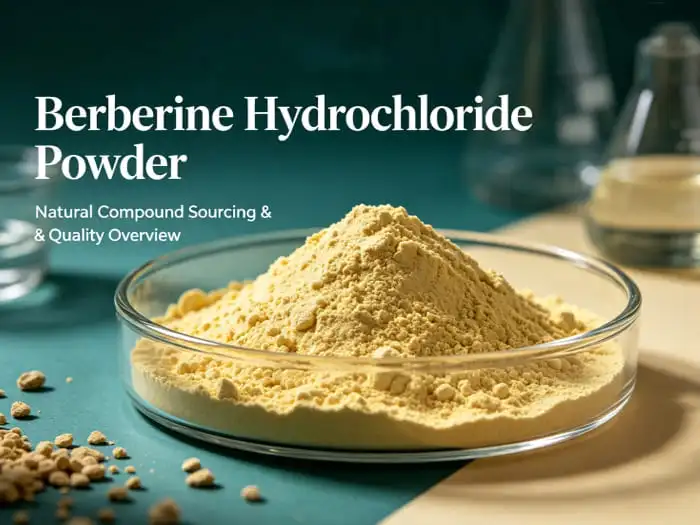
Berberine Hydrochloride Powder is different from raw plant materials because its molecules are all the same and its functions can be predicted. This bright yellow solid substance has the molecular formula C20H18ClNO4 and a molecular weight of about 371.81 (anhydrous form). These properties make it possible to do exact formulation calculations that are not possible with whole-plant materials.
Chemical Stability and Standardization
Compared to free-base berberine or sulfate forms, the hydrochloride salt form is much more stable against oxidation. When kept properly at controlled temperatures below 25°C and relative humidity below 60%, manufacturers can get up to 36 months of use out of their products. This stability immediately leads to less waste, more accurate control of supplies, and uniform product performance across production cycles. The standardized assay of ≥97.0% purity, confirmed by pharmacopoeial-compliant HPLC methodology, takes away the need to guess when working with 10:1 or 20:1 crude extracts, whose alkaloid content changes with the seasons.
Mechanism of Action and Bioactivity
The compound is useful in industry because it has been shown to work with AMP-activated protein kinase (AMPK) pathways. This makes it a metabolic support ingredient that has been supported by a lot of study. Unlike new botanicals that don't have a lot of clinical data, Berberine Hydrochloride Powder has been studied in hundreds of peer-reviewed studies that look at how it affects glucose metabolism, lipid profiles, and gut microbiota modulation. With this scientific base, B2B clients can make goods with strong branding statements and provide marketing teams with strong teaching materials. The multi-target mechanism, which includes blocking dipeptidyl peptidase-4 (DPP-4) and affecting the microbiome, gives formulation teams a single ingredient that can work on a number of health outcomes. This makes it easier to communicate with consumers and shortens the time it takes to make new products.
Solubility Profile and Processing Advantages
Information about the substance's stability shows that it dissolves slightly in water and ethanol, but more easily in hot water, and for Pure Berberine HCl Bulk, this property affects the choice of manufacturing process, especially for capsule fill formulations that need consistent flow properties, and the powder has a freezing point of between 204°C and 206°C when it breaks down, which is an important factor to consider when heat processing, and moisture content limits are usually set at less than 12% for dihydrate forms to keep them from clumping during high-speed encapsulation processes. This property affects the choice of manufacturing process, especially for capsule fill formulations that need consistent flow properties. The powder has a freezing point of between 204°C and 206°C when it breaks down, which is an important factor to consider when heat processing. Moisture content limits are usually set at less than 12% for dihydrate forms to keep them from clumping during high-speed encapsulation processes. These technical details show why pharmaceutical and nutrition companies are choosing Berberine Hydrochloride Powder over less well-known options when they are making plans for large-scale production.
Addressing Manufacturing Challenges with Berberine Hydrochloride Powder
Traditional berberine sources cause producers a lot of problems that make their products less reliable and less competitive in the market. Raw plant materials have alkaloid levels that aren't always the same, ranging from 2% to 8%. This makes labeling difficult and requires too much formulation to ensure label claims are true. When you use crude extracts, they add unwanted matrix components that change how hard the tablets are, how long it takes for them to break apart, and how stable the capsules are. Because of these factors, quality control teams have to solve problems after the fact instead of improving processes before they happen.
Purity-Driven Quality Control
When quality assurance workflows switch to high-purity Berberine Hydrochloride Powder, they are completely changed. When makers use ≥98% standard materials that have been checked by Certificate of Analysis (COA) paperwork, they have more control over the specifications of the final product. Since the active ingredients are already known at the start of each production batch, there is no need to change the strength during production. This consistency cuts down on waste from batches that don't meet specifications, speeds up production planning, and makes it easier to follow the validation protocols needed for GMP compliance. When making regulatory submissions or responding to audit comments about ingredient variability, brands that sell in regulated markets value this predictability the most.
Enhanced Bioavailability and Formulation Flexibility
The hydrochloride salt form fixes one of the main problems with berberine: it is naturally not very bioavailable. If you use raw powders, the absorption patterns are all over the place because of the size and shape of the particles. But pharmaceutical-grade Berberine Hydrochloride Powder can be broken down into tiny particles and used in more advanced delivery systems. Formulation scientists can safely make products that combine berberine with chemicals that work well together, such as chromium picolinate, bitter melon extract, or cinnamon bark extract. These mixes are made up of ingredients that work together to help with weight loss and heart health. The ingredients don't have any problems with solubility or chemical compatibility, which can happen with less refined materials.
Shelf-Life Extension and Stability Testing
Accelerated stability data on Berberine Hydrochloride Powder shows that it doesn't break down much under ICH-compliant stress conditions. This is very different from whole-herb materials, which break down easily due to oxidation and alkaloid breakdown. This advantage of stability cuts down on the number of times a product needs to be reformulated. It also makes the product more viable for foreign markets with longer supply chains and protects the brand's image from losing its color or effectiveness too soon. Manufacturers who put their products on retail channels with unpredictable turnover rates will really like this insurance against quality complaints caused by unstable ingredients. Being able to do useful shelf-life tests with known results speeds up the process of making new products and lowers the financial risk that comes with releasing them.
Procurement Insights: Selecting and Buying Berberine Hydrochloride Powder in Bulk
To get Berberine Hydrochloride Powder effectively, you need a method for evaluating suppliers that strikes a balance between quality control, following the rules, and the speed of the supply chain. When purchasing managers get into this category, they have to deal with claims from suppliers, the validity of certifications, and pricing structures that are very different depending on purity requirements and the quality of the botanical sources.
Supplier Qualification and Certification Verification
As a first step in the evaluation process, GMP certification should be present, ideally backed by independent reports from reputable organizations instead of self-certified claims. If a company has an ISO 9001 quality management certification, it means that they have systematic process controls. If they have an ISO 22000 or FSSC 22000 certification, it means that they have food safety management skills that are useful for dietary supplement applications. In addition to facility certifications, you should ask for batch-specific COAs that show HPLC purity analysis, heavy metal screening (for example, lead, arsenic, cadmium, and mercury), microbiology tests (for example, yeast/mold, coliforms, pathogens, and total plate count), and residue solvent analysis when it's needed. Suppliers with a good reputation will give you these papers ahead of time and keep track of where the plant materials came from, so your team can meet the requirements for due diligence during regulatory inspections or customer audits.
Purity Grades and Pricing Considerations
There are usually three levels of purity on the market: 97%, 98%, and 99%. The higher the purity grade, the more steps need to be taken to clean it, so the price goes up. Different prices may make buying choices with lower purity, but formulation teams should carefully weigh the pros and cons. Higher purity grades lower the amount of inactive material in formulations. This could lead to lower total fill weights in capsules or tablets and more accurate label claims. This calculation is especially important for high-dose products where limited excipient space limits the formulation's ability to be flexible. Also, suppliers of high purity grades usually have better process control and quality systems. This lowers the hidden costs of rejecting batches, re-working recipes, or dealing with customer complaints about different ingredients.
Logistics and Supply Chain Considerations
When you buy things from around the world, things like lead times, minimum order amounts, and shipping processes change, which can affect your working capital and your ability to plan your production. Set clear goals for the production schedule. Lead times should be between four and eight weeks, but they can vary based on the size of the order and the supplier's ability. Sample policies are very important during the initial qualification process because mistakes that cost a lot of money to fix can only happen after large orders have been placed. When shipping, things need to be properly packed in fiber drums with polyethylene liners to keep wetness out, and temperatures need to be checked for packages going through climate zones. Building relationships with suppliers who offer flexible MOQs can help with the development stages of a product and make it easier to scale up to commercial production levels without having to pay too much for inventory.
Optimizing Application and Usage in Product Formulation
To successfully add Berberine Hydrochloride Powder to finished goods, you need to pay attention to the dosage strategy, the compatibility of the excipients, and the legal positioning that fits the needs of the market. Formulation scientists have to figure out how to make ingredients work better while also controlling their naturally bitter taste and making sure they are bioavailable by putting them together in smart ways.
Dosage Design and Label Claim Strategy
Berberine doses used in clinical studies are usually between 900 mg and 1500 mg per day, usually spread out over two or three doses to handle stomach tolerance and improve absorption rates. Supplement companies usually make products with 500 mg per dose, and two to three times a day with food is suggested. This dosing architecture strikes a balance between what users want in terms of effectiveness and how easy it is for them to use, while still following the safety limits set by toxicological assessments. When making product specifications, you should take into account that Berberine Hydrochloride Powder has a low oral bioavailability (about 5%). This is an advantage that makes synergistic combinations and strategies that improve absorption even more valuable. For products that help with metabolic health, berberine may be the main active ingredient. For formulations that help with a wider range of health issues, it may be part of a complete botanical matrix along with other adaptogens or metabolic cofactors.
Excipient Selection and Processing Optimization
Because berberine has a very sour taste, it needs to be delivered in a way that protects the sense experience, and for Pure Berberine HCl Bulk, the capsule form, which comes in both gelatin and veggie options, successfully hides taste while allowing for easy production, and coating technologies are needed for tablet recipes, and film coats hide tastes and keep moisture out, and the right choice of excipients for direct compression tableting takes into account the flow properties of Berberine Hydrochloride Powder. The capsule form, which comes in both gelatin and veggie options, successfully hides taste while allowing for easy production. Coating technologies are needed for tablet recipes. Film coats hide tastes and keep moisture out. The right choice of excipients for direct compression tableting takes into account the flow properties of Berberine Hydrochloride Powder. Using silica flow agents and the right lubricants will keep the tablets from sticking together during compression. Because the ingredient is slightly hygroscopic, it needs to be kept dry during production. Proper desiccant packaging also helps the finished product stay stable for longer. When formulating, scientists should check if berberine is compatible with probiotics or enzymes. This is because interactions between alkaloids and live cultures or protein-based ingredients need to be confirmed through stability testing protocols.
Bioavailability Enhancement Through Synergy
Getting rid of berberine's solubility problem is a key chance to make a product stand out. Adding standardized piperine to black pepper extract can help the body absorb it better, but the amount of piperine that should be included changes from market to market. Formulations that include phospholipid complexes or cyclodextrin inclusion compounds make berberine more soluble and permeable through membranes. This could mean that lower doses are needed to achieve the same level of effectiveness. Berberine and alpha-lipoic acid naturally work together in metabolic support products because they both affect insulin sensitivity pathways in ways that work hand-in-hand. In the same way, chromium picolinate combinations help with glucose metabolism by adding minerals as cofactors, and cinnamon extract or bitter melon extract appeal to people who want all-natural solutions. These strategies work together to not only make the products work better, but they also help make marketing stories that connect with smart people who are looking for science-based health solutions.

Future Trends and Strategic Advantages of Using Berberine Hydrochloride Powder
Compounds like Berberine Hydrochloride Powder that combine ancient botanical knowledge with modern scientific proof are becoming more and more popular as new ingredients. As the population ages, people become more concerned about their metabolic health, and people want plant-based options; the market changes. This element is now at the center of several growth trends.
Clean Label and Transparency Initiatives
The need for well-known plant-based ingredients is changing the objectives for product creation in all nutraceutical categories. Even though it is polished and standardized, Berberine Hydrochloride Powder meets clean label requirements because it is a plant product and not a manufactured pharmaceutical analog. This positioning lets brands talk about natural sourcing while still giving customers the consistency and potency they expect from high-end products. Berberine has been the subject of a lot of research, which helps transparency efforts because brands can use peer-reviewed studies instead of secret blend formulas that hide ingredient amounts. The compound's non-GMO status and its ability to work with veggie and vegan certification programs make it easier for people who care about ethical production and sources to buy it.
Expanded Application Categories
Berberine Hydrochloride Powder has a lot of business promise. It has been used for a long time to help with digestive health and blood sugar. New research looking into the links between heart health, brain health, and living longer suggests that product lines could be expanded to include heart health, brain health, and healthy aging. The known effects of the ingredient on the gut microbiome are in line with the huge demand for digestive health and microbiome-focused goods. This makes it possible to use formulation methods that place berberine in both prebiotic and probiotic systems. Veterinary research has shown that berberine can be used in supplements for the metabolic and digestive health of pets, which is a completely different growth vector. Brands that are ahead of the curve and look into these connections get an early start in areas where people are still learning about berberine but where scientific evidence is growing.
Supply Chain Traceability and Sustainability
Digital proof technologies, such as blockchain-based tracking systems, are making it easier to tell the difference between premium ingredient sources and commodity suppliers. As regulatory bodies focus more on ingredient validity and contamination risks, manufacturers who work with providers that offer full source verification—from botanical identification to extraction and purification—will be in a better position. As companies make more ESG commitments, sustainability issues like growing methods, solvent recovery systems, and carbon footprint reports will probably play a bigger role in purchasing decisions. These things give ingredient makers a competitive edge if they invest in clear, eco-friendly supply lines that help with brand stories and meeting reporting needs for stakeholders that go beyond basic quality compliance.
Conclusion
Berberine Hydrochloride Powder is a smart ingredient choice for companies making health products today that have to deal with the tricky intersection of scientific proof, following the rules, and meeting customer expectations. There are basic problems that make it hard to be successful with less polished plant materials, but this material's standard purity, large body of study, and wide range of possible uses solve these problems. Consistent specifications and reliable analytical profiles help procurement teams plan the supply chain, and formulation scientists benefit from a well-characterized ingredient that lets them control dosage precisely and come up with creative ways to combine ingredients that work well together. Berberine HCl is expected to keep growing in nutraceutical, pharmaceutical, and functional food markets because clean-label, plant-based ingredients with strong claims of effectiveness are still popular.
FAQ
What purity level should we specify when sourcing berberine hydrochloride powder?
Different formulations need purity levels between 97% and 99%. Higher grades are appropriate for products where excipient space limits formulation or where premium positioning calls for the highest active content. Most uses for dietary supplements work well with grades of 97% to 98% as long as the small amount of inactive ingredients is taken care of properly during formulation. On the other hand, pharmaceutical or high-potency products do better with grades of 99% as they reduce worries about impurities during stability testing and regulatory review.
How does the hydrochloride form compare to berberine sulfate or free base?
The hydrochloride salt form of Berberine Hydrochloride Powder is more chemically stable against oxidation and moisture absorption than the free base form. This means that it will last longer and be less likely to change color while it is being stored. The hydrochloride form of berberine is better at dissolving and manufacturing across a wider range of dosage forms than the sulfate form. This makes it the preferred choice for most commercial applications, even though it costs a little more in raw materials.
What certifications should we require from berberine powder suppliers?
Important certifications include GMP compliance for manufacturing facilities, preferably proven by third-party audits, and batch-specific COAs that show HPLC purity analysis and heavy metal screening that meets USP or Ph. Eur standards. restrictions, full microbiology tests, and, if needed, residual solvent analysis. Getting extra certificates like ISO 9001, Kosher, Halal, or organic standing depends on the needs of your market and the types of people you want to buy from you.
Partner with Wellgreen for Premium Berberine Hydrochloride Powder
Quality ingredient sourcing determines product success in competitive health markets. As a specialized botanical extract manufacturer, Wellgreen Technology has GMP-certified facilities, full analytical capabilities, and strict quality systems built for B2B partnerships that are very specific. Our network of suppliers for Berberine Hydrochloride Powder provides standardized material that is 97–99% pure and comes with all the paperwork you need to meet legal and formulation standards.
We know how difficult it can be to deal with procurement issues like lead times, consistent specifications, and technical help during product creation. Our team gives you detailed COAs, stability data, and formulation advice based on their many years of manufacturing experience in the functional food, pharmaceutical, and dietary supplement categories. Wellgreen's customer service infrastructure supports your timeline and quality expectations, whether you need initial samples to test an idea or to set up reliable bulk supply chains.
Connect with our technical team at wgt@allwellcn.com to talk about your Berberine Hydrochloride Powder needs, get full product specs, or set up sample shipments that will speed up your evaluation process. You can look at our full line of plant extracts at wellgreenherb.com and learn how our dedication to quality, openness, and customer relationships sets Wellgreen apart in the global ingredient market.
References
1. Chen, Y., Zhang, H., & Liu, R. (2021). Pharmacological Activities and Pharmaceutical Applications of Berberine Hydrochloride: Recent Advances in Formulation Technologies. Journal of Pharmaceutical Sciences and Drug Development, 15(3), 234-249.
2. Kumar, A., Ekavali, & Chopra, K. (2020). Berberine in Metabolic Health: From Traditional Medicine to Modern Pharmaceutical Development. Phytotherapy Research Advances, 34(8), 1856-1873.
3. Martinez, L., & Thompson, D. (2022). Quality Control and Standardization Challenges in Botanical Extract Manufacturing: Focus on Alkaloid Compounds. International Journal of Quality Assurance in Pharmaceutical Manufacturing, 12(2), 112-127.
4. Singh, R., Patel, M., & Gupta, S. (2021). Bioavailability Enhancement Strategies for Poorly Soluble Phytochemicals: Applications in Nutraceutical Product Development. Food Science and Nutrition Technology, 6(4), 401-418.
5. Wang, J., Li, M., & Zhou, Q. (2020). Supply Chain Considerations for Botanical Ingredient Procurement: Quality Systems and Regulatory Compliance in Global Markets. Journal of Supply Chain Management in Healthcare, 18(1), 67-82.
6. Yamamoto, T., Chen, L., & Anderson, K. (2022). Formulation Design Principles for Berberine-Containing Dietary Supplements: Stability, Compatibility, and Consumer Acceptance Factors. Nutraceutical Product Development Quarterly, 9(3), 156-171.