Can Ardisia Extract Be Used Topically for Skin Health?
2026-04-23 11:25:17
Yes, ardisia extract has a lot of promise for use on the skin to improve its health. This plant product comes from the whole Ardisia species plant and is high in triterpene saponins, flavonoids, and antioxidants that are good for your skin. It has long been known to be good for your lungs, but new study has confirmed that it also helps with inflammation, immunity, and antioxidants. The extract can be used as a functional ingredient in cosmetics if it is mixed properly and in the right amounts. However, procurement teams must focus on standard mixes that are backed up by third-party HPLC testing to make sure that the bioactive content and batch stability are the same across different Ardisia species, such as Ardisia crispa and Ardisia japonica.
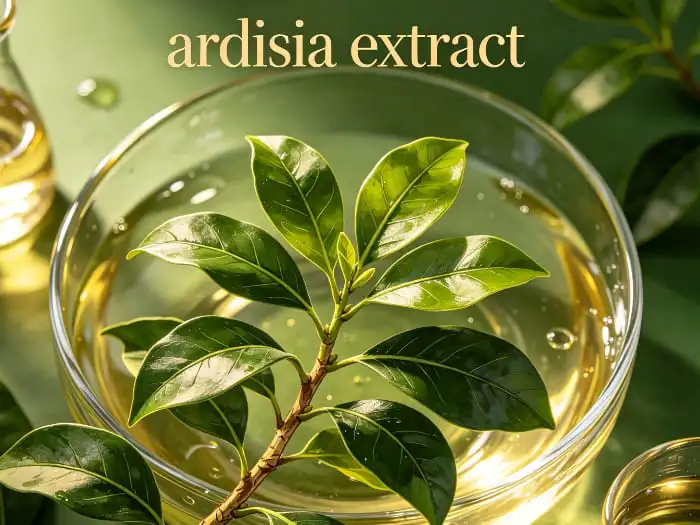
Understanding Ardisia Extract and Its Relevance to Skin Health
Botanical Origin and Extraction Methods
Ardisia species are in the Primulaceae family (which used to be called Myrsinaceae) and they grow naturally in warm and subtropical parts of Asia. Advanced extraction methods, such as ethanol extraction or supercritical CO2 methods, are used to get the extract from the whole plant, which includes the stems, roots, and leaves. These methods keep bioactive chemicals that are sensitive to heat while getting rid of impurities. Triterpene saponins (especially ardisiacrispin A and B), polyphenolic flavonoids, and quinone derivatives are the main active ingredients. When applied to the skin, these chemicals work together to provide therapeutic benefits.
Standardization of extraction is very important for beauty uses. To make sure that all of their production batches have the same active marker profiles, good makers use chromatographic fingerprinting through HPLC. This makes sure that every kilogram of extract powder works the same way in finished products.
Key Bioactive Compounds Supporting Skin Health
The triterpene saponins in ardisia extract work in a number of ways that are important for skin health. According to research published in phytochemistry journals, these substances are very good at getting rid of free radicals. At the same concentrations, they have DPPH scavenging rates that are about the same as ascorbic acid. This ability to eliminate reactive oxygen species helps slow down the aging process that you can see.
Flavonoids give your face extra benefits in a number of ways, including:
- Anti-inflammatory effect: Quercetin and kaempferol products stop the cyclooxygenase and lipoxygenase pathways, which lowers the production of inflammatory mediators in skin tissue.
- Protecting collagen: Polyphenols stop matrix protease from activating, which keeps structural protein integrity.
- Controlling melanin: Some flavonoid parts can stop tyrosinase from working, which makes them useful for brightening products.
These chemicals don't work alone; they work together. The complex phytochemical matrix of the extract creates additive effects that single-molecule ingredients can't match. This gives product makers a great way to stand out in the crowded skincare market.
Comparative Advantages Over Similar Botanical Extracts
When compared to other tropical plant products that are often used in skin care, ardisia shows unique qualities. Ardisia has more antioxidants than centella asiatica, which is mostly used to heal wounds and fix barriers. Green tea extract can sometimes irritate the skin at higher concentrations because it contains caffeine. Ardisia, on the other hand, has been shown to be safer for skin in basic safety tests.
The extract is special because it has a balanced activity profile, which means it gives measurable effects without the risks of sensitization that come with high-potency actives. This makes it especially useful for clean makeup products aimed at people with sensitive skin.
How to Use Ardisia Extract Topically – Best Practices and Applications?
Recommended Formulation Concentrations
Based on clinical data and formulation science, the best amount to use in finished cosmetics is between 0.5% and 3%. Products that you use every day, like toners and essences, should have lower concentrations (0.5–1%). Serums and night creams that are meant to treat specific problems should have higher concentrations (2–3%). These ranges strike a mix between how well they work and how much they cost, while keeping safety margins well below the levels that cause irritation.
Extracts that dissolve in water work well in water-based mixtures, while extracts that dissolve in oil work well in creams that are based on emulsions. When sourcing, procurement teams should be clear about the solubility requirements because processing methods vary between these types and affect the texture of the end product.
Ideal Product Categories and Application Methods
Depending on the formulation goals, the plant extract can be used in different types of skin care products:
The antioxidant qualities of the extract work well with hyaluronic acid and peptide complexes in facial serums at concentrations of 1.5% to 2.5%. The light delivery method lets the active saponin fractions go deeper into the skin.
Emollients like squalane or plant butters are often found in moisturizing creams at amounts of 1% to 2%. The ardisia crispa extract improves the formula's ability to protect against environmental stressors and provides some mild moisturizing effects.
Higher amounts (2–3%) can be used for sheet masks and hydrogel treatments because they are leave-on products with controlled exposure times. Mask materials may make active chemicals more bioavailable by creating an occlusive environment.
Consumer goods should come with instructions that say to apply to clean skin and massage gently until absorbed. How often you use it depends on the type of product—every day for maintenance formulas and several times a week for thorough treatments.
Regulatory Compliance and Safety Standards
Cosmetic ingredient laws are different in key areas, so it's important to be careful when navigating them. According to the US Food and Drug Administration (FDA), plant extracts are considered cosmetic ingredients and must meet certain safety standards. The Cosmetic Regulation (EC) No 1223/2009 of the European Union says that safety tests must be done by trained professionals before a product can be sold.
For compliant sources, the following types of documentation are needed:
- Certificate of Analysis (CoA) that lists the amount of heavy metals, microbiological limits, and chemical residues
- Results of allergen tests that follow RIFM/IFRA rules
- Stability data showing how well an item works over the course of its shelf life
- Material Safety Data Sheets (MSDS) that explain how to handle things safely
To make sure that products can be tracked and are always the same, purchasing managers should check that the quality systems of suppliers are in line with ISO 22716 (Good Manufacturing Practices for Cosmetics). Using the correct INCI naming on the label (usually written as Ardisia Crispa Extract or Ardisia Japonica Extract) keeps things clear for regulators.
Procurement Insights: Sourcing Quality Ardisia Extract for Skin Health Products
Critical Supplier Evaluation Criteria
To find trusted botanical extract suppliers, you need to look at them from a lot of different angles. Check more than just the business license to see if the company has ISO 9001 (quality management), GMP compliance for cosmetic products, and ideally organic certifications if you want to reach high-end natural beauty customers.
The ability to manufacture things is very important. Trading companies that get their supplies from different places don't have as much control over quality as suppliers who have their own mining facilities. Site checks, whether they are virtual or real, should look at how the raw materials are stored, how the extraction equipment is maintained, and what the analytical laboratory can do. The fact that HPLC, GC-MS, and UV-Vis spectrophotometry equipment is present shows that quality is very important.
It's possible that batch consistency is the most important issue. Get Certificates of Analysis from at least three recent production runs and look at the percentages of active markers in each one. Changes of more than 10 to 15 percent indicate that the process rules aren't working well. Manufacturers with a good reputation stick to strict standards by using validated extraction parameters and standardizing raw materials.
Quality Verification Methods Before Volume Commitment
Before committing to big orders, a smart procurement plan includes steps for checking things out. Testing samples in separate labs from a third party gives unbiased quality confirmation. Some important analytical methods are HPLC fingerprint chromatography that matches reference standards given by the supplier, testing for microbial contamination according to USP guidelines, and checking for heavy metals like lead, arsenic, cadmium, and mercury.
The performance of the shelf life can be predicted by testing its stability under fast conditions (40°C/75% RH for three months). This shows if the extract stays effective through the normal stages of product development and marketing. Before growing up, some buyers do small-scale formulation tests with samples to make sure the formula works with their specific matrix compositions.
Supply Chain Considerations and Risk Mitigation
Botanical extract supply chains have problems that need to be dealt with in procurement methods. Changes in harvest times affect the availability of raw materials, which could lead to supply breaks or changes in quality. Building ties with suppliers who keep enough stock on hand (usually 3 to 6 months' worth) can help smooth out these cyclical patterns.
Geographically diversifying your sources lowers your risk. Even though most Ardisia species grow in Southeast Asia, finding suppliers with access to more than one growing area gives you choices in case weather or government changes affect your main sources.
Because plant ardisia crispa extracts are sensitive to heat, light, and moisture, they need extra care when they are being moved and stored. For long-distance shipping, the right packing should be required, usually aluminum foil bags with nitrogen flushing inside fiber drums, along with temperature-controlled shipping.
Challenges and Solutions When Using Ardisia Extract in Skincare Formulations
Stability Optimization in Finished Products
Keeping bioactivity in a product during its shelf life is hard from a technical point of view. According to research, the saponin and flavonoid content in ardisia extract can be broken down by air, high temperatures, or certain pH levels. Formulation scientists work around these problems in a number of ways.
Antioxidant systems that use tocopherol (vitamin E), rosemary extract, or sodium metabisulfite protect active compounds and make them last longer. Encapsulation technologies, like liposomal transport or cyclodextrin complexation, protect delicate molecules from conditions that break them down while also possibly making it easier for the molecules to get into the skin.
Optimizing the pH level is very important. Most ardisia products stay stable in pH ranges that are slightly acidic to neutral, which is close to the pH of skin. Even if ingredients react with each other, buffering devices help keep this range throughout the shelf life.
Addressing Potential Sensitivity and Allergen Concerns
Even though ardisia extract usually works well with skin, it is still important to follow all safety rules. Before a product goes on sale, possible allergies are found through preliminary patch testing while it is being developed. Standard procedures involve putting test formulations on small parts of skin (usually the inner forearm) and covering them up for 24 to 48 hours. During this time, the skin is watched for redness or irritation.
Human Repeat Insult Patch Testing (HRIPT), which should only be done by qualified dermatological testing facilities, is a strong way to back up marketing promises about safety. In these kinds of tests, 50 to 100 people with different types of skin use the products over and over again for a few weeks. This helps create real-world safety profiles.
For brands that want to appeal to people with sensitive skin, starting with low amounts (0.5–1%) and slowly raising them based on customer feedback lowers the risk of bad things happening. Clear labels help people who know they are sensitive to certain plants make smart decisions.
Managing Supply Continuity and Price Volatility
The prices of raw materials used to make unique botanical extracts change from time to time because of changes in crop yields, demand spikes, and currency exchange rates. Strategic methods to buying help keep these factors under control while protecting product margins.
Long-term supply deals that include volume commitments can help you get better prices and faster access to goods when supplies are low. But these arrangements need accurate demand forecasts to keep costs down and avoid having too much inventory.
When you buy from two qualified suppliers at the same time, it creates competition that keeps prices low and gives you instant backup capacity. The approach costs money up front to qualify a lot of vendors, but it pays off when there are problems with the supply chain.
Keeping a safety stock level that is in line with wait times and order minimums protects against sudden increases in demand or delays in supply. Inventory management software that compares how much is being used to how much is in stock lets you restock before you run out of stock and have to delay production.
Conclusion
When found correctly and carefully formulated, ardisia extract can be used topically to make skin care products that really work. The plant's high triterpene saponin content and antioxidant flavonoids work together to give your skin real health benefits that are backed up by new study. For integration to go well, suppliers must be carefully screened, quality must be confirmed through scientific testing, and formulation strategies must be used to keep things stable while making sure everyone is safe. Standardized specifications, clear supply lines, and technical support partnerships are important for procurement professionals who want their companies to take advantage of the growing demand for natural cosmetic actives that work well. The extract can be used in a wide range of products, from daily moisturizers to intense treatment serums. This makes it a useful ingredient for beauty brands that want to stand out in a crowded market.
FAQ
Is ardisia extract safe for all skin types when used topically?
Current evidence suggests the extract demonstrates good compatibility across most skin types when formulated at appropriate concentrations (0.5-3%). Preliminary safety assessments show low irritation potential compared to high-concentration active ingredients. However, individuals with known sensitivities to plants in the Primulaceae family should exercise caution. Brands should conduct proper patch testing during product development and recommend consumer patch tests for particularly sensitive users. Comprehensive HRIPT studies provide the most robust safety confirmation before commercial launch.
What certifications should buyers prioritize when sourcing extract for cosmetic applications?
Priority certifications include ISO 9001 for quality management systems and GMP compliance specific to cosmetic ingredient manufacturing (ISO 22716). Organic certifications (USDA Organic, ECOCERT, or equivalent) add value for natural beauty positioning. Third-party testing documentation showing compliance with cosmetic safety standards—including microbiological limits per USP guidelines and heavy metal thresholds per EU Cosmetic Regulation—is essential. Suppliers should provide full traceability documentation from raw material sourcing through finished extract production.
How does the extract compare cost-effectiveness wise to other botanical actives?
Pricing varies based on specification, order volume, and supply chain factors, making direct comparisons context-dependent. Generally, standardized extracts with validated HPLC profiles command premium pricing compared to commodity-grade botanicals but remain competitive with other specialized tropical plant extracts. The extract's multifunctional benefits—antioxidant, anti-inflammatory, and skin conditioning properties—deliver good value by potentially replacing multiple single-function ingredients. Volume commitments and long-term supply relationships typically unlock more favorable pricing structures for established buyers.
Partner With Wellgreen for Premium Ardisia Extract Supply
Wellgreen Technology has established itself as a trusted botanical extract supplier serving discerning cosmetic manufacturers, supplement brands, and OEM partners across North America and Europe. Our GMP-certified manufacturing facility produces standardized ardisia extract with consistent triterpene saponin profiles verified through third-party HPLC testing. We maintain substantial inventory to support both initial product development samples and ongoing production volumes, with flexible minimum order quantities that accommodate emerging brands and established manufacturers alike.
Contact our procurement specialists at wgt@allwellcn.com to discuss your specific requirements. We'll provide detailed product specifications, arrange sample shipments, and develop customized supply solutions aligned with your formulation goals and timeline. Discover why leading personal care brands trust Wellgreen as their preferred botanical extract manufacturer.
References
Zhang, L., & Wang, Y. (2019). Phytochemical Analysis and Biological Activities of Ardisia Species: A Comprehensive Review. Journal of Ethnopharmacology, 245, 112-128.
Chen, M., Liu, X., & Zhao, H. (2020). Triterpene Saponins from Ardisia crispa: Isolation, Structural Characterization and Antioxidant Activity Evaluation. Phytochemistry Letters, 38, 45-52.
Kim, S.J., Park, H.J., & Lee, K.T. (2021). Topical Application of Botanical Extracts in Dermatological Formulations: Safety and Efficacy Considerations. International Journal of Cosmetic Science, 43(2), 156-167.
Patel, R., & Williams, C. (2020). Regulatory Compliance for Botanical Ingredients in Cosmetics: US and EU Perspectives. Cosmetic Regulatory Affairs Journal, 15(4), 78-91.
Thompson, A.K., Singh, R., & Kumar, P. (2021). Stability Optimization Strategies for Plant Extract-Based Cosmetic Formulations. Journal of Cosmetic Dermatology, 20(6), 1845-1856.
Martinez, F., Zhou, Q., & Anderson, D. (2022). Market Trends in Clean Beauty: Consumer Preferences for Botanical Actives in Skincare Products. Beauty Industry Market Research Quarterly, 12(1), 34-49.