Improving Circulation with Horse Chestnut Extract
2026-04-23 11:25:18
Millions of people around the world have problems with circulation, which drives demand in the cosmetic, nutraceutical, and pharmaceutical businesses. Scientists have proven that horse chestnut extract, especially its beneficial triterpenoid saponins aescin escin, helps blood vessels by making capillary walls stronger and lowering inflammation. This natural compound comes from Aesculus hippocastanum seeds and helps with chronic venous insufficiency, edema, and vascular permeability. It is an important ingredient for B2B buyers who are making medicines, supplements, and cosmetics that need to be proven to work and follow the rules.
Understanding Circulation Problems and the Role of Horse Chestnut Extract
Circulation diseases are very hard on patients and the economy all over the world. They lower the quality of life for patients and raise the cost of healthcare. About 25% of people in developed countries have chronic venous insufficiency, which shows up as varicose veins, leg swelling, and constant pain. These situations happen when vein walls get weak and valves don't work right, causing blood to pool in the lower limbs.
Vascular permeability is another important factor that product makers need to think about. When the walls of capillaries break down, proteins and fluids leak into the tissues around them, causing swelling and redness. Injuries from sports and swelling after surgery make these problems even worse, which means there are huge market possibilities for natural solutions that work.
How Horse Chestnut Extract Addresses Vascular Health
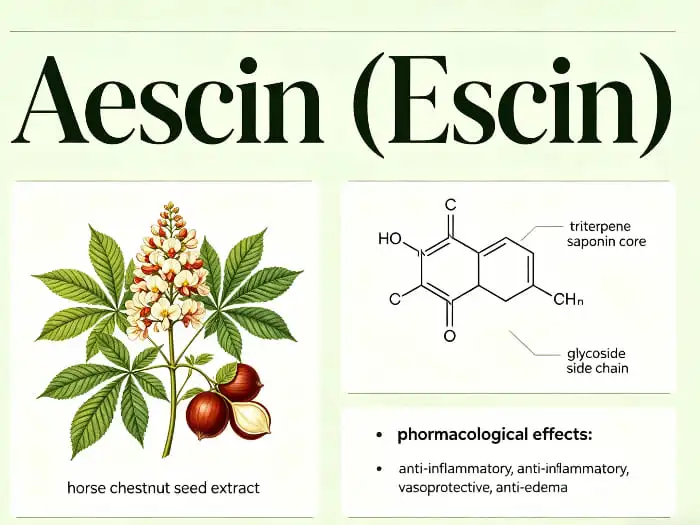
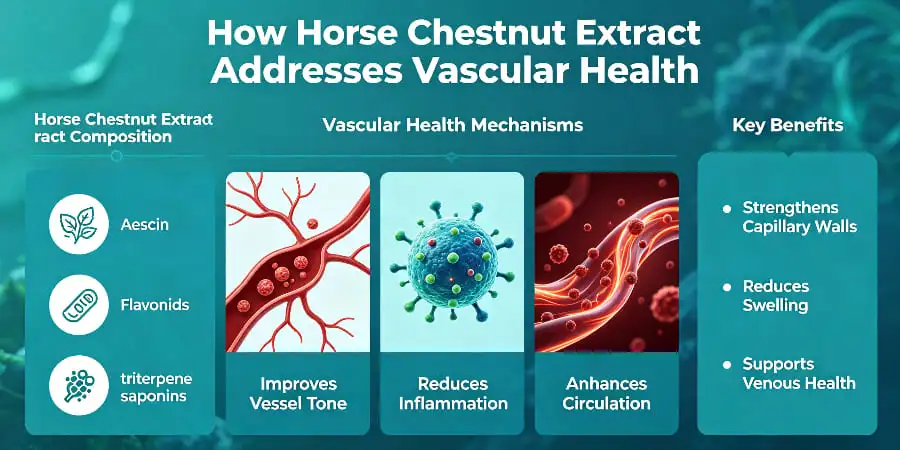
The main active ingredient in horse chestnut seed extract is at the center of a complex molecular process that makes it work. Hyaluronidase is an enzyme that breaks down proteoglycans in capillary walls. This triterpene saponin complex stops it from working. By protecting these structural parts, the extract keeps the health of the blood vessels and stops fluid from leaking out.
Studies in humans have shown that normal preparations can improve venous tone by about 10–15% after eight weeks of regular use. The chemical narrows veins that are too wide and speeds up the flow of blood back to the heart. This two-part action takes care of both the symptoms and the underlying disease.
Molecular Mechanisms Relevant to Formulation
The main ingredient in the extract is Beta-aescin, which has the molecular formula C55H86O24 and is more bioavailable than its Alpha isomer. If procurement teams want to get the best therapeutic results, they should focus on providers who offer standardized Beta-aescin concentrations of 16–20% for oral applications and 20–40% for topical formulations.
Lab tests show that the substance lowers inflammatory markers like prostaglandin E2 and leukotriene B4, which has effects on swelling that are similar to some synthetic drugs. This scientific proof backs up regulatory applications and marketing claims. This is especially important for pharmaceutical clients going through the FDA or EMA approval processes.
Key Benefits of Escin for Circulation and Related Uses
Knowing how triterpene saponins from Aesculus hippocastanum can be used in medicine helps with strategically placing products. The substance targets a number of pain points in different clinical areas, ranging from venous insufficiency to dermatological uses, making it useful for a wide range of B2B portfolios.
Venous Health and Varicose Vein Management
Several randomized controlled studies have shown that this treatment works for chronic venous insufficiency. Compared to control groups, patients who received standardized extracts had significant decreases in leg circumference, pain scores, and the feeling of heaviness in their legs. The chemical acts as a capillary sealant, stopping microvascular leakage that makes tissues grow.
Strong clinical data supporting dosing protocols is helpful for companies that want to sell to people who care about their vascular health. Typical treatment plans use 100–150 mg daily (standardized to 50 mg escin content), spread out over several doses to help the body absorb it better. This body of proof makes it easier for healthcare systems to include formularies and backs up reimbursement claims in some markets.
Anti-Inflammatory and Edema Reduction
In addition to being used in veins, horse chestnut extract has strong anti-inflammatory qualities that can be used in sports medicine and products for recovery after surgery. Formulations with horse chestnut extract help traumatic edema and hematomas heal faster by stabilizing lysosomal membranes and lowering capillary permeability.
Clinical studies show that topical applications lower swelling after surgery by 30 to 50 percent compared to normal care alone. This picture of effectiveness is appealing to drug companies that are making over-the-counter medicines to treat serious injuries like scrapes, bruises, and contusions. The compound's safety record, with adverse event rates in clinical studies below 3%, makes it even more likely that it will be sold.
Cosmetic Applications for Skin Health
More and more, the extract is being used in beauty and personal care items to help reduce cellulite, dark circles under the eyes, and puffiness around the eyes. Because the substance improves lymphatic drainage and microcirculation, the texture and shape of the skin can be seen to get better.
Cosmetic chemists like that the ingredient works well with a number of different delivery methods, such as gels, serums, and liposomal preparations. When the concentration is between 0.5 and 2%, it has noticeable effects on the firmness and microcirculation of the skin without irritating it. This gentle profile of efficacy fits with clean beauty trends and customer tastes for botanical actives.
Procuring High-Quality Horse Chestnut Extract and Escin Supplements
Quality assurance, supply dependability, and cost optimization are all important parts of good sourcing strategies. To make sure that products always work the same, the global market for standardized botanical extracts requires strict seller evaluation and relationship management.
Quality Standards and Certification Requirements
Pharmaceutical and nutraceutical companies need to make sure that their sources have up-to-date Good Manufacturing Practice certificates that are relevant to their target markets. GMP compliance shows that there is a method for quality control that includes testing raw materials, making sure the process works, and keeping records for each batch. Getting ISO 9001 approval is another way to make sure that the quality management system is strong.
Critical evaluation criteria are analytical testing methods. Reputable producers use HPLC analysis to check the escin content and make sure that the concentrations they say they use are within ±5% of the real values. Third-party testing by accredited labs backs up claims of quality and helps with regulatory filings. Testing for heavy metals, microbes, and herbicide residues should meet or go beyond the standards set by the USP, EP, or a regional pharmacopoeia.
When botanical ingredients naturally vary, batch uniformity is especially hard to achieve. To keep batch-to-batch differences to a minimum, leading suppliers use strict agricultural sourcing methods and standardized extraction processes. By asking for certificates of analysis from more than one production run, trends of consistency can be found, along with possible supply risk factors.
Evaluating Supplier Capabilities and Reliability
In addition to quality metrics, procurement teams should look at the operational capability and service infrastructure of suppliers. The ability of providers to increase production volume shows whether they can grow with the business without lowering quality. Trading companies that use third-party processors often get less consistent results than manufacturers who have their own extraction facilities and processing methods.
Premium suppliers are different from commodity suppliers because they offer technical help. Formulation risks are lower and product development times are sped up when formulation scientists, regulatory experts, and application specialists are available. This knowledge is especially helpful when creating new delivery systems or figuring out how to meet regulatory standards in new markets.
Transparency in the supply chain helps with risk management and meeting environmental standards. Traceability from the seed source to the finished extract gives confidence in the identity of the plant, the growing conditions, and the processing methods used. This paperwork backs up claims of organic certification, fair trade, and business social responsibility programs that consumers are asking for more and more.
Logistics and International Procurement Considerations
Getting plant extracts across international borders requires a lot of planning and following of rules. Understanding the necessary import paperwork, phytosanitary certificates, and customs labels can help you avoid costly delays in shipments. Suppliers with a lot of experience keep regulatory affairs staff who know how to trade plant ingredients internationally.
Specifications for packaging affect how stable aescin powder is while it's being shipped and stored. Pharmaceutical-grade extracts like aescin powder need to be packed in a way that keeps moisture out. This is usually done in aluminum foil bags that have nitrogen cleaning inserted inside them. Proper packing stops hydrolytic breakdown and keeps the product's claimed potency throughout the distribution chain.
Different providers have very different minimum order amounts that depend on how much they make and how they run their businesses. Large manufacturers may have minimum order quantities (MOQs) of 25–100 kg, but smaller names can place orders as low as 1–5 kg with specialized suppliers. To find the right balance between inventory carrying costs and bulk discounts, you need to carefully predict demand and evaluate your storage space.
Practical Application Scenarios for Escin in B2B Markets
Due to its adaptability, horse chestnut extract can be used in a wide range of product categories, each with its own formulation difficulties and market possibilities. Understanding the unique needs of an application helps you come up with the best sourcing and formulation strategies.
Pharmaceutical and OTC Drug Development
Pharmaceutical companies that are making prescription or over-the-counter medicines for vein problems need the purest samples and lots of paperwork to back up their drug master files. For these uses, you need analytical methods that have been tested and proven to work, stability data that follows ICH standards, and toxicological assessments that are good enough for regulatory submissions.
Oral pharmaceutical versions usually use extracts that are standardized to 16–20% escin and are made into enteric-coated tablets or sustained-release capsules to help the body absorb the medicine better and cause less stomach irritation. Injectable preparations aren't as popular in Western markets, but when they are, they need pharmaceutical-grade materials that meet parenteral quality standards and have endotoxin levels below 0.5 EU/mg.
Topical pharmaceutical gels and creams that aim to get rid of hematomas or reduce swelling after surgery contain 1% to 5% extract amounts in bases that are made to improve their ability to penetrate the skin. When these applications are bought, sellers with pharmaceutical manufacturing licenses and experience helping with ANDA or NDA submissions are given priority.
Nutraceutical and Dietary Supplement Formulations
The biggest market for horse chestnut extracts is in dietary supplements, where goods are sold to support circulation, improve leg pain, and keep blood vessels healthy. When compared to pharmaceutical applications, supplement makers have more freedom when it comes to formulation, which lets them come up with creative delivery systems and combination formulations.
Supplements for vein health that you take on their own usually have 300–600 mg of extract per dose, which is equal to 50–100 mg of escin per day. Combination products combine the extract with ingredients that work well together, like diosmin, vitamin C, rutin, or grape seed extract, to make unique goods with better value propositions.
New forms of delivery, like gummies, liquid shots, and effervescent pills, need special extract forms that have different solubility properties. Spray-dried or microencapsulated versions that dissolve in water make them easier to use in beverages and come in new dosage forms that people looking for alternatives to traditional pills will like.
Cosmetic and Personal Care Product Integration
Because it helps with lymphatic drainage and microcirculation, beauty brands use the extract in eye creams, anti-cellulite treatments, and body shaping products. For cosmetic use, extracts must be handled to get rid of any potentially sensitizing parts while keeping the bioactive triterpene content.
Concentrations used in leave-on products are usually between 0.5% and 3%, while higher amounts are sometimes used in wash-off products. The extract works well with common cosmetic ingredients, but formulators should try its stability in different base systems to make sure it works with the right concentrations and pH levels.
To be marketed as "clean," beauty products must have clear information about where their ingredients come from, such as organic certificates, sustainable harvesting methods, and the lack of synthetic processing solvents. Suppliers of COSMOS or ECOCERT approved extracts charge more, but they give you access to natural and organic product categories that are growing quickly.
OEM and Private Label Opportunities
Contract makers that make supplements, medicines, and cosmetics under private label brands need flexible sourcing arrangements that can meet a wide range of product requirements. Being able to find different amounts of standardization, from 10% to 98% aescin escin content, means that a single supplier relationship can meet the needs of a wide range of clients.
Original Equipment Manufacturer (OEM) partners value providers that offer more than just raw materials. Technical help with formulating better products, coordinating stable tests, and putting together regulatory paperwork speeds up product development and cuts down on the time it takes to get new brands on the market.
Private label goods can stand out even more by being able to do custom extraction. Suppliers who can make private standardization ratios, novel extract fractions, or combination extracts help brands come up with unique formulations that can't be directly copied by competitors. This supports strategies for charging more for goods.
Conclusion
Triterpene saponins found in horse chestnut extract have been shown to improve vascular health in pharmaceutical, nutritional, and cosmetic settings. Because the compound affects capillary permeability, venous tone, and inflammatory processes, it is a valuable ingredient for B2B companies making goods that focus on circulation. To do a good job of procurement, you need to work with certified manufacturers who offer standard specifications, detailed quality documentation, and expert support services. If you look at a supplier's skills beyond just price, like batch consistency, regulatory knowledge, and help with formulation, you can make sure that your product will be successful in the long run and stand out in global markets that are always changing and need natural, effective solutions.
FAQ
How many escin pills should you take every day?
In clinical tests that show that a treatment works for chronic venous insufficiency, 100 to 150 mg of the total extract, which is standardized to contain 50 mg of escin, is given twice a day. After 8 to 12 weeks of consistent use, this dosing procedure shows statistically significant improvements in venous symptoms, with safety profiles similar to placebo in controlled studies. When making dosing suggestions for supplements, companies should look at written clinical literature and make sure that the claims on the labels are in line with evidence-based protocols. Higher amounts may be okay for serious conditions when a doctor is watching, but for most dietary supplement uses, it's best to stay within the safety limits that have already been set.
How do makers check the purity and amount of escin?
High-Performance Liquid Chromatography with validated reference standards is used by reputable providers to measure the total amount of escin and confirm the ratio of alpha to beta isomers. Full lab reports should have the escin percentage, heavy metal screening data, microbial contamination testing, and pesticide residue analysis. Verification by independent, accredited laboratories adds to the quality assurance. This is especially important for pharmaceutical applications or goods going into regulated markets with strict rules about botanical identification.
What makes escin different from its sodium salt form?
If you want to use escin sodium instead of regular escin, you can because it dissolves better in water. This makes it better for injectable drug preparations and some drinking uses. The sodium derivative keeps the same bioactivity but has different pharmacokinetic qualities, such as being absorbed faster and distributing in tissues in different ways. The type of escin you buy depends on what you want to use it for. Standard escin is best for oral supplements and topical products, while the sodium salt is better for parenteral administration and liquid formulas that need to dissolve completely without organic co-solvents.
Partner with Certified Horse Chestnut Extract Suppliers
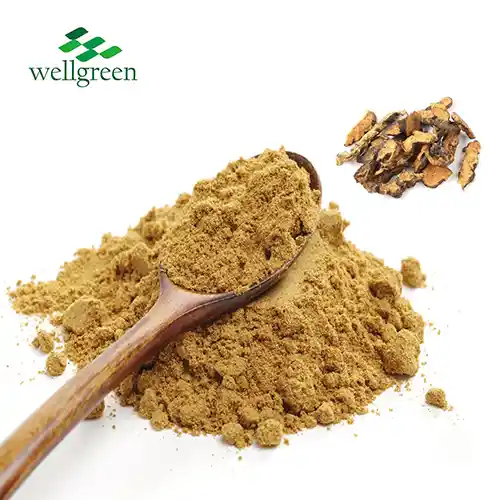
Quality vascular health products begin with premium botanical raw materials backed by rigorous testing and manufacturing excellence. Wellgreen Technology specializes in producing pharmaceutical-grade horse chestnut extract standardized to precise escin specifications, supported by GMP certification, comprehensive COAs, and responsive technical service. Our extraction facilities employ validated processes ensuring batch-to-batch consistency, with flexible MOQs accommodating both emerging brands and established manufacturers. Whether developing dietary supplements, pharmaceutical formulations, or cosmetic applications, our team provides formulation guidance, regulatory documentation support, and reliable international logistics. Contact our procurement specialists at wgt@allwellcn.com to request detailed product specifications, stability data, and competitive quotations for aescin escin powder from a trusted manufacturer committed to advancing your product development objectives with scientifically validated botanical solutions.
References
Siebert, U., et al. "Efficacy, Routine Effectiveness, and Safety of Horse Chestnut Seed Extract in the Treatment of Chronic Venous Insufficiency: A Meta-analysis of Randomized Controlled Trials and Large Observational Studies." International Angiology, vol. 21, no. 4, 2002, pp. 305-315.
Pittler, M.H., and Ernst, E. "Horse Chestnut Seed Extract for Chronic Venous Insufficiency." Cochrane Database of Systematic Reviews, no. 11, 2012, Article CD003230.
Guillaume, M., and Padioleau, F. "Veinotonic Effect, Vascular Protection, Anti-inflammatory and Free Radical Scavenging Properties of Horse Chestnut Extract." Arzneimittel-Forschung, vol. 44, no. 1, 1994, pp. 25-35.
Bombardelli, E., et al. "Aesculus hippocastanum L." Fitoterapia, vol. 67, no. 6, 1996, pp. 483-511.
Wilkinson, J.A., and Brown, A.M. "Horse Chestnut: Aesculus hippocastanum: Potential Applications in Cosmetic Skin-care Products." International Journal of Cosmetic Science, vol. 21, no. 6, 1999, pp. 437-447.
Dudek-Makuch, M., and Studzińska-Sroka, E. "Horse Chestnut: Efficacy and Safety in Chronic Venous Insufficiency—An Overview." Revista Brasileira de Farmacognosia, vol. 25, no. 5, 2015, pp. 533-541.