
Egg Yolk Lecithin for Bakery Products and Specialty Food Emulsions
2026-11-11 09:37:07
Bakery teams usually meet lecithin as a line item inherited from a previous formulation, dosed at a round number nobody can defend. Then a fat reduction project, an egg replacement brief or a clean-label review arrives, and the emulsifier suddenly becomes the ingredient that decides whether the crumb holds. At that point the question shifts from "how much" to "which one", and egg yolk lecithin and soy lecithin stop being interchangeable.
What Egg Yolk Lecithin Brings That Soy Lecithin Does Not
Both are phospholipid mixtures and both are surface-active, but they are not the same mixture. Egg yolk carries a higher proportion of phosphatidylcholine and phosphatidylethanolamine and, importantly, a different fatty acid profile, which shows up in melt behaviour, mouthfeel and the way the emulsifier behaves when the emulsion is heated.
Phospholipid profile
Soy lecithin is dominated by phosphatidylcholine, phosphatidylethanolamine and phosphatidylinositol in proportions that vary with the refining route. Egg yolk lecithin is valued in bakery and confectionery work for its phospholipid balance and for a neutral flavour that does not read as beany in a delicate sponge. When a specification sheet lists only total phospholipids, ask for the class distribution; that is the number that predicts behaviour.
Allergen and labeling consequences
The choice has a labeling consequence that often decides the project before any trial starts. Egg is a declared allergen in most major markets, while soy is a separate declaration. A product that already carries an egg line has no new problem; one marketed on a soy-free or egg-free platform does. This is a formulation decision with a compliance cost, not a purchasing preference, and it should be made before a sample is ordered.
How Lecithin Works at an Interface
Lecithin is amphiphilic: one end of the molecule prefers oil, the other prefers water. In a batter it migrates to the boundaries between the dispersed fat, the aqueous phase and the air cells created during mixing, and lowers the energy needed to keep those boundaries in place. Everything else that lecithin is credited with in a bakery follows from that single behaviour.
The practical implication is that the dose has an optimum rather than a direction. Under-dosing leaves interfaces unprotected and the emulsion breaks; over-dosing can destabilise foam structure because excess surfactant competes at the air-water interface. That is why a trial that only increases the dose tells you very little.
Reading the Emulsifier Specification
An emulsifier specification is read differently from a flavour specification: the numbers describe chemical state as much as identity. Six of them decide whether two samples will behave the same in a batter.
| Specification item | What it predicts | Note for the buyer |
|---|---|---|
| Acetone-insoluble matter | Phospholipid content as distinct from neutral oil carried through refining | The single most useful purity indicator; compare on the same basis |
| Acid value | Free fatty acid released by hydrolysis during storage | Rising values indicate age or poor storage, not a different grade |
| Peroxide value | Oxidative state of the lipid phase | Predicts off-note risk in a delicately flavoured crumb |
| Moisture | Microbiological stability and weighing accuracy | Ask whether the value is as-supplied or after drying |
| Colour | Visible effect in a pale crumb or a white filling | Request a Gardner or Lovibond reading, not a descriptive word |
| Consistency or viscosity | Pumpability and dispersion into the fat or water phase | Decides whether the plant can dose it at all |
Two suppliers can both declare "lecithin" and differ on three of these. The comparison only becomes meaningful when the same method is used on both sides, which is why a specification sheet without methods belongs in the file but not in the decision.
Dough Conditioning: Where the Effect Shows Up
In bread and laminated doughs the emulsifier interacts with the starch and protein network. The observable effects are crumb softness over time, dough extensibility during sheeting, and the volume of the baked piece. None of these are visible in a beaker, so the trial has to be run at the bench and then at the plant, with a fixed bake profile.
Record the things that move: specific volume, crumb firmness at day one, three and seven, and the lamination quality after sheeting. A trained eye and a texture analyser will agree more often than either will agree with a supplier's application note. The same discipline applies to any powdered functional ingredient whose real behaviour depends on the matrix, as this note on dispersion challenges in powder blends sets out from a different ingredient category.
Aeration and Crumb in Cakes and Sponges
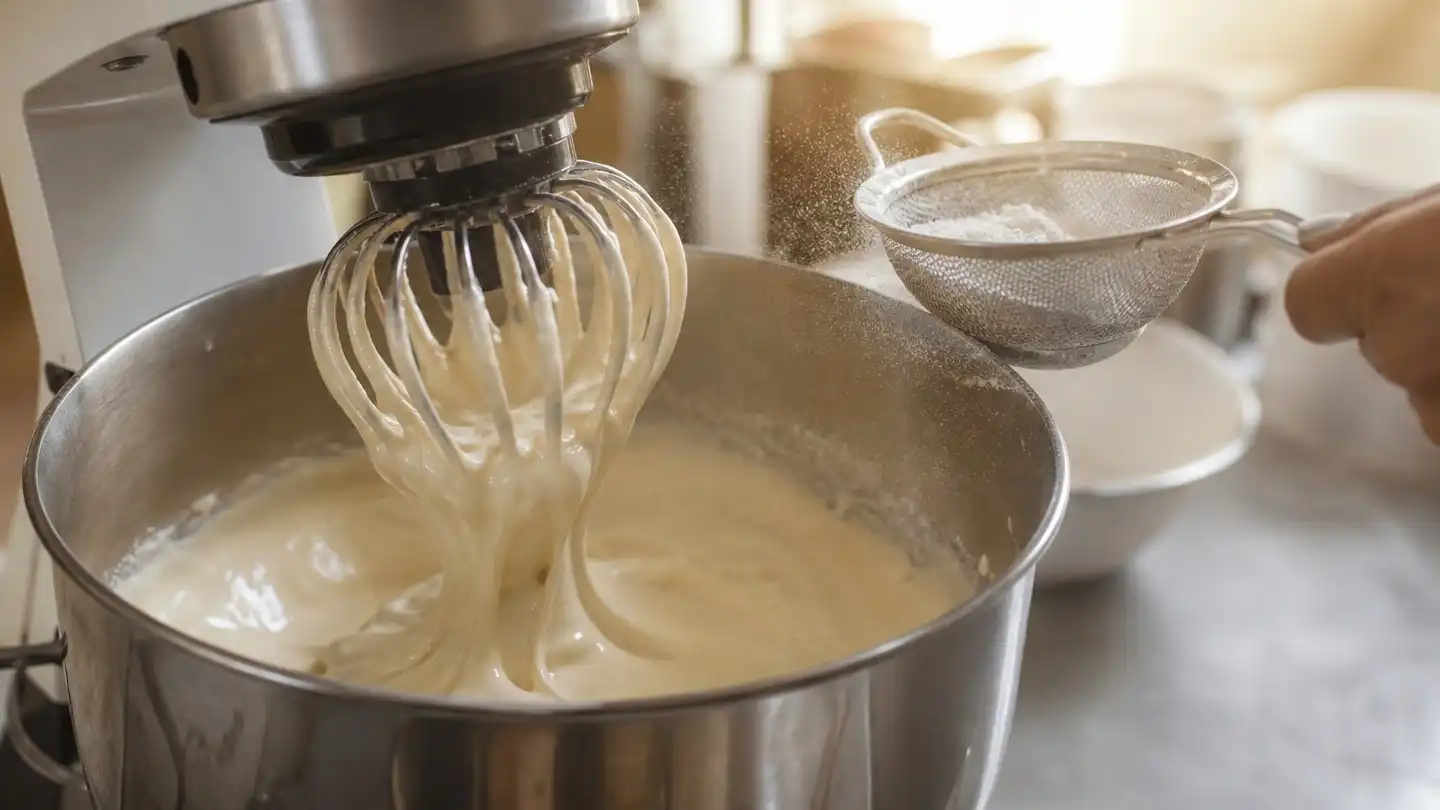
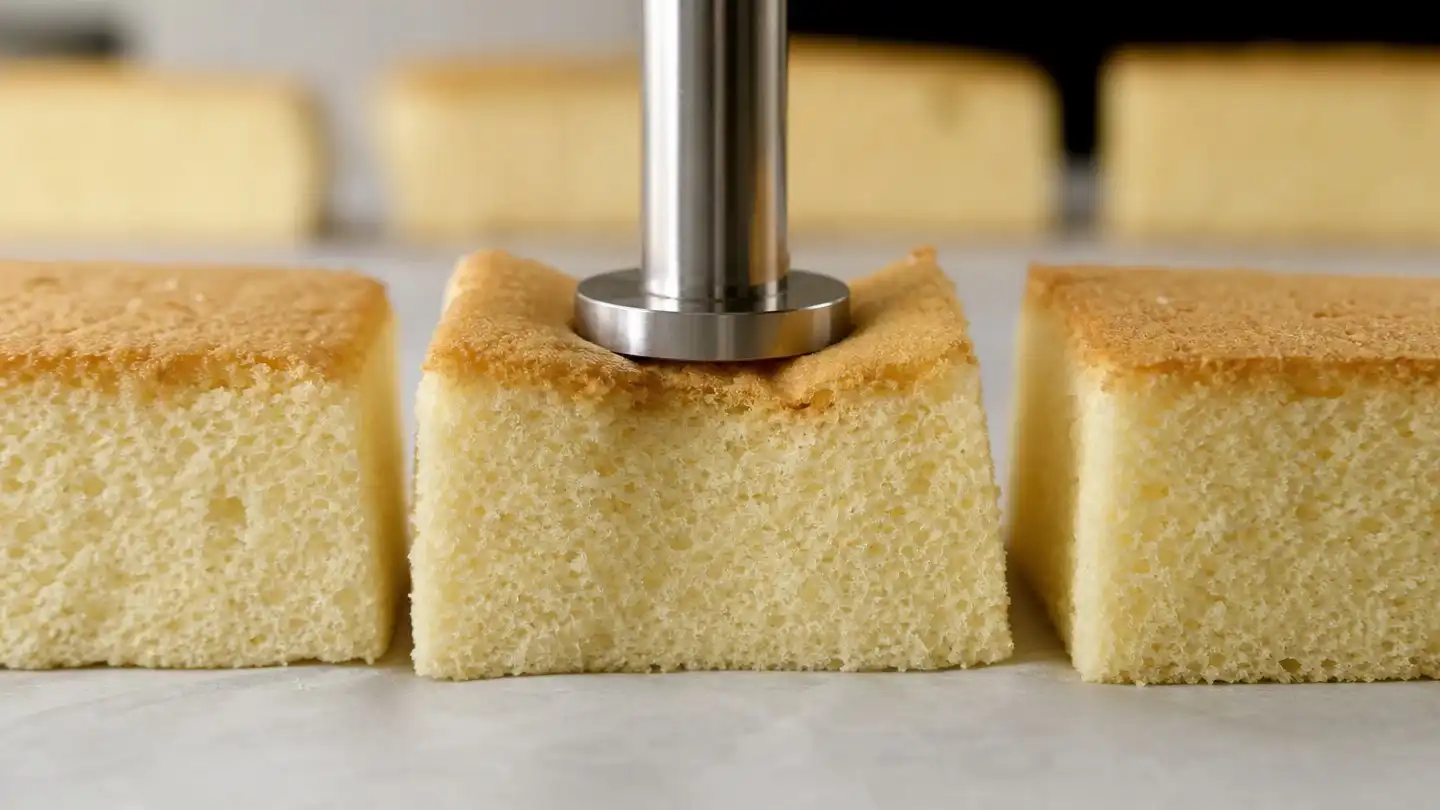
In a sponge or a high-ratio cake the emulsifier stabilises the air cells whipped into the batter, and the size distribution of those cells determines how even the crumb looks and how the product feels in the mouth. Egg yolk lecithin is often chosen here because the phospholipid balance supports a fine cell structure without the beany note that a soy-derived emulsifier can contribute to a vanilla or cream-flavoured system.
The catch is that aeration is also a function of mixing time, bowl temperature and batter specific gravity. Change the emulsifier and you may need to move one of the other three. A trial that varies only the emulsifier will usually show a result, and that result will usually disappear on the plant.
Emulsions Beyond Baking: Sauces, Fillings and Glazes
Oil-in-water systems
Dressings, cream fillings and dairy-free sauces are oil-in-water emulsions, and lecithin is one of the few emulsifiers that carries no labeling penalty in most markets. Here the specification that matters most is the acetone-insoluble value, because neutral oil dilution reduces the emulsifying capacity per kilogram and quietly raises the dose the line will call for.
Water-in-oil systems
Margarine-type and low-fat spread systems need the opposite curvature, and lecithin is usually one component of a blend rather than the whole answer. In these systems the emulsifier interacts with the fat crystal network, so the trial has to include the cooling and working profile.
Heat Stability Through the Bake
An emulsifier that performs in a cold batter and fails at 200 °C is not a useful emulsifier. Egg-derived lecithin is generally chosen where the product undergoes a real bake because the phospholipid mixture holds the interface across the temperature range the crumb experiences. Test it in the finished product, cooled and at day three, not in a model emulsion held at room temperature.
Off-Notes, Colour and the Clean-Label Position
Lecithin is a declared emulsifier in most labeling systems, and its declaration is straightforward. What is less straightforward is the flavour contribution. A soy-derived material can bring a cereal note that reads as stale in a vanilla system; an oxidised lipid phase can bring a painty note that a sensory panel will find before any analytical result does. Peroxide value and a blind triangle test together answer the question, and neither answers it alone.
Colour matters in white fillings and pale sponges. A dark lecithin forces a compensating colour adjustment, which then needs declaring. Ask for the colour reading and a photograph of the material as supplied.
Dosage as a Formulation Variable
Published usage rates for lecithin in bakery applications span a wide band because the requirement depends on fat content, the presence of other emulsifiers, and the process. A trial should bracket the incumbent dose rather than replace it: run at roughly three quarters, the incumbent level, and one and a quarter times the incumbent level, in the finished formula, and evaluate all three at day one and day seven. The result is a curve, and the curve is the deliverable.
The curve also protects the buyer's negotiation position. A supplier that recommends a single figure without knowing the fat level, the mixing profile and the other emulsifiers in the formula is quoting a habit rather than an application. Once the three-point curve exists, a higher phospholipid grade can be priced against the dose it removes, and the comparison becomes arithmetic instead of opinion.
There is a second reason to handle dose as a variable. Regulatory frameworks cap emulsifier use by category in some markets and by good manufacturing practice in others, and a formulation that sits at the top of an approved band has no room to absorb a specification change. Building the curve early leaves that room in reserve.
Supply and Quality: What to Lock Down
| Risk | Why it matters in a bakery line | Control to write into the agreement |
|---|---|---|
| Lot-to-lot variation in phospholipid content | Dose drift, followed by crumb drift | Acetone-insoluble range on every COA, with a defined method |
| Oxidative ageing in transit | Off-notes in delicately flavoured products | Peroxide value at release plus a maximum storage temperature |
| Allergen cross-contact | Label integrity on a soy-free or egg-free platform | Allergen statement per lot and a segregated-line declaration |
| Carrier or blending changes | Consistency and dosing behaviour change without notice | Notification clause covering carriers and dilution |
| Documentation gaps | Retailer or certification audit findings | Complete specification, COA, allergen and safety data on file before approval |
The company-level programmes that sit behind these documents are set out on the quality and accreditation page. They establish the framework; the lot certificate establishes the material.
Trial Design: Four Batches That Answer the Question
Four batches, run on consecutive days with the same operator, answer most emulsifier questions. Batch one is the incumbent as a control. Batch two replaces the emulsifier at equal phospholipid contribution rather than equal weight, which is the step most trials miss. Batch three runs at a reduced total fat level to see whether the emulsifier carries the reformulation. Batch four repeats batch two to measure the noise in your own process.
If batch four differs from batch two by more than the difference between batch one and batch two, the trial has measured the bakery rather than the ingredient, and the answer is to run it again before changing anything.
Conclusion
Egg yolk lecithin earns its place in bakery and specialty emulsion work when the specification is read as a set of predictions rather than a purity certificate, and when the trial is designed to separate the ingredient from the process. Comparing it with a soybean lecithin on price per kilogram alone hides the difference in phospholipid content that the line will pay for in dose. The background on how carrier-based powders behave in dry systems is covered in this overview of carrier specifications for powdered lipids, and the same logic applies to a spray-dried emulsifier.
If you are reformulating a sponge, a filling or a sauce and need to compare egg yolk lecithin against soy on the same analytical basis, we can provide both specification sheets, the lot certificates with methods, and samples for a four-batch trial. Send the application and the process conditions to wgt@allwellcn.com and the technical team will answer against your matrix.
References
- U.S. Food and Drug Administration. 21 CFR Part 184 — Direct Food Substances Affirmed as Generally Recognized as Safe. Current edition.
- U.S. Food and Drug Administration. 21 CFR Part 101 — Food Labeling; allergen declaration requirements. Current edition.
- Codex Alimentarius Commission. General Standard for Food Additives (CXS 192-1995, as amended). FAO/WHO.
- International Organization for Standardization. ISO 660 — Animal and vegetable fats and oils: determination of acid value and acidity. 2020.
- International Organization for Standardization. ISO 3960 — Animal and vegetable fats and oils: determination of peroxide value. 2017.
- International Organization for Standardization. ISO 4833-1 — Microbiology of the food chain: colony count at 30 °C. 2013.
This article is intended for business-to-business ingredient sourcing and formulation discussion. It does not provide medical, nutritional, or regulatory advice for any specific product or market.