Exploring Saffron Extract: Grades, Qualities, and Extraction Methods
2026-03-30 13:54:51
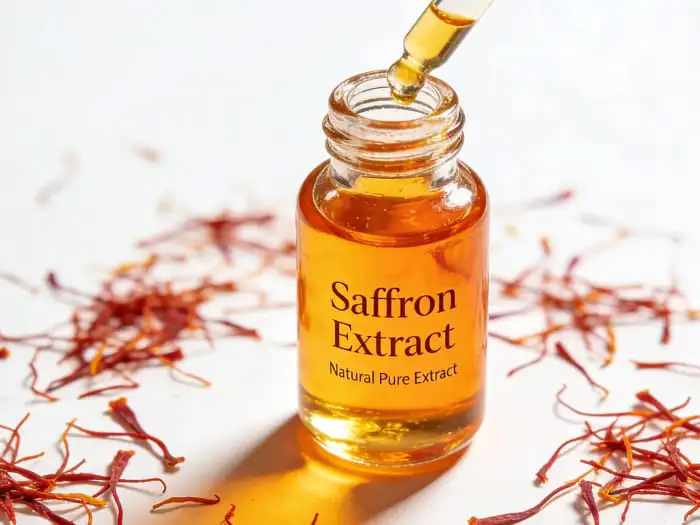
Exploring saffron extract begins with understanding its origin from Crocus sativus stigmas, a precious botanical ingredient prized across pharmaceutical, nutraceutical, and cosmetic industries. This comprehensive guide examines standardized grades, quality parameters, and advanced extraction methodologies that determine bioactive potency. From traditional water-ethanol processing to modern supercritical CO2 techniques, each method influences crocin content, safranal preservation, and commercial viability. Understanding these factors enables procurement professionals to source authentic, high-quality saffron extract that meets regulatory standards while delivering consistent therapeutic benefits for mood support, antioxidant applications, and premium formulations.
Understanding Saffron Extract: Grades and Qualities
Botanical Origin and Bioactive Profile
The tiny stigmas of Crocus sativus L., a plant in the Iridaceae family that is mostly grown in Iran, Kashmir, and Spain, are used to make saffron extract. Because only three stigmas grow on each flower, it takes about 150 flowers to make one gram of raw saffron, which makes it one of the most expensive foods in terms of weight. The extract is a reddish-brown to dark red powder that is made by using special processing methods to concentrate the plant's beneficial chemicals.
The main beneficial components are crocin, which gives the plant its color and antioxidant activity, safranal, which gives it its smell and neuroprotective qualities, and picrocrocin, which gives it its bitter taste and may help regulate mood. These apocarotenoids work together to provide the treatment benefits seen in clinical studies, mainly for improving mood, supporting brain function, and protecting cells from oxidative stress.
Quality Grading Standards and Assessment Criteria
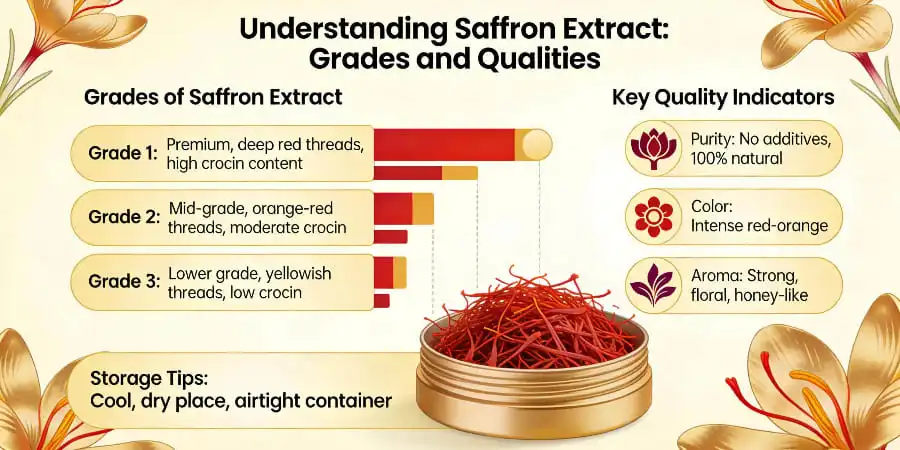
Professional grading methods rate saffron extracts based on a number of factors that have a direct effect on their use in business. Spectrophotometric measurement of crocin content is used to measure color intensity, which is the main sign. Premium types usually have 2 to 5 percent total crocins, which are measured through HPLC fingerprinting to make sure that each batch is the same.
Aroma review is based on safranal levels, which are what give the extract its unique smell and medicinal power. Controlled processing temperatures and safe atmospheres help keep flammable compounds stable in high-quality extracts. Other important factors that affect grade classification and regulatory compliance are the amount of moisture, heavy metal contamination, and bacterial purity.
Distinguishing Authentic from Synthetic Alternatives
Because saffron has a high economic value and many fake goods are on the market, market authenticity is still a big problem. Advanced analytical methods, such as LC-MS profiling and isotope ratio analysis, can be used to find the chemical fingerprints of real crocus sativus extracts. Instead of real Crocus sativus extracts, synthetic ones often have fake colorants or cheaper plant replacements that don't have the same complex bioactive profile.
Good sellers give full certificates of analysis that show where the products came from, how they were extracted, and how effective they are. Independent verification services from third-party testing labs that specialize in plant authentication keep buyers safe from fake or low-quality goods.
Extraction Methods of Saffron Extract: From Traditional to Advanced
Conventional Solvent-Based Extraction Techniques
Using different amounts of water and ethanol in traditional extraction methods breaks down both water-loving and fat-loving compounds in saffron stigmas. Crocin content is usually higher when extracted with water because these chemicals dissolve in water. On the other hand, ethanol-based methods capture more volatile components, such as safranal. Controlling the temperature during extraction keeps heat-sensitive bioactives from breaking down. The best temperatures for processing are between 40°C and 60°C.
The most popular traditional methods are maceration and percolation, which need longer contact times to get the best result. However, these methods have some problems, such as liquid residue issues, the possibility of bioactive breakdown, and extraction efficiency that changes based on the quality of the raw material and the processing conditions.
Advanced Extraction Technologies
Supercritical CO2 extraction has become the best way to get pure saffron extracts that don't leave behind any solvents. Under certain pressure and temperature conditions, this method uses carbon dioxide to carefully remove bioactive chemicals while keeping their natural structure and effectiveness. The process gives you better control over the factors of the extraction, which lets you target compounds and make the result more consistent.
Another new method that cuts down on processing time and increases return efficiency is ultrasonic-assisted extraction. Sound wave energy changes the structure of cells, which makes it easier for solvents to get inside and compounds to come out. This technique works especially well for keeping thermolabile chemicals that could break down under normal heating settings.
Selecting Optimal Methods for Commercial Applications
Pharmaceutical uses need the highest levels of purity, so supercritical CO2 extraction is the best option, even though it costs more to handle. The fact that it doesn't contain any solvents takes away any legal worries while still providing a high concentration of bioactives that can be used in medicinal formulations. Nutraceutical manufacturers often balance cost and quality requirements, selecting standardized hydroalcoholic extractions that provide reliable potency at competitive pricing.
When used in cosmetics, extraction methods that keep both the bioactive effectiveness and the taste qualities are best. Cold-pressing methods keep the delicate chemical profiles that are needed for high-end skin care products, and changed supercritical processes can target specific compounds that are useful for anti-aging uses.
Comparing Saffron Extract Types and Products for B2B Procurement
Extract Forms and Their Commercial Applications
For business-to-business uses, saffron extract powder is the most useful form because it is stable, has consistent strength, and is easy to mix into different mixtures. When stored properly, the powder form allows for exact doses in pills, tablets, and functional foods, while also keeping the powder's long-term shelf life. Crocin levels are usually standardized to be between 0.3% and 3%, which lets makers choose the right amounts for different uses.
Liquid extracts are better for use in drinks and on the skin because they dissolve quickly and are absorbed quickly. Careful storage methods are needed for these products to stay bioactively stable and avoid microbial contamination. Oil-based extracts are used in massage and makeup because they concentrate lipophilic ingredients and make them easier for the skin to absorb.
Organic Certification and Regulatory Compliance
Organic approval is very useful for companies that want to sell high-end goods to health-conscious customers. Certified organic crocus sativus extracts must be grown according to strict rules that don't allow manmade fertilizers and pesticides to be used at any point in the growing process. Processing facilities need their own organic approval to make sure that organic materials don't get mixed up with regular materials while they are being extracted and packed.
In the United States, proposals for dietary supplements are regulated by the Food and Drug Administration (FDA), while in Europe, new food products are regulated by the European Food Safety Authority (EFSA). When procurement experts know these standards, they can find the right grades to help the product registration and market entry processes go smoothly.
Supplier Evaluation and Quality Assurance
Suppliers with a good reputation keep full quality control systems that include ISO certifications, GMP compliance, and tested methods that have been proven to work. There should be thorough reports of analysis, stability studies, and records that can be used to connect finished extracts to specific amounts of raw materials. Transparency in the supply chain is becoming more important as regulatory bodies keep a closer eye on where plant ingredients come from and how they are processed.
Most of the time, expert support services, custom standardization choices, and flexible minimum order amounts are extra benefits that come from buying from international providers. Getting to know providers who are familiar with different market needs and rules can help you make sure you always have supplies while lowering the risks of not following the rules.
Procurement Guide: How to Buy and Source Saffron Extract for Your Business
Strategic Sourcing Considerations
To successfully buy saffron extract, you must first set clear quality standards that are in line with the needs of the final product and the demands of the target market. Setting clear standards for crocin content, extraction method, and approval needs lets you compare suppliers accurately and negotiate prices. Changes in the market have a big effect on the prices of raw materials, so long-term supply deals help with budgeting and keeping track of stockpiles.
Minimum order quantities (MOQs) change a lot from one seller to the next. For example, specialty manufacturers often have lower MOQs but charge more. Larger food and drug businesses may benefit from having direct links with extraction facilities, which can help them set their own standards and get better prices. Geographically varying supply sources gives you more protection against problems that might happen in your area when it comes to output.
Quality Verification and Supplier Assessment
Facility surveys, reference checks, and testing of samples by independent labs should all be part of the due diligence process. Suppliers with a good reputation accept openness and provide a lot of paperwork, such as extraction methods, quality control procedures, and records of regulatory compliance. Testing skills are a key difference, and more advanced providers offer unique analytical methods and stability studies.
As governmental bodies keep a closer eye on botanical ingredients, supply chain tracking becomes more and more important. Suppliers should give clear records that connect finished extracts to specific crop areas and processing batches. This way, if there are any quality problems or legal questions, suppliers can quickly address them.
Building Strategic Partnerships
Long-term relationships with reliable suppliers have many benefits, such as giving you priority when supplies are low, providing expert help for product development, and letting you do research together. Custom blending, private labeling, and legal support are just a few of the value-added services that many providers give that can help new goods get to market faster.
Communication methods should cover things like quality, shipping times, and sharing market information. Regular reviews of a business help find ways to make processes better and cut costs while keeping quality standards high, which is important for protecting the brand and keeping customers happy.
Conclusion
Purchasing workers can make smart choices about where to buy saffron extract that meet both quality and cost goals if they know about the different grades, qualities, and methods used for extraction. Premium extraction methods keep the medicinal components whole while meeting legal standards for beauty, nutraceutical, and pharmaceutical uses. To make sure that products are always the same and that they meet market standards, quality assessment works on crocin standardization, authentication methods, and full source evaluation. Strategic relationships with qualified makers give you a competitive edge through technical support, custom formulas, and reliable supply chain management. These are all things that you need to develop and place your products successfully in the market.
FAQ
What makes high-quality saffron extract different from standard grades?
High-quality saffron extract features standardized crocin content between 2 and 5 percent, as shown by HPLC fingerprinting and third-party verification. The best grades use advanced extraction methods that keep volatile chemicals safe, make sure bioactivity stays uniform, and get rid of contaminants. Quality providers give full certificates of analysis, proof of origin, and stability data to help with regulatory compliance.
How do different extraction methods affect bioactive content?
Because it doesn't leave behind any solvent waste, supercritical CO2 extraction keeps the most bioactive content. This makes it perfect for medicinal uses. When used correctly, traditional water-ethanol methods are cost-effective and good at keeping beneficial compounds. Ultrasonic-assisted methods cut down on processing time while keeping the purity of the compound. This is especially helpful for parts that break down at high temperatures, like safranal.
What certifications should I look for when sourcing saffron extract?
Some important certificates are ISO quality management, GMP manufacturing compliance, and, if necessary, organic approval. Extra quality control includes heavy metal analysis, bacterial safety paperwork, and testing by a third party to make sure the results are correct. Suppliers should keep records that can be used to connect produced goods to the sources of their raw materials and the batches of work that went into making them.
Partner with Wellgreen for Premium Saffron Extract Solutions
Wellgreen Technology stands as your trusted saffron extract supplier, combining advanced GMP production techniques and thorough quality control systems to make sure they only provide the best plant solutions. Our modern extraction facilities use cutting-edge supercritical CO2 and standardized liquid technologies to make sure that the bioactive profiles are always the same and that the purity levels are higher than the standards set by the industry. We can meet the needs of a wide range of businesses, from new nutrition companies to well-known pharmaceutical companies, thanks to our flexible minimum order quantity (MOQ) choices and thorough inventory management. You can talk to our technology team about special orders and ask for samples by emailing wgt@allwellcn.com.
References
Abdullaev, F.I., & Espinosa-Aguirre, J.J. (2004). Biomedical properties of saffron and its potential use in cancer therapy and chemoprevention trials. Cancer Detection and Prevention, 28(6), 426-432.
Hosseinzadeh, H., & Nassiri-Asl, M. (2013). Avicenna's (Ibn Sina) the Canon of Medicine and saffron (Crocus sativus): a review. Phytotherapy Research, 27(4), 475-483.
Kyriakoudi, A., Tsimidou, M.Z., & O'Callaghan, Y.C. (2015). Extraction and analysis of bioactive compounds in saffron. Food Research International, 78, 371-381.
Melnyk, J.P., Wang, S., & Marcone, M.F. (2010). Chemical and biological properties of the world's most expensive spice: Saffron. Food Research International, 43(8), 1981-1989.
Rahaiee, S., Moini, S., Hashemi, M., & Shojaosadati, S.A. (2015). Evaluation of antioxidant activities of bioactive compounds and various extracts obtained from saffron (Crocus sativus L.): a review. Journal of Food Science and Technology, 52(4), 1881-1888.
Zhang, A., Shen, Y., Cen, M., Hong, X., & Shao, Q. (2019). Supercritical carbon dioxide extraction of saffron (Crocus sativus L.) and its analysis by HPLC. LWT - Food Science and Technology, 111, 731-738.