Fennel Seed Extract - Benefits, Nutrition, And Weight Loss
2026-05-28 14:54:01
Fennel seed extract has become an important part of functional foods and nutraceuticals because it contains concentrated bioactive substances that help with weight loss, metabolic optimization, and digestive health. This botanical concentrate comes from Foeniculum vulgare Mill. and gives procurement professionals a standard, clean alternative to raw agricultural crops. It makes sure that all batches are the same and that cosmetics, functional drinks, and dietary supplements follow the rules. Knowing what it is made of, how it can be used therapeutically, and what quality standards are set by helps B2B buyers make smart sourcing choices that keep up with changing market needs.
Understanding Fennel Seed Extract: Composition and Nutritional Facts
Extraction Methods and Bioactive Concentration
Combinations of ethanol and water are used in solvent-based extraction methods to turn raw fennel seeds into a high-potency extract. This method focuses the bioactive parts while getting rid of the microbial risks that come with using raw plants. Standardized extracts have concentration ratios of 4:1, 10:1, or 20:1, which means they always have the same healing effects. Ground seeds, on the other hand, have oil content that changes from 1% to 3%.
The main bioactive compound, trans-anethole, makes up about 1% to 5% of good extracts and has the usual effects of making you feel full. Flavonoid glycosides like quercetin and kaempferol, as well as fenchone and estragole, are phytochemicals that work well together. Together, these chemicals help with antioxidant action, relaxing smooth muscles, and changing hormones.
Nutritional Profile and Quality Parameters
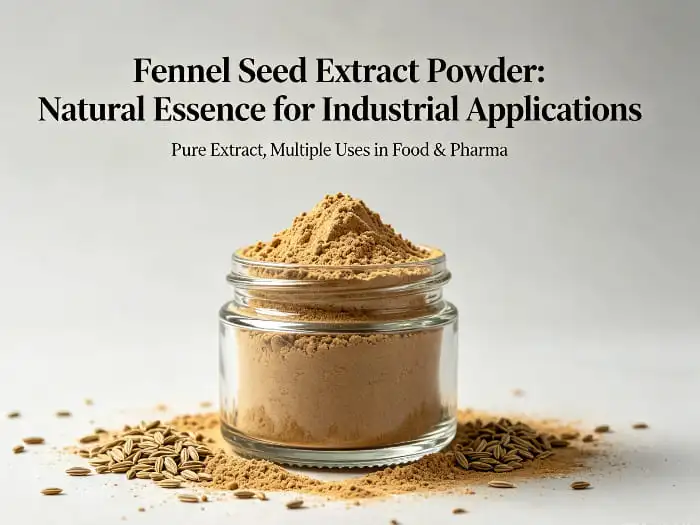
Professional-grade extracts look like fine, airy powders that are a brownish-yellow color. Important physical properties include a particle size that lets 95% of it pass through an 80-mesh sieve, which makes it easy to blend in dry capsules and drinks. The bulk density is between 0.40 and 0.60 g/ml, which makes encapsulation more efficient and speeds up the production process.
Trace elements like calcium, magnesium, and iron are found in nutritional analysis, along with B-complex vitamins that have been kept safe by controlled extraction temperatures. Loss during drying stays below 5%, and the amount of ash stays below 5%, which shows that there isn't much inorganic pollution. Different types that dissolve in water are used in drinks, while different types that dissolve in solvents are better for lipophilic formulations in softgels and topical goods.
Quality Control Imperatives
Four quality factors that can't be changed are what procurement teams focus on. Gas Chromatography (GC) and High-Performance Liquid Chromatography (HPLC) check for trans-anethole content and find contamination with star anise leftovers. According to ICH Q3C standards, solvent residue testing limits the amount of ethanol or methanol to set ppm levels. ICP-MS testing for heavy metals makes sure that lead stays below 3ppm, arsenic stays below 1ppm, cadmium stays below 1ppm, and mercury stays below 0.1ppm. Microbial testing shows that the Total Plate Count is less than 10,000 cfu/g and that Salmonella, E. coli, and Staphylococcus aureus are not present at all, which was confirmed by AOAC methods.
Health Benefits of Fennel Seed Extract Relevant to Global Markets
Digestive Support and Gastrointestinal Comfort
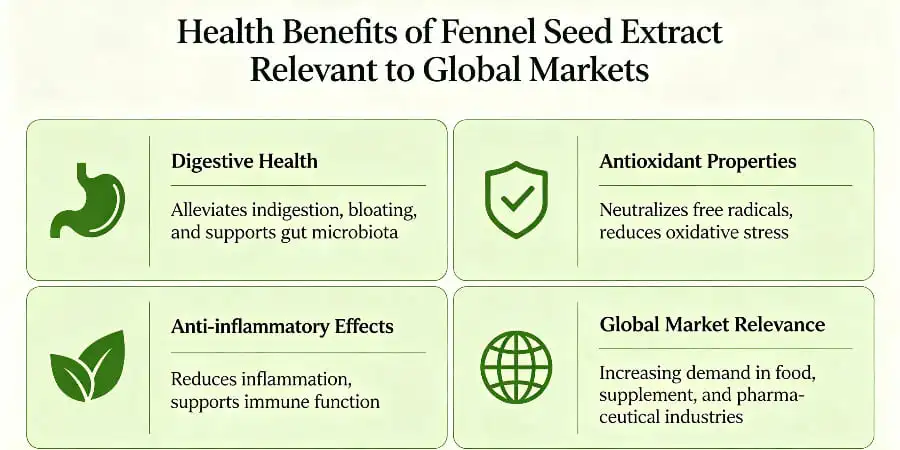
Flavonoids from fennel extract have been shown in clinical studies to help with bloating, stomach cramps, and gas buildup by relaxing smooth muscle tissue. The anethole part changes the movement of the gut and increases the production of stomach enzymes, which makes it easier for the body to absorb nutrients. Formulations for functional dyspepsia and irritable bowel syndrome (IBS) contain 100 mg to 200 mg of standardized extract per serving, which is in line with recommended dosage levels based on proof.
Buyers in bulk who are making digestive health capsules like fennel because it looks good on a clean label and works well with probiotic mixes. Its gentle nature makes it good for sensitive people, like the old and people with long-term digestive problems. Fennel extract is used in functional foods like protein bars and meal replacement shakes. Its digestive-helping traits balance out the discomfort caused by the high fiber content.
Metabolic Enhancement and Weight Management
New studies show that fennel powder can slightly speed up your metabolism and make you feel less hungry. This makes it a useful ingredient in weight management plans. Changing the signaling pathways for ghrelin and leptin, two hormones that control hunger and fullness, is part of the process. Even though fennel extract isn't a weight loss drug on its own, it works well with stimulant ingredients like green tea extract and chromium picolinate in mixtures.
For weight loss, the recommended daily dose is usually between 300 mg and 500 mg, spread out over several meals. The diuretic properties of the extract help with temporary water weight loss, which is a feature that is valued in sports nutrition products used before a race. The safety profile of fennel extract powder is good for procurement professionals who are trying to reach the growing metabolic health market. In 12-week clinical trials, few side effects were observed.
Women's Health Applications
Fennel extract has been used for a long time as a galactagogue, which means it helps women breastfeed. Recent studies have shown that nursing mothers who took fennel extract produced more milk. The phytoestrogen action linked to anethole may help control the menstrual cycle and ease the symptoms of dysmenorrhea. Formulations for women's health use fennel along with chasteberry and evening primrose oil to make plant blends that work well together.
These apps give B2B clients who are making pregnant and postnatal supplement lines new ways to make money. For regulatory reasons, there needs to be clear warning about pregnancy safety, since too much use may be harmful. For breastfeeding support, 150 mg to 300 mg per day, standardized to at least 1% volatile oils, is what is recommended.
Comparing Fennel Seed Extract: Product Forms, Strengths, and Alternatives
Powder Versus Liquid Extract Formats
Powder extracts are the most popular way for businesses to buy things because they are more stable, cheaper, and can be used in a variety of ways. While liquid extracts need to be preserved and can be hard to ship internationally, spray-dried powders stay effective for 24 months when stored in a controlled environment. Powder formats work perfectly with processes that compress tablets, fill capsules, and mix dry drinks.
For example, sublingual medicines and functional shots are two uses for liquid extracts that need to be quickly absorbed by the body. Their glycerin or alcohol base makes them dissolve right away, but it makes them harder to use in drinks that are mostly water. Buying choices are based on the specifications of the finished product. Powder formats are better for a wider range of uses and cost less per unit when purchased in bulk.
Organic Certification and Sourcing Considerations
Certified organic by the USDA, the EU, or a similar organization, organic fennel extract gets a premium price in natural product channels. People want pesticide-free ingredients, and these types meet that need, but they need a lot of paperwork in the supply chain. Conventional extracts are safe even though they aren't organic because they go through a full pesticide residue screening process that includes more than 500 compounds and is in line with EC 396/2005 rules.
Phytochemical traits are affected by where the plants come from. For example, fennel from the Mediterranean has higher levels of anethole than fennel from Asia. When B2B buyers are trying to find the best balance between quality and price, they look at source traceability systems and look for sellers who give a Certificate of Analysis (CoA) with every batch. Being able to check out how plants are grown and how they are extracted builds trust in long-term supply relationships.
Comparison with Raw Seeds and Similar Botanicals
Extracts, on the other hand, don't have the risk of microbe contamination that comes with whole or ground fennel seeds. They also offer concentrated actives in smaller serving sizes. At a 10:1 ratio, 200 mg of extract has the same bioactivity as 2,000 mg of raw seeds. This means that the capsules are smaller and consumers are more likely to take them. This concentration advantage is very important in supplement markets that are very competitive and where ease of dosage affects buying choices.
Anise extract and fennel extract are often mixed up. Both contain anethole, but anise extract comes from different plants and has different secondary chemical profiles. Star anise is a common adulterant that needs to be carefully screened for by TLC identification tests. B2B procurement teams define the botanical identity of Foeniculum vulgare to avoid regulatory issues and make sure that the therapeutic benefits are real.
Procuring Fennel Seed Extract: Best Practices and Market Insights for B2B Clients
Evaluating Supplier Credentials and Certifications
Suppliers with a good reputation keep their GMP (Good Manufacturing Practice) approval, which shows that they follow the rules for making pharmaceuticals. HACCP compliance and ISO 22000 certification for food safety add more layers of quality guarantee. Procurement managers ask for audit records, such as cleaning procedures, records of properly calibrated tools, and training logs for employees.
In the competitive world of sourcing, suppliers who give full testing portfolios that include identity, purity, potency, and contaminant screening stand out. Having access to tested analytical methods that are in line with USP, EP, or BP pharmacopeial standards makes sure that all foreign markets follow the rules. Due diligence methods are strengthened by the fact that Certificates of Analysis from approved third-party laboratories are available.
Bulk Purchasing Dynamics and MOQ Considerations
Minimum Order Quantities (MOQ) are very different. Well-known manufacturers need commitments of 25 kg to 100 kg, while specialized providers can handle smaller trial orders of 1 kg to 5 kg. Volume pricing structures reward bigger promises by lowering prices by 15% to 30% for orders over 500 kg. Payment terms usually involve 30% deposits with balance due before shipment, though established relationships may secure net-30 or net-60 arrangements.
Lead times range from 15 to 45 days, based on how much inventory is available and how much customization is needed. Buyers who want private labeling or specific specifications can arrange longer delivery times to allow for testing of formulations and the creation of packaging. Strategic procurement involves figuring out how much you will need each year so you can discuss blanket purchase orders with set delivery dates that make the most of your cash flow and warehouse space.
Leveraging OEM and Private Label Opportunities
Contract manufacturers handle formulation development, encapsulation, bottling, and labeling, giving brands that don't have their own production facilities a complete answer. These relationships make it easy to get into new markets quickly with little money. For partnerships to work, everyone needs to be able to clearly understand the goals, such as the concentration of the foeniculum vulgare extract, the ingredients that work well together, and the format of the finished product.
Custom formulation services help businesses find their own place in the market by creating unique mixes of fennel extract and other plants that work well together. Suppliers that give R&D support make it easier to build prototypes and test their stability, which shortens the time it takes for new products to hit the market. Protecting intellectual property through secrecy agreements keeps secret formulas created through working together safe.
Usage Guidelines, Dosage, and Safety Considerations
Dosage Recommendations for Primary Applications
Digestive support products usually contain 100 mg to 200 mg of standardized extract per serving. These should be taken before meals to get the most gas-busting benefits. According to weight loss plans, daily doses should be increased to 300 mg to 500 mg, spread out over two or three meals. Women's health products that help with breastfeeding use 150 mg to 300 mg every day, and products that help with monthly pain may use 200 mg to 400 mg during periods that are painful.
These suggestions are based on the idea that the trans-anethole content should be standardized to at least 1%. Higher concentration extracts allow proportional dosage decreases, which keeps therapeutic levels the same while lowering the number of capsules needed. Formulation teams choose concentration ratios that are in line with retail price positioning and competitive standards so that the product works well and doesn't cost too much per serving.
Administration Forms and Bioavailability Optimization
Capsules and tablets are the most common forms of dietary supplements because they allow for precise dose control and long shelf life. Powder extracts mix easily into healthy beverage matrices, but problems with solubility need lecithin or cyclodextrin complexation to be solved. Liposomal delivery methods improve bioavailability, but they can only be used in high-end products because they are hard to make and cost a lot.
Timing suggestions say to take it with meals to get the most out of the digestive enzymes, but weight control plans may work better if taken before a meal to suppress appetite even more. In clinical settings, sustained-release technologies may make it easier for people to take their medicine as prescribed by extending the time that active compounds are absorbed.
Regulatory Compliance and Safety Profiles
In the United States, fennel extract is generally thought to be safe (GRAS) as long as it is used within the recommended dose range. European Union rules allow it to be in food supplements, though each country may have its own rules about how to apply them. Pregnancy contraindications need to be made clear on the label, since high doses may make the uterus shrink.
Adverse effects are still very rare at suggested doses, but some people who are allergic to plants in the Apiaceae family have had allergic reactions. Hormone-sensitive drugs and blood thinners can combine with each other, which is why product labels include warnings about this. For B2B clients to make sure they are following the rules, they use thorough regulatory review processes and hire consultants who know what the target market needs.
Conclusion
Fennel seed extract represents a versatile botanical ingredient meeting diverse B2B procurement needs across nutraceutical, pharmaceutical, functional food, and cosmetic sectors. Its concentrated bioactive profile, supported by clinical evidence and traditional use validation, positions it strategically in digestive wellness, metabolic health, and women's supplement markets. Successful procurement demands rigorous supplier evaluation, emphasizing quality certifications, analytical testing capabilities, and supply chain transparency. Understanding extraction methodologies, standardization protocols, and regulatory frameworks enables informed sourcing decisions that balance quality, cost, and market positioning. The extract's compatibility with various delivery systems and formulation synergies provides product developers with flexible innovation pathways, supporting competitive differentiation in evolving wellness landscapes.
FAQ
How does fennel extract differ from other digestive botanicals like ginger or peppermint?
Fennel extract operates primarily through antispasmodic mechanisms targeting intestinal smooth muscle, reducing cramping and bloating, whereas ginger modulates nausea via serotonin receptor antagonism. Peppermint's menthol content provides localized cooling sensations and esophageal sphincter relaxation. These differing mechanisms allow complementary blending strategies, where fennel addresses lower GI discomfort while peppermint targets upper digestive symptoms. Procurement teams developing comprehensive digestive formulas often combine all three botanicals in synergistic ratios, validated through clinical testing protocols.
What authentication methods prevent fennel extract adulteration?
Thin Layer Chromatography (TLC) provides rapid botanical identity confirmation, detecting substitution with cheaper star anise extracts through distinct chromatographic fingerprints. Gas Chromatography-Mass Spectrometry (GC-MS) offers definitive volatile oil profiling, quantifying trans-anethole alongside marker compounds unique to Foeniculum vulgare. DNA barcoding technologies enable species-level authentication, particularly valuable for organic certifications requiring complete traceability. Reputable suppliers provide these authentication results within standard Certificates of Analysis, building procurement confidence in material authenticity.
Partner with Wellgreen for Premium Fennel Seed Extract Supply
Wellgreen Technology stands as your trusted fennel seed extract manufacturer, delivering pharmaceutical-grade botanical concentrates that meet the exacting standards of global nutraceutical, food, and cosmetic applications. Our GMP-certified production facilities ensure rigorous quality control through comprehensive HPLC assay verification, heavy metal screening, and microbial testing protocols. We maintain substantial inventory across multiple concentration ratios, enabling rapid fulfillment for both trial orders and bulk procurement commitments. Our technical team provides OEM support for custom formulation development, backed by complete documentation packages facilitating regulatory submissions worldwide. Contact our procurement specialists at wgt@allwellcn.com to discuss your specific requirements, request samples, or explore private labeling opportunities that accelerate your product development timelines.
References
Badgujar, S. B., Patel, V. V., & Bandivdekar, A. H. (2014). "Foeniculum vulgare Mill: A Review of Its Botany, Phytochemistry, Pharmacology, Contemporary Application, and Toxicology." BioMed Research International, 2014, 842674.
Bae, J., Kim, J., Choue, R., & Lim, H. (2015). "Fennel (Foeniculum vulgare) and Fenugreek (Trigonella foenum-graecum) Tea Drinking Suppresses Subjective Short-term Appetite in Overweight Women." Clinical Nutrition Research, 4(3), 168-174.
Alexandrovich, I., Rakovitskaya, O., Kolmo, E., Sidorova, T., & Shushunov, S. (2003). "The Effect of Fennel (Foeniculum vulgare) Seed Oil Emulsion in Infantile Colic: A Randomized, Placebo-Controlled Study." Alternative Therapies in Health and Medicine, 9(4), 58-61.
Rather, M. A., Dar, B. A., Sofi, S. N., Bhat, B. A., & Qurishi, M. A. (2012). "Foeniculum vulgare: A Comprehensive Review of Its Traditional Use, Phytochemistry, Pharmacology, and Safety." Arabian Journal of Chemistry, 9(Supplement 2), S1574-S1583.
Ostad, S. N., Soodi, M., Shariffzadeh, M., Khorshidi, N., & Marzban, H. (2001). "The Effect of Fennel Essential Oil on Uterine Contraction as a Model for Dysmenorrhea, Pharmacology and Toxicology Study." Journal of Ethnopharmacology, 76(3), 299-304.
Choi, E. M., & Hwang, J. K. (2004). "Anti-inflammatory, Analgesic and Antioxidant Activities of the Fruit of Foeniculum vulgare." Fitoterapia, 75(6), 557-565.