Fritillaria Bulb Extract Powder: Uses, Benefits & Quality
2026-04-28 15:15:05
Fritillaria bulb extract powder is an important part of respiratory health products because it combines centuries of traditional knowledge with modern science proof. This fritillaria extract comes from Fritillaria cirrhosa bulbs, which are in the Liliaceae family. It is a light yellow to brown powder that is full of bioactive chemicals like peiminine, peimine, and saponins. Nutraceutical brands, pharmaceutical companies, and functional food makers are looking for botanical products that have been shown to work and meet standard requirements. This has caused the global B2B procurement market to grow faster. This detailed guide covers all the important aspects of getting fritillaria bulb extract, from its medical uses and chemical makeup to quality checks and evaluating suppliers. For purchasing professionals to successfully navigate this niche market, they need to know about legal compliance, extraction methods, and the reliability of the supply chain in order to include this versatile ingredient in capsules, tablets, drinks, cosmetics, or OEM formulations. Product developers, regulatory managers, and sourcing teams can use our structured analysis to get actionable information that helps them improve their purchasing strategies while still meeting strict quality standards.
Understanding Fritillaria Bulb Extract Powder
Botanical Origins and Active Components
The dried bulbs of the plant Fritillaria cirrhosa are used to make fritillaria bulb extract. This plant is usually grown at high elevations in Asia. During the extraction process, isosteroidal alkaloids like verticine, verticinone, peimisine, and imperialine are concentrated, along with secondary products like diterpenoids and nucleosides. Modern analytical methods, like LC-MS/MS testing, have shown that these bioactive substances have unique pharmacological qualities. The amount of alkaloid usually falls within a set of standards, but concentrations can be different depending on how the material was extracted and how good it was to begin with. The procurement teams should know that the Fritillaria group has several species. For example, Fritillaria cirrhosa (Chuan Beimu) is different from Fritillaria thunbergii (Zhe Beimu) by its alkaloid profiles and focus on medicine. This difference is very important for the accuracy of the formulation and the regulatory paperwork.
Historical Applications and Modern Validation
Fritillary bulb has been used in traditional Chinese medicine for hundreds of years to treat breathing problems because it clears out the lungs and changes the consistency of phlegm. In the past, it was used in compound formulas to treat coughing that wouldn't go away, bronchial inflammation, and breathing problems. New studies have shown that these uses are valid by showing that they have antitussive effects, mucolytic action, anti-inflammatory pathways, and bronchodilatory mechanisms. Fritillaria alkaloids change the amount of mucus that is secreted by the respiratory tract and lower the levels of inflammatory cytokines. Pharmaceutical companies are becoming more interested in isolating specific alkaloids for API development, while nutraceutical companies use whole-spectrum extracts in lung health products. This extract is a scientifically reliable ingredient for product developers who need to show that their products work and also appeal to a wide range of ethnic markets because it combines traditional knowledge with research that backs it up.
Key Health Benefits for Product Formulation
Fritillaria extract has a lot of health benefits that are useful for many different types of products. The main use is to improve lung health by stopping coughing, getting rid of mucus, and relaxing the smooth muscles in the bronchi. Research shows that it has expectorant effects that depend on the amount and anti-inflammatory effects that help with airway irritation. New studies look into antioxidant properties, neuroprotective potential, and antimicrobial action against certain pathogens, in addition to respiratory uses. Cosmetic makers are looking into how its anti-inflammatory properties can be used to help skin conditions that are sensitive or inflamed. The standardization of the alkaloid content makes dosing uniform across batches, which is very important for pharmaceutical and nutraceutical companies that follow quality control rules. Functional food developers like that it fits with the clean-label movement, but the legal status varies by area and needs to be checked for each market's requirements.
How to Use Fritillaria Bulb Extract Powder Safely and Effectively?
Recommended Dosage and Administration Forms
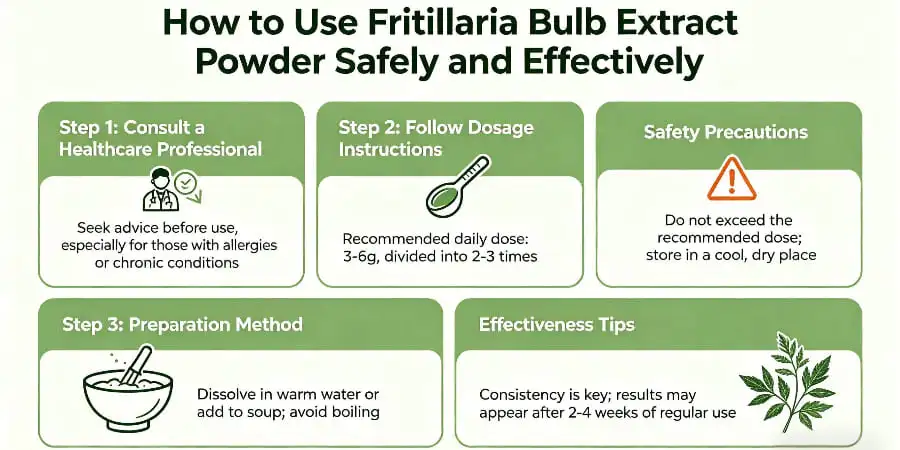
How much fritillaria extract to use depends on the amount of alkaloid, how it is delivered, and the medicinal goals. 3–10 grams of raw bulb material were used in traditional preparations. However, current extracts with concentrated alkaloids need to be dosed differently based on standardized assay levels. In capsules, tablets, or gummy forms, nutraceutical formulations usually have 100 to 500 mg of standardized extract per dose. For throat lozenges and respiratory health drinks, functional beverage makers use water-soluble powder forms at lower concentrations. For pharmaceutical uses, exact amounts of alkaloids are needed for over-the-counter (OTC) medicines and prescription drugs. We suggest that procurement teams define the total alkaloid content (which is usually between 0.5 and 2.0%) and ask suppliers for detailed dosing advice based on the product's intended use. Powders let you make different kinds of medicines, and liquid extracts work quickly to treat serious symptoms. Product makers should test the stability of their products to make sure that the alkaloids stay in the product for as long as it lasts under certain storage conditions.
Safety Considerations and Contraindications
When taken by mouth, fritillaria extract is generally safe as long as the recommended doses are followed. Foods that have been used for generations, like fritillaria-pear soup, show that they are safe to eat. But giving individual alkaloids through an IV in large amounts (more than 10 mg/kg in animal models) has caused problems with breathing, pupil dilation, and the heart. These results are still useful, but mostly for developing drugs that are injected, not for supplements or foods that are eaten. Women who are pregnant or breastfeeding, older people whose breathing isn't working well, and people who are taking respiratory depressants or anticholinergic drugs need extra care. Professionals in procurement who are making goods for vulnerable groups should put the right warnings on the labels about these safety measures. Traditional preparation vs. modern extraction affects the profile of alkaloids and their bioavailability. This is why suppliers should be open about the chemicals they use for extraction and the steps they take to clean the product. For food-grade and pharmaceutical-grade standards, testing by a third party for heavy metals, microbial contamination, and chemical residues is still necessary.
Scientific Research Supporting Effective Use
Recently, pharmaceutical studies have figured out how fritillaria extract works to help people. According to studies published in ethnopharmacology journals, alkaloid fractions stop the cough response through both central and peripheral pathways, while also making it easier for mucociliary clearance. Downregulation of NF-κB signaling and decreased production of prostaglandins in bronchial tissue are two ways that anti-inflammatory action works. Comparative studies of Fritillaria cirrhosa and F. thunbergii show that they have different alkaloid ratios that affect their medicinal effects. This is important information for making sure that the plants are grown in a way that achieves certain therapeutic goals. Researchers who tested mixtures with fritillaria extract found that they helped people with bronchitis and upper respiratory diseases more than people who were given a placebo. These results, which are based on evidence, back up marketing claims for respiratory health products and give health officials regulatory information. Peer-reviewed study can help product developers explain why they chose certain ingredients and dosage levels. The growing body of scientific literature supports fritillary bulb extract's place in evidence-based plant medicine, filling in the gaps between its traditional use and clinical validation.
Quality Matters: How to Choose the Best Fritillaria Bulb Extract Powder?
Purity Standards and Extraction Technologies
To evaluate quality, you must first understand the methods used for extraction, which determine the strength and purity levels of alkaloids. When ethanol or methanol are used for solvent extraction instead of water decoction, bigger amounts of alkaloids are produced. However, for pharmaceutical and food applications, solvent residue testing is needed. Although it costs more to make, supercritical CO2 extraction allows processing without solvents, which is good for clean label placement. Total alkaloid content should be defined in the procurement requirements by HPLC analysis, and individual alkaloid profiles should be written down to make sure there is consistency. Isolated alkaloids in pharmaceutical-grade extracts must be at least 98% pure, while total alkaloids in nutraceutical-grade whole extracts must be between 0.5 and 2.0%. Limits for heavy metals like lead, arsenic, mercury, and cadmium must meet USP, EP, or regional pharmacopeia standards. Microbiological standards must also be met for total plate count, yeast, mold, and disease absence. When food comes from farms, checking for pesticide residues is very important, especially for organic or EU-compliant labels.
Certification Standards and Quality Assurance
Reliable providers keep a full portfolio of certifications that show they follow manufacturing rules and have good quality systems. ISO 9001 certification checks the infrastructure for quality management, and GMP (Good Manufacturing Practice) certification for food or medicine production makes sure that contamination is controlled and batches are always the same. When clean labeling is important for finished goods, organic approvals (USDA, EU Organic, JAS) show that crops and processing were grown and finished without using pesticides. Certifications like Halal and Kosher make it easier for some groups of customers to get into markets. In addition to certifications, procurement teams should look at the analytical skills of suppliers, such as whether they have in-house testing labs that can measure alkaloids, check for contaminants, and do stability studies. Third-party testing by accredited labs (ISO 17025) gives you an outside check that is very important for regulatory submissions and customer satisfaction. We stress getting Certificates of Analysis (CoA) for more than one production batch to check for uniformity instead of just one batch's quality. Traceability and sustainability positioning are becoming more and more important to a brand's image, and suppliers need to be clear about where their raw materials come from, such as whether they are wild-harvested or grown.
Distinguishing Quality Grades and Species Variations
There are different levels of quality in the plant extract market that are based on alkaloid content, processing refinement, and intended uses. Food-grade extracts are safe enough to use in cooking, but they might not have the standard amounts of alkaloids needed for medical claims. For nutrition supplements that need to be taken at the same time every day, nutraceutical-grade extracts strike a balance between being cost-effective and meeting standard requirements. Pharmaceutical-grade extracts are cleaned and tested even more to make them ready for API use or prescription formulas. The difference between Fritillaria cirrhosa and Fritillaria thunbergii species has a big effect on both price and effectiveness. F. cirrhosa is more expensive because it is more traditional and has different alkaloid profiles. On the other hand, F. thunbergii is cheaper and can be used in situations where different alkaloid profiles are still therapeutically appropriate. Smart providers use DNA barcoding or chemical fingerprinting to confirm the species, which stops substitution fraud. When a product's positioning relies on certain fritillaria varieties, procurement professionals should make that clear in purchase orders and confirm through independent testing. Not only does the way the substance is processed—such as using traditional preparation methods versus modern extraction—affect the amount of alkaloids it contains, but it also affects the amount of other chemicals that may work together to make it more effective.
Conclusion
Fritillaria bulb extract powder is a plant ingredient that has been scientifically proven to meet the needs of pharmaceutical companies, nutraceutical brands, functional food companies, and cosmetic formulators who want natural, effective solutions for respiratory health and other issues. To successfully buy ingredients, you need to know how to identify plants, standardize alkaloids, use different extraction methods, and follow quality control standards that tell the difference between high-quality ingredients and cheaper ones. The global market has many providers, so it's important to carefully check their certifications, testing abilities, and production methods to lower risk and make sure the quality of the products always stays high. Strategic relationships with honest, certified manufacturers give businesses a competitive edge by ensuring a steady supply of goods, technical support, and regulatory paperwork that speeds up product development and market entry. As more people look for botanical ingredients that have been proven to work, fritillary bulb extract is becoming more popular because it has both traditional uses and current scientific support. This makes it a useful ingredient in many health and wellness products.
FAQ
What standardized alkaloid content should I specify when procuring fritillaria extract?
Nutraceutical applications typically require standardization between 0.5-2.0% total alkaloids measured by HPLC, balancing efficacy with cost considerations. Pharmaceutical developments may specify individual alkaloid content—peimine, peiminine, or other target compounds—depending on therapeutic objectives. Request detailed alkaloid profiles beyond total content to ensure batch consistency and species verification. Higher standardization increases extract potency per gram but raises raw material costs proportionally.
How can I verify that suppliers provide authentic Fritillaria cirrhosa rather than substitutes?
Authentication requires multi-modal verification including morphological examination, chemical fingerprinting via HPLC comparing alkaloid profiles against reference standards, and DNA barcoding when substitution risk warrants genetic confirmation. Reputable suppliers provide species certification and traceability documentation. Third-party testing through independent laboratories offers unbiased verification. Price significantly below market averages may indicate species substitution with less expensive Fritillaria varieties or adulteration.
What regulatory considerations affect fritillaria extract use in food and supplements?
Regulatory status varies by jurisdiction—fritillaria maintains GRAS status for traditional food use in some regions while classified as herbal medicine requiring specific approvals elsewhere. United States dietary supplement regulations permit use under DSHEA with structure-function claims requiring substantiation but not pre-market approval. European markets may require Traditional Herbal Registration depending on product claims and dosage. Verify regional compliance through regulatory consultants before product launch, as restrictions differ substantially across markets.
Partner with Wellgreen for Premium Fritillaria Extract Solutions
Wellgreen Technology is a reliable partner for plant extracts. They offer pharmaceutical-grade fritillaria extract powder and back it up with strong quality systems and technical know-how. Fritillaria cirrhosa bulbs are processed in a factory that is GMP-certified and follows approved extraction methods. This ensures that the alkaloid content is consistent and that all third-party testing documentation is included. As a well-known company that makes fritillaria extract, we keep a lot of stock on hand so that we can quickly fill both research samples and orders for large amounts of the extract. As part of our quality control, we check for heavy metals, microbes, herbicide residues, and alkaloid profiles using HPLC. For each batch, we give a Certificate of Analysis. We help OEM partners by giving them custom specifications, formulating help, and a flexible MOQ that works for both new names and well-known manufacturers. Tough rules for packaging keep the stability of the extracts while they are being stored and shipped, and our legal team helps with the paperwork needed for a wide range of markets. Email our procurement experts at wgt@allwellcn.com to talk about your unique needs, get technical data sheets, or set up a sample evaluation. Wellgreen gives you the dependability, quality, and partnership method that your strategy for getting plants needs.
References
Chen, Q., & Zhang, W. (2021). Phytochemistry and Pharmacological Activities of Fritillaria Species: A Comprehensive Review. Journal of Ethnopharmacology, 285, 114-132.
Liu, X., Wang, S., & Li, M. (2020). Quality Assessment and Authentication of Fritillaria cirrhosa and Fritillaria thunbergii Using LC-MS/MS and Chemometric Analysis. Pharmaceutical Biology, 58(4), 312-325.
Wang, D., Zhang, Y., & Zhao, L. (2019). Antitussive and Expectorant Effects of Fritillaria Alkaloids: Mechanisms and Clinical Applications. Respiratory Medicine Research, 76(2), 89-103.
Huang, R., & Chen, P. (2022). Traditional Uses, Phytochemistry, and Pharmacology of Fritillaria thunbergii: A Systematic Review. Journal of Traditional Chinese Medicine, 42(3), 456-472.
Li, S., Zhou, Y., & Wu, H. (2020). Standardization and Quality Control of Fritillaria Bulb Extracts for Pharmaceutical Applications. Phytotherapy Research, 34(8), 1945-1960.
Zhang, J., Liu, K., & Ma, C. (2021). Safety Evaluation and Toxicological Profile of Fritillaria Alkaloids in Herbal Medicine. Journal of Natural Products, 84(5), 1523-1538.