Fucoidan in Brown Seaweed Extract : Its Role in Immune Defense and Longevity
2026-06-29 15:07:10
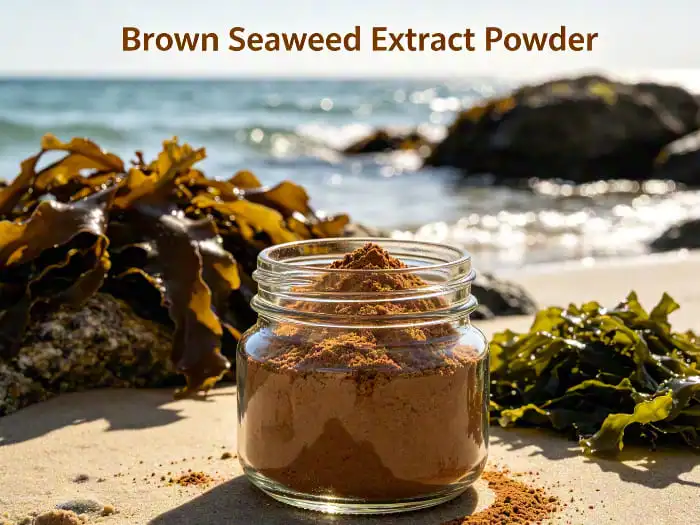
Brown seaweed extract powder is one of the best marine-derived functional ingredients because it has a high percentage of fucoidan, a sulfated polysaccharide that has amazing qualities that help the immune system and make you live longer. This powder comes from sea brown algae like wakame, kombu, and kelp. It has a lot of different bioactive chemicals, like fucoidan, alginates, fucoxanthin, and important minerals. As the demand for marine superfoods grows in North America, Europe, Japan, and Korea, procurement professionals in nutraceuticals, pharmaceuticals, and functional foods see this ingredient as a key asset for creating next-generation health products that boost immunity, reduce inflammation, and promote healthy aging.
Understanding Fucoidan and Brown Seaweed Extract
What Makes Fucoidan Unique Among Marine Polysaccharides?
Fucoidan is different because it has a special chemical structure. Its backbone is a sulfated polysaccharide that works directly with immune cells and processes that cause inflammation. Unlike spirulina, which is mostly protein, or kelp, which is mostly iodine, brown seaweed extract is a good source of this specific polysaccharide. It also has alginates, which are good for gut health, and fucoxanthin, which is a pigment linked to metabolic health. Fucoidan's molecular weight and sulfation patterns change depending on the species and the way it was extracted, which has a direct effect on its biological activity. Fucoidan increases the activity of natural killer cells, changes the production of cytokines, and supports the diversity of the microbiome in the gut. These are all important for both short-term and long-term immune protection.
The Science Behind Immune Modulation and Longevity
Fucoidan's multifaceted approach to health has been shown in clinical studies. Studies show that it turns on macrophages and dendritic cells and helps keep inflammation reactions in check by changing the NF-κB pathway. The ingredient is useful for immune support formulas because it makes defense systems work better without causing too much inflammation. When it comes to living longer, fucoidan's antioxidant properties help fight oxidative stress, which is a major cause of cellular age. The compound also shows promise in helping to keep the cell cycle healthy, but B2B messaging must follow the rules when talking about these kinds of study results. When procurement teams look at how different ingredients work, knowing about these mechanistic paths helps them have better conversations with R&D departments about how to make new medicines and how to place therapies in competitive markets.
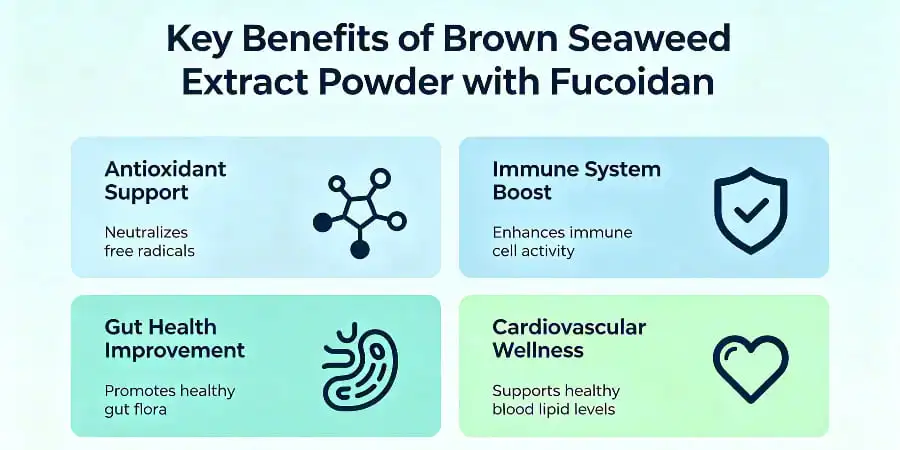
Key Benefits of Brown Seaweed Extract Powder with Fucoidan
Immune System Enhancement and Defense Support
Immune health is the main business application that drives demand. Extracts that are high in fucoidan have been shown to boost the body's natural defenses in a number of ways. Research that has been published in peer-reviewed journals shows that people who took regular fucoidan supplements had higher levels of antibody production and better phagocytic activity. These results directly lead to the creation of new products that can help the immune system, such as functional drinks, capsules, and mixtures that combine this marine element with vitamin C, zinc, or medical mushroom extracts. Product makers like that the ingredient works well with other immune-supporting ingredients, so they can make formulations that meet customers' needs for all-around wellness options. For standardized extracts, the suggested daily dose amounts are usually between 300 mg and 1000 mg, but for certain uses, you may need to talk to formulation experts to get the most out of both effectiveness and cost-effectiveness.
Metabolic Support and Anti-Inflammatory Properties
The metabolic and anti-inflammatory qualities open up new business possibilities in addition to immune uses. Fucoxanthin is a carotenoid that is found in high-quality brown kelp products. It has been studied in the areas of weight loss and metabolic health. It may help keep fat metabolism and thermogenesis healthy, which means it can be used in metabolic support items for people who are trying to lose weight. Fucoidan's anti-inflammatory properties come from its ability to stop the activity of pro-inflammatory enzymes and lower levels of oxidative stress markers. This puts the ingredient in a good spot in the anti-aging and inflammation control categories, which are both quickly growing areas in beauty-from-within items and dietary supplements. Because it is a gentle anti-inflammatory, it can be used in cosmetics to help with sensitive skin, reducing redness, and maintaining the health of the skin barrier. Manufacturers of these products gain from the ingredient's dual function: taking it by mouth improves overall health, and putting it on the skin gives specific benefits.
Gut Health and Prebiotic-Like Activity
The prebiotic properties of alginate and fucoidan parts meet the needs of the growing gut health market. These polysaccharides are hard for the upper digestive system to break down. They make it to the gut, where they are used as food by good bacteria. This selective fermentation helps a variety of microbes and the production of short-chain fatty acids, both of which are important signs of gut health. Product makers who are making gut health supplements, digestive enzymes, or probiotic mixture products find that this marine ingredient works well with other ingredients and lets them make unique marketing claims. Because properly processed brown seaweed extracts dissolve in water, they can be added to functional drinks, protein mixes, and even gummy forms, which means they can be used for more things than just pill delivery. When buyers know about all of these benefits, they can judge a supplier's products not just by the amount of fucoidan they contain, but also by their full biological profile, which helps with health in many different product categories.
Quality and Procurement Considerations for B2B Buyers
Critical Quality Parameters and Certification Requirements
Controlling heavy metals is the most important quality issue for foods that come from the sea. The requirements for buying things must clearly state the highest amounts of arsenic, lead, cadmium, and mercury that are allowed, along with the testing methods that must be used. Reliable providers give full Certificates of Analysis that include ICP-MS heavy metal testing. This makes sure that the product meets EU and US food-grade standards. Standardizing the amount of fucoidan is necessary for more reasons than just preventing infection. The yield and activity of different extraction methods are very different. The only way to be sure that a batch is consistent is to check the fucoidan amounts using HPLC. Buyers should ask for past COA data across multiple production lots to make sure there is stability. This is especially important because marine raw materials naturally change with the seasons. Systematic quality management is shown by ISO 22000, GMP, and organic certifications. However, buyers should check or ask for third-party audit reports to make sure that real operational compliance is met, not just the showing of the certificate.
Solubility, Taste Profile, and Formulation Compatibility
Marine products can be hard to mix because they have the taste and smell of the ocean. Advanced processing methods, like treating with enzymes and spray-drying at controlled temperatures, can reduce these taste problems while keeping the bioactivity. For beverage uses, it's important to use grades that are water-soluble and have normal pH profiles so that they don't precipitate in acidic environments that are common in functional drinks. Solubility data should be asked for across a range of pH levels and temperatures that are important to the planned uses by procurement teams. The way particles are distributed affects both how quickly they dissolve and how they feel in the mouth. The d50 numbers should be specified so that they are acceptable for the delivery method. Suppliers who offer different grade choices, like normal powder, water-dispersible powder, or high-purity extracts, give different product lines more options. Getting technical help from sources who know how hard it is to make new medicines and can provide data on stability tests or advice on how to make medicines that work well with other active ingredients can cut down on development times and costs for making new medicines.
Supply Chain Reliability and Traceability
The quantity of marine raw materials changes naturally with the seasons, the state of the ocean, and the availability of materials in different areas. Supply impact risks can be reduced by building relationships with providers and buying from a variety of areas with clean water. Traceability paperwork should go back to specific harvest sites, and sellers should provide third-party proof that the seafood came from the oceans without coming from industrial pollution zones. Japanese and Korean suppliers have traditionally been at the top of the market because their own laws are so strict. However, Chinese suppliers are becoming more and more compliant with international standards by improving their processing facilities and getting the right certifications. It's easier to get stability from batch to batch when providers keep controlled stock backups and use statistical process control during extraction. Production delays can be avoided by talking about minimum order amounts, wait times, and buffer stock policies with the provider during the initial evaluation. The global logistics skills of suppliers—such as having the right paperwork for customs, the right packaging to keep moisture out during ocean freight, and experience with temperature-controlled shipping when needed—have a direct effect on the total landed cost and the ingredients' viability once they arrive.
How to Choose the Right Brown Seaweed Extract Powder Supplier?
Evaluating Supplier Credentials and Technical Capabilities
Comparing fucoidan amounts and prices is only one part of choosing a supplier. Manufacturing capacity, the level of complexity of brown seaweed extract technology, and analytical skills all have a big impact on the quality of the product and the stability of the supply. Trading companies that use third-party processors lose control more often than suppliers who run their own GMP-certified extraction plants. During the evaluation process, you should ask for facility permits, information on the type of extraction (chemical vs. enzymatic), and information on the testing equipment that is available on-site. Suppliers who can do HPLC, ICP-MS, and bacteria testing can handle checking specs more quickly and look into quality problems more thoroughly. Customer references from well-known brands in your target market group can tell you a lot about how consistent, quick, and good at solving problems a provider really is in the real world. Technical service, like whether the provider can help with formulation, stable tests, or legal paperwork for certain markets, adds a lot of value on top of the raw material itself.
Customization Options and Private Label Opportunities
Customized specs and private label options are becoming more and more important for brands to stand out. Unique product positioning is possible with suppliers who offer variable fucoidan standardization levels, custom blending with complementary ingredients, or specialized processes (for example, low-temperature extraction that protects heat-sensitive compounds). OEM and ODM services let brands create their own formulas without having to invest in manufacturing equipment. This is especially helpful for new brands that want to see how the market reacts to their products before going big. When a new product is being launched, inventory risk is lower when there are private label choices with flexible minimum order amounts. When looking at these services, make sure you know how intellectual property is protected, if there are options for access for unique formulas, and if the provider has any relationships with rival brands that could cause problems. Flexibility in packaging, such as using bulk drums for high-volume makers or smaller numbers for niche brands, changes the amount of working capital needed and the way things are stored. Suppliers who can meet a range of packing needs while still ensuring quality and traceability show a high level of practical skill that helps business relationships grow.
Sampling Protocols and Risk Mitigation Strategies
Before agreeing to large-scale purchases, smart buying always starts with a wide range of samples. Ask for samples that come with full COAs that list all the important quality factors, such as the amount of fucoidan found by HPLC, the heavy metals panel, microbiological tests, the amount of moisture, and the particle size distribution. Do internal tests or third-party verification to make sure what the seller says is true. This will help you set standards for the relationship from the start. Formulation teams use sensory review to find possible problems with taste, smell, or color early on in the process. Pilot-scale production runs with sample materials find problems with recipe compatibility before they get in the way of commercial production plans. You might want to ask for samples from more than one production lot to check the accuracy. When placing an initial order, smaller trial amounts with faster shipping allow for thorough testing and inspection upon receipt before the order volume is increased. Including payment terms and quality promises in supply agreements, along with clear performance expectations that support long-term partnerships, protects both parties and sets clear performance expectations for acceptable variation ranges and remedies for materials that don't meet standards.
Practical Applications and Integration of Fucoidan-Enriched Brown Seaweed Extract
Formulation Strategies Across Product Categories
The most common use right now is in immune support products, where fucoidan-rich extracts are made into pills that work on their own or with vitamin C, elderberry, and zinc to make full immune formulas. The usual amount of inclusion is between 300 and 1000 mg per serve, taking into account cost and label claim proof. When properly dissolved, the powder can easily be put into two-piece pills, tablets (via direct compression or wet granulation), and more and more chewy forms. Functional beverage makers use water-soluble grades in protein shakes, immunity shots, and improved waters. However, it is important to test the shakes' safety over a long period of time and in different pH environments. Gut health goods mix the protein with digestive enzymes and bacteria to get the most out of the prebiotic-like action. Collagen peptides, hyaluronic acid, and vitamins that support facial health are all found in beauty-from-within products that are meant to improve skin health. Standardized extracts are usually added to anti-aging serums, soothing creams, and scalp treatments at amounts ranging from 1% to 5%, based on the type of product and its claims.
When both buyers and sellers understand these application frameworks, they can talk more clearly about grade needs, specification goals, and expected performance outcomes in certain product situations. Regulatory issues are very different in different markets. For example, Novel Food laws in Europe, GRAS status in the US, and health claim limits that are specific to each country all affect how foods are made and marketed. Keeping up with changes in regulations in key markets saves product investments and keeps companies from having to pay a lot of money to re-create their products or pull them from the market.
Conclusion
Fucoidan-rich brown seaweed extract powder is a scientifically proven and widely useful ingredient that can be used in a number of high-growth wellness areas. People care about their health, and this ingredient's known immune-modulating, anti-inflammatory, and longevity-promoting qualities make it a good choice for supplements, functional foods, and makeup. To make a good purchase, you need to pay attention to quality factors like controlling heavy metals and making sure fucoidan is the same across all suppliers. You should also evaluate suppliers based on their technical skills, how reliable their supply chain is, and the customization services they offer. As the global trend for marine superfoods continues to grow, brands can take advantage of this ingredient's huge market potential by building relationships with qualified providers who can show consistent quality, legal compliance, and technical support.
FAQ
How does fucoidan content standardization affect product efficacy?
The way fucoidan is extracted has a direct effect on its chemical structure and concentration, which in turn has an effect on its biological function. If a supplier says they have high numbers without HPLC proof, they might be counting total polysaccharides instead of active fucoidan. Fucoidan content from reputable sources is checked using HPLC and is usually between 10% and 85%, based on how strong the extraction was and what the fucoidan is going to be used for. Higher concentrations lower the doses needed but raise the cost of the material. The best standard combines treatment goals with the ability to make money.
What differentiates brown seaweed extract from spirulina or chlorella?
Spirulina and chlorella are good for you because they are high in protein and chlorophyll, but fucoidan and fucoxanthin, which are sulfated polysaccharides, are only found in brown seaweed extract. You can't find them in these watery algae. The health benefits of each are different. Spirulina is high in protein, while brown seaweed extract provides immune-modulating chemicals and digestive support in different ways. Which marine ingredient works best for formulation goals depends on how the product is positioned.
Can this ingredient be used in both food and cosmetic applications?
Good brown seaweed products that have been certified as food-grade can be used in both dietary supplements and skin cosmetics, though the way they are processed may be different. For cosmetic uses, certain particle sizes or extra cleaning may be needed to make sure they are compatible with the skin. On the other hand, heavy metal limits and microbial standards are more important for ingestible goods. Talking to sellers about the uses you want to use their products for makes sure you choose the right grade and get the right approval paperwork to follow the rules for each product category.
Partner with Wellgreen for Premium Brown Seaweed Extract Powder Supply
Wellgreen Technology is a reliable company that makes brown seaweed extract powder. They provide fucoidan-rich products that meet the strict needs of functional food, nutraceutical, and medicinal uses. Our GMP-certified center makes sure that heavy metals are strictly controlled, that batches are always the same, and that all of the tests are done. Every shipment comes with a thorough COA that includes HPLC fucoidan verification and a full heavy metals panel. We have steady supply lines that come from clean ocean sources. We offer a range of specifications, from standard powders to water-soluble grades that can be used in a variety of situations. Our technical team can help you with recipe, and our OEM and private label services can help you make your brand stand out. Whether you need small amounts to test a new product or large amounts for mass production, our large inventory and world services make sure that you get what you need on time. Get in touch with our buyers at wgt@allwellcn.com to ask for samples, talk about specific needs, or find out how our brown seaweed extract powder for sale can add marine bioactives to your products in a way that is supported by science.
References
Fitton, J.H., Stringer, D.N., and Karpiniec, S.S. (2015). "Therapies from Fucoidan: An Update on Clinical Trials." Marine Drugs, 13(9), 5920-5946.
Ale, M.T., Maruyama, H., Tamauchi, H., Mikkelsen, J.D., and Meyer, A.S. (2011). "Fucoidan from Sargassum sp. and Fucus vesiculosus reduces cell viability of lung carcinoma and melanoma cells in vitro and activates natural killer cells in mice in vivo." International Journal of Biological Macromolecules, 49(3), 331-336.
Cumashi, A., Ushakova, N.A., Preobrazhenskaya, M.E., D'Incecco, A., Piccoli, A., Totani, L., Tinari, N., Morozevich, G.E., Berman, A.E., Bilan, M.I., et al. (2007). "A comparative study of the anti-inflammatory, anticoagulant, antiangiogenic, and antiadhesive activities of nine different fucoidans from brown seaweeds." Glycobiology, 17(5), 541-552.
Park, M.K., Jung, U., and Roh, C. (2011). "Fucoidan from Marine Brown Algae Inhibits Lipid Accumulation." Marine Drugs, 9(8), 1359-1367.
Ermakova, S., Sokolova, R., Kim, S.M., Um, B.H., Isakov, V., and Zvyagintseva, T. (2011). "Fucoidans from Brown Seaweeds Sargassum horneri, Eclonia cava, Costaria costata: Structural Characteristics and Anticancer Activity." Applied Biochemistry and Biotechnology, 164(6), 841-850.
Irhimeh, M.R., Fitton, J.H., and Lowenthal, R.M. (2007). "Fucoidan ingestion increases the expression of CXCR4 on human CD34+ cells." Experimental Hematology, 35(6), 989-994.