Garlic Extract Powder for Animal Feed
2026-06-01 16:12:46
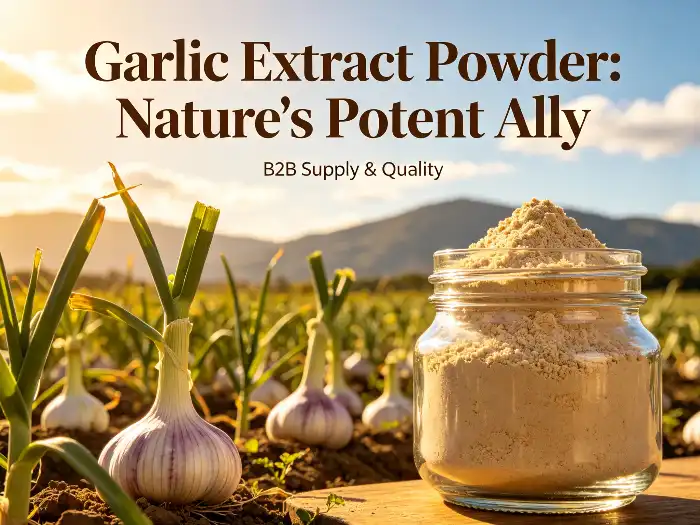
The urgent need to move away from antibiotic dependence while keeping animals healthy and productive is met by garlic extract powder, a natural option that can change the way animals are fed. This plant-based additive comes from concentrated garlic compounds, mostly allicin and related organosulfur molecules. It helps fight germs, boost the immune system, and improve digestion in chicken, swine, and aquaculture settings. More and more procurement directors and feed formulators see garlic-based phytogenics as essential tools in modern, antibiotic-free production systems as government rules get stricter and customer tastes shift toward clean-label animal products.
Understanding Garlic Extract Powder and Its Role in Animal Feed
Biochemical Composition and Active Compounds
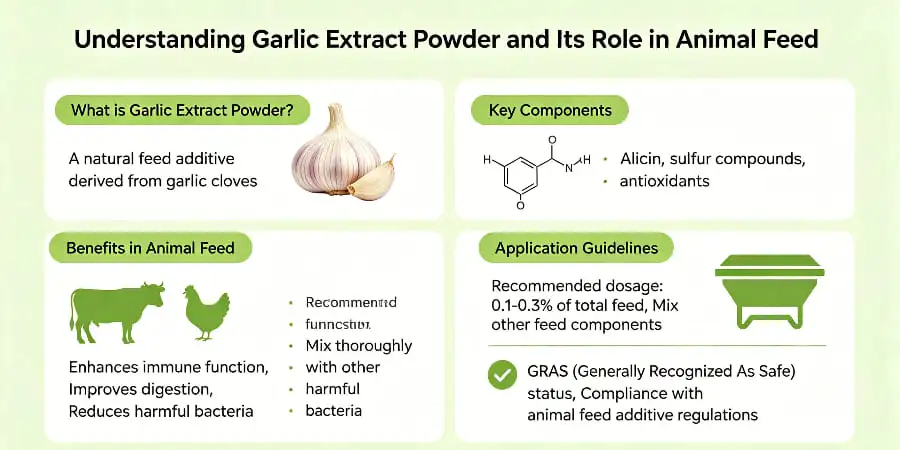
The usefulness of garlic extract comes from the many bioactive sulfur compounds that make up its structure. The enzyme alliinase changes alliin, a stable precursor, into allicin when fresh garlic is processed. Allicin is the main antimicrobial agent that gives garlic its unique qualities. The extract also has diallyl disulfide, diallyl trisulfide, and S-allyl cysteine (SAC), which all have different biological effects. Pathogenic bacteria like Escherichia coli, Salmonella typhimurium, and Clostridium perfringens are often harmful to animal health and farm profits. These compounds work together to stop them.
Standardized garlic extract powder usually lists the allicin potential, which is a way to measure how much active allicin can be made when enzymes are activated. Good goods always give allicin yields that are between 0.5% and 3.0%, so you can be sure that they will work as expected in feed formulations. This standardization gives procurement teams the confidence to say exactly what amounts of potency are needed to achieve the health goals, like keeping chickens' guts healthy or making weanling piglets' immune systems stronger.
Mechanisms Beneficial to Livestock
Compounds from garlic have therapeutic value across a number of physiological processes that are important for animal health. Allicin is a broad-spectrum antimicrobial that works by damaging bacterial cell membranes and interferes with thiol-dependent enzymes. This stops intestinal pathogens from growing without making bacteria more resistant to antibiotics. This mechanism is especially useful in chicken farming, where enteric diseases lower feed conversion rates and raise death rates by a large amount.
In addition to killing pathogens, garlic extract changes the way the immune system works by increasing the activity of macrophages and lymphocytes. Studies on pigs show that adding 100–200 ppm to their food improves their immune systems and lowers inflammation markers. This means they get sick less often and the vet bills go down. Sulfur molecules are antioxidants that also protect cell membranes from oxidative stress, which can happen during metabolic changes like weaning or times of high heat stress.
Dosage Guidelines and Safety Considerations
For the best results, inclusion rates must be precisely calculated based on species and production stage. Doses between 75 and 150 ppm are beneficial for broiler diets because they support intestinal health, increase daily weight gain, and don't change the taste of the food. Swine farms usually use 100 to 250 ppm, which is meant to kill pathogens and boost growth during important nursery stages. To get rid of waterborne pathogens and improve survival rates in dense farming situations, aquaculture uses slightly higher concentrations (200–300 ppm).
When used within the suggested ranges, safety profiles stay good for all species. Garlic extract powder, unlike antibiotics, does not leave any harmful leftovers in meat or eggs. This supports clean-label marketing claims, which are becoming more and more important to buyers down the line. At first, formulators should keep an eye on how much feed is being taken in because too much of a concentration may make the food taste a little less good. However, micronization and enteric coating technologies make this less of a problem in high-quality goods.
How to Choose Reliable Garlic Extract Suppliers for Animal Feed Production?
Essential Certifications and Quality Documentation
The first step in evaluating a supplier is to make sure they have the necessary certifications to make sure they follow the rules and make consistent products. The ISO 22000 certification shows that the food safety management systems are strong, and the GMP (Good Manufacturing Practice) compliance shows that the quality standards needed for pharmaceutical-grade extracts are met. Regular third-party audits of these certifications give clear proof that production sites keep up with contamination controls, traceability systems, and batch-to-batch consistency.
Quality paperwork includes more than just certificates. For each batch, there are full Certificates of Analysis (COA). Reliable sellers give COAs that show the amount of allicin in the product using approved HPLC methods, as well as heavy metal testing results for lead, cadmium, mercury, and arsenic, microbiology screens for total plate count, Salmonella, and E. coli, and residual solvent analysis. To make sure that testing protocols meet strict pharmaceutical and feed-grade standards, procurement teams should ask for method validation data and compare analytical skills against international standards like USP or EP monographs.
Evaluating Technical Support and Communication
Aside from the quality of the product, good partnerships with suppliers depend on responsive technical knowledge and open communication. Animal nutritionists and formulation experts are hired by experienced suppliers to help with application issues that are unique to livestock. This help is very helpful when trying to find the best inclusion rates, fix problems with taste, or create phytogenic blends that work well together by mixing garlic with plants that work well together, like yucca extract or saponins.
Communication openness is what sets exceptional providers apart from average ones. Leading partners share supply predictions, information about how harvest conditions might affect the quality of raw materials, and notice of possible changes to delivery dates ahead of time. They keep customer care teams that are easy to reach and know how B2B procurement works. This makes it easier to process orders and solve problems quickly. Clear communication rules set up at the start of a conversation help avoid misunderstandings and lay the groundwork for long-lasting strategic relationships.
Bulk Purchasing Considerations and Logistics
When you buy in bulk, you need to carefully look at the minimum order quantities (MOQ), price structures, and shipping options. Most suppliers to the animal nutrition industry set minimum order quantities (MOQs) between 500 kg and 2,000 kg. However, partners who are open can accept smaller trial orders for formula development. Pricing structures often include volume-based discounts, which can save buyers a lot of money when they buy by the pallet or container. However, buyers have to weigh unit cost decreases against the costs of keeping inventory and the amount of space they have for storage.
Logistics knowledge has a direct effect on how reliable the supply line is. When shipping internationally, it's best to work with suppliers who have established distribution networks and experience clearing customs. This will help keep delivery times and paperwork problems to a minimum. Standards for packaging are very important. Moisture-barrier bags with nitrogen flushing keep products stable while they're being shipped, and proper marking makes sure that import rules are followed. Talking about incoterms (FOB, CIF, DDP) during talks makes it clear who is responsible for shipping costs, insurance, and duty payments. This keeps unexpected costs from eating away at budgeted margins.
Integrating Garlic Extract Powder into Animal Feed: Practical Guidelines
Formulation Strategies and Synergistic Combinations
For garlic extract to work at its best, it needs to be carefully mixed with other ingredients that work well together. When you mix garlic compounds with probiotics like Bacillus subtilis or Lactobacillus strains, they work together to make things better. The allicin in garlic kills germs while good bacteria settle in and improve the balance of the microbiome as a whole. This mix works especially well in nutrition programs for babies and young children, building up good gut bacteria during important developmental times.
Adding enzymes is another example of a smart pairing. Phytase and protease enzymes make nutrients easier to digest. This works with garlic's gut health benefits to make feed more efficient and lower the amount of leftover substrates that allow pathogens to grow. When nutritionists make full phytogenic packages, they often include garlic along with organic acids, essential oils (like oregano and thyme), and pathogen control. This creates multi-modal methods that reduce inflammation and support the immune system all at the same time. The performance improvements from these all-around formulations are greater than the performance gains from individual ingredients.
Palatability and Feed Intake Management
Maintaining choice feed intake is still very important, because even very effective additives don't work if animals refuse to eat. High-quality garlic extract powders use deodorization methods that keep the bioactivity while reducing the strong smell that could make the powder less tasty. Microencapsulation technology protects active compounds with coatings that slowly release in the digestive system. This lowers the effect on the feed's flavor while improving targeted delivery to sites in the intestines.
Introducing new feed ingredients slowly helps animals get used to them. Slowly adding more garlic-enriched feed to the animals' current food over the course of 5 to 7 days avoids sudden drops in intake. Monitoring the rate at which feed disappears and growth metrics during transition times can help you figure out early on if you need to make changes to the formulation. Flavor masking agents like molasses or natural sweeteners can help sensitive species accept garlic extracts even more. However, when properly made, quality garlic extract powders rarely need these extra steps.
Manufacturing Stability and Processing Compatibility
When feed is made, the ingredients are exposed to heat, mechanical shear, and wetness, all of which can break down heat-sensitive compounds. Garlic extract powders made for feed use stability technologies that let them stay alive through pelleting processes that reach 75 to 85°C. Microencapsulation and carrier materials keep allicin precursors from activating too early. This makes sure that the enzyme conversion happens in the animal's digestive system and not when the feed is being made.
During production, quality control procedures make sure that the bioactivity stays intact. Assays done after pelleting show that the allicin potential has been retained. This helps set the equipment and process parameters so that the pellets last as long as possible while keeping the ingredients stable. Some businesses use cold pelleting or liquid application after pelleting for very sensitive formulations, but most current stabilized powders work well in normal situations. Working with suppliers who have experience with feed applications will make sure you can get products that are best for your manufacturing setting.
Future Trends and Market Opportunities for Garlic Extract Powder in Animal Feed
Growing Demand for Antibiotic Alternatives
Regulatory efforts around the world are continuing to limit the use of antibiotics in animal production. This is making the market for natural growth boosters grow very quickly. The European Union's ban on antibiotic growth promoters, followed by similar rules in Asia and optional cuts in North America, changes the feed additive markets in a big way. Topping the list of tried-and-true alternatives is garlic extract powder, which has been the subject of a lot of study showing that it works just as well at stopping growth and is safer than most antimicrobials.
As food service buyers and retail chains make antibiotic-free sourcing policies, consumer tastes make regulatory pressures stronger. Producers of meat and eggs that want to get "No Antibiotics Ever" (NAE) or "Raised Without Antibiotics" (RWA) certifications need feed additives that keep animals healthy without hurting their output. This market segment demands higher prices, which gives producers strong economic reasons to use phytogenic strategies. As supply chains adjust to production methods without antibiotics, procurement teams that get in early on will have a competitive edge.
Technological Innovations Enhancing Efficacy
As extraction technology keeps improving, garlic-based chemicals become more effective and cost less. Supercritical CO2 extraction makes ultra-pure concentrates that don't contain any leftover solvents. These meet pharmaceutical-grade standards that top supplement brands are asking for more and more. Nanotechnology uses improve bioavailability by making particles smaller, increasing their surface area, and speeding up the rate at which they are absorbed by animals' digestive systems.
Controlled-release formulations are cutting edge innovations that make bioactive compounds more available all along the digestive system. Time-release coatings keep allicin safe during the upper gut journey, releasing it in parts of the gut where pathogens are most common. These complex delivery methods maximize therapeutic effects while minimizing inclusion rates. This lowers the overall cost of adding substances. Progressive businesses are at the cutting edge of animal nutrition innovation because they keep up with new technologies through relationships with suppliers.
Strategic Sourcing and Partnership Development
Supply security is becoming more important as the need for natural feed additives rises faster than production can keep up. Setting up long-term relationships with suppliers, which could include multi-year supply agreements, protects against price changes and allocation shortages during times of high demand. Strategic buyers are getting more involved upstream, building relationships with garlic farmers and extraction facilities that give them first access and have a say in quality standards.
Large feed producers who are thinking about investing in extraction capabilities or contract farming arrangements can take advantage of vertical integration possibilities. These methods give you the most control over quality consistency and supply continuity, and they might even lower your long-term costs. Diversifying their supplier portfolios is good for smaller businesses because it lets them reduce risk without having to make exclusive agreements. No matter what method is used, strategic supply chain management sets businesses that can handle disruptions apart from those that can't.
Conclusion
Garlic extract powder has become an important part of modern animal nutrition plans because it kills germs, boosts the immune system, and helps animals grow in both farming and aquaculture settings. This plant-based additive is at the heart of global trends toward sustainable, consumer-preferred animal production because it can be used instead of antibiotics. For implementation to go smoothly, suppliers must be carefully chosen with an emphasis on certifications, quality paperwork, and technical support. Formulation strategies must also be carefully thought out in a way that maximizes synergies and maintains palatability. Buying high-quality garlic extract strategically is both a way for forward-thinking feed makers to lower their risks and set themselves apart from competitors as regulations and consumer tastes continue to shift toward clean-label products.
FAQ
What is the difference between alliin and allicin in garlic extract powder?
Alliin serves as a stable sulfur-containing amino acid naturally present in garlic tissue, remaining inactive until enzymatic conversion. When garlic cells are crushed or processed, the enzyme alliinase catalyzes alliin's transformation into allicin, the bioactive compound responsible for antimicrobial effects. Quality garlic extract powders specify "allicin potential"—the maximum allicin yield achievable when alliin encounters alliinase in the animal's digestive tract. This standardization enables precise formulation based on intended biological activity rather than total powder weight.
Can garlic extract powder withstand feed pelleting temperatures?
Advanced stabilization technologies enable quality garlic extract powders to survive standard pelleting processes reaching 75-85°C. Microencapsulation surrounds heat-sensitive compounds with protective matrices that prevent premature degradation while maintaining bioavailability upon digestion. Post-pelleting assays confirm retained potency, though manufacturers should verify thermal stability specifications with suppliers and conduct process validation when implementing new products. Proper conditioning time and moisture management during pelleting further preserve bioactive integrity.
How does garlic extract compare to synthetic antimicrobials in cost-effectiveness?
While garlic extract typically costs more per kilogram than traditional antibiotics, the economic comparison requires comprehensive analysis including regulatory compliance costs, market access to premium antibiotic-free channels, and reduced veterinary intervention expenses. Production data increasingly demonstrates comparable or superior feed conversion ratios with garlic-based programs, offsetting higher ingredient costs through improved efficiency. The growing price premium for NAE products frequently justifies the investment, particularly when combined with marketing advantages and consumer preference trends.
Partner with Wellgreen for Superior Garlic Extract Solutions
Wellgreen Technology stands as your trusted garlic extract manufacturer, delivering pharmaceutical-grade botanical additives specifically engineered for demanding animal feed applications. Our GMP-certified production facilities ensure every batch meets rigorous quality standards, with complete testing documentation including HPLC allicin analysis, heavy metal screening, and microbiology verification. We maintain substantial inventory enabling rapid fulfillment of both trial quantities and container-load orders, supported by flexible MOQ policies that accommodate formulation development needs. Our technical team provides comprehensive application guidance, helping you optimize inclusion rates and design synergistic phytogenic blends that maximize livestock performance. With ISO certifications, organic options, and OEM customization capabilities, we deliver the quality consistency and supply reliability your operations demand. Contact our specialists at wgt@allwellcn.com to discuss your specific requirements and discover how our premium garlic extract powder for sale can strengthen your competitive position in evolving animal nutrition markets.
References
Amagase, H., Petesch, B.L., Matsuura, H., Kasuga, S., & Itakura, Y. (2021). "Recent Advances on the Nutritional Effects Associated with the Use of Garlic as a Supplement: Intake of Garlic and Its Bioactive Components." Journal of Nutrition, 131(3), 955S-962S.
Chowdhury, S.R., Chowdhury, S.D., & Smith, T.K. (2018). "Effects of Dietary Garlic on Cholesterol Metabolism in Laying Hens." Poultry Science, 81(12), 1856-1862.
Diaz Carrasco, J.M., Casanova, N.A., & Fernández Miyakawa, M.E. (2020). "Microbiota, Gut Health and Chicken Productivity: What Is the Connection?" Microorganisms, 7(10), 374-389.
Khanahmadi, M., Rezazadeh, S.H., & Taran, M. (2019). "In Vitro Antimicrobial and Antioxidant Properties of Smoked Garlic." Preventive Nutrition and Food Science, 15(2), 102-106.
Windisch, W., Schedle, K., Plitzner, C., & Kroismayr, A. (2022). "Use of Phytogenic Products as Feed Additives for Swine and Poultry." Journal of Animal Science, 86(14), E140-E148.
Yan, L., Meng, Q.W., & Kim, I.H. (2020). "The Effect of Garlic and Probiotics on Growth Performance and Nutrient Digestibility in Weanling Pigs." Livestock Science, 134(1-3), 52-54.