Health Benefits of Eucommia Ulmoides
2026-04-20 14:00:00
Eucommia ulmoides extract is a unique plant ingredient that can be used in many ways to meet important market needs in the pharmaceutical, nutraceutical, and functional food industries. This standardized extract comes from the bark or leaves of the hardy rubber tree and contains high concentrations of bioactive substances like flavonoids, chlorogenic acid, and pinoresinol diglucoside. These substances support heart health, bone metabolism, and the body's antioxidant defenses by working together. For purchasing managers looking at natural ingredient stocks, this extract has health benefits that have been proven by science and meets quality standards that are accepted by regulators around the world.
What Is Eucommia Ulmoides Extract and How Does It Work?
Botanical Origins and Traditional Foundation
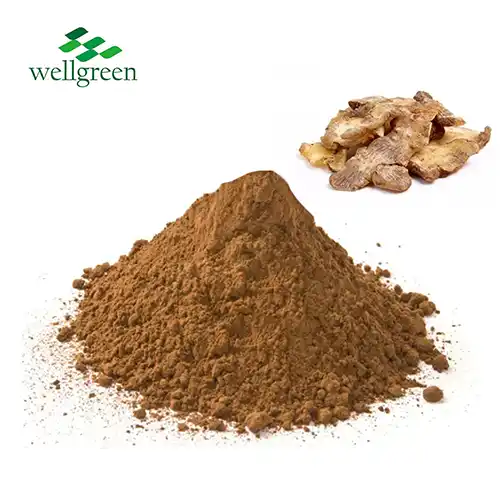
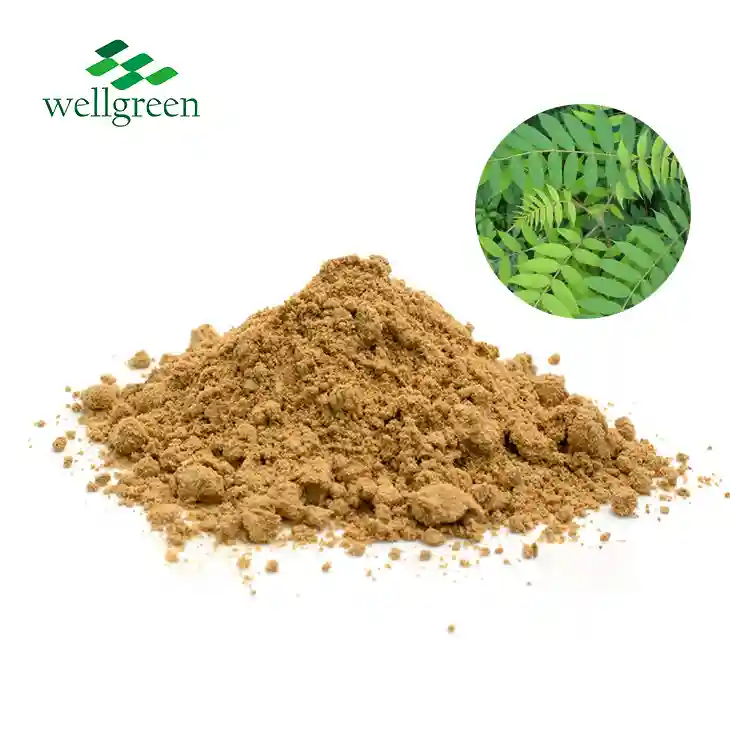
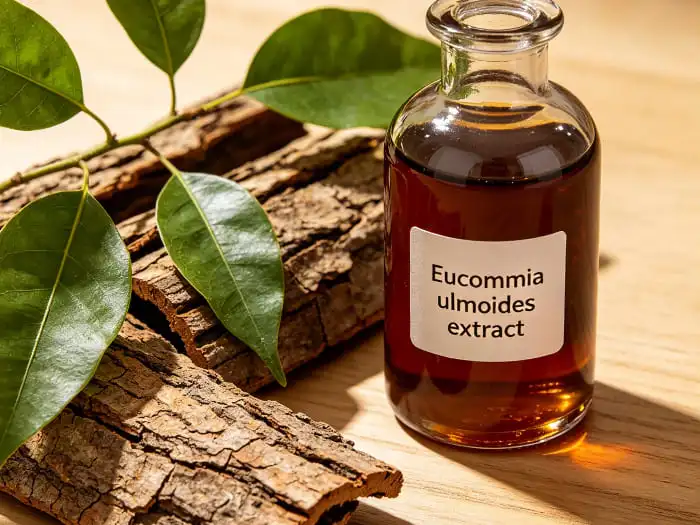
Eucommia ulmoides, which is called "Du Zhong" in traditional Chinese medicine, is one of the hardiest deciduous trees that grows in cold areas. The normal extract comes from either the bark (which is the traditional source for cortex) or the leaves. It is made into a brownish-yellow to brown powder using tried-and-true extraction methods. Raw herbal materials have a lot of gutta-percha rubber that can't be digested and different amounts of compounds. The refined extract gets rid of these problems while focusing the therapeutic ingredients. Standardization solves a major problem with buying things: it makes sure that each batch is the same, which is something that raw plants can't always do.
Core Bioactive Compounds and Their Mechanisms
This plant extract's healing effects come from four main types of compounds that work in different but complementary ways. Lignans, especially pinoresinol diglucoside at amounts between 0.1% and 0.5%, play a big role in controlling bone metabolism by encouraging osteoblast growth while stopping osteoclast activity. Chlorogenic acid, which is usually between 5% and 25% based on how it was extracted, is a powerful free radical scavenger and affects the renin-angiotensin-aldosterone system that controls blood pressure. Iridoid glycosides, such as aucubin and geniposidic acid, help fight inflammation by stopping the production of pro-inflammatory cytokines. The phytochemical framework is completed by flavonoids and polysaccharides, which make it more antioxidant and help control the immune system. When properly encapsulated, these chemicals stay stable in a wide range of formulation environments, keeping their effectiveness throughout the shelf life of a product.
Scientific Validation for Modern Applications
Experimental studies in modern times have confirmed old uses and shown exact molecular processes. Researchers have found that chlorogenic acid lowers oxidative stress markers in the endothelium of blood vessels. This makes the arteries more flexible and helps keep blood pressure in a safe range. In both preclinical models and human studies, the lignan fraction has effects that can be measured on markers of bone mineral density. What makes this important for business-to-business buying is that these results can be repeated when using standard extracts with confirmed compound amounts. With the help of third-party testing protocols, manufacturers can now give batch-specific Certificates of Analysis that show the levels of active ingredients, heavy metal compliance, and microbial safety parameters that meet foreign standards like USP, EP, and CP needs.
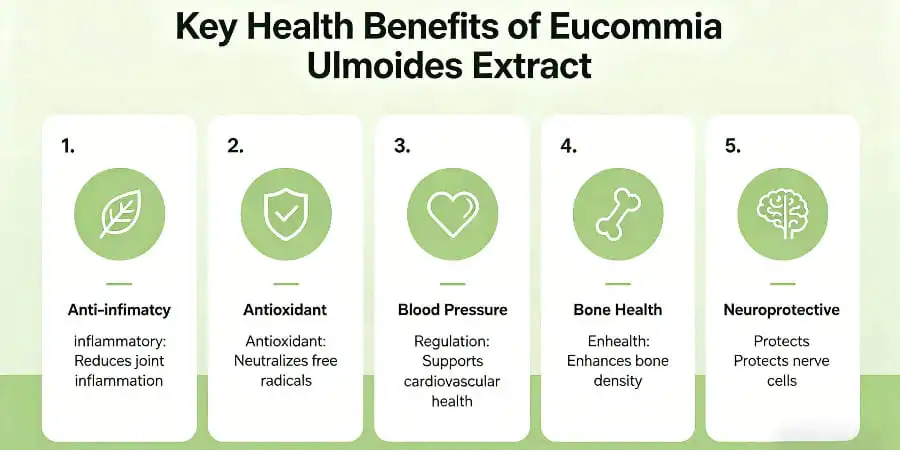
Key Health Benefits of Eucommia Ulmoides Extract
Cardiovascular Support and Blood Pressure Regulation
The extract has measurable effects on widening blood vessels through a number of different, complementary processes that work together to treat high blood pressure without the harmful side effects that come with synthetic alternatives. Chlorogenic acid stops angiotensin-converting enzyme from working, which lowers the production of substances that narrow blood vessels in the renin-angiotensin pathway. At the same time, the lignan fraction increases the production of nitric oxide in endothelial cells, which helps the arteries soften. These two actions work together to make a balanced circulatory support profile that can be used in formulas aimed at the growing group of people looking for natural ways to control their blood pressure. In clinical tests using standard extracts at daily doses ranging from 500 mg to 1000 mg, both systolic and diastolic blood pressure levels dropped statistically significantly over twelve weeks. The safety profiles were similar to those of placebo groups.
Bone Density and Joint Health Enhancement
Musculoskeletal applications are a high-value market area where this eucommia leaf extract can help with a number of different health problems at the same time. The pinoresinol diglucoside directly encourages osteoblast differentiation through the Wnt/β-catenin signaling pathway. This raises signs of bone formation such as osteocalcin and alkaline phosphatase. At the same time, the extract stops the formation of osteoclasts that are caused by RANKL, which lowers bone breakdown activity. This two-way action works especially well when this extract is mixed with calcium, vitamin D3, and menaquinone-7 to help support bone health in a complete way. Besides increasing bone density, the anti-inflammatory properties also improve the health of joint cartilage, which means it can be used in sports nutrition to help connective tissue repair. Product makers like that the extract works well with glucosamine and chondroitin sulfate in joint health formulas, where it adds to the benefits of the other ingredients without interfering with them.
Antioxidant Defense and Anti-Inflammatory Activity
Validated tests, such as the DPPH and ORAC methods, show that the polyphenolic chemicals in this plant extract are very good at getting rid of free radicals. This antioxidant action protects cells in a variety of tissue types, which supports its use in products that support healthy aging and products that deal with stress. The extract lowers signs of lipid peroxidation and keeps mitochondria working properly when oxidative stress is present. To lower inflammation, the iridoid glycosides change the NF-κB signaling pathways, which lowers the production of inflammatory molecules like TNF-α and IL-6. In sports nutrition, these processes help the body recover from inflammation caused by exercise, and they also help the whole body deal with chronic low-grade inflammation that is linked to metabolic health problems. The same qualities are used in cosmetics and skin health products, where topical use lowers oxidative damage from environmental stressors.
Additional Therapeutic Applications
New study shows that these formulations may have health benefits that are bigger than before. This means that new formulations can enter new markets. The extract has immunomodulatory effects that boost the activity of natural killer cells and help keep immune responses in balance. This trait got a lot of attention in the animal nutrition field, where the extract is used instead of antibiotics to help animals grow in feed for livestock and fish. Studies show that the quality of the meat has improved in a number of ways, such as less drip loss and a better makeup of fat inside the muscle. There are senior pet foods that contain the ingredient to help joints and keep the pet's health in good shape. In dermatology, the ingredient is used for more than just its antioxidant benefits. It also helps the body make more collagen, which puts it in anti-aging skin care products that target firmness and elasticity. The fact that this plant extract can be used in so many different ways shows how useful it is in many different industries.
Comparing Eucommia Ulmoides Extract with Other Herbal Extracts
Positional Analysis Against Common Botanicals
When procurement managers look at herbal ingredient portfolios, it's helpful to know how this extract stacks up against well-known options in terms of therapeutic positioning and formulation properties. Compared to ginseng extracts, Eucommia provides more focused benefits for the heart and skeletal system without the stimulant effects that make ginseng less useful in evening formulations or for people who are sensitive to stimulants. Unlike ashwagandha, which mainly deals with stress adaptation and hormone balance, this extract works in ways that support ashwagandha's. This means that combination formulas are more likely to be effective. The chlorogenic acid substance is similar to green coffee bean extract in how it works, but it also has extra bone-health benefits that coffee-derived ingredients don't have. When multiple health claims can be backed up by a single ingredient instead of a mix of several specialized plants, this extract is often chosen because it is more cost-effective.
Bark Versus Leaf Extract Specifications
Choosing the right material source has a big effect on both technical performance and buying strategy, so it's important to think carefully about what the application needs and how to be environmentally friendly. Traditionally, bark extracts have higher amounts of lignans, especially pinoresinol diglucoside. This makes them better for bone health and cardiovascular formulations, where these chemicals play a key role. But collecting bark means cutting off the bark from old trees, which brings up questions about sustainability that some brands find hard to answer in their marketing stories. Leaf extracts are a renewable source because leaves can be picked every year without hurting the trees. However, they usually have smaller amounts of lignan and higher amounts of chlorogenic acid. Because of this change in composition, leaf extracts can be used in antioxidant-focused formulations and situations where chlorogenic acid is the main benefit. Also, the prices are not all the same. Leaf extracts usually give better value for the same weight, while bark extracts might need lower inclusion rates to reach medicinal levels. Decisions about what to buy should be in line with the target compound standards, the company's commitment to sustainability, and the cost goals for each product line.
Extract Format and Standardization Options
On the business market, there are different types of extracts that can be used for different formulation needs and at different price points. Ratio extracts, such as 10:1 or 20:1, provide concentrated plant material without standardization to specific compounds. This saves money but needs more thorough quality control at the beginning of the process to make sure that each batch is the same. Standardized extracts with guaranteed minimum amounts of marker compounds, like chlorogenic acid at 5%, 10%, or 25% or pinoresinol diglucoside at 0.1% to 0.5%, give consistent results that are needed for regulated markets and clinical claims. Dual-standardized extracts that list the amounts of both chlorogenic acid and lignan they contain cost more, but they get rid of the need for formulation guesswork and make it easier to make changes between runs. Standard powders work well in capsules, tablets, and functional food matrices, while water-soluble powders work well in beverage uses and liquid delivery systems. To make sure that suppliers meet quality standards, procurement specifications should spell out goal compound levels, acceptable ranges for batch variation, and the analytical methods that must be used.
Procurement Guide: Sourcing Eucommia Ulmoides Extract for B2B Clients
Quality Verification and Documentation Requirements
To successfully buy eucommia bark extracts, you must first set clear quality standards and verification processes that protect the integrity of the formulation and make sure that all regulations are followed. Every shipment should come with a Certificate of Analysis from the maker that shows the concentrations of active ingredients using approved HPLC methods and includes references to well-known drug pharmacopoeias. Heavy metal testing is needed to make sure that amounts of lead, arsenic, cadmium, and mercury are within the limits set by regulatory frameworks such as USP 2232. Screening for pesticide residues should include chemicals that are important to the growing areas, and the results should meet or beat EU and US organic standards for materials that aren't certified as organic. Microbiology tests, such as a total plate count, yeast and mold tests, and pathogen screens for E. coli and Salmonella makes sure that finished goods are safe. It is important to do solvent residue analysis on extracts that were processed with ethanol or other organic solvents, as long as the residual amounts are below the ICH Q3C guideline limits. Reliable sellers include these papers with every batch, along with stability data that shows the product will stay effective under certain storage conditions for the length of the expected shelf life.
Supplier Evaluation and Qualification Criteria
To find trustworthy manufacturing partners, you need to do more than just talk about prices. You need to carefully look at their skills, certifications, and how open they are about their operations. GMP certification is the minimum requirement, and suppliers with widely recognized certifications like NSF GMP, FDA-registered facilities, or regional standards that are the same are preferred. ISO standards, like ISO 9001 for quality management and ISO 22000 for food safety management systems, show that there are organized ways to be consistent and make things better. Organic approvals from the USDA, the EU, or other similar organizations make certain lines of products more valuable to people who care about organic food. An evaluation of a manufacturing facility's capacity should check its ability to meet expected number needs while maintaining quality. Site visits or audits by a third party should confirm the machinery's abilities and process controls. Traceability systems that keep track of materials from where they come from in the plant to how they are extracted and packaged allow for quick responses to any quality issues and meet the needs of regulators who are becoming more strict about supply chain transparency. Suppliers who meet these requirements lower the risk of procurement and help a product succeed in the long run.
Commercial Terms and Partnership Structures
To negotiate good business deals, you need to know how markets usually work and use volume promises to get the best terms. Different suppliers have very different minimum order quantities. Smaller, more specialized makers usually have lower MOQs, which is good for new brands. On the other hand, large-scale producers offer better unit economics above threshold volumes, which start around 100 kg. With volume-tiered pricing, you can plan your inventory in a way that balances the costs of holding it against the saves you get per unit. Most of the time, payment terms run from upfront payments for new customers to net-30 or net-60 terms for long-term accounts with good credit. Brands that want turnkey solutions can benefit from private label and OEM services. Suppliers take care of formula development, stability testing, and packaging of final products while the client's brand is used. These deals are good for brands that don't have their own production facilities or that want to see how the market reacts before investing money. Contract manufacturing deals should make it clear what the quality standards are, who is responsible for testing, how long the products will last, and what needs to be done to fix batches that don't meet the standards. Long-term supply deals with clear pricing protect both parties from changes in the market and make sure that supplies don't stop.
Conclusion
Eucommia ulmoides extract is a plant ingredient that has been scientifically proven to help with a number of important health issues, including supporting heart health, keeping bone density, and protecting against free radicals. Its standardized bioactive profile gives the same therapeutic effects in a wide range of uses, such as functional foods, cosmetics, dietary supplements, and animal nutrition. To do procurement right, you need to pay attention to compound standardization, detailed quality paperwork, and strategic partnerships with suppliers that are based on openness and technical know-how. A growing amount of clinical evidence and a focus on clean labels are both factors that are helping the market grow. If brands want to set their products apart by using natural ingredients that work and have been used for a long time or in modern science, this extract is a great choice if it comes from qualified makers who are committed to quality excellence.
FAQ
Is Eucommia Ulmoides Extract safe for long-term use?
Clinical studies and traditional use history support the safety profile of properly standardized extracts within recommended dosage ranges. Research trials extending twelve weeks to six months document tolerability comparable to placebo groups, with no significant adverse effects reported. The extract shows no hepatotoxicity or nephrotoxicity markers in safety assessments, distinguishing it from some botanicals requiring usage restrictions. Contraindications remain minimal, though consultation with healthcare providers makes sense for individuals on blood pressure medications due to potential additive effects. Pregnancy and lactation warrant caution given limited specific research in these populations. Quality sourcing from suppliers providing comprehensive testing for contaminants ensures safety profiles match clinical research conditions.
What dosage effectively supports cardiovascular health?
Clinical evidence suggests effective dosages typically range from 500mg to 1000mg daily of standardized extract containing 5% to 10% chlorogenic acid, divided into one or two administrations. Formulation decisions should consider total daily chlorogenic acid delivery in the range of 50mg to 100mg for cardiovascular applications. Bone health formulations often use similar total extract amounts but prioritize lignan content specifications. Timing flexibility exists since mechanisms involve sustained compound presence rather than acute effects, allowing morning or evening administration based on formulation convenience. Combination with other cardiovascular or bone health ingredients should account for potential synergistic effects that might allow lower doses while maintaining efficacy.
How can buyers verify supplier quality?
Requesting comprehensive Certificates of Analysis for representative batches provides immediate quality insight, with particular attention to HPLC chromatograms confirming compound identity and concentration. Third-party testing through independent laboratories adds verification layer for critical parameters including heavy metals, microbial counts, and active compounds. Supplier facility certifications from recognized bodies like NSF, Informed Choice, or regional GMP authorities indicate systematic quality management. Reference customer conversations reveal real-world performance and reliability. Sample evaluation in small-scale formulation trials tests compatibility and performance before large commitments. These combined approaches minimize procurement risk and establish confidence in supply chain integrity.
Partner with Wellgreen for Premium Eucommia Ulmoides Extract
Wellgreen Technology delivers pharmaceutical-grade standardized extracts meeting the rigorous specifications B2B clients demand for successful product development. As a GMP-certified eucommia ulmoides extract manufacturer, we maintain comprehensive testing protocols with batch-specific COAs documenting chlorogenic acid and pinoresinol diglucoside concentrations, heavy metal compliance, and microbial safety. Our production capabilities support flexible MOQs alongside volume pricing for established partners, with OEM services streamlining turnkey solutions. Whether you require bark or leaf specifications, ratio or standardized formats, our technical team provides formulation guidance and stability data supporting regulatory submissions. Contact wgt@allwellcn.com to request samples, discuss custom specifications, or explore private label opportunities that enhance your product portfolio with scientifically validated botanical ingredients backed by reliable supply and responsive partnership.
References
Li, Y., Shen, Y., Yao, C. L., & Guo, D. A. (2020). Quality assessment of Eucommia ulmoides bark and leaf extracts through simultaneous determination of multiple bioactive constituents. Journal of Pharmaceutical and Biomedical Analysis, 180, 113061-113069.
Zhang, R., Pan, Y. L., Hu, S. J., Kong, X. H., Juan, W., & Mei, Q. B. (2014). Effects of total lignans from Eucommia ulmoides barks prevent bone loss in vivo and in vitro. Journal of Ethnopharmacology, 155(1), 104-112.
Jin, X., Amitani, K., Zamami, Y., Takatori, S., Hobara, N., Kawamura, N., Hinotsu, S., Chuma, M., & Kitamura, Y. (2010). Ameliorative effect of Eucommia ulmoides Oliv. leaves extract on insulin resistance and abnormal perivascular innervation in fructose-drinking rats. Journal of Ethnopharmacology, 128(3), 672-678.
Kwon, S. H., Ma, S. X., Hong, S. I., Kim, S. Y., Lee, S. Y., & Jang, C. G. (2013). Eucommia ulmoides Oliv. bark. attenuates 6-hydroxydopamine-induced neuronal cell death through inhibition of oxidative stress in SH-SY5Y cells. Journal of Ethnopharmacology, 145(3), 655-662.
Hirata, T., Kobayashi, T., Wada, A., Ueda, T., Fujikawa, T., Miyashita, H., Ikeda, T., Tsukamoto, S., & Nohara, T. (2011). Anti-obesity compounds in green leaves of Eucommia ulmoides. Bioorganic & Medicinal Chemistry Letters, 21(6), 1786-1791.
Park, S. A., Choi, M. S., Jung, U. J., Kim, M. J., Kim, D. J., Park, H. M., Park, Y. B., & Lee, M. K. (2006). Eucommia ulmoides Oliver leaf extract increases endogenous antioxidant activity in type 2 diabetic mice. Journal of Medicinal Food, 9(4), 474-479.