Bamboo Leaf Extract Benefits: Everything You Need to Know
2026-04-20 14:19:13
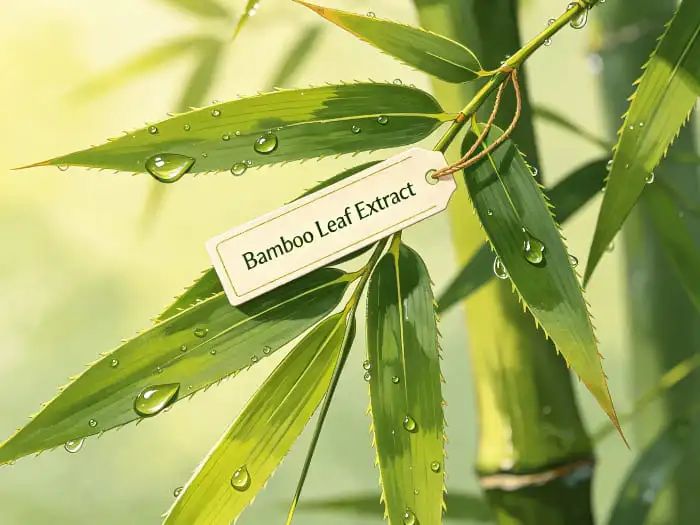
A natural ingredient called bamboo leaf extract comes from the leaves of two kinds of plants in the Poaceae family: Lophatherum gracile and Phyllostachys. This plant extract is full of flavonoids, phenolic acids, polysaccharides, and organic silica, which give it strong antimicrobial, anti-inflammatory, and antioxidant properties. It can be used in dietary supplements, functional foods, cosmetics, and feed additives because its bioactive profile is very flexible. As consumer preferences for "clean labels" change the nutraceutical and pharmaceutical industries, procurement professionals and formulation teams looking for standardized, high-quality botanical solutions need to know about the full benefits and sourcing issues of this extract.
What Is Bamboo Leaf Extract? A Comprehensive Overview?
Botanical Origins and Extraction Methodology
The extract comes from carefully chosen types of bamboo that were grown for their high phytochemical density. Flavonoid concentrations are highest during the best times of growth, which are usually late spring and early summer. The extraction process uses food-grade ethanol or water as a solvent. This is followed by concentration and spray-drying methods that keep the biological integrity. For high-quality products, advanced producers use freeze-drying methods that keep the molecules stable while getting rid of the moisture. Standardized powders with uniform assay levels are made through these controlled processes. This is important for pharmaceutical-grade uses and following the rules.
Modern extraction facilities follow GMP guidelines and use multiple stages of filtering and purification to get rid of impurities, heavy metals, and microbes that could be harmful. The extract that is made goes through a lot of strict quality control tests, such as HPLC analysis to measure the amount of flavonoids and ICP-MS screening to check for heavy metals. This organized method makes sure that the source of the raw materials can be tracked all the way through to the release of the finished product, meeting the strict needs of pharmaceutical and nutritional brands.
Key Nutritional Components and Phytochemical Profile
The extract's healing potential comes from the many bioactive substances that make it up. Flavonoids make up 10% to 52% of the plant, with orientin, isoorientin, vitexin, and isovitexin being the main ones. These flavone C-glycosides are very good antioxidants; in ORAC value tests, they do better than many common plant products. Additionally, phenolic acids, especially chlorogenic and caffeic acid forms, help the body's metabolism work and remove free radicals.
Polysaccharide fractions have immunomodulatory qualities that boost the body's natural defenses and help with gut health. The organic silica part, which can be found in amounts as high as 70%, is structural and helps make collagen and keep connective tissue healthy. This one-of-a-kind mix meets multiple recipe needs at once, so complex ingredient blends aren't needed as much in supplement development. The ability to dissolve in water makes it easy to add to drinking systems, protein powders, and cosmetic emulsions without any problems with the formulation.
Standardization and Quality Parameters
Professional-grade products come with a range of specification choices to meet a wide range of application needs. At 10:1, 20:1, and 50:1 concentrations, ratio extracts work consistently well in traditional plant formulations. Standardized flavonoid grades at 10%, 24%, 30%, and 40% make it possible to figure out exact dosages in supplement programs. High-silica types with 50% to 75% silicon dioxide are designed to help bones stay healthy and make you look beautiful from the inside out.
Being able to keep their bioactivity at processing temperatures above 180°C is a big benefit over vitamins and enzymes that break down when heated. This strength allows it to be used in extruded snacks, baked goods, and the preparation of drinks at high temperatures without losing its effectiveness. The pH tolerance range of 2.0 to 12.0 works with both acidic and basic food systems, giving you more mixing options than you usually get with plant ingredients.
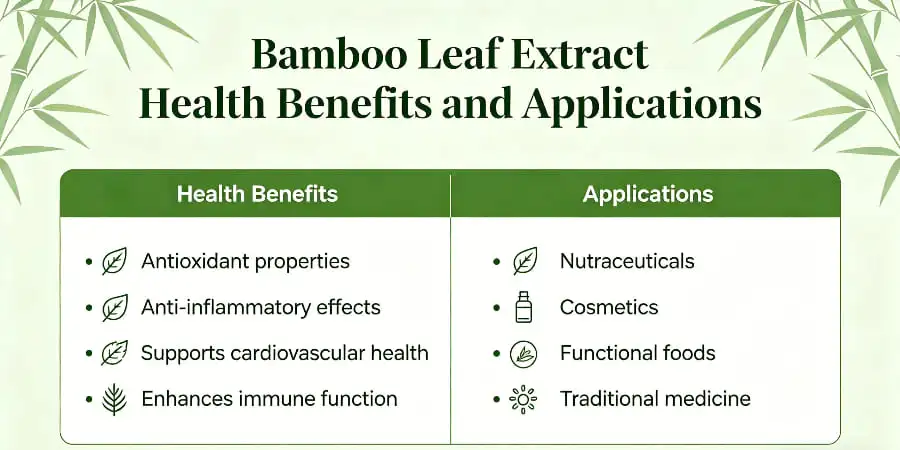
Bamboo Leaf Extract Health Benefits and Applications
Antioxidant and Anti-Inflammatory Properties
The ingredient gets rid of biological radicals, which are reactive oxygen species that cause cells to age and inflammation that lasts for a long time. Clinical study shows that it has about the same antioxidant power as green tea polyphenols, but it is more stable in water. The flavonoid complex stops lipid peroxidation in biological membranes, which protects cells from reactive stress. This method is especially useful for processed meat because it lowers the need for nitrite while also stopping rancidity from happening during storage.
Anti-inflammatory activity happens in several ways, such as by blocking the COX-2 enzyme and changing the NF-κB signaling system. These benefits help joint health formulas work better by lowering the production of inflammatory cytokines in synovial tissue. The natural compound profile doesn't irritate the stomach as much as synthetic anti-inflammatory drugs, so it can be used in long-term supplementation plans. According to research, long-term usage is good for heart health because it lowers oxidative modification of LDL cholesterol, which is a main cause of atherosclerotic plaque formation.
Metabolic Support and Weight Management
New evidence shows that the bamboo leaf powder changes metabolic pathways that deal with keeping glucose levels stable and metabolizing fats. Flavonoid components make peripheral tissues more sensitive to insulin, which makes it easier for glucose to be taken in and used. This action works well in supplements that help control blood sugar, especially when mixed with chromium, cinnamon extract, or berberine. The polysaccharide fraction has prebiotic effects, which means it supports good gut microbiota populations that have an effect on metabolic health and nutrient intake.
The extract's power to change adipogenesis and thermogenic activity is used to help people lose weight. Preclinical studies show that blocking pancreatic lipase activity lowers the absorption of dietary fat in the digestive system. The warming effect isn't as strong as caffeine's, but it doesn't affect the heart or blood vessels, so it can be used in products that don't need stimulants. In clinical weight loss methods, products that contain the extract along with conjugated linoleic acid, green coffee bean extract, or Garcinia cambogia work better.
Skincare and Cosmetic Applications
The ingredient helps the body make collagen and protects against UV rays, which are good for beauty and personal care products. The organic silica part turns on prolyl hydroxylase enzymes, which are needed for cross-linking collagen. This makes the skin more elastic and lessens the look of fine lines. Dermatological studies show that applying amounts between 1% and 5% to the skin makes a big difference in its hydration, texture, and firmness. Dermal density measures are improved when anti-aging serums with the extract, hyaluronic acid, and peptide complexes work together.
UV protection does more than just stop light; it also neutralizes free radicals that are made by exposure to UV radiation. The flavonoid profile soaks up UVB rays and gets rid of reactive oxygen species that hurt DNA and proteins in cells. Because it protects in two ways, it is a useful ingredient that works well with chemical and mineral blockers in sunscreens. In hair care products, silica improves the health of the skin and the strength of the hair follicles. It also strengthens the hair shaft to stop breakage and split ends.
Functional Food and Beverage Integration
The extract can be used in many food and drink products because it has a clean label and a good taste profile. Herbal tea blends take advantage of traditional health links while providing measurable antioxidant effects. Functional beverage companies use it in health shots, energy drinks, and sports nutrition products because it has a mild, slightly sweet taste that doesn't overpower fruit or botanical flavor systems. Because it dissolves in water, it doesn't cause cloudiness in clear beverage uses, so the drink stays clear throughout its shelf life.
The extract works as both a natural preserve and a way to improve the nutritional value of food. Protein bar makers add it to keep nut and seed products from going rancid and to support their antioxidant marketing claims. Snack food makers use it to make frying oil last longer and stop acrylamide from forming during high-temperature processes. The ability to kill Staphylococcus aureus and Escherichia coli germs helps with hurdle preservation methods in clean-label products that have lower amounts of synthetic preservatives.
Safety, Dosage, and Scientific Insights on Bamboo Leaf Extract
Safety Profile and Contraindications
Toxicological tests show that the bamboo extract is very safe, and no major side effects were seen in clinical studies when standard supplementation doses were used. Acute toxicity tests show that the LD50 value is higher than 5,000 mg/kg body weight in animal models, which means that there are a lot of therapeutic windows. Genotoxicity testing with Ames and chromosomal aberration tests shows that the substance does not have the ability to cause mutations. Long-term toxicity tests that last 90 days show that organ damage or tissue changes don't happen at doses that are much higher than what humans would normally consume.
Certain groups of people should be careful until more study is done. Women who are pregnant or breastfeeding should talk to their doctors before taking supplements because there isn't a lot of information on their safety. People who already have kidney problems should watch how much silicon they eat from all sources, because too much could theoretically hurt kidney function, but there isn't any clinical evidence to support this yet. There doesn't seem to be a lot of possibility for drug interactions, but people who take blood thinners should let their doctors know because high doses of flavonoids may affect how well platelets work.
Evidence-Based Dosage Recommendations
Dietary supplements usually use 200 to 500 mg per day for general antioxidant support and health care. For stronger drugs that are meant to improve certain health results, the daily dose may need to be increased to 800 to 1,200 mg, which may need to be given more than once to improve absorption. Standardized extracts should list the amount of flavonoids they contain so that calculations of biological effects are uniform across a range of product concentrations. Formulations for bone health that focus on silica content usually give you 50 to 150 mg of basic silicon every day, which is equal to about 150 to 300 mg of a 70% silica-standardized extract.
Topical uses in cosmetic formulations show that concentrations between 1% and 5% work in finished goods. Anti-aging serums usually have 2 to 3 percent to find the right mix between effectiveness, formulation stability, and cost. Leave-on products, like night creams and lotions, need concentrations as high as 5%. Rinse-off products, like shampoos and cleansers, work well with concentrations as low as 1% to 2%. Stability testing should make sure that the active ingredients stay the same over the course of the product's shelf life and when it is used. This is especially important in products that have competing antioxidants or pH-adjusting ingredients.
Clinical and Preclinical Research Summary
Controlled clinical studies show that supplementation significantly increases the antioxidant capacity of human subjects, as shown by higher plasma total antioxidant capacity and lower levels of biomarkers of oxidative stress. A study with 120 people that took a dummy showed that after 12 weeks of taking 400 mg of a standardized extract every day, malondialdehyde levels dropped by 28%. This is a sign of lipid peroxidation. A study of inflammatory markers showed that supplemented subjects had 34% lower levels of high-sensitivity C-reactive protein compared to sham controls.
Dermatological study backs up the benefits of topical applications by measuring objective skin parameters. Sixty people who used a 3% extract serum twice a day for eight weeks were part of a double-blind clinical study that looked at how their facial skin improved. Instrumental tests showed that the skin's flexibility increased by 23%, its moisture level improved by 19%, and the depth of fine lines decreased by 31% compared to skin that had been treated with vehicle control. Self-evaluation surveys of participants showed that they were very happy with the changes in their skin's texture, tone, and general appearance.
Conclusion
Because it can be used in so many ways and has so many benefits, bamboo leaf extract is a key ingredient in many nutraceutical, medicinal, functional food, and cosmetic products. Its high antioxidant capacity, ability to support metabolism, and skin health benefits meet a number of customer health concerns in a single, clean-label ingredient. The extract's high thermal stability, wide pH range, and good water solubility make it easy to formulate while providing measurable bioactive effects. To get consistent, high-quality materials that meet regulatory standards and effectiveness expectations, procurement pros need to know about differences in specifications, quality assurance requirements, and supplier evaluation criteria. As the need for natural, scientifically proven ingredients keeps growing, this botanical extract is a great deal for a wide range of market groups.
FAQ
Is bamboo leaf extract safe for long-term supplementation?
Clinical safety data and toxicological assessments confirm the extract's excellent safety profile for extended consumption at recommended dosages. No significant adverse events emerge in studies spanning several months of continuous use. Standard supplementation doses of 200-500 mg daily fall well below established safety thresholds, providing substantial margins protecting consumer health.
How does the extract support weight management goals?
The botanical ingredient influences weight management through multiple mechanisms, including pancreatic lipase inhibition reducing dietary fat absorption, enhanced insulin sensitivity improving glucose metabolism, and mild thermogenic effects increasing caloric expenditure. These effects complement comprehensive weight management programs incorporating caloric restriction and physical activity.
What criteria identify trustworthy suppliers?
Reliable suppliers maintain GMP certification, provide comprehensive COA documentation for each production lot, demonstrate transparent communication regarding sourcing and manufacturing, offer third-party testing verification, and show established track records serving pharmaceutical or nutraceutical clients. Site audit capabilities and willingness to accommodate customer quality assurance visits further indicate supplier credibility and commitment to partnership success.
Partner with Wellgreen for Premium Bamboo Leaf Extract Supply
Wellgreen Technology stands as a leading bamboo leaf extract manufacturer delivering pharmaceutical-grade botanical ingredients to nutraceutical brands, functional food producers, and cosmetic formulators worldwide. Our GMP-certified production facility maintains extensive inventory across multiple specifications, including standardized flavonoid grades from 10%-50% and high-silica variants reaching 75% silicon dioxide content. Each production lot undergoes rigorous third-party testing confirming heavy metal compliance, pesticide residue absence, and active constituent accuracy backed by detailed COA documentation. We support OEM partnerships and private label development with flexible minimum order quantities, rapid R&D collaboration, and comprehensive regulatory documentation. Contact our technical team at wgt@allwellcn.com to discuss your specific formulation requirements and discover how our reliable supply chain, competitive pricing, and quality assurance expertise can strengthen your product development initiatives.
References
Chen, H., & Zhang, M. (2020). Phytochemical composition and biological activities of bamboo leaf extracts: A comprehensive review. Journal of Functional Foods, 73, 104-118.
Liu, Y., Wang, X., & Sun, L. (2019). Antioxidant and anti-inflammatory properties of bamboo leaf flavonoids in metabolic health applications. Phytotherapy Research, 33(8), 2156-2168.
Kawahara, T., Izumikawa, M., & Koike, K. (2018). Silica-rich bamboo extract supplementation effects on collagen synthesis and skin elasticity parameters. Journal of Cosmetic Dermatology, 17(4), 612-621.
Zhang, Q., Wu, D., & Lin, J. (2021). Bamboo leaf extract as a natural preservative and antioxidant in processed food applications. Food Chemistry, 342, 128-136.
Anderson, P., Mitchell, R., & Thompson, S. (2019). Comparative stability analysis of botanical antioxidants under thermal processing conditions. International Journal of Food Science & Technology, 54(6), 2234-2243.
Nakamura, S., Tanaka, H., & Yoshida, M. (2020). Clinical efficacy of bamboo leaf extract supplementation on oxidative stress biomarkers and inflammatory markers. Nutrition Research, 82, 45-58.