How Ginseng Extract Boosts Brain and Body Functions
2026-05-19 14:00:33
Ginseng extract, which is a concentrated plant ingredient made from the roots of Panax species, is now an essential part of the nutraceutical market because it can improve brain function and physical health. These bioactive compounds are full of ginsenosides and help with mental clarity, long-lasting energy, and dealing with stress through adaptogenic and antioxidant processes. Ginseng extract is a well-known plant that has been used for a long time. It has been shown to work well in many different types of products, including capsules and tablets, functional drinks, and complex nutritional mixes.

Understanding Ginseng Extract and Its Health Benefits
What Makes Ginseng Root Extract a Cornerstone Ingredient?
The botanical extract from Panax ginseng roots has been used for hundreds of years in traditional medicine. However, modern technology has made it into a standard, reliable ingredient that can be used in many commercial settings. Unlike raw ginseng root powder, properly processed ginseng root extract concentrates the active ginsenosides to exact levels, usually between 5% and 30%. This makes sure that all production batches have the same amount of potency. This standardization helps with a big problem in botanical manufacturing: the fact that plant materials are naturally different, which makes it harder to get the right recipe.
Different types of ginseng have different ginsenoside profiles that affect how they work. Higher amounts of Rg1 are found in Korean Red Ginseng. This herb has stimulating "yang" properties that help with physical performance and staying awake. American Ginseng has more Rb1 than other ginseng, which gives it the calming "yin" effect that is desired in stress management products. When procurement teams know about these differences in chemicals, they can match extract specifications exactly to product positioning and target groups.
Cognitive Enhancement Through Adaptogenic Mechanisms
Researchers have found that ginsenosides change the way neurotransmitter systems work, which affects learning, memory, and brain function. A 2018 study in the Journal of Ginseng Research found that healthy people who took standardized ginseng every day had better working memory and reaction times within eight weeks. The adaptogenic qualities control the function of the hypothalamic-pituitary-adrenal axis. This helps the brain keep working at its best during times of stress, which usually make it harder to think clearly.
These benefits have been proven by science and can be used by companies that make nootropic supplements or useful drinks for mental performance. The neuroprotective antioxidant activity of the extract fights oxidative stress, which is a cause of cognitive decline with age. This makes it useful for products for older people or workers who are mentally tired.
Physical Performance and Energy Support Applications
In addition to its cognitive advantages, ginseng extract is a non-stimulant energy booster that can be used for goods that need long-lasting energy without the jittery effects of caffeine. The ginsenosides make it easier for cells to use oxygen and make ATP, which increases endurance and makes physical tasks feel less hard. Because of this process, it is widely used in energy support products and daily vitality formulations in the B2B supplement market.
There is clinical evidence to back these uses. Researchers found that people who took ginseng extract felt less tired and were able to exercise longer than people who took a fake. This makes the ingredient a good choice for functional drink makers looking for clean-label alternatives to synthetic stimulants, especially as more people want natural energy options.
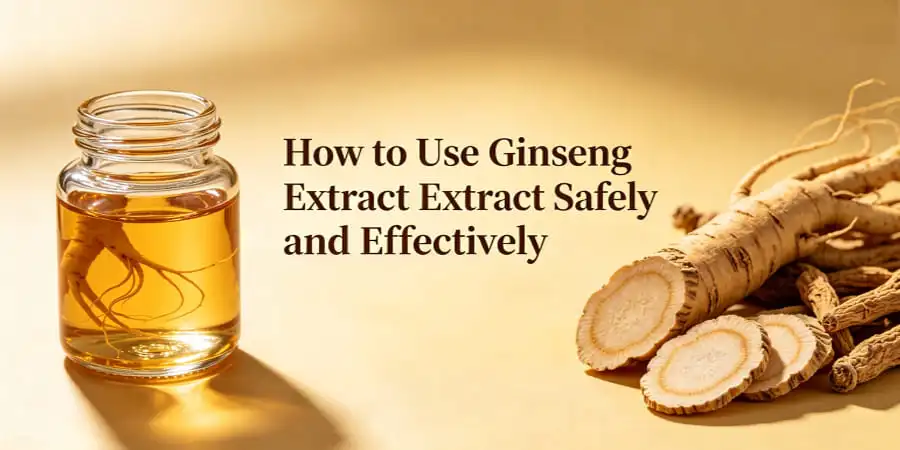
How to Use Ginseng Extract Safely and Effectively?
Dosage Considerations Across Delivery Formats
For product creation to work well, you need to know how different forms of ginsenoside concentrations can be used to make therapeutic doses. Standardized extracts with 5–10% total ginsenosides usually need 200–400 mg per day to help with energy and brain function. Higher-potency extracts with 20–30% ginsenosides can have the same results with 100–200 mg per day. Because of this, formulators can choose the best capsule size, reduce the number of tablets, or change the rate of liquid inclusion based on how the product is positioned.
When powder types are used in functional drinks, there are some special things to keep in mind. Low-pH energy drinks don't have to worry about settling because water-soluble grades keep the product stable throughout its shelf life. Because high-saponin concentrations are naturally bitter, they need careful flavor masking techniques. This is especially important in ready-to-drink applications where the taste profile has a direct effect on how well the product is received by customers.
Timing Protocols and Cycling Strategies
The directions for using a product should show the best ways to take it so that it works best. The extract's energizing effects work best when taken in the morning, so it helps you stay awake during the day without messing up your sleep patterns at night. Some experts say that cycling routines, like taking it for five days and then taking a break for two days, can help keep you from building up a tolerance. However, this method works better for high-dose therapeutic uses than for regular nutritional supplementation.
Safety Profile and Contraindications
Ginseng extract has a great safety record across many clinical studies, but some groups of people should be careful. People who take blood thinners should talk to their doctors because ginsenosides may change how platelets stick together. People with diabetes need to think about how to handle their blood sugar because the extract might help control glucose levels. The warnings about being pregnant or breastfeeding are just general safety measures for botanical supplements, not specific safety concerns.
These safety factors show how important it is to check the quality of suppliers. Thorough testing for heavy metals, pesticide residues, and microbiological contamination protects end users and makes sure that all places follow the rules. Procurement workers should make it a priority for manufacturers to keep their GMP certification and provide full Certificates of Analysis that show purity requirements.
Procuring Ginseng Extract: What B2B Buyers Need to Know?
Quality Parameters That Define Premium Supply
Setting clear quality standards that make sure products are the same from one production run to the next is the first step to successful procurement. The basic specification is the amount of ginsenoside that can be proven through HPLC testing. However, a full quality review includes physical properties that affect the manufacturing process. Standardizing the mesh size (usually between 80 and 100 mesh for powder extracts) makes sure that the powder can flow evenly when it is encapsulated and in beverage mixtures.
Moisture levels below 5% stop microbes from growing and keep things stable while they're being stored, which protects your investment in bulk goods. Ashes with an ash percentage of less than 5% have been processed properly and inorganic contaminants have been removed. Heavy metal limits that meet USP standards, especially for arsenic, cadmium, mercury, and lead, protect end users and meet regulations in all foreign markets.
Supplier Evaluation Beyond Price Metrics
To find trusted manufacturing partners, you need to look at their skills and how they might affect long-term business relationships. Supply stability shows that farm sourcing networks can handle changes in the seasons and crop quality changes from year to year. When manufacturers have partnerships in a lot of different growing regions, they are less likely to be affected by weather events or crop failures that mess up supply lines.
The ability to provide technical help is what sets strategic partners apart from commodity suppliers. Manufacturers that give formulation consultation help brands get the best extraction specifications for their needs, whether they're making water-soluble powders for drinks or high-potency ginseng root extracts for small capsules. Collaboration shortens the time it takes to make a product and lowers the cost of trying different formulations and seeing what works best.
OEM and Custom Specification Opportunities
Private-label makers and brands that want to stand out can benefit from suppliers who offer flexible minimum order amounts and options for custom standardization. You can make functionally different products with tailored marketing claims by specifying exact ginsenoside ratios, such as focusing on certain compounds like Rg1 or Rb1.
Custom package solutions, such as small-batch containers for new brands and bulk totes for high-volume operations, show that suppliers are flexible enough to adapt to how businesses grow. From idea to market launch, OEM services like formula development, stability testing, and help with regulatory paperwork make the process easier.
Maximizing the Business Value of Ginseng Extract Products
Application Innovation Across Industry Segments
Because the botanical extract can be used in many different ways, it can be used in creative ways that open up new market possibilities beyond traditional supplement capsules. Developers of functional drinks use water-soluble grades in energy drinks, protein recovery drinks, and herbal wellness teas because people like natural options to artificial ingredients. The hard part is keeping ginsenoside stable in acidic environments while also making sure that flavor profiles fit with the general taste experience.
Pigment ginseng is used in anti-aging skin care products because it has antioxidant qualities and improves microcirculation. Serum and cream makers need extracts that don't contain methanol and have a light color that won't change the color of finished goods. Because the extract can increase collagen production, it can be used to support the selling of high-end skin care products aimed at older people.
Building Consumer Trust Through Transparency
In markets that are already full, differentiating products rests more and more on clear, high-quality communication that builds consumer trust. Standardized ginsenoside content, third-party testing confirmation, and traceability to specific growing areas are all things that brands say to build trust, which is why they can charge more for their products. Marketing materials that teach customers by explaining how the product is extracted, how it is tested for quality, and how it was based on scientific research build brand authority.
This openness includes answering common customer questions about ginsenoside content consistency across batches, variety source differences, suitability for different delivery forms, and reproducibility from batch to batch. When brands work with manufacturers who give them specific technical documentation and testing data, they get marketing materials that help them turn educated customers into loyal customers.
Strategic Positioning for Competitive Advantage
To place your product well in the market, you need to find gaps in the current product landscape and make formulations that meet the needs of consumers who aren't being met. When you mix ginseng with other plants that work well together, you get special blends that give your brand a unique identity that can't be copied. Products that are made for specific groups of people, like workers dealing with cognitive demands or active adults helping with recovery, help marketers focus more and get more sales.
Clinical studies, even small ones, that prove something scientifically are a strong way to set your product or service apart in the market. When brands fund university studies or form research partnerships, they get access to unique data that backs up specific product claims that rivals can't get without spending the same amount of money.
Conclusion
The strategic value of ginseng root extract in modern product development stems from its scientifically validated cognitive and physical performance benefits combined with broad application versatility. Procurement professionals who understand ginsenoside standardization nuances, variety-specific functional profiles, and quality verification protocols position their organizations to develop compelling products that meet evolving market demands. The ingredient's established safety record and strong consumer recognition reduce market education barriers while supporting premium positioning opportunities. Success in this competitive landscape requires partnerships with manufacturing suppliers offering consistent quality, technical expertise, and the flexibility to support custom formulations that differentiate brands in crowded wellness markets.
FAQ
What ginsenoside concentration is optimal for cognitive enhancement products?
Products targeting cognitive benefits typically utilize extracts standardized to 10-20% total ginsenosides, providing effective doses at 200-400 mg daily. Higher concentrations allow smaller serving sizes in capsule formats, though functional beverage applications may use lower concentrations balanced with larger serving volumes to manage flavor profiles while delivering equivalent bioactive compound levels.
How does extraction method impact final product quality?
Ethanol extraction produces high-purity concentrates with complete ginsenoside profiles, while water extraction yields more hydrophilic compounds suitable for beverage applications. Spray-drying versus vacuum-drying affects powder characteristics like flowability and reconstitution properties. Quality manufacturers employ validated extraction protocols with standardized parameters controlling temperature, pressure, and processing duration to ensure reproducible results across production batches.
Can ginseng extract maintain stability in acidic beverage environments?
High-quality water-soluble grades formulated specifically for beverage applications maintain ginsenoside stability in pH ranges as low as 3.5 when properly formulated. Manufacturers should conduct accelerated stability testing under intended storage conditions to verify shelf-life performance, particularly regarding precipitation prevention and active compound degradation in finished products.
Partner with Wellgreen for Premium Ginseng Extract Supply
Wellgreen Technology operates as a specialized ginseng extract manufacturer maintaining GMP-certified facilities with comprehensive quality control systems. Our standardized ginsenoside specifications range from 5% to 30% total saponins, verified through validated HPLC testing methods that ensure batch-to-batch consistency. We control agricultural residues and heavy metal content through multi-stage testing protocols, providing Certificates of Analysis documenting compliance with international standards. The technical team offers formulation consultation for energy support products, functional beverages, and combination botanical blends, supporting OEM custom development with flexible minimum order quantities. Our stable supply capacity and diverse specification options address the core concerns of procurement professionals seeking reliable botanical ingredient partners. Contact our team at wgt@allwellcn.com to discuss your specific requirements and access technical documentation supporting your product development initiatives.
References
Lee, S.M., Bae, B.S., Park, H.W., Ahn, N.G., Cho, B.G., Cho, Y.L., & Kwak, Y.S. (2018). Characterization of Korean Red Ginseng: History, preparation method, and chemical composition. Journal of Ginseng Research, 42(3), 263-269.
Reay, J.L., Kennedy, D.O., & Scholey, A.B. (2005). Single doses of Panax ginseng reduce blood glucose levels and improve cognitive performance during sustained mental activity. Journal of Psychopharmacology, 19(4), 357-365.
Scholey, A., & Kennedy, D. (2002). Acute, dose-dependent cognitive effects of Ginkgo biloba, Panax ginseng and their combination in healthy young volunteers: differential interactions with cognitive demand. Human Psychopharmacology Clinical and Experimental, 17(1), 35-44.
Kim, H.G., Cho, J.H., Yoo, S.R., Lee, J.S., Han, J.M., Lee, N.H., Ahn, Y.C., & Son, C.G. (2013). Antifatigue effects of Panax ginseng: a randomised, double-blind, placebo-controlled trial. PLOS ONE, 8(4), e61271.
Leung, K.W., & Wong, A.S. (2010). Pharmacology of ginsenosides: a literature review. Chinese Medicine, 5(1), 20-35.
Kiefer, D., & Pantuso, T. (2003). Panax ginseng: evaluation of the clinical evidence for therapeutic use. American Family Physician, 68(8), 1539-1542.