How Psyllium Husk Powder Supports Digestive and Heart Health?
2026-01-13 13:51:11
Psyllium husk powder is beneficial for the heart and gut because of its unique fiber composition. This natural component is made from the seeds of Plantago ovata. It has a lot of soluble fiber that forms a gel-like substance when it gets wet. This process helps keep cholesterol and blood sugar in check. It also makes sure that you have frequent bowel movements. Psyllium husk powder is an ingredient that is growing in usefulness for nutrition companies, drug makers, and functional food makers who want to give their customers healthy options backed by science.
As the need for natural health ingredients grows, product makers and buying managers need to know about this plant-based extract's science and possible uses. Psyllium is used in more than just regular dietary supplements because it is so flexible. If it is used to make new kinds of things in a lot of different areas, as long as strict quality standards and rules are followed.
Understanding Psyllium Husk Powder and Its Nutritional Profile
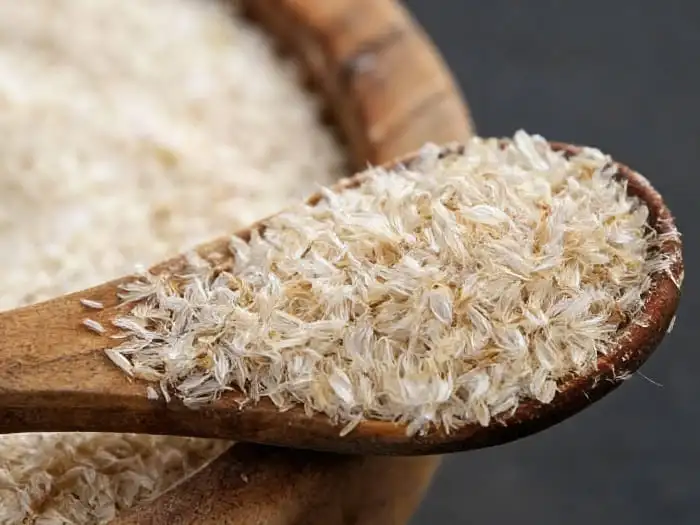
The powder psyllium husk is made from the seeds of the Plantago ovata plant. India and other places with the right temperature are where this plant is mostly grown. It's different from whole husks or capsules because it's made from carefully collecting, cleaning, and grinding them into a fine powder. This fiber source is 85% dietary fiber and comes from a plant. It's mostly soluble fiber, which is what lets it form gels.
Key Nutritional Components and Bioactive Compounds
Some of psyllium's key ingredients and its nutritional profile show that it can help treat health issues. This plant extract is good for your health because it has fiber, mucilage, arabinoxylans, and other bioactive substances. The fiber in this product that dissolves in liquid makes up about 75% of the overall fiber, and it is mostly arabinoxylan protein. There's a lot of soluble fiber here, so thick gels form that slow down processes and make you feel full.
Quality Specifications for Industrial Applications
The microbial standards, moisture level, and particle size must be closely watched when making psyllium husk powder. Industrial-grade items usually keep wetness levels below 12% to keep the product stable and make it last longer. The particle size distribution affects how useful it is, and powders with smaller particles are better at spreading out in liquid mixtures. Quality control tests for heavy metals, chemical residues, and microbial pollution must meet the standards for food and drugs.
Psyllium powder is a naturally gluten-free option for companies that serve customers who are sensitive to gluten. However, it needs to be processed in places that don't make any gluten-containing goods and be certified as such. This function makes it more valuable for people who are working on things that people with celiac disease and gluten intolerance can use.
How Psyllium Husk Powder Supports Digestive Health?
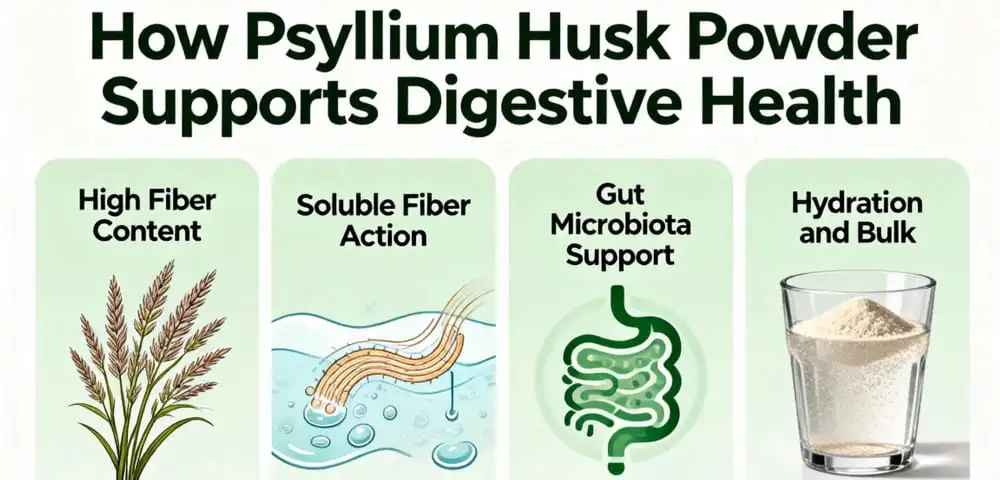
Psyllium is good for your digestive system because it can soak up water and become a gel-like material in your digestive tract. This process is helpful for digestive health in general and for common gastrointestinal problems in a number of ways.
Bowel Regularity and Constipation Relief
Psyllium helps people have normal bowel movements by making their stool thicker and adding water to it, according to a clinical study. When soluble fiber absorbs water in the gut, it makes stools softer and easier to pass. Research has shown that eating 5 to 10 grams every day can help a lot with the amount and regularity of bowel movements within 2 to 3 days of consistent use. This reaction happens because of the way that things physically bulk up and help bacteria grow in the gut.
Prebiotic Properties and Gut Microbiome Support
According to new research, psyllium is a prebiotic that helps good bacteria such as Bifidobacterium and Lactobacillus grow. These bacteria use fermentation to break down the soluble fiber. This process makes short-chain fatty acids that help the cells in the gut get food and help the immune system work. The prebiotic affect lowers inflammation in the digestive system and helps the gut barrier work better.
Weight Management and Satiety Enhancement
Because psyllium can form gels, it makes you feel full, so you eat less and take fewer calories. Eating fiber before a meal makes a person feel full, so they generally eat less. Clinical tests have shown that people who lost more weight took psyllium supplements than people who didn't take the supplements. For this reason, psyllium is a helpful thing to put in weight loss goods.
One thing to think about is that you should be sure to drink plenty of water when you use psyllium products, because not drinking enough can block your bowels. Companies should put clear information on their product packages about how much to take and how much water to drink so that their customers are safe.
The Cardiovascular Benefits of Psyllium Husk Powder
One of the best-known benefits of taking psyllium is that it is good for your heart. This is backed by a lot of clinical study and recognition by the psyllium regulatory body. The amount of soluble fiber in a food affects several heart-related risk factors in ways that are well understood.
Cholesterol Reduction and Lipid Profile Improvement
Randomized controlled studies that have been analyzed meta-wise show that adding psyllium to your diet lowers total cholesterol and LDL cholesterol by 5–15%. By binding bile acids in the intestine, this mechanism lowers the amount of cholesterol in the blood. It does this by driving the liver to turn cholesterol into new bile acids. If you take 7 to 10 grams of this every day for four to six weeks, you will usually start to see this result.
The FDA has allowed a health claim that says psyllium husk fiber may lower the chance of heart disease when eaten as part of a diet low in saturated fat and cholesterol. This official recognition of psyllium-containing products gives makers a boost in marketing and helps consumers feel good about using those products.
Blood Glucose Regulation and Diabetes Management
Psyllium is very helpful for controlling blood sugar, which is especially good for people who have type 2 diabetes. The soluble fiber slows down the body's intake of carbohydrates. This results in blood glucose levels rising more slowly after eating. Research has shown that both postprandial glucose reaction and long-term glycemic control (as measured by HbA1c levels) get better.
Clinical evidence supports the use of psyllium as an additional treatment for diabetes, with participants having 10–20% lower increases in glucose after meals. This benefit also includes making insulin more sensitive, which makes psyllium a useful ingredient for making metabolic health products.
Comparative Analysis: Psyllium Husk Powder vs Other Fiber Sources
There are a lot of different fiber supplements on the market, but psyllium is different from plant-based choices like methylcellulose, wheat dextrin, and others because of its unique properties.
Unique Gel-Forming Properties and Viscosity
Psyllium forms very thick gels, which work better than insoluble fibers to lower cholesterol. Many sources of fiber do not do this. The gel viscosity is directly related to how well the treatment works, which makes psyllium especially useful for cardiovascular uses. Psyllium makes a more reliable gel and is easier to dose than chia seeds or flaxseed.
Because psyllium dissolves in water, you can quickly get its benefits. On the other hand, solid fibers like wheat bran mainly help you mechanically and not metabolically. This difference impacts how manufacturers place their products and choose their target markets.
Processing Compatibility and Formulation Advantages
Psyllium powder works very well with many different manufacturing processes, such as making drinks, filling capsules, and compressing tablets. Its neutral taste allows it to be added to food items without changing their flavor, unlike some fiber sources that need to be mixed with other flavors.
When it comes to psyllium, organic and standard choices both offer a range of options for different groups of people, markets, and price ranges. Organic certification needs more paperwork and tracking, but health-conscious buyers are willing to pay more for it. For uses that are sensitive to cost, supply chain factors support the use of conventional sources while keeping the same therapeutic benefits.
Procurement Guide: Sourcing and Buying Psyllium Husk Powder in Bulk
To get psyllium husk fiber successfully, you need to carefully consider providers, quality standards, and rules that must be followed. India is where about 80% of all commercial psyllium comes from, so the worldwide supply chain is mostly focused there.
Supplier Evaluation and Quality Assurance
GMP certification, organic certifications when needed, and written quality control methods are important qualifications for suppliers. Good providers give full certificates of analysis that include tests for bacteria, heavy metals, and fiber content. Traceability documentation should keep track of goods from when they are grown to when they are processed and packaged.
Here are the most important approval standards that you should check when choosing a supplier:
- ISO 22000 Food Safety Management: This makes sure that the entire supply chain follows complete food safety rules, including key control points, hazard analysis, and contamination prevention steps that are unique to botanical extracts.
- USDA Organic Certification: This certification shows that the farm follows organic methods, which means they can't use synthetic pesticides, fertilizers, or GMO materials. They also need to keep the soil healthy and maintain biodiversity.
- Standards from NSF International: It proves the purity, strength, and truth of the label of a product from a third party, which is very important for dietary supplements that need to be trusted by consumers.
- HACCP Implementation: This shows a methodical way of ensuring food safety by recognizing risks and taking steps to avoid them during all stages of production.
All of these certifications make sure that the psyllium you get meets quality standards around the world and follows the rules in the places you want to sell in. Suppliers with multiple certifications usually have better quality management methods and lower supply chain risks.
Contract Negotiation and Supply Chain Management
The prices of psyllium rely on how much people want it around the world and how well the crops are collected. These changes should be kept in mind when making volume buying deals. Long-term deals can keep prices stable and make sure that production planning has a steady supply. Quality needs to clearly define the acceptable amounts of moisture and particles, as well as the overall purity.
Psyllium lasts 24 to 36 months as long as it is kept properly. This should be kept in mind when using inventory control methods. Some buildings need to control the temperature and humidity. This changes the price of storage but not the quality of the goods. Having more than one supplier lowers the risks in the supply chain that come with growing in places where the weather can affect production.
Conclusion
Psyllium husk powder is a very well-tested ingredient that is good for your heart and stomach. A lot of research has shown that it is good for your health. It is also approved by the government and liked by customers. Because of these reasons, it is very helpful for making health goods. Professional business-to-business buyers need to know about the different suppliers and quality standards, as well as how the goods can be used in a variety of scenarios. This helps them make smart decisions about what to buy that meets the wants of the market and makes sure that products are safe and work well. The nutraceutical, pharmaceutical, and functional food industries are seeing a growing demand for high-quality psyllium goods as more individuals learn about natural methods to maintain their health.
FAQs
How much psyllium husk powder should you take each day for good gut health?
People usually take between 5 and 10 grams of this every day, and they should drink plenty of water with it. Starting with small amounts and slowly adding more can help avoid stomach problems and get the most out of the medicine.
Is it possible to use psyllium husk powder to make food and drinks?
Yes, psyllium powder is a great useful ingredient that can be used in many different kinds of foods. Its ability to form a gel and bland taste make it a good addition to drinks, baked goods, and protein products because it makes them healthier without changing their taste.
How soon can people expect to see health benefits from using psyllium husk powder?
If you take the supplement every day, you usually see digestive benefits within 1 to 3 days. Improvements in heart health, like lower cholesterol, take 4 to 6 weeks of constant use to be seen, however.
Partner with Wellgreen for Premium Psyllium Husk Powder Supply
Wellgreen Technology is ready to help you get psyllium husk powder with our wide-ranging production and quality control systems. Our GMP-certified facility has a lot of high-quality plant extracts on hand, so you can be sure you'll get what you need for your product creation projects. We offer full paperwork, including certificates of analysis and help with following the rules. We also offer unique packaging that meets your needs. As a seasoned provider of psyllium husk powder, we know that the consistent quality and quick delivery of your manufacturing processes are very important. If you want to talk about your needs and learn how our knowledge can help you get better plant extract options, email us at wgt@allwellcn.com.
References
Anderson, J. W., Baird, P., Davis Jr, R. H., Ferreri, S., Knudtson, M., Koraym, A., ... & Williams, C. L. (2009). Health benefits of dietary fiber. Nutrition Reviews, 67(4), 188-205.
Gibb, R. D., McRorie Jr, J. W., Russell, D. A., Hasselblad, V., & D'Alessio, D. A. (2015). Psyllium fiber improves glycemic control proportional to loss of glycemic control: a meta-analysis of data in euglycemic subjects, patients at risk of type 2 diabetes mellitus, and patients being treated for type 2 diabetes mellitus. The American Journal of Clinical Nutrition, 102(6), 1604-1614.
McRorie Jr, J. W. (2015). Evidence-based approach to fiber supplements and clinically meaningful health benefits, part 1: What to look for and how to recommend an effective fiber therapy. Nutrition Today, 50(2), 82-89.
Solà, R., Godàs, G., Ribalta, J., Vallvé, J. C., Girona, J., Anguera, A., ... & Salas-Salvadó, J. (2007). Effects of soluble fiber (Plantago ovata husk) on plasma lipids, lipoproteins, and apolipoproteins in men with ischemic heart disease. The American Journal of Clinical Nutrition, 85(4), 1157-1163.
Turco, I., Ferretti, G., & Bacchetti, T. (2016). Review of the health benefits of psyllium husk. European Journal of Clinical Nutrition, 70(2), 141-146.
Ziai, S. A., Larijani, B., Akhoondzadeh, S., Fakhrzadeh, H., Dastpak, A., Bandarian, F., ... & Unterman, T. G. (2005). Psyllium decreased serum glucose and glycosylated hemoglobin significantly in diabetic outpatients. Journal of Ethnopharmacology, 102(2), 202-207.