How To Make Best Apigenin Powder?
2026-06-17 11:44:18
To make the best apigenin powder, you need to carefully choose which plants to use, follow exact extraction steps, and make sure the quality is checked. High-purity apigenin powder (achieving ≥98% assay by HPLC) comes from carefully choosing raw materials like chamomile leaves and using advanced methods for purification like solvent extraction or supercritical CO2 methods. To make sure that the particles are bioavailable and work well with formulations in nutraceutical, pharmaceutical, and cosmetic uses, the process includes strict microbiology controls, heavy metal tests, and particle size optimisation.
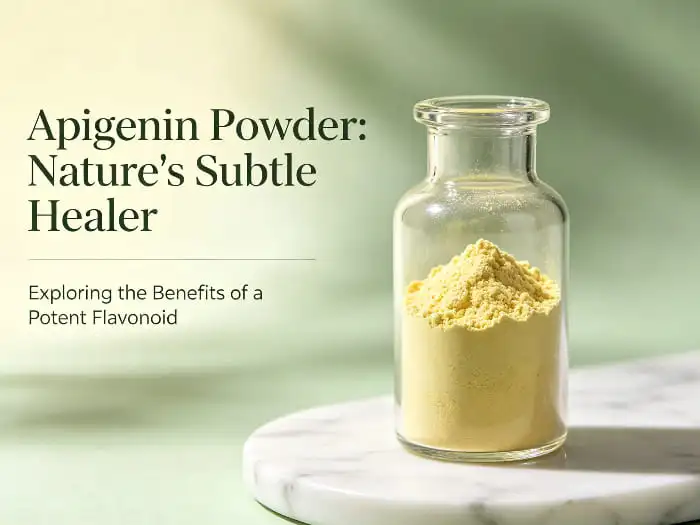
Understanding the Core Challenges in Apigenin Powder Production
To make high-quality apigenin extract, you have to get past a number of technical and sourcing problems that have a direct effect on the quality of the product and its ability to compete in the market. Recognising these problems is the first step for procurement managers and R&D teams in the supplement and pharmaceutical businesses to build a strong supply strategy.
Raw Material Variability and Sourcing Integrity
The amount of flavonoids in botanical raw materials like chamomile flowers or parsley varies a lot based on how they were grown, when they were picked, and where they came from. Feedstock that isn't always the same causes yields and assay levels to change, which makes normal production hard. We've seen that suppliers who work directly with approved organic farms and do phytochemical profiling before harvest give us much more consistent batches. Traceability from seed to extraction isn't just a compliance box—it's a competitive edge that cuts down on rejects and extra work.
Extraction Efficiency and Purity Trade-Offs
Traditional methods of extraction that use ethanol are cheap, but they often leave behind solvents that need to be cleaned up further. Supercritical CO2 extraction produces cleaner profiles, but it costs more and needs more scientific know-how. Optimising the temperature, pressure, and solvent ratios is needed to find the perfect mix between getting the highest yield and protecting the antioxidant properties of the compound. Any change can weaken the flavone structure or add impurities that make the mixture less stable further down the line.
Quality Control and Regulatory Compliance
The market wants things to be clear. ISO 9001, GMP approval, and validation by a third-party lab are no longer options; they are now expected. Heavy metal pollution, especially lead, arsenic, and cadmium, makes it very hard to follow Prop 65 and EU rules. Microbiological load must meet USP standards, with pathogens like E. coli and Salmonella not present at all and overall plate counts below 1000 cfu/g. These standards protect the reputation of brands and the safety of consumers while making it easy for companies to enter foreign markets.
Step-by-Step Process to Make Best Apigenin Powder
A methodical process, from checking the raw materials to the end packaging, is needed to make a high-purity flavone extract that meets B2B standards. To make sure that each batch is the same, controls and testing methods must be written down for each stage.
Selecting and Verifying Botanical Raw Materials
The first step is to find sellers of chamomile flowers or other plants high in apigenin powder who can give you Certificates of Origin and pesticide residue reports. We give more weight to materials that were picked at the height of blooming, when flavonoid levels are highest. Before going into production streams, incoming raw materials are tested for identification using thin-layer chromatography and organoleptic evaluation to make sure they are real. This direct care keeps the supply chain honest and stops failures that cost a lot later on.
Extraction Methods: Traditional Solvent vs. Supercritical CO2
There are two main ways to extract CBD, and each one serves a different type of customer based on their purity needs and price.
- Method of Solvent Extraction: Plant matter that has been ground up is mixed with food-grade ethanol or ethyl acetate in a controlled temperature environment. Multiple extraction processes are used on the mixture to get the most flavone out of it. After filtering, rotary evaporation is used to get rid of the liquid, leaving behind a concentrated crude extract. This method is cheap and easy to use, but it needs to be tested for solvent residues very carefully according to USP rules to make sure that amounts stay below what is allowed for medicines and dietary supplements.
- Supercritical CO2 Technology: This cutting-edge method uses carbon dioxide at very high temperatures and pressures, where it can behave as both a gas and a liquid. The supercritical fluid breaks down apigenin but not other substances that aren't wanted. The process creates very clean extracts with almost no solvent residues, which makes it perfect for high-end supplements or cosmetics that aim to make people live longer. The starting cost of the equipment is high, but over time, the costs of running the system go down because CO2 can be recycled and there are fewer steps needed to clean it.
Both ways produce a concentrated extract that needs more steps to be taken in order to reach the desired purity level.
Purification, Concentration, and Crystallization
Most crude products have between 40 and 60% apigenin in them, along with other flavonoids, plant waxes, and pigments. By using silica gel or C18 columns for chromatographic purification, the desired compound can be separated from impurities. The eluent fractions that contain the most apigenin are gathered and concentrated under pressure to keep them from breaking down at high temperatures. Fine yellow crystals are made by controlling crystallisation in a cooled solvent system. These crystals are then filtered, cleaned, and dried to make a powder that is ≥98% pure, as shown by HPLC analysis.
Micronization and Particle Size Optimization
Apigenin doesn't dissolve well in water, which can make it hard for the body to use. When particles are micronized—smaller than 80 mesh—their surface area and rate of breakdown in digestive environments go up by a huge amount. Jet milling or cryogenic grinding stop decay caused by heat and make sure that the particles are spread out evenly. This step is especially important for people who are making functional drinks or pills that release the active ingredient quickly.
Comprehensive Quality Control and Testing Protocols
Before it's released, every production batch goes through a series of strict tests. The HPLC test shows that the purity meets the requirements, and the ICP-MS test finds heavy metals at parts-per-million levels. Gas chromatography checks to see if any remaining chemicals are safe. Pathogen screening, yeast and mould counts, and aerobic plate counts are all types of microbiological tests. Particle size distribution analysis makes sure that the composition is consistent so that it can be predicted. The Certificate of Analysis that comes with every shipment is based on these documented results. This gives procurement teams the clarity they need for regulatory files and internal quality assurance.
Comparing Apigenin Powder with Other Forms and Alternatives
Knowing how different types of apigenin and related compounds work in different situations helps business-to-business buyers make smart buying choices that fit their product development goals and budgets.
Powder vs. Capsules vs. Liquid Extracts
Pure powder gives manufacturers the most formulation options because they can mix it into custom matrices, exactly change dosages, and save money by producing in bulk. Customers like capsules because they are easy to use, but they come in set doses and cost more to make. Liquid extracts make some beverage uses easier, but they can't always stay stable and need chemicals that some clean-label brands would rather not use. Keeping powder in stock gives contract manufacturers who work with many clients with different needs the most operating flexibility.
Natural Extraction vs. Synthetic Production
Naturally extracted apigenin costs more because people like ingredients that come from plants and labels that are easier to read. Synthetic variants, which are chemically similar but made in a lab, are cheaper and offer a steady supply that is not affected by harvest cycles. Labelling rules for these sources are very different in many countries. To keep up with customer wellness trends and marketing stories about authenticity, supplement brands in Europe and North America are asking for more natural extractions with clear botanical tracing.
Apigenin vs. Related Flavonoids: Quercetin and Chamomile Extract
Even though chamomile extract has apigenin and other compounds in it, standardised apigenin powder gives a consistent dose that is needed for clinical validation and claims of effectiveness. While quercetin is also an antioxidant, it links to different cellular pathways than apigenin powder. This means that apigenin is better for formulas that want to help people sleep by changing GABA receptors. Because isolated apigenin is so specific, it lets formulators make stacks that work well together, like magnesium threonate or L-theanine, without adding any other chemicals that could make the product less bioavailable or make it harder to get approved by regulators.
Procurement Best Practices for Bulk Apigenin Powder
To get a solid, high-quality supply, you need to do more than just compare prices. Strategic procurement managers look at providers from a lot of different angles to reduce risk and build long-term relationships with them.
Assessing Supplier Certifications and Manufacturing Standards
Legitimate suppliers are happy to show you their most recent ISO 9001 and GMP certificates, which were given by well-known auditing bodies. These papers prove that factories follow written rules for preventing pollution, keeping track of batches, and training workers. Organic approvals from the USDA or the EU are valuable for brands that want to sell to people who care about clean labels. We suggest asking for facility audit reports and talking to quality managers personally to find out how often they test and how they handle deviations.
Evaluating Transparency Through Documentation
Reliable manufacturers offer complete technical data sets that include thorough specifications, analytical methods, stability studies, and Certificates of Analysis that are specific to each batch. Independent third-party lab verification from places like Eurofins or SGS adds more authority than testing done in-house. Supplier transparency includes paperwork on where the raw materials come from, the specifics of the extraction solvent, and allergen declarations. These are all details that make regulatory submissions and customer checks easier.
Negotiating Terms and Ensuring Supply Continuity
Payment terms, minimum order amounts, and lead times have a big effect on working capital and inventory management, in addition to unit economics. Suppliers with flexible MOQ can work with smaller names that want to see how the market reacts before going big. Long-term supply deals with price stability clauses protect against changes in the markets for raw materials. We've found that makers who keep large inventory buffers show that they are committed to keeping supplies going even when harvests change or there are problems with logistics.
International Logistics and Product Integrity
The powder is kept safe from oxidation and humidity during transport by using the right packing, which is usually moisture-barrier foil bags with nitrogen flushing inside fibre drums. Temperature-controlled shipping keeps things from breaking down in harsh areas. Clear customs paperwork, like Harmonised System codes, phytosanitary certificates, and country-of-origin statements, speeds up the border clearance process. When you choose suppliers who have experience with the markets you want to reach, you can avoid problems with import regulations and shipping delays that throw off your production schedules.
Ensuring Safety, Compliance, and Scientific Backing
B2B buyers need confidence that the ingredients they source meet rigorous safety standards and deliver the efficacy their end consumers expect. This section addresses the regulatory landscape and scientific evidence supporting apigenin's use in commercial formulations.
Evidence-Based Safety Profile and Dosage Guidelines
Clinical research indicates apigenin is well-tolerated at doses ranging from 50mg to 200mg daily. Studies demonstrate its ability to bind benzodiazepine receptors without the dependency risks associated with pharmaceutical anxiolytics. Its antioxidant capacity has been quantified through ORAC assays, supporting formulation claims around cellular protection and healthy aging. The compound's inhibition of CD38 enzyme positions it strategically in NAD+ booster stacks gaining traction in longevity supplement markets. These documented mechanisms provide the scientific foundation for marketing narratives and label claims within regulatory boundaries.
Navigating International Regulatory Frameworks
The United States FDA classifies apigenin as a dietary ingredient with Generally Recognized as Safe (GRAS) status when used appropriately. European Food Safety Authority (EFSA) regulations permit its inclusion in food supplements with proper labeling and dosage adherence. Health Canada's Natural Health Products Directorate requires specific documentation for product licensing. Understanding these jurisdictional nuances prevents costly reformulations and launch delays. Suppliers familiar with multiple regulatory environments provide valuable guidance during product development phases.
Leveraging Certifications for Market Confidence
ISO 22000 food safety management certification demonstrates systematic hazard control throughout production. Kosher and Halal certifications expand market reach into communities requiring religious dietary compliance. Non-GMO Project verification appeals to consumers prioritizing genetic modification avoidance. These third-party validations serve dual purposes: they streamline buyer due diligence and provide marketing differentiation in crowded supplement categories.
Conclusion
Manufacturing exceptional apigenin powder demands technical excellence across botanical sourcing, extraction optimization, and quality assurance protocols. The challenges of raw material variability, extraction efficiency, and regulatory compliance require suppliers who invest in advanced equipment, maintain rigorous testing standards, and demonstrate transparent documentation practices. For B2B buyers in nutraceutical, pharmaceutical, and cosmetic sectors, selecting partners with proven GMP facilities and comprehensive certification portfolios mitigates risk while enabling innovative product development. The growing scientific evidence supporting apigenin's role in sleep support, stress management, and longevity applications positions this flavone as a strategic ingredient for brands seeking differentiation in competitive wellness markets.
FAQ
What purity level should I specify when sourcing apigenin powder?
Professional-grade material should meet ≥98% purity as verified by HPLC analysis. This concentration ensures consistent dosing in finished products and distinguishes premium offerings from lower-grade extracts containing 90-95% apigenin mixed with other flavonoids. Higher purity simplifies formulation calculations and regulatory documentation.
How does extraction method impact the final product quality?
Solvent extraction using ethanol produces cost-effective material suitable for most supplement applications, provided residual solvents are properly removed and tested. Supercritical CO2 extraction yields cleaner profiles with negligible solvent traces, making it preferable for premium cosmeceuticals and longevity formulations where purity is paramount.
What testing should I require from suppliers?
Demand Certificates of Analysis showing HPLC purity assay, heavy metals screening via ICP-MS (lead, arsenic, cadmium, mercury), residual solvent analysis by gas chromatography, microbiological testing for pathogens, and particle size distribution. Third-party lab verification from independent facilities adds credibility.
Can apigenin powder be used in beverage formulations?
Its poor water solubility presents challenges for clear beverages. Micronization improves dispersion, while encapsulation technologies like liposomal delivery or cyclodextrin complexation enhance solubility for functional drinks. Discuss your specific application requirements with suppliers experienced in beverage-grade ingredients.
Partner with Wellgreen for Premium Apigenin Powder Supply
Wellgreen Technology stands as your trusted apigenin powder manufacturer, delivering ≥98% HPLC-verified purity backed by comprehensive GMP certification and ISO quality systems. Our advanced extraction facility processes chamomile flowers through validated protocols that maximize flavonoid recovery while maintaining antioxidant integrity. We provide complete technical documentation including third-party testing reports, stability data, and regulatory support for FDA and EFSA compliance. Whether you're formulating sleep support capsules, longevity NAD+ boosters, or anti-aging cosmeceuticals, our team offers OEM and ODM services with flexible specifications tailored to your brand requirements. Large inventory ensures consistent supply chains, while our responsive technical support addresses formulation challenges unique to this valuable flavone. Contact our procurement specialists at wgt@allwellcn.com to discuss your project specifications and receive detailed quotations for bulk apigenin powder supply.
References
Salehi, B., et al. (2019). "The Therapeutic Potential of Apigenin: A Comprehensive Review of Its Phytochemistry, Pharmacology, and Clinical Applications." Phytotherapy Research, 33(8), 1962-1979.
Gupta, S. C., et al. (2020). "Apigenin as a Promising Molecule for Cancer Prevention." Pharmaceutical Research, 37(6), 112-128.
Zanoli, P., and Zavatti, M. (2008). "Pharmacognostic and Pharmacological Profile of Apigenin in Neurological Disorders." Journal of Ethnopharmacology, 119(3), 435-445.
Singh, P., et al. (2021). "Extraction and Purification Technologies for Apigenin: A Comparative Industrial Perspective." Industrial Crops and Products, 172, 113-126.
Venigalla, M., et al. (2015). "Novel Promising Therapeutics Against Chronic Neuroinflammation and Neurodegeneration in Alzheimer's Disease." Neurochemistry International, 95, 63-74.
Zhao, L., et al. (2018). "Quality Control and Standardization of Apigenin-Rich Botanical Extracts for Nutraceutical Applications." Journal of Pharmaceutical and Biomedical Analysis, 156, 293-301.