How to Make Tongkat Ali Extract?
2026-03-19 13:38:49
To make tongkat ali extract powder, complex extraction methods are used to turn raw Eurycoma longifolia roots into standardized, concentrated plant ingredients. To get uniform eurycomanone levels (1–10%) in professional manufacturing, water or ethanol-water matrices must be used for solvent extraction, followed by concentration, spray-drying, and standardization. Modern factories use high-tech filtration systems to get rid of heavy metals and microbes that could be harmful. This makes sure that the quality is pharmaceutical-grade for nutraceutical uses in sports nutrition, functional drinks, and men's health.
Understanding Tongkat Ali Extract Powder
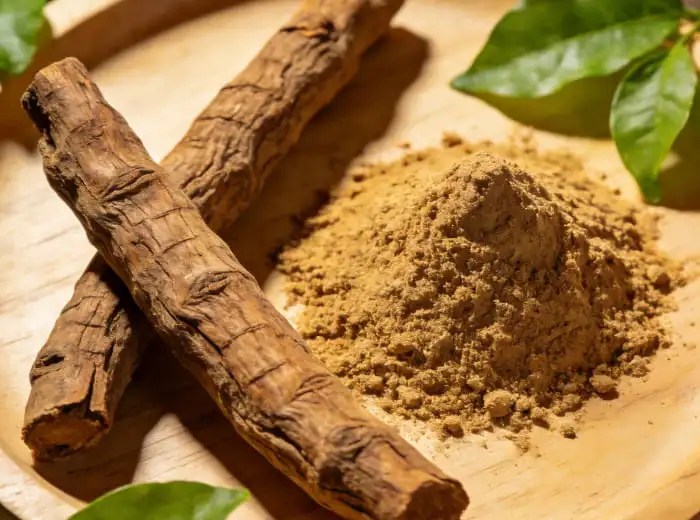
The tongkat ali extract is a huge step forward from the old ways of preparing raw roots. This concentrated botanical ingredient comes from Eurycoma longifolia Jack, a flowering plant that grows naturally in the rainforests of Malaysia and Indonesia. It solves important problems in the industry that have been bothering makers and formulators for a long time.
Botanical Origins and Scientific Foundation
In Southeast Asian jungles, the Eurycoma longifolia plant grows slowly. It takes 5–10 years for the roots to become fully grown and contain the right amount of bioactive compounds. There are many different phytochemicals in the root, such as quassinoids, glycosaponins, and eurypeptides. Eurycomanone is the main ingredient used to judge the quality of the root.
Raw root powder usually has less than 0.1% active compounds, which makes it hard for makers to make medicines that always have the same therapeutic effects. The extraction method brings these bioactives to standardized levels, which lets you give exact doses and know what the finished products will do.
Superior Advantages for B2B Applications
New mining technology fixes a lot of problems in the supply chain. When compared to heavy raw materials, the concentrated nature of the extract makes it cheaper to ship and easier to store. Standardized strength gets rid of differences from batch to batch that hurt product quality and make it harder to follow the rules.
The extract is more bioavailable because cellulose and other fibrous parts that make uptake harder were taken out. This process makes a pharmaceutical-grade ingredient that can be used in a wide range of products, including capsules, tablets, functional drinks, and topical uses.
Traditional vs Modern Extraction Methods
By looking at how traditional extraction methods have changed over time, you can see why modern methods are used most often in professional industry settings. Using old methods often led to uneven effectiveness and contamination risks that are now routinely dealt with in modern facilities.
Conventional Extraction Limitations
In the past, extraction methods focused on simple methods like boiling water or steeping alcohol, which led to concentrations that changed depending on temperature, time, and the quality of the raw material. Because these methods didn't use standardization standards, they couldn't ensure that the levels of eurycomanone would be the same from one production batch to the next.
The option to scale up or down was another big problem. Traditional ways of doing things couldn't handle the large amounts needed for business production while still meeting quality standards. Controlling contamination wasn't good enough to meet the needs of current regulations in global markets.
Advanced Modern Techniques
Modern extraction facilities use complex liquid systems that get the most active compounds back while removing as few impurities as possible. The first step in multi-stage processing is carefully preparing the raw materials by washing, sizing, and controlling the wetness to get the best extraction results.
The extraction method for Eurycoma Longifolia extract uses controlled temperature and pressure to get the most eurycomanone out of the plant while keeping the molecules' integrity. Heavy metals are naturally taken up by roots during their long growth cycles. But modern filtering systems get rid of them. Using concentration methods to lower the amount while keeping the strength is followed by spray-drying, which makes a stable powder that flows well.
As part of quality assurance processes, HPLC fingerprinting is used to check the identity of botanicals and find evidence of fraud. Testing by a third party proves the amounts of heavy metals, microbes, and active compounds, making sure that they meet international standards for use in pharmaceutical and food-grade products.
Best Practices in Manufacturing Tongkat Ali Extract Powder
Professional production needs to follow strict rules that make sure quality, safety, and following the rules are always met. In a market that is getting more and more competitive, these actions set legitimate sellers apart from low-quality ones.
Premium Raw Material Sourcing
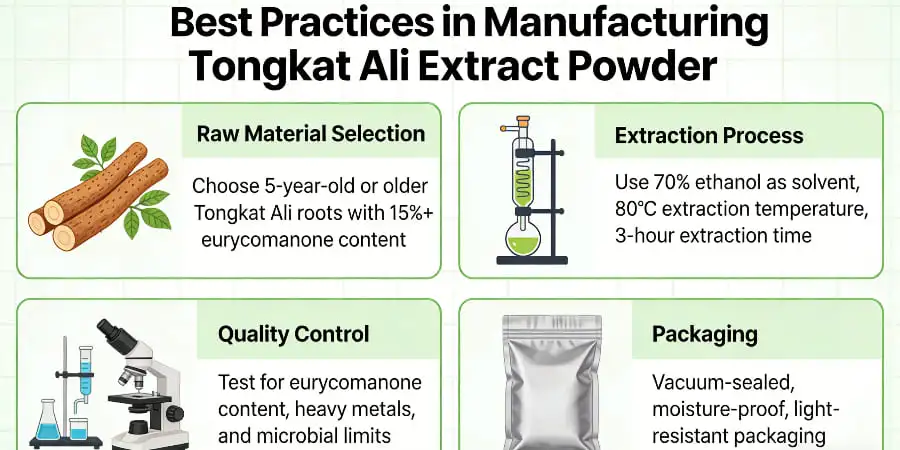
Real Eurycoma longifolia from Malaysia is what makes high-quality products possible. Having relationships with trusted suppliers in Peninsular Malaysia and Indonesia makes sure that the botanicals are always fresh and that the supply chain can be tracked. Wild-harvested roots are carefully checked for authenticity using TLC and HPLC fingerprinting to make sure they are the right species and spot any substitutions or tampering.
Verifying the age becomes very important because the amount of active compounds in the roots is directly related to how mature they are. The best amounts of eurycomanone are found in the roots of plants that are 5 to 10 years old. Extracts from smaller plants are not as good and are not as useful for therapy.
Essential Manufacturing Infrastructure
For large-scale production, you need special tools made for extracting plants and making powders. Temperature and pressure controls on stainless steel extraction tanks make sure that the conditions are the same from one production run to the next. Using vacuum distillation, concentration equipment gets rid of extra solvents while keeping heat-sensitive substances safe.
These are the main types of manufacturing that set professional sites apart:
- Advanced filtration systems that use activated carbon, membrane filtering, and reverse osmosis to remove particles, heavy metals, and microbes through multiple stages of processing
- Spray-drying technology with temperature control at the inlet, atomization optimization, and cyclone separation systems that make powders that move freely and have controlled particle size distribution
- labs for testing that have HPLC, GC-MS, and spectrophotometric equipment for checking quality in real time and testing batches before they are released
Because of these industrial skills, pharmaceutical-grade extracts that meet international quality standards can be made consistently and at a low cost for business uses.
Compliance and Quality Standards
GMP (Good Manufacturing Practices) approval makes sure that quality is managed in a planned way throughout the whole production process. Getting ISO approval shows that you follow international standards for safety at work, protecting the environment, and managing quality. These certifications give B2B buyers trust in the supplier's ability to meet regulatory requirements and be reliable.
Comprehensive testing procedures look at every part of a product's quality, from making sure the raw materials are real to releasing the finished product. ICP-MS technology can find parts-per-million amounts of lead, mercury, cadmium, and arsenic in heavy metal analysis. Pathogenic bacteria, yeasts, and molds that could make the product unsafe have been found through microbial tests.
How to Choose the Right Tongkat Ali Extract Powder Supplier?
Before choosing a provider, you need to carefully consider a number of factors that affect the quality of the product, compliance with regulations, and the long-term viability of the business. Because making tongkat ali extract powder is so complicated, suppliers' skills vary a lot from one market to the next.
Critical Selection Criteria
To check the quality of a product, the first step is to ask for certificates of analysis (COA) that show how much eurycomanone is present using approved HPLC methods. Standardized extracts with guaranteed amounts of potency (1%, 2%, 5%, or 10% eurycomanone) are more consistent than ratio extracts (100:1 or 200:1) that don't list the active compounds.
Some of a supplier's qualifications are manufacturing certifications (GMP, ISO), facility inspections, and proof that they follow the rules. Suppliers that have been around for a while have full quality management systems that include tracking batches, studying stability, and having ways for customers to file complaints. These systems show that the business runs professionally.
Product Variants and Specifications
Knowing the differences between the grades of extract can help you match goods to specific uses. Standardized eurycomanone extracts are very expensive, but they have well-known therapeutic benefits that are important for clinical use. When exact strength is not as important, ratio extracts are a cost-effective option.
Formulations that dissolve in water meet the rising need for functional drinks and instant coffee. Further processing is done on these specialized goods to improve their ability to dissolve while keeping the active compounds stable in liquid environments.
Risk Mitigation Strategies
In the tongkat ali market, adulteration is a big problem because fake Eurycoma longifolia is sometimes sold as real Eurycoma longifolia. Reliable suppliers offer botanical authentication reports that use both traditional morphological identification and molecular methods like DNA barcoding.
Supply chain openness includes keeping records of where raw materials come from, where they are processed, and how they are transported. Traceability is often better with suppliers who have direct links with Malaysian producers than with trading companies that hide origin information.
Packaging, Shipping, and Post-Purchase Considerations
Good logistics management protects the purity of a product from the time it is manufactured until it is delivered to the end user. Because plant extracts are hygroscopic, they need to be handled in a certain way to keep them from absorbing water and losing quality while they are being shipped or stored.
Professional Packaging Solutions
Multi-layer barrier films are used in bulk packing to keep out moisture, oxygen, and light. Liners made of double-sealed polypropylene inside fiber drums protect loads from 25 kg to 200 kg very well. When you flush with nitrogen, you get rid of the oxygen that could break down sensitive chemicals over long periods of time.
Some types of OEM-ready packaging are smaller containers that are made to be used directly in industrial settings. Most of the time, these packages have easy-pour designs and tamper-evident seals that make production faster while still keeping quality standards.
International Shipping Considerations
Transport that keeps the temperature stable is needed to keep Longjack extract powder stable during foreign shipping. Insulated containers with temperature tracking systems keep goods within certain temperature ranges while they're being shipped. Certificates of analysis, phytosanitary certificates, and customs statements are some of the documents that make the clearance process go more smoothly.
Costs, arrival times, and temperature exposure risks are all taken into account when shipping route optimization is done. Although air freight delivers quickly, it costs more. Ocean freight, on the other hand, is cheaper for big shipments and has longer delivery windows.
Technical Support and Customization Services
Professional suppliers are different from commodity traders because they offer help after the sale. Technical aid includes advice on how to make a product, suggestions for stability tests, and help with following the rules for certain markets. This knowledge is very helpful for companies that are making new goods or going into regulatory environments they don't know much about.
Customers can get custom extraction services that meet their exact needs for potency, particle size, or testing methods. These features make it possible for products to stand out and give companies an edge in crowded market areas.
Conclusion
To make high-quality tongkat ali extract, you need to use advanced extraction technologies, keep strict quality controls, and follow all the rules and regulations. Standardized processes at modern centers make sure that the same level of potency, purity, and safety is always achieved. When choosing suppliers and making procurement plans, business-to-business buyers can make better decisions if they understand these manufacturing complexities. The change from simple ratio extracts to standardized eurycomanone concentrations is a big step forward in the quality and dependability of plant ingredients for business uses.
FAQ
What's the difference between 100:1 ratio extract and standardized eurycomanone extract?
Ratio extracts (100:1, 200:1) indicate concentration levels but don't guarantee active compound content. Standardized extracts specify exact eurycomanone percentages (1-10%) through HPLC testing, ensuring consistent therapeutic effects and predictable formulation outcomes.
How important is Malaysian origin for tongkat ali quality?
Malaysian Eurycoma longifolia contains optimal phytochemical profiles due to specific soil conditions and climate factors. Authentic Malaysian sources undergo rigorous botanical authentication to prevent substitution with inferior materials from other regions.
What certifications should I look for in suppliers?
Essential certifications include GMP (Good Manufacturing Practices) for quality systems, ISO standards for management processes, and third-party testing documentation for heavy metals, microbiological safety, and active compound verification.
How does water solubility affect extract applications?
Standard extracts show limited water solubility, suitable for capsules and tablets. Water-soluble versions undergo additional processing for functional beverages and instant coffee applications, though they may have different stability characteristics.
What's the typical shelf life for tongkat ali extract powder?
Properly packaged extracts maintain potency for 24-36 months when stored in cool, dry conditions. Moisture-barrier packaging and controlled storage temperatures prevent degradation of active compounds and microbial growth.
Contact Wellgreen for Premium Tongkat Ali Extract Solutions
Wellgreen Technology stands as your trusted tongkat ali extract powder manufacturer, delivering pharmaceutical-grade botanical ingredients that meet the most stringent quality requirements. Our GMP-certified facilities produce standardized eurycomanone extracts with guaranteed potency levels, comprehensive COA documentation, and complete regulatory compliance for global markets. With extensive inventory management, flexible OEM support, and rapid delivery capabilities, we streamline your procurement processes while ensuring consistent product quality. Contact our technical team at wgt@allwellcn.com to discuss your specific requirements and discover how our premium Malaysian-sourced extracts can enhance your formulation portfolio.
References
Bhat, R., & Karim, A. A. (2010). Tongkat Ali (Eurycoma longifolia Jack): A review on its ethnobotany and pharmacological importance. Fitoterapia, 81(7), 669-679.
Rehman, S. U., Choe, K., & Yoo, H. H. (2016). Review on a traditional herbal medicine, Eurycoma longifolia Jack (Tongkat Ali): Its traditional uses, chemistry, evidence-based pharmacology and toxicology. Molecules, 21(3), 331.
Talbott, S. M., Talbott, J. A., George, A., & Pugh, M. (2013). Effect of Tongkat Ali on stress hormones and psychological mood state in moderately stressed subjects. Journal of the International Society of Sports Nutrition, 10(1), 28.
Henkel, R. R., Wang, R., Bassett, S. H., Chen, T., Liu, N., Zhu, Y., & Tambi, M. I. (2014). Tongkat Ali as a potential herbal supplement for physically active male and female seniors—a pilot study. Phytotherapy Research, 28(4), 544-550.
George, A., & Henkel, R. (2014). Phytoandrogenic properties of Eurycoma longifolia as natural alternative to testosterone replacement therapy. Andrologia, 46(7), 708-721.
Thu, H. E., Mohamed, I. N., Hussain, Z., Jayusman, P. A., & Shuid, A. N. (2017). Eurycoma longifolia as a potential adoptogen of male sexual health: A systematic review on clinical studies. Chinese Journal of Natural Medicines, 15(1), 71-80.