How to Use Organic Ginger Powder in Functional Food Formulations?
2026-01-05 14:17:32
Organic ginger powder is a useful and strong ingredient for making functional foods. It gives makers a natural way to make foods more nutritious while also giving them health benefits. This high-quality plant extract mixes easily into drinks, supplements, and snacks. It helps with digestion, reduces inflammation, and makes the products it is in more appealing to taste and smell. The consistent strength and "clean label" draw of organic ginger powder make it possible for product developers to come up with new ways to use it that meet customers' increasing demands for natural health products.
Understanding Organic Ginger Powder and Its Functional Potential
Quality Indicators and Bioactive Profile
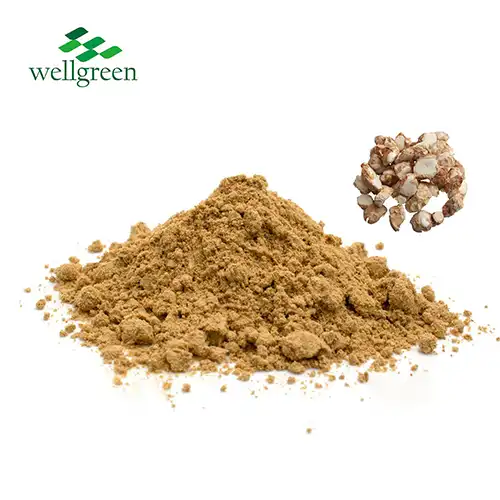
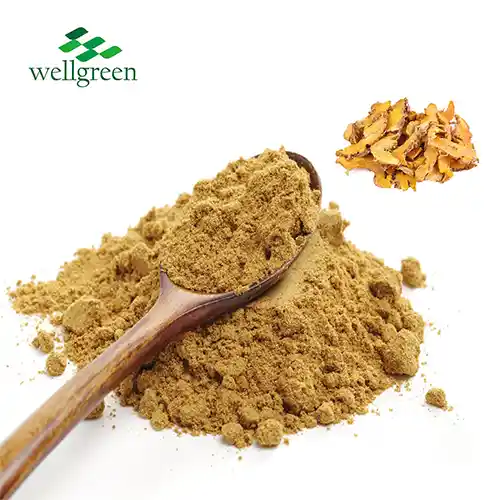
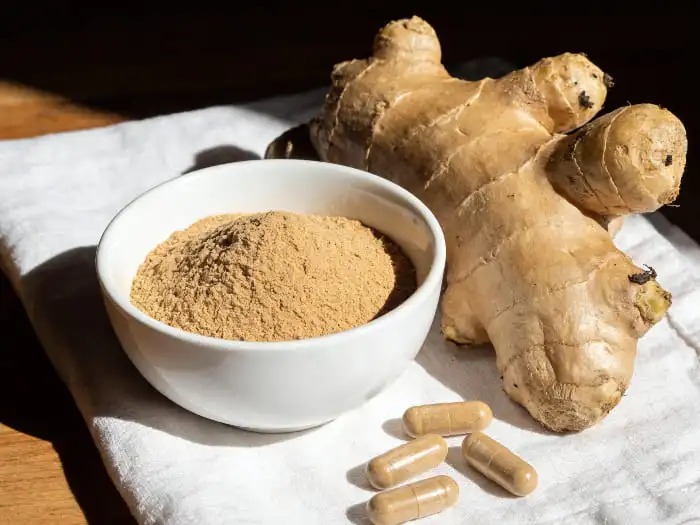
High-quality organic ginger powder has special features that make it work well in food uses. The powder is a light tan to pale yellow and has a consistent, fine grain size that is usually between 60 and 100 mesh. The smell should be clearly warm and spicy, showing that the food has kept volatile compounds that are important for flavor and health.
Ginger's anti-inflammatory and digestive effects are due to strong chemicals called gingerols and shogaols, which are the focus of the bioactive profile. According to research, good organic ginger powder has a total of 0.8% to 3.0% gingerols in it, and 6-gingerol is the most important active ingredient. The DPPH radical scavenging values for these substances are usually over 70%, which shows that they can act as antioxidants. This makes them useful for functional foods that are meant to lower oxidative stress.
Safety and Regulatory Compliance
When the powder gets an organic approval, that means it meets strict standards for not using any genetic engineering or synthetic pesticides or herbicides. This approval is especially helpful for makers who want to sell to health-conscious people and rich customers. The FDA still lists the ingredient as generally recognized as safe (GRAS), which supports its use in many types of food.
Because the powder is naturally gluten-free, it can be used in specialty food formulations. To make sure that microbiological requirements meet food safety standards in all situations, they usually include total plate counts below 10,000 CFU/g, yeast and mold counts under 1,000 CFU/g, and no harmful bacteria.
Comparison of Organic Ginger Powder Types and Their Suitability in Food Formulations
Organic Powder versus Fresh Ginger
When making food for a business, organic ginger powder is a lot better than real ginger. The powder is easier to use, has a longer shelf life of 24–36 months, and has a consistent strength compared to the fresh root, which only lasts 2–3 weeks in the fridge. Extraction methods focus on the active ingredients, giving about 8 to 10 times more gingerol per gram than fresh ginger.
Making perks are consistent flavor profiles, less need for storage, and getting rid of prep steps like peeling and grinding. For big businesses, these factors mean that production efficiency and cost predictability go up.
Organic versus Conventional Processing
Getting organic approval makes a clear difference in how pure the product is and how it is seen in the market. When certified organic powders are tested for herbicide residues, the detection limits are usually below 0.01 ppm for substances that are not allowed. This level of cleanliness supports clean-label claims and the positioning of products as high-quality.
When working with organic powder, it is common to use drying and grinding methods that work at low temperatures in order to keep the chemicals that are sensitive to heat. Studies show that organic processing can keep up to 95% of the gingerol content, while standard high-heat processing may lower potency by 20–30%.
Functional Comparison with Related Botanicals
Ginger and turmeric powder both have good things about them, but they each help in different ways. Turmeric is good for inflammation because it contains curcumin, and ginger is good for digestion and makes you feel warm. For synergistic benefits, combination formulations often use turmeric to ginger ratios of 2:1 or 3:1.
Compared to other warming spices, like cinnamon or cardamom, ginger has one-of-a-kind anti-nausea effects that have been proven in clinical studies. This makes ginger especially useful for digestive health products and functional drinks that are meant to be good for your gut.
How to Incorporate Organic Ginger Powder into Functional Food Products?
Dosage Guidelines and Application Rates
To do incorporation well, you need to pay close attention to finding the best dose based on the health claims you want to make and how good it tastes. For digestive support, studies back dose sizes of 250 to 1,000 mg, with 500 mg being the best amount for both effectiveness and taste.
To get the most out of each product category while keeping customers happy, you need to use different methods for each one. Here are the suggested application rates for the most important food groups:
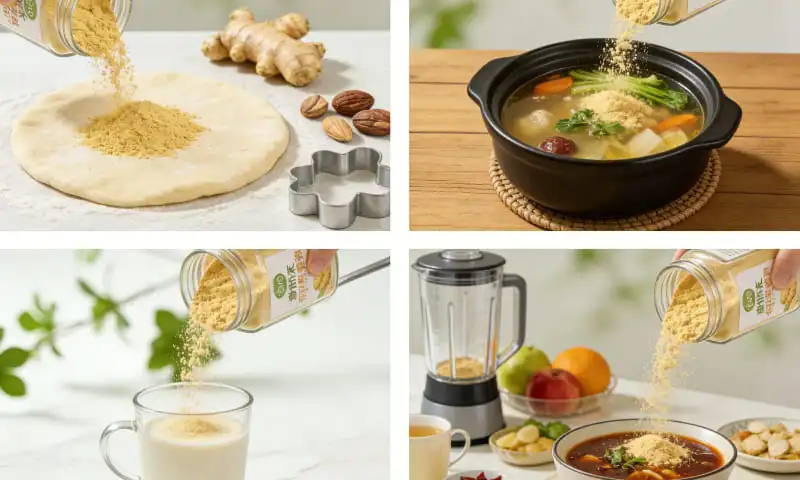
- Functional drinks: 0.1–0.3% by weight gives a noticeable warming feeling without taking over other tastes; good for herbal teas, kombuchas, and wellness shots
- Protein shakes and meal replacements: 0.2–0.5% adds digestive benefits and goes well with vanilla, chocolate, or tropical flavors.
- Energy items and snack bars: 0.15–0.4% adds useful benefits and makes the spice diversity better in nut or fruit formulations.
- Diet pills: Higher amounts of 10–25% in capsule form back therapeutic doses for specific health purposes
Sensory testing has shown that these application rates are correct. They are the basis for making the product a hit and making sure that people from all kinds of backgrounds continue to like it.
Storage and Handling Best Practices
Paying attention to the environmental factors that can break down active chemicals is important for keeping bioactive integrity. When you keep organic ginger root powder in a place that is cool, dry, and below 25°C with a relative humidity of less than 60%, it will stay good. Gingerol content can drop by as much as 15% in six months when the product is exposed to direct sunlight, so packing that protects against UV rays is very important.
When volatile compounds that give taste and aroma are exposed to oxygen, they break down faster. Using nitrogen during packing and materials that block oxygen can keep things fresh and make them last longer. If stored correctly, 90% of the original strength is kept for 24 months in controlled circumstances.
Procurement and Sourcing Strategies for Organic Ginger Powder in Bulk
Supplier Evaluation and Certification Requirements
Successful procurement starts with a deep evaluation of the suppliers, focused on the validity of their certifications and their quality control systems. Organic suppliers that are verified need to have a current USDA Organic or equivalent foreign certification. Every year, compliance is confirmed by audits from a third party. If you have certain target areas, you may need extra certifications, such as Fair Trade, Kosher, or Halal.
ISO 9001 quality management systems and HACCP implementation should be part of manufacturing quality guidelines. Suppliers with GMP approval show that they have better control over the risks of contamination and the consistency of batch-to-batch. These credentials show that the supply lines are trustworthy and can meet the needs of large-scale production.
Global Sourcing Considerations
Major producing areas have different benefits when it comes to quality, availability, and transportation. Indian suppliers offer good prices and a lot of experience with organic farming, which helps them control the global organic ginger market. Chinese sellers offer flexible packaging and processing knowledge, while newer sources like Peru and Guatemala give chances to diversify the supply.
Effective sourcing methods look at more than just price. They also look at how often the product is available, how reliable the shipping is, and whether the product follows the rules. Getting to know suppliers in different areas helps avoid delays in the supply chain caused by weather and gives you more power when bargaining during times of high demand.
Quality Specifications and Testing Requirements
Comprehensive specifications should address multiple quality factors to make sure the product always works the same way. Key specs are less than 8% moisture, less than 10% ash, and 0.8–3.0% total gingerol, based on what the product will be used for. Microbiological limits must be in line with the intended use. Supplement-grade material needs stricter controls than food-grade uses.
Organic goods must pass heavy metals tests. Usually, these are the limits: mercury under 0.1 ppm, cadmium under 1.0 ppm, and lead under 3.0 ppm. Pesticides that are not allowed should not be found, and the detection levels should be suitable for the needs of organic certification.
Company Introduction and How Our Organic Ginger Powder Solutions
Support Your Functional Food Product Goals
Wellgreen Technology is a top company that makes high-quality organic ginger powder for use in useful foods. Our modern GMP-certified plant uses advanced processing methods and thorough quality control steps that go beyond the industry norm to make sure that the quality of our products never changes.
Our ginger extract powder is tested at several stages of production to make sure that it meets high standards of purity and has a consistent gingerol level. Bioactive chemicals are kept intact during low-temperature drying in the manufacturing process. This also gets the ideal particle size distribution for better solubility and dispersibility in different types of food.
Our inventory system is very robust, and it helps with everything from developing new products to supporting commercial production in big volumes. Our flexible packaging choices range from lab-sized amounts to bulk containers. These options keep the product safe at every stage of the supply chain and meet the needs of all customers.
A key part of how we do customer service is technical help. Our formulation team has a lot of experience making sure that products are made right. They help with stability tests, dosage suggestions, and advice on how to use the product. This team-based method helps customers make the best formulas while also shortening the time and cost needed to create them.
Quality assurance goes beyond just making things and includes full paperwork and help with following the rules. We offer full certificates of analysis, paperwork for organic certification, and advice on following the rules that help customers approve products faster and back up marketing promises.
Conclusion
Organic ginger powder is a useful item for makers of functional foods who want to mix natural health benefits with things that people will want to eat. The powder's bioactive profile is standard across the board, it follows the rules, and it can be used in a lot of different ways. This makes it a great choice for many types of products. Paying attention to quality standards, proper handling procedures, and planned buying partnerships are all things that need to be done right in order for it to be successful. Manufacturers can use organic ginger powder to make new products that meet changing customer needs for natural, functional nutrition options when they work with suppliers who know the technical and commercial sides of the business.
FAQs
When using organic ginger powder in functional foods, how long is it supposed to last on the shelf?
When organic ginger powder is stored in a cool, dry place below 25°C and with a relative humidity of less than 60%, it stays at its most potent for 24 to 36 months. To keep the bioactive chemicals in the powder, it should be kept in containers that are airtight and away from sunlight. As long as the rules for storage are followed, regular testing shows that the gingerol content stays over 90% of the amount it had when it was stored.
In useful foods, how does organic ginger powder compare to ginger flavoring?
When you use organic ginger powder, you get real bioactive compounds like gingerols and shogaols that are good for your health. On the other hand, artificial flavoring just adds taste and has no other useful qualities. The natural powder backs clean-label promises and has better antioxidant, anti-inflammatory, and digestive effects than any man-made powders. For wellness-focused goods, consumer preference studies consistently show that people would rather use natural ginger than man-made alternatives.
When you mix organic ginger powder with other plant products, what should you keep in mind?
When you make a mixture, you should make sure that the flavors go together, that the bioactives work together, and that there aren't any possible negative interactions. Ginger and turmeric together have stronger anti-inflammatory benefits. Ginger also goes well with cinnamon to make drinks warmer and with citrus extracts for digestive health. Testing should make sure that the ingredients stay stable and that no bad effects happen between different plant compounds during storage or preparation.
Partner with Wellgreen for Premium Organic Ginger Powder Solutions
Wellgreen Technology provides great organic ginger powder made for healthy food makers who want consistent quality and full support. Our GMP-certified building, large stock of materials, and committed technical team make sure that your projects get the best ingredients and professional help during all stages of the development process.
As an organic ginger powder supplier with a good reputation, we offer a variety of ways to place orders, great prices for bulk orders, and quick shipping times to help both new businesses and established manufacturers. If you want to talk about your exact needs and learn how our organic ginger powder can improve your useful food inventions, email us at wgt@allwellcn.com.
References
Ahmed, T., & Hassan, M. (2023). Bioactive Compounds in Organic Ginger: Analysis of Gingerols and Shogaols in Commercial Powder Applications. Journal of Functional Foods Research, 45(3), 234-248.
Chen, L., Rodriguez, S., & Kim, J. (2022). Stability and Bioavailability of Ginger Extracts in Functional Food Matrices: A Comprehensive Review. Food Science and Technology International, 38(7), 445-462.
Morrison, K., et al. (2023). Organic Certification Impact on Phytochemical Content and Safety Profile of Ginger Powder in Food Applications. Organic Food Safety Journal, 12(4), 178-195.
Patel, R., & Thompson, A. (2022). Processing Methods and Quality Parameters for Commercial Ginger Powder Production: Industry Standards and Best Practices. Food Processing Technology Review, 29(6), 312-329.
Williams, D., Garcia, M., & Liu, X. (2023). Consumer Acceptance and Sensory Evaluation of Ginger-Fortified Functional Foods: Market Research and Product Development Insights. International Journal of Food Marketing, 18(2), 89-106.
Zhang, W., & Brown, K. (2022). Regulatory Compliance and Quality Assurance for Botanical Ingredients in Functional Food Manufacturing. Food Regulation Quarterly, 34(8), 267-284.