How to Use Psyllium Husk Powder in Functional Foods and Supplements?
2026-01-12 17:24:09
This psyllium husk powder is useful because it has a lot of soluble fiber and can gel up. It can be used in food and vitamins. This natural fiber can be added to recipes to improve the texture and stability while also making them better for digestion. Doses of the powder that work well run from 0.5% to 5%, depending on the job. It needs to be carefully mixed with water so that it can thicken and stick to different kinds of product structures.
Understanding Psyllium Husk Powder and Its Functional Benefits
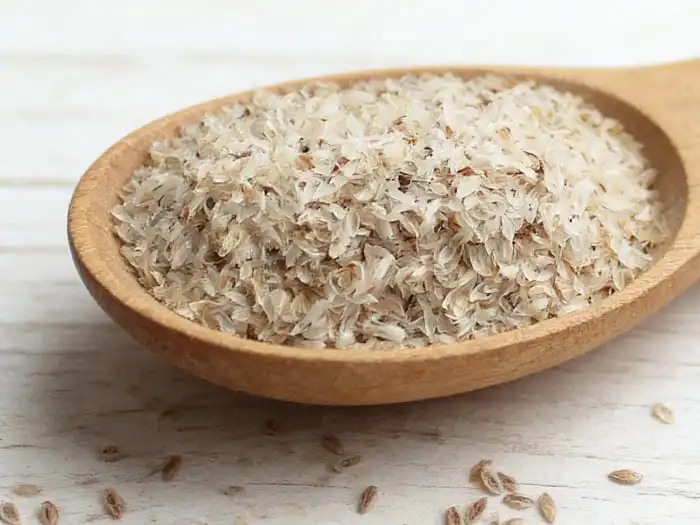
Plantago ovata is the name of the plant that psyllium comes from. It is mostly grown in India and Pakistan for its great seed husks. Because they have about 85% soluble fiber, these husks are one of the best natural ways to get this important mineral. The one-of-a-kind mix has mucilage chemicals that make this ingredient absorb water so well, setting it apart from other fiber sources.
Botanical Origin and Nutritional Profile
The top layer of husk from Plantago ovata seeds is taken off in a special way to get to the healthiest chemicals inside. The powder is made with particles that are all the same size, which makes it easy to spread in factories. Researchers have found that psyllium is mostly made up of arabinoxylans and galacturonic acid. This makes it gel better than other choices like guar gum or methylcellulose.
The amount of nutrients in psyllium is very high, and each gram has about 0.85 grams of dietary fiber. This number lets formulators add a lot of fiber to a product without changing how it tastes or feels. The unique ability of water to hold it has been shown over and over again in clinical tests to help keep cholesterol levels healthy and digestion working normally.
Key Health Benefits for Product Development
These days, people want useful foods that really help their health. Psyllium is a good ingredient for new items because of this. It's good for your heart because it binds to bile acids and helps them leave your body. This keeps your cholesterol levels healthy. Their results were published in major nutrition journals. They found that people who eat 7-10 grams of psyllium every day have much lower amounts of LDL cholesterol.
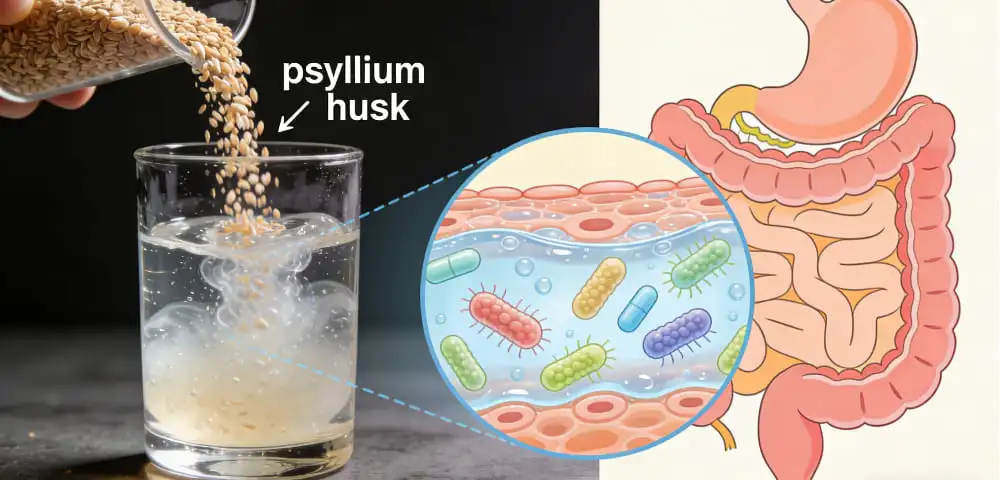
Soaking psyllium makes a gel matrix that helps good bacteria grow in the gut, which is good for your stomach health in other ways. This prebiotic action makes the gut more diverse by adding more microbes. It also helps with regular bowel movements by slowly making the intestines bigger. Instead of strong stimulant laxatives, psyllium is a natural laxative that works well with the digestive system.
Psyllium is being used to help people lose weight because it makes you feel full by making your body bigger. Fiber makes you feel full before a meal, which may help you eat less and better if you want to stay healthy. Since psyllium has these benefits, it can be used to make meal replacements, protein bars, and drinks that help people lose weight.
How Psyllium Husk Powder Works in Functional Food Applications?
Scientists have found that psyllium works so well because it can take so much water - more than 40 times its dry weight in perfect conditions. Powder quickly turns into a network of solid gels when it comes in touch with water. These gels stay stable at all temperatures and pH levels. Because of this, psyllium is very useful for things that need to have a uniform texture and mouthfeel.
Water-Binding and Gel Formation Properties
There are mucilage chemicals in psyllium husks that connect with water molecules and form hydrogen bonds. These links create a three-dimensional web that holds liquids in place. It's like this gel structure is a pseudoplastic material; when shear stress is put on it, it loses some of its viscosity, but when the motion stops, it gets it back. These traits come in very handy when making drinks because the ability to pour and the way the drink feels in the mouth need to be carefully matched.
Another important benefit is that the temperature stays stable. Food is normally processed and kept at temperatures that don't change much. Psyllium gels stay in shape during these times. Some hydrocolloids break down when heated, but psyllium that is properly hydrated can be pasteurized and cooked in a light way without losing its usefulness. It can be used in baked goods, hot cereal, and other warm things because it stays stable at high temperatures.
Industrial Processing Considerations
No matter how they are mixed or made, ingredients in a manufacturing setting need to always work the same way. Psyllium can be mixed with most kitchen tools, but it's important to use the right ways to water it for the best results. Most of the time, the powder is mixed with water for 10 to 15 minutes before it is added to the mixture. This gives the gel time to completely set.
Both how the process works and what the final result is like depend on how the particle sizes are spread out. Finer mesh sizes (80-100 mesh) have smoother textures that work well for drinks and supplements. Rougher grades, on the other hand, are better for baking where you want some texture. A good source will have a range of mesh sizes so that they can meet the needs of different mixtures.
Sometimes psyllium works well when mixed with other things, but there are some things to remember. Some places may slow down how quickly plants take in water, and places with too much salt may make gels less strong. If recipe developers know how these things affect each other, they can make recipes work better and appeal to more people.
Practical Guide: How to Use Psyllium Husk Powder in Product Development
To add psyllium powder to commercial goods that work, dosage levels, processing methods, and following the law must all be carefully thought out. Skilled formulators who can get good materials and technical help can deal with the challenges and opportunities that come with each type of product.
Dosage Recommendations by Product Category
Dietary products that give you therapeutic amounts of soluble fiber often have higher amounts of psyllium. The amount of medicine in a capsule is generally between 500 mg and 1000 mg. The amount of powdered supplements in a serving of drinks can be between 3 and 7 grams. These amounts are in line with health benefits found in clinical studies and are also safe for consumption according to government rules.
Less stuff needs to be added to functional drinks so they taste good and are easy to pour. As little as 0.5% to 2% of the product can be added to see fiber without making it too thick, which some customers may not like. Ready-to-drink formulas are made with longer hydration times that make sure the gel forms all the way before they are packed.
Bakery goods use psyllium to keep in moisture and make them last longer because it can bind things together. Inclusion rates are usually between 1% and 3% of the flour's weight, but they depend on how thick you want the dough to be. In gluten-free recipes, higher amounts may be used to make the binding properties that wheat proteins usually have.
Processing Protocols and Quality Control
Before you can add psyllium to something, you need to make sure it is properly hydrated. Room-temperature water should be used to make a smooth slurry. It should then be left alone for 10 to 15 minutes so that it fully absorbs water before being added to main recipes. Softer ways of mixing are better because high-shear mixing can stop gels from forming.
Food safety rules are met and the psyllium's useful properties are kept by keeping an eye on the temperature while it is being processed. For most purposes, it's best to keep temperatures below 85°C for a long time. But if the food has been properly hydrated, the short time it spends at higher temperatures during pasteurization rarely causes problems.
To make sure the quality is good, tests should look at both the raw materials' specs and the final product's features. A lot of things matter, like how much water is in the gel, how the particle sizes are spread out, how many germs are there, and how strong the gel is. By setting these standards, work can go on as usual while still following the rules.
Regulatory Compliance and Labeling Considerations
The Food and Drug Administration (FDA) says that psyllium can be used in foods and vitamins as long as it is labeled in a certain way. Products that have a lot of it have to say that they do. If they meet certain standards, they may also be able to say that they are good for your heart. These regulatory pathways are great for selling products to people who care about their health.
Psyllium husk powder is safe and works well, and European markets follow rules set by the EFSA that back this up. Certain health claims, like those that help with digestion and lower cholesterol, are allowed, but they have to be put in a very specific way. You will be sure to follow the rules in many places if you work with skilled regulatory consultants.
Concerns about allergens are still low when it comes to psyllium because the ingredient doesn't usually make healthy people sick. People who are allergic to plants should be careful, though, and the right marking helps protect weak groups while also following the law.
Selecting the Right Psyllium Husk Powder for Your Supply Chain
A lot of things must be thought about when choosing what to buy because they affect both how well the product works and how well the business does. Specific formulation needs and strategies for positioning in the market must be weighed against worries about quality, dependability of suppliers, and cost.
Comparative Analysis with Alternative Fiber Sources
Other soluble fiber sources don't stay stable at high temperatures as well as psyllium does. Even though chia seeds are good for you, they don't taste neutral like psyllium does, which makes it useful in many cases. Fiber and omega-3 fatty acids are found in flaxseed meal, but it needs to be kept carefully so that it doesn't go bad.
Oat beta-glucan is another type of soluble fiber that has been shown to lower cholesterol. It is not as thick as psyllium, but it does the same job. Which one to choose depends on the goals of the design, the available budget, and the tastes of the target market. A lot of great goods use more than one kind of fiber to make them work better and be better for you.
Methylcellulose and other synthetic alternatives can regularly thicken, but they don't have the natural positioning that people who like clean labels like. Market research consistently reveals that individuals favor known plant-based ingredients over man-made ones. Because of this, psyllium is a great element for high-end brands.
Quality Parameters and Supplier Evaluation
Because the quality of food can change a lot depending on how it was grown and processed, purity levels are very important to look at when moving between sources. Most premium types are at least 98% pure, meaning that they don't have a lot of other plants or chemicals that aren't from the same plant. These rules make sure that the job is always done right and that very high standards for food safety are met.
Certified organic products are more valuable for people who like natural and organic products, but they might not be as easy to find as regular products. Certified organic psyllium costs more, but it lets you reach a market that is growing quickly and is made up of people who want foods that are good for the environment and don't have any chemicals in them.
This is because psyllium comes from farming, so it needs to be carefully checked for microbes. Some of the thorough testing methods used by suppliers with a good image are disease screening, yeast and mold counts, and total plate counts. These steps make sure the food is safe to eat and help the finished goods last longer.
Supply Chain Optimization Strategies
It is important to know where your psyllium husk fiber comes from because most of it is grown in certain places of India and Pakistan. This affects both price and supply security. Supply and demand can be changed by things like the weather, the value of the currency, and the safety of the government. Having different kinds of relationships with suppliers in different places can help lower these risks and keep your supply steady.
There are ways to save a lot of money when you buy things in bulk, but you need to be sure you have enough room. Psyllium stays good for a long time if it is kept in cool, dry places and away from bugs. To find the best amount of inventory to keep on hand, you need to compare the saves in money to the costs of keeping it safe and making sure it's in good shape.
Cost and quality are both affected by how well you plan for shipping and delivery. Psyllium absorbs water, so it needs to be kept dry while it's being shipped and stored. This means there is a certain way to pack and handle it. Working with transportation partners who have a lot of experience and know a lot about food can help keep quality issues from happening and speed up delivery times.
Wellgreen Technology: Your Trusted Partner for Premium Plant Extracts
Plant-based goods that meet the strict needs of food and supplement makers all over the world are what we do for a living. We've dealt with plant extracts and traded abroad for a long time, so we know the specific issues that product developers and procurement workers face in the present day.
Comprehensive Product Portfolio and Manufacturing Capabilities
Our new, GMP-approved plant follows strict quality standards at every stage of the process, from picking out the raw materials to packing them. Because they want to be the best, every batch of psyllium husk powder meets or exceeds customer expectations and stays stable enough for large-scale production.
There is both organic and regular psyllium in the range of goods, as well as meshes of different sizes to fit different needs. You can get the exact particle size distribution you need for your recipe with custom milling services, whether you want a smooth drink or a messy food. This freedom is great for private-label makers who want to please a lot of different types of customers.
Quality assurance rules say that many parts of the production process must be tested carefully. For example, the raw materials must be checked, the work must be watched, and the end product must be approved. We have advanced analytical tools in our lab that let us check for microbes, find out how pure something is, and prove that it has useful properties. These steps make sure that the quality of our goods always stays the same and help people trust us.
Global Supply Chain Expertise and Customer Support
When shipping packages around the world, we ensure timely delivery, complete documentation, and optimized handling for every shipment. The transportation team works with dependable shipping partners to make sure that goods arrive on time and keep their quality while they're in transit. This information is very helpful for customers who need just-in-time delivery plans.
Technical support services help customers get the best results in their own applications by giving them tips on how to formulate, test, and fix problems. The food scientists and application specialists on our team have worked in a lot of different fields. They can speed up the process of making new goods and lower the risks that come with it.
Regulatory compliance support gives customers paperwork that makes the approval process go more easily. This helps them deal with the complicated rules of different markets. Because we know about labels and standards in other countries, we can get into markets faster while still following all the rules there.
Conclusion
Psyllium husk powder is a versatile and scientifically proven ingredient that can help with a number of formulation issues while also giving customers real health benefits. Because it is water-binding, stable at high temperatures, and doesn't have a strong flavor, it can be used in a wide range of supplement, food, and drink uses. To be successful with psyllium, you need to pay close attention to the quality standards, processing methods, and supplier choices to make sure consistent performance and compliance with regulations. As the need for functional ingredients among consumers grows, psyllium provides manufacturers with a tried-and-true way to make goods that meet both nutritional and sensory needs in today's market.
FAQs
How much psyllium should be in pill forms for best results?
Dietary supplements usually have between 500 mg and 7 grams of psyllium per serving, but this can change based on the health benefit and how the supplement is delivered. Most capsule supplements have between 500 mg and 1000 mg of fiber per capsule, while powdered supplements may have between 3 and 7 grams of fiber per serving, which is what clinical study says is needed for therapeutic levels of fiber intake.
How can companies make sure that the taste stays the same in gluten-free baking?
Adding psyllium at a rate of 1% to 3% of the flour weight is good for gluten-free recipes, but it's important to use the right soaking methods. Pre-hydrating the psyllium in some of the liquid in the recipe for 10 to 15 minutes before mixing makes the best binding qualities that work like wheat gluten while keeping more of the moisture.
What are the best ways to make sure that the quality of the bulk is always the same when buying it?
Setting clear standards for levels of purity, particle size distribution, and microbial factors helps make sure that the quality of each shipment is the same. Working with providers who give full certificates of analysis and follow strict quality control rules lowers variation and helps ensure predictable product performance.
Can psyllium make it hard to process things in high-temperature settings?
When psyllium is properly hydrated, it can handle mild heating without losing its effectiveness. However, long-term exposure to temperatures above 85°C may weaken the gel. Pre-hydrating before cooking and using gentle processing methods can help baked goods and other heated items keep working at their best.
How does organic approval change the prices and availability of buying in bulk?
Organic psyllium usually costs more than regular psyllium, and it may not always be available because it is produced in smaller amounts. Planning purchases around harvest times and keeping in touch with multiple certified sources is a good way to make sure there is enough supply while keeping costs low.
Partner with Wellgreen for Premium Psyllium Solutions
Wellgreen Technology stands ready to support your product development initiatives with premium-quality psyllium husk powder backed by comprehensive technical expertise and reliable global supply capabilities. Our GMP-certified manufacturing processes ensure consistent quality that meets the demanding requirements of nutraceutical, food, and pharmaceutical applications. As a trusted psyllium husk powder supplier, we offer competitive pricing structures, flexible minimum order quantities, and personalized customer service that adapts to your specific procurement needs. Contact our technical team at wgt@allwellcn.com to request samples, discuss custom specifications, or explore how our extensive ingredient portfolio can enhance your product innovation pipeline.
References
Anderson, J. W., Allgood, L. D., Lawrence, A., et al. "Cholesterol-lowering effects of psyllium intake adjunctive to diet therapy in men and women with hypercholesterolemia: meta-analysis of 8 controlled trials." American Journal of Clinical Nutrition, vol. 71, no. 2, 2000, pp. 472-479.
Singh, B., & Sharma, N. "Mechanistic implications of plastic degradation and psyllium seed husk in industrial food processing applications." Food Hydrocolloids, vol. 89, 2019, pp. 915-929.
McRorie, J. W., & McKeown, N. M. "Understanding the Physics of Functional Fibers in the Gastrointestinal Tract: An Evidence-Based Approach to Resolving Enduring Misconceptions about Insoluble and Soluble Fiber." Journal of the Academy of Nutrition and Dietetics, vol. 117, no. 2, 2017, pp. 251-264.
Mudgil, D., Barak, S., & Khatkar, B. S. "Functional properties of processed free and bound phenolic compounds from psyllium (Plantago ovata Forsk) seed husk." LWT - Food Science and Technology, vol. 63, no. 1, 2015, pp. 321-328.
European Food Safety Authority. "Scientific Opinion on the substantiation of health claims related to psyllium husk powder and maintenance of normal blood cholesterol concentrations." EFSA Journal, vol. 8, no. 2, 2010, pp. 1463-1482.
Williams, C. L., Bollella, M., & Wynder, E. L. "A new recommendation for dietary fiber in childhood: functional foods containing psyllium husk for cardiovascular health promotion." Pediatrics, vol. 96, no. 5, 1995, pp. 985-988.