How to Use Reishi Mushroom Powder?
2026-04-30 14:00:00
Reishi mushroom powder has become an important ingredient in the supplement and nutraceutical businesses around the world, especially in the US market where demand for immune-boosting and adaptogenic products keeps going up. It is now necessary for procurement managers, product developers, and regulatory teams to understand the technical details, application methods, and sourcing parameters of this botanical extract. Not doing so is not an option for those who want to make competitive products and build long-term relationships with suppliers. This complete guide covers all the practical and strategic aspects of adding reishi extract to your product line, from manufacturing techniques to compliance frameworks. It will help you make sure that your purchasing decisions are in line with what the market wants and what the science says works.
Understanding Reishi Mushroom Powder and Its Benefits
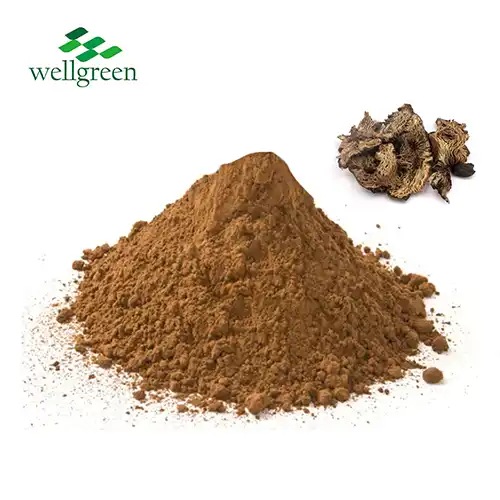
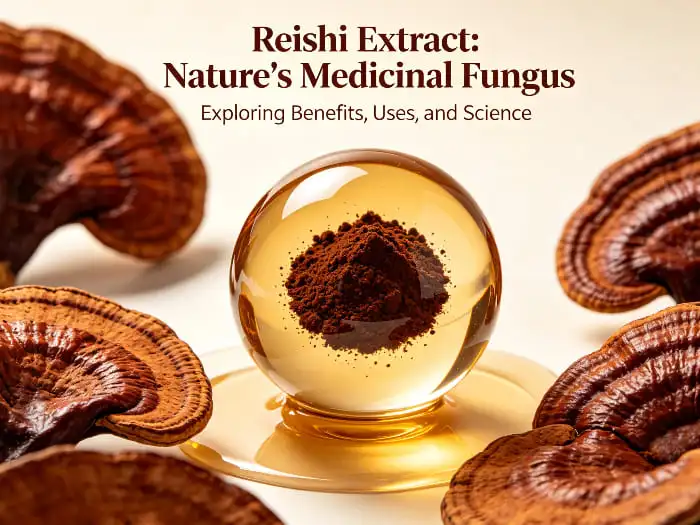
Ganoderma lucidum growing bodies are where reishi mushroom extract powder comes from. This makes it one of the most commonly used polysaccharide-rich plant extracts in both traditional and modern medicine. This ingredient is used in functional food matrixes, immune support dietary supplements, and compound botanical formulas, and it has been used consistently and is well-known in the market.
Key Active Components and Functional Advantages
Polysaccharides and triterpenoids are the two main groups of beneficial compounds that make reishi mushroom powder work. It is known that polysaccharides, especially beta-glucans, can change the immune system by working with macrophages and dendritic cells to make immune monitoring better. Triterpenoids, especially ganoderic acids, help fight inflammation and free radicals. The polysaccharide content of raw materials is usually between 10% and 50%, based on how they were extracted, and the triterpenoid concentration is usually between 2% and 6%. These factors directly affect how a product is positioned: immune-boosting capsules work best with higher polysaccharide extracts, while adaptogenic mixes do well with balanced profiles.
Extraction Methods and Their Impact on Formulation
In order to concentrate bioactive chemicals, manufacturers either use hot water extraction or dual extraction (water and ethanol). Hot water extraction increases the amount of polysaccharides that are extracted, making powders that dissolve in water that are perfect for use in drinks and quick drink mixes. Dual extraction gets both polysaccharides that dissolve in water and triterpenoids that dissolve in alcohol. This makes a full-spectrum extract that is best for high-potency pills and tablets. For companies that make functional drinks, the extract has to be able to dissolve in water without settling to the bottom. It also has to stay stable at brewing temperatures of up to 100°C and in acidic pH environments that are common in tea and coffee mixes. By knowing these differences, procurement teams can choose the right extract types based on how they want to give the information.
Nutritional Profile and Quality Markers
Along with active chemicals, good reishi mushroom powder has certain technical features that show it was made with care. Heavy metal levels (lead, arsenic, cadmium, and mercury) must stay below strict limits set by FDA and European Pharmacopoeia standards. Premium extracts keep their moisture content below 5% to stop microbes from growing during storage. Microbiological requirements include a total plate count of less than 10,000 CFU/g and no E. coli, Salmonella, or Staphylococcus aureus. These markers are very important for pharmaceutical and nutritional uses, which are closely watched by regulators. The argument between fruiting body and mycelium is also important. Fruiting body extracts have more bioactive chemicals and less starch filler, which is why they are better for therapeutic-grade formulations.
How to Use Reishi Mushroom Powder: Practical Application Guide
To successfully add reishi mushroom powder to commercial products, you need to know the exact dosage requirements, formulation methods, and application-specific issues that affect both effectiveness and customer acceptance.
Industry-Standard Dosage Ranges Across Product Formats
Based on clinical studies and traditional use, daily doses of reishi extract standardised to 10–30% polysaccharides are between 1,500 mg and 3,000 mg are helpful. When it comes to capsules, a normal serving is 500 mg, so people need to take three to six capsules every day to reach therapeutic levels. Tablets can hold more medicine, usually 1,000 mg per tablet, which makes pills easier to carry. Powders that are meant to be mixed with drinks usually say to use 1-2 grammes per serving, taking into account how much the powder will dilute and how well people can handle earthy, slightly bitter tastes. During procurement talks, these dosage guidelines have a direct effect on your minimum order quantities and cost-per-serving calculations.
Formulation Techniques for Different Product Applications
When making functional mushroom coffee or adaptogenic drink mixes, the reishi extract needs to be completely spread out so that it doesn't stick together or settle. It's important to know how big the particles are; extracts ground to 80–120 mesh give the best flowability and stability in suspension. When enclosing something, you need to think about different things. For example, the powder's bulk density (usually 0.40-0.60 g/ml) affects how accurately automatic capsule-filling tools can measure the fill weight. When bulk density is low, capsules may not be fully filled, and dosing may not be uniform. When bulk density is high, machines may get stuck. When making tablets, companies have to think about how the tablets will compress. For example, reishi powder often needs binding agents like microcrystalline cellulose or maltodextrin to get the right hardness and breakdown times without lowering its bioavailability.
Synergistic Blending with Complementary Botanicals
Market data shows that people are becoming more interested in multi-mushroom formulas that mix reishi, cordyceps, and lion's mane to make what experts call "mushroom matrix" goods. Reishi helps the immune system and improves the quality of sleep. Cordyceps gives you energy and improves sports performance. Lion's mane is good for your brain and nerves. To get a full health picture, balance ratios usually include 40–50% reishi, 30–35% lion's mane, and 15–20% cordyceps when making these blends. This method helps brands stand out in supplement markets that are already very crowded while still meeting a wide range of customer needs with a single SKU. Suppliers who offer pre-blended mushroom matrices with full certificates of analysis and stability from batch to batch are good for procurement teams.
Timing and Frequency Recommendations
Understanding optimal consumption habits helps B2B clients make better marketing materials and product education, even though it's mostly useful for end users. The adaptogenic qualities of reishi work over time, so you need to take it every day for 8 to 12 weeks to see real improvements in your immune system and stress response. Products meant to help you sleep often say to take them in the evening because some triterpenoid parts may help you relax. On the other hand, formulas that focus on immune support during the day should not include messages related to sedatives. Label claims, marketing copy, and compliance review methods are all affected by these small details.
Bulk Procurement Considerations for Reishi Mushroom Powder
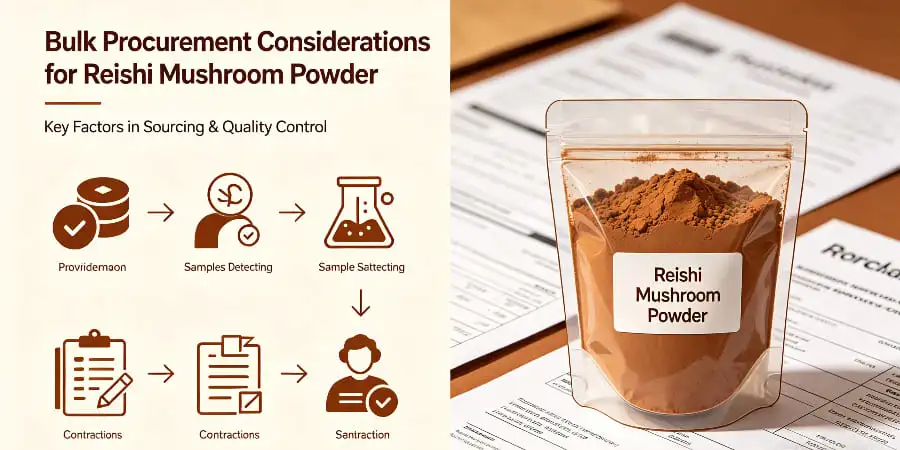
Getting reliable, high-quality reishi mushroom extract in large amounts takes a thorough analysis of pricing structures, supplier capabilities, and logistical frameworks that have a direct effect on product development timelines and profits.
Price-Quality Dynamics and Specification Customization
Prices in the plant extract market vary a lot depending on the level of standardisation, the ratio of extraction, and the quality of the source material. A 10:1 extraction ratio (10 kg of raw material makes 1 kg of extract) usually costs less than a 30:1 ratio. However, concentration alone doesn't mean that the bioactivity is better; the extraction method and testing processes are more important. Standardised extracts that are sure to have certain amounts of polysaccharides cost more than generic extracts but give formulation consistency that generic extracts can't match. Wellgreen Technology specialises in customising polysaccharide standardisation standards that let clients find the best balance between cost and desired effectiveness. You can choose between organic and standard grades, change the particle size for different uses, and even make your own mushroom blend ratios for OEM/ODM partnerships.
Minimum Order Quantities and Scalability
Suppliers usually set minimum order amounts that range from 25 kg to 1,000 kg, depending on the type of extraction and the level of customisation. Smaller MOQs are good for new brands that are trying how the market reacts, while higher volumes allow established manufacturers to use volume-based pricing, which is important for them to do business at scale. Procurement teams should think about store space, product development timelines, and inventory turnover rates when figuring out MOQ requirements. When stored properly in cool, dry places below 25°C with relative humidity below 60%, reishi mushroom extract stays stable for 24 to 36 months. This means that larger purchases are financially feasible for goods that have been selling quickly. Suppliers with flexible MOQs show operating flexibility, which is helpful for brands whose demand changes with the seasons or who have a lot of new products coming out at once that need different extract specifications.
Certification Requirements and Regulatory Compliance
Different markets have very different rules about botanical dietary supplements, which makes it hard to meet the requirements for foreign purchases. Products that are going to be sold in the US have to follow FDA rules about dietary supplements. These rules include New Dietary Ingredient (NDI) notices if they apply, correct labelling according to 21 CFR 101, and following current Good Manufacturing Practices (cGMP) as explained in 21 CFR 111. EU Novel Food Regulation, Traditional Herbal Medicinal Products Directive, and strict heavy metal limits set by European Pharmacopoeia must all be followed in order to sell goods in Europe. For each batch, responsible providers keep a lot of paperwork, such as Certificates of Analysis (CoA), tests for residual solvents, pesticide screening, and microbiological reports. This paperwork is what your regulatory filing packages and customer audits are built on.
Logistics and Supply Chain Risk Management
Getting botanicals from other countries adds logistical challenges that can throw off production schedules if they are not handled well. It usually takes 45 to 90 days from the time an order is placed until it arrives at the warehouse. This includes production, quality testing, export paperwork, ocean freight, customs clearance, and marketing within the country. To make sure there aren't any supply interruptions caused by things like port congestion, customs delays, or seller capacity limits, procurement managers should set buffer inventory levels that cover at least two production cycles. It is important to have relationships with freight forwarding companies that have experienced brokers who can help you understand the Harmonised System (HS) code classification (usually 1302.19 for plant extracts), handle phytosanitary certificates, and make sure that the right temperature is maintained during transit to protect the bioactive integrity of the goods. Having multiple qualified suppliers gives you a safety net, but finding good backup sources costs money for things like sample tests and facility audits.
Best Practices to Ensure Safe and Effective Use
Product safety and regulatory compliance must be maintained throughout the lifecycle of a product. This protects the brand's image, the health of consumers, and market access, and it also helps the business grow in the long term.
Quality Control Protocols and Contamination Prevention
Before being sent to production plants, strict quality control starts with checking the raw materials against known standards. This includes evaluating the food's look, smell, and taste, making sure it's real by using HPLC fingerprinting or DNA barcoding to stop tampering, and making sure it's safe by checking for heavy metals, pesticides, aflatoxins, and microbes that could be harmful. To keep things from getting contaminated while they are being processed, mixed, or packaged, factories need to have environmental monitoring programmes, sanitation standard operating procedures, and hygiene guidelines for workers. The testing of finished goods should be the same as the testing of arriving materials, and samples should be kept for stability studies and to look into any complaints from the field. These methods are in line with cGMP rules and are the most important part of quality assurance programmes.
Dosage Adjustments and Regional Regulatory Frameworks
Different regulatory bodies set different maximum daily dose limits and need different label warnings or reasons why the drug shouldn't be used. In the US, dietary supplements can come in a wide range of doses as long as they are backed up by safety proof. However, European Union member states may set stricter limits through their own food supplement regulations. Products sold in Canada need to follow the Natural Health Products Regulations, which include getting Health Canada's approval before going on sale and having specific dosage instructions passed. Before starting large-scale production, the procurement and product development teams need to work together with regulatory experts to make sure that formulations meet the needs of the target market. This careful research keeps expensive re-formulations, changes to the package, or pulling the product from the market from happening.
Labeling Compliance and Health Claim Restrictions
In the US, dietary supplement labels must have a Supplement Facts panel, the right disclaimers ("This statement has not been evaluated by the FDA..."), and they must be very careful not to make disease claims that would make the product an illegal drug again. If you have the right proof and let the FDA know about structure-function claims (like "supports immune health"), they are legal. But if you make disease claims (like "treats cancer" or "cures diabetes"), they will be enforced by the government. Even tighter rules apply to health claims in European markets. Only pre-authorized claims listed in EU Regulation 1924/2006 can be put on labels, and it's very hard to prove reishi-specific claims. Legal review is needed to figure out these complicated requirements, and claim substantiation dossiers from suppliers that include relevant clinical research and traditional use evidence are often helpful.
Conclusion
Strategic procurement of reishi mushroom extract requires balancing multiple considerations—bioactive standardization, extraction methodology, certification requirements, application-specific formulation needs, and regulatory compliance frameworks. The insights presented throughout this guide equip procurement managers, product developers, and OEM partners with the technical knowledge necessary to make informed sourcing decisions that enhance product efficacy, ensure consumer safety, and support brand differentiation in competitive wellness markets. Successful integration of reishi into your product portfolio depends on selecting suppliers who demonstrate manufacturing excellence, maintain rigorous quality systems, provide comprehensive technical support, and understand the unique demands of nutraceutical and functional food applications.
FAQ
What storage conditions best preserve reishi extract bioactivity?
Reishi mushroom powder should be stored in sealed, light-resistant containers within temperature-controlled environments below 25°C and relative humidity under 60%. Exposure to moisture accelerates polysaccharide degradation and creates conditions favorable for microbial growth, while high temperatures can degrade triterpenoid content. Proper storage maintains bioactive compound stability for 24-36 months from manufacture date.
Can reishi extract be combined with pharmaceutical ingredients?
Reishi may interact with anticoagulant medications, immunosuppressants, and blood pressure medications due to its bioactive compounds. Pharmaceutical formulators must conduct interaction studies and review contraindications thoroughly. For dietary supplement applications, appropriate label warnings regarding medication interactions and medical condition consultation should appear on packaging.
How does extract concentration affect cost and efficacy?
Higher extraction ratios and polysaccharide standardization increase raw material costs but allow for smaller serving sizes and more concentrated formulations. A 30:1 extract standardized to 50% polysaccharides delivers greater bioactivity per gram than a 10:1 extract at 20% polysaccharides, potentially justifying premium pricing through enhanced efficacy and reduced capsule counts per serving.
Partner with Wellgreen for Premium Reishi Extract Supply
Wellgreen Technology operates as a professional plant extract powder manufacturer and supplier, maintaining GMP-certified production facilities, extensive inventory systems, and comprehensive certification portfolios designed to meet the exacting standards of nutraceutical and pharmaceutical clients. Our reishi extract offerings include customizable polysaccharide standardization specifications, organic and conventional grades, and batch stability that supports long-term brand partnerships. We provide formulation consultation for complex mushroom matrix blends, OEM/ODM application development support, and rapid technical response to specification questions. Contact our procurement team at wgt@allwellcn.com to request detailed product specifications, certificates of analysis, and sample quantities for formulation trials. As your reishi extract supplier, we're committed to transparent communication, consistent quality delivery, and partnership in your product innovation journey.
References
Wachtel-Galor, S., Yuen, J., Buswell, J. A., & Benzie, I. F. F. (2011). Ganoderma lucidum (Lingzhi or Reishi): A Medicinal Mushroom. In Herbal Medicine: Biomolecular and Clinical Aspects (2nd ed.). CRC Press/Taylor & Francis.
Boh, B., Berovic, M., Zhang, J., & Zhi-Bin, L. (2007). Ganoderma lucidum and its pharmaceutically active compounds. Biotechnology Annual Review, 13, 265-301.
Sanodiya, B. S., Thakur, G. S., Baghel, R. K., Prasad, G. B., & Bisen, P. S. (2009). Ganoderma lucidum: a potent pharmacological macrofungus. Current Pharmaceutical Biotechnology, 10(8), 717-742.
Lindequist, U., Niedermeyer, T. H., & Jülich, W. D. (2005). The pharmacological potential of mushrooms. Evidence-Based Complementary and Alternative Medicine, 2(3), 285-299.
Xu, Z., Chen, X., Zhong, Z., Chen, L., & Wang, Y. (2011). Ganoderma lucidum polysaccharides: immunomodulation and potential anti-tumor activities. American Journal of Chinese Medicine, 39(1), 15-27.
Bishop, K. S., Kao, C. H., Xu, Y., Glucina, M. P., Paterson, R. R., & Ferguson, L. R. (2015). From 2000 years of Ganoderma lucidum to recent developments in nutraceuticals. Phytochemistry, 114, 56-65.