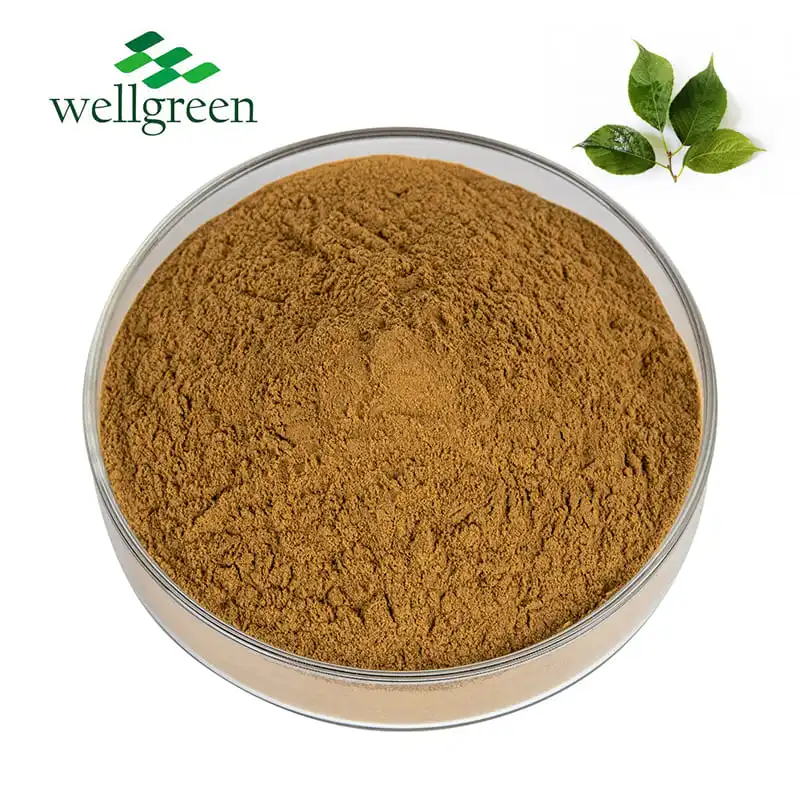
How Yucca Extract Feed Grade Works as a Natural Feed Additive for Modern Farming
2026-09-14 15:09:06
Yucca Extract Feed Grade, derived from Yucca schidigera, is a standardized botanical ingredient engineered specifically for animal nutrition applications. Its core active compounds — steroidal saponins — work by binding ammonia in the digestive tract and modulating gut microbiota, resulting in measurably lower emissions and improved feed utilization. Unlike general plant extracts, this feed-grade material meets strict purity and contaminant thresholds required by commercial livestock operations. Understanding its mechanism helps procurement teams, formulation scientists, and feed manufacturers make informed sourcing decisions aligned with both performance targets and regulatory requirements.
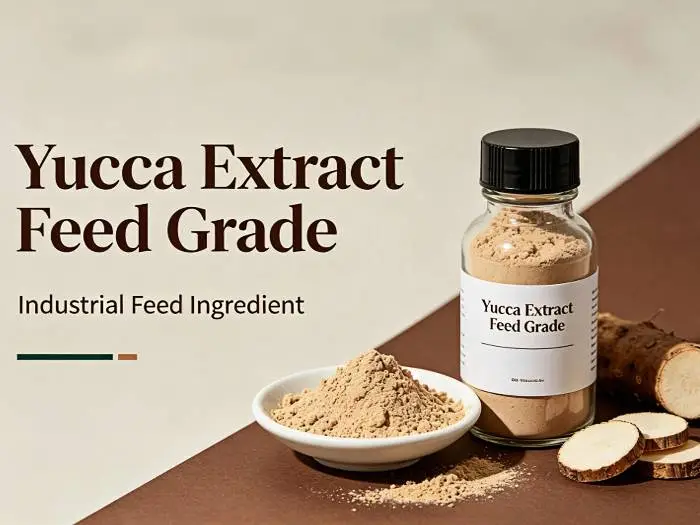
Understanding Yucca Extract Feed Grade: Composition and Mechanism
For decades, researchers have looked into how to feed animals Yucca schidigera juice. The Yucca Extract Feed Grade is different not only because it comes from plants, but also because the amount of steroidal saponins is limited and the same in every batch.
What Are Steroidal Saponins and Why Do They Matter?
Yucca's main use in animal feed is through steroidal saponins, which are useful chemicals. They bind to ammoniacal nitrogen compounds in the gut, which slows down the process of making and absorbing ammonia. According to a study published in 2012 in Livestock Science, Yucca saponins significantly decreased urease activity in the hindgut of swine. This is directly related to lower ammonia release from manure. For procurement managers, this means that the assay value on a certificate of analysis is not just for show; it actually tells them what the product will do in the barn.
Mechanism of Action in Animal Digestion
Saponins work with intestinal epithelial cells to improve nutrient uptake in addition to lowering ammonia levels. They make the gut lining's surface area bigger by making the membranes less stiff, which makes it easier for amino acids and glucose to be absorbed. Because they work in two ways—environmental and nutritional—Yucca-based products are still useful in programs for feeding chickens, pigs, fish, and cows. Standard rates for adding things to full feed are usually between 50 and 150 grams per metric ton, but the exact amount needed varies based on the amount of saponin and the species being targeted.
Benefits of Yucca Extract Feed Grade in Modern Farming
In industrial farming, Yucca Extract Feed Grade saponin powder is useful in three areas that are all connected: protecting animals, making operations more efficient, and protecting the environment.
Here are the measured benefits of this ingredient that make it useful in current feed programs:
- Ammonia reduction at the source: Steroidal saponins bind urease substrates in the gut before ammonia can escape, which greatly lowers the amount of ammonia in the barn air. Studies using broiler models have shown that under controlled conditions, ammonia levels drop by 30–50%. This directly lowers the risk of respiratory disease in animals that are kept inside.
- Improved Feed Conversion Ratio (FCR): An animal that isn't as stressed by ammonia puts more of its metabolic energy into growth instead of immune defense. Commercial tests on pig farms showed that adding Yucca saponin powder at tested levels improved FCR, which meant that the pigs gained more weight per unit of feed they ate.
- Gut microbiota modulation: Saponins specifically kill certain groups of harmful bacteria while boosting good microbes. This microbiota-shaping effect helps keep the intestines healthy, lowers the risk of diarrhea, and lowers the need for antibiotics, which is important in markets where antibiotic growth promoter (AGP) restrictions are getting stricter.
- Reduced metabolic burden: Lowering the body's absorption of ammonia means that the liver and kidneys have to handle less nitrogenous waste. This keeps organs working well and makes animals with long production cycles, like sows and broiler producers, healthier overall.
Chicken processors, pig farmers, and aquaculture owners all have real problems that these benefits help to solve. Yucca saponin extract often works better with other herbal additives like plant-based enzymes or organic acids. This makes it a useful part of natural additive programs that use more than one ingredient.
Choosing the Right Yucca Extract Feed Grade Product
Not all materials made from Yucca work the same way in feed applications. To choose a technically good Yucca Extract Feed Grade product, you need to look at a number of quality factors that are all connected.
Saponin Assay and Batch Consistency
The main thing that buyers should check is the saponin content, which is given as a percentage of the total extract. Wellgreen has normal ranges of saponins from 10% up to 98%, and they have approved testing methods and batch-level data for suppliers to look at. For feed companies that do constant blending, batch-to-batch uniformity is a must because the safety of the formulation depends on the active ingredients being the same in each batch.
Physical Form and Processing Compatibility
Yucca Extract Feed Grade powder that is safe for animals can be mixed right into premix systems, functional feed mixes, and complex additive matrices. Powder forms are better than liquid forms because they are easier to flow, spread out evenly when mixed, and stay stable on the shelf. Buyers should ask for information on particle size and bulk density to make sure that the product will work with their current mixing equipment and premix production lines.
Certifications and Compliance Documentation
When buying from other businesses in the US and other countries, supplier certification is just as important as product specifications. GMP compliance, FAMI-QS alignment for feed ingredient supply chains, and full contaminant control data that includes heavy metals, pesticide residues, and microbiological limits are all important quality system indicators. Wellgreen keeps its production facilities GMP-certified and helps suppliers meet the standards for full documentation packages.
Procurement Strategies for Yucca Extract Feed Grade
Yucca Extract Feed Grade botanical ingredients are goods that change in price based on volume. A structured buying strategy is better for procurement teams than just transactional ordering.
When you build a strong supply relationship with a verified manufacturer instead of a trading middleman, you get direct access to production scheduling, help with custom specifications, and priority allocation during supply chain disruptions. Wellgreen is a direct manufacturer and exporter that can supply in bulk, which makes it a good choice for feed mills, premix makers, and animal nutrition brands that need steady yearly amounts.
Any business order should come after sampling protocols. Procurement teams can independently check claims by asking for standard saponin certificates, heavy metal panels, and solubility data before committing to volume. MOQ requirements depend on the grade of concentration. Timing order quantities with production cycles lowers the cost of keeping inventory without affecting supply.
Brands that are making their own additive lines are finding that private label and OEM manufacturing choices are more and more useful. Wellgreen does special formulation work, such as changing particle size and concentration, as long as the client signs a secrecy agreement that protects their intellectual property (IP).
Future Prospects and Trends in Natural Feed Additives with Yucca Extract
The structure of the global market for animal feed additives is changing. Regulatory pressure against AGPs in the EU, some parts of Southeast Asia, and more and more in commercial production in the US has created a long-lasting need for functional alternatives derived from plants. Materials based on Yucca Extract Feed Grade saponins are well-positioned in this transition because their mechanism is well-documented, their safety profile is known, and their use across multiple species has been widely validated.
When feed plans are changed based on real-time data on animal performance, precision nutrition platforms need additives that have known amounts of strength. Standardized extracts of saponins easily fit with this style. Researchers are also looking into how Yucca saponins can work better with phytogenic blends and postbiotics. This could lead to more advanced multifunctional additive systems in the near future.
Conclusion
One of the most scientifically sound choices in plant-based animal feeding is steroidal saponins that come from Yucca. In chicken, pig, and aquaculture systems, the Yucca Extract Feed Grade form consistently lowers ammonia levels, improves FCR, and is good for gut health. A good long-term buying option for procurement professionals and formulation teams looking at natural feed additive ingredients is one that has uniform saponin content, regulatory compliance paperwork, and the ability to supply in bulk. As the industry moves further away from synthetic growth promoters, these ingredients will continue to be important to both performance-driven and sustainability-driven feed programs.
FAQ
What is the typical saponin content range in feed-grade yucca extract?
There are a lot of different standardized amounts of Yucca Extract Feed Grade goods on the market. Wellgreen has a range of steroidal saponin concentrations, from 10% to 98%. Formulation teams can choose the right concentration level based on the goal inclusion rate, cost structure, and type of application, such as premix, compound feed, or functional additive blend.
How does yucca saponin powder differ from yucca root powder?
There is a wide range of active ingredients in Yucca root powder, which is a lightly processed botanical element. On the other hand, controlled extraction and standardization are used to make saponin extract, which gives each batch a set assay value. Feed makers need the standard form to make sure that the mixture is always correct across production runs.
What species can benefit from yucca saponin inclusion?
The ingredient has been proven to work with broilers, layers, turkeys, pigs (nursery, grow-finish, sows), shrimp, tilapia, salmon, and ruminants. Dosage and preparation methods are different for each species, and Wellgreen's scientific team can give advice based on species.
Is yucca extract powder compatible with other feed additives?
It works well in premix systems with organic acids, phytogenic compounds, enzymes, and probiotic carriers. Before making a lot of something, it's best to test how well it works with certain other items.
Partner with Wellgreen for Reliable Yucca Extract Feed Grade Supply
Wellgreen Technology is a GMP-approved company that makes Yucca Extract Feed Grade. They offer standard saponin specifications ranging from 10% to 98%, along with full compliance documentation and the ability to supply in bulk. Our team can help you make changes to the content, particle size, and OEM formulation services that are specific to your production needs. You can email us at wgt@allwellcn.com or visit wellgreenherb.com to ask for samples, detailed data sheets, or help with your purchase.
References
1. Cheeke, P. R. (2000). Actual and potential applications of Yucca schidigera and Quillaja saponaria saponins in human and animal nutrition. Journal of Animal Science, 77(Suppl. 1).
2. Shi, Y., Xu, Z. R., Feng, Y. L., & Wang, C. Z. (2006). Efficacy of modified montmorillonite nanocomposite to reduce the toxicity of aflatoxin in broiler chicks and in cell cultures. Animal Feed Science and Technology, with cross-reference to saponin studies.
3. Killeen, J., McGee, M., & Earley, B. (2014). A review of the role of Yucca schidigera extracts in livestock and poultry production. Animal Feed Science and Technology, 198, 1–14.
4. Headon, D. R., & Dawson, R. (1990). The bile salt binding activity of saponins derived from Yucca schidigera. Biochemical Society Transactions, 18(2).
5. Amon, M., Dobeic, M., Sneath, R. W., Phillips, V. R., Misselbrook, T. H., & Pain, B. F. (1997). A farm-scale study on the use of de-odorase for reducing odour and ammonia emissions from broiler houses. Bioresource Technology, 61(3), 229–237.
6. Srikandakumar, A., Johnson, E. H., & Mahgoub, O. (2004). Effect of Yucca schidigera extract on rumen fermentation and performance of Omani goats. Animal Feed Science and Technology, 117(1–2), 153–162.