Marigold Extract Benefits for Vision
2026-03-09 13:44:46
Marigold extract is very good for your eyes because it has a lot of lutein and zeaxanthin, which are two strong carotenoids that build up in the retina and macula. These bioactive chemicals naturally protect against damage from blue light and oxidative stress. This makes the extract an important part of nutritional products that aim to improve eye health. Regular supplementation with these xanthophyll carotenoids has been shown in clinical studies to improve macular pigment density and general visual function. This makes ingredients derived from marigolds essential parts of modern eye health products.
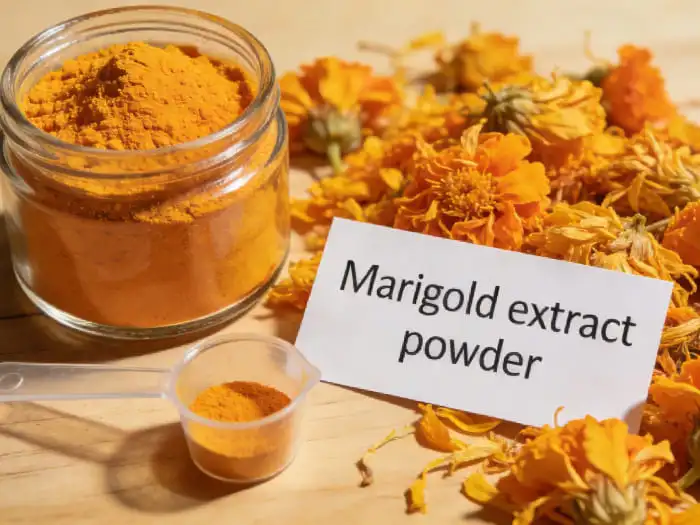
Understanding Marigold Extract and Its Impact on Vision
Marigold extract mostly comes from Tagetes erecta L., a plant species that is grown in large amounts in China, India, and Mexico because it has a lot of carotenoids. This specialized oleoresin, not regular plant extracts, is the main commercial source of bioavailable lutein and zeaxanthin in the pharmaceutical business.
Botanical Origins and Extraction Technology
To protect the delicate carotenoid matrix inside marigold petals, the extraction process uses modern solvent-based methods. Modern factories use supercritical CO2 extraction and ethanol-based methods to get consistent concentrations while keeping the purity of the molecules. This precise method makes sure that all production batches have the same amount of strength, which meets the high standards needed for pharmaceutical-grade uses.
Professional extraction labs use HPLC analysis to make sure they have the right amounts of lutein and zeaxanthin. They usually get the 5:1 golden ratio, which is scientifically proven to be the best and most like the natural makeup of macular pigment. This regulation is very important for supplement companies that are making formulas that are AREDS2-compliant.
Carotenoid Profile and Bioavailability
The extract is very bioavailable because it has a special carotenoid profile that sets it apart from other plant sources. During processing, enzymes change natural lutein esters into free lutein. This improves the rate of absorption in the small intestine. This biological change makes sure that the chemicals get to the retinal tissues where they can build up and form protective macular pigments.
According to scientific research, carotenoids from marigolds are more stable than manufactured ones. They keep their effectiveness for longer periods of time when properly sealed. The natural matrix effect makes uptake more effective, and within weeks of supplementation, serum lutein levels went up in a way that could be measured.
Key Benefits of Marigold Extract for Vision
Carotenoids from marigolds are good for your eyes in more ways than just adding them to your diet. They can help protect your eyes against current visual problems. Multiple ways that these chemicals support eye health in a wide range of demographic groups have been confirmed by research.
Macular Pigment Enhancement
Supplementing with lutein and zeaxanthin has been shown to raise macular pigment optical density (MPOD) by a large amount in both healthy people and people who are just starting to show signs of aging. This improvement makes a natural filter that only takes in high-energy blue bands. This keeps photoreceptor cells from being damaged by light.
The macular pigment works as an internal "sunscreen" for the retina. The higher the density, the better the chance of seeing clearly in low light. Studies done by professionals show that consistent supplementation methods can improve contrast sensitivity and glare recovery.
Blue Light Protection Mechanisms
People today are exposed to amounts of artificial blue light from digital devices and LED lighting systems that have never been seen before. Carotenoids from marigolds protect the body by blocking these harmful wavelengths before they reach the eye, which is a very sensitive area.
Studies in the lab show that lutein and zeaxanthin can successfully stop the formation of singlet oxygen species caused by blue light. This stops lipid peroxidation in retinal pigment epithelium cells. This antioxidant action is especially helpful for people who spend a lot of time in front of a screen or who are exposed to blue light at work.
Anti-inflammatory Properties
In addition to its direct antioxidant benefits, marigold extract has strong anti-inflammatory effects on tissues in the eye. The carotenoids control the inflammatory processes that lead to age-related retinal degeneration and the worsening of diabetic retinopathy.
According to research, taking supplements regularly lowers inflammatory markers in the blood and supports healthy blood vessel activity in the retina. Because of these qualities, the extract can be used for more than just vision supplements. It can also be used as part of complete eye health maintenance plans.
Comparing Marigold Extract with Other Natural Extracts for Vision
Knowing the competition helps people who work in procurement make smart choices about where to source products based on formulation needs and health claims they want to make. Depending on the planned use and regulatory issues, each botanical source has its own unique benefits.
Marigold vs. Turmeric Extract
Turmeric extract has strong curcumin compounds that help with inflammation in many ways, but it doesn't have the special macular carotenoids that are needed to help with direct vision. Turmeric's benefits are still general and not just focused on eye tissues. This means that it works well with marigold-based products instead of competing with them.
The bioavailability profiles of these extracts are very different. Turmeric needs special delivery methods to be absorbed better, while marigold carotenoids naturally have lipophilic properties that make them easier to take in. Because of how it's made, marigold extract is best for eye health goods that need to measure retinal deposition.
Calendula vs. Tagetes Species
Even though they are both marigolds, Calendula officinalis and Tagetes erecta have very different uses in medicine. Calendula extract mostly contains triterpenoids and flavonoids that are good for the skin, while Tagetes species are high in xanthophyll pigments that are important for eye health.
Calendula doesn't have the high levels of lutein that are needed for real vision benefits, so procurement teams should be very clear about the plant sources they use. Tagetes erecta is still the standard for uses that focus on vision because it has a higher carotenoid density and has been clinically proven to work.
Quality Certification Impact
Organic approval has a big effect on the quality of the extract and where it stands in the market, especially for clean-label products that are aimed at health-conscious customers. Certified organic marigold extract gets higher prices and helps brands stand out in the supplement market, which is very competitive.
Verification of non-GMO status is useful for companies that want to sell their products in Europe and the United States, where people are more concerned about genetic change and how it affects their health. These certifications need careful documentation of the supply chain, but they give finished goods big marketing benefits.
Procurement Insights: Buying Marigold Extract for Vision-Related Applications
To do strategic sourcing, you need to know the technical details and quality standards that set premium marigold flower extract sellers apart from commodity providers. Professional buying teams have to look at more than just unit price to make sure that formulations work and that they follow the rules.
Critical Supplier Certifications
Quality control starts with making sure that suppliers have all the necessary certifications to show that they know how to make things and follow the rules. Some important qualifications are FSSC 22000 for managing food safety, ISO standards for quality systems, and special certifications like Kosher and Halal for certain markets.
GMP (Good Manufacturing Practice) compliance is especially important for pharmaceutical and nutritional uses because it makes sure that production standards are always met and that there is no contamination. Suppliers should show detailed records of their quality control systems and audit reports from a third party that show they are still following the rules.
Wellgreen Technology keeps a full set of certifications, such as ISO standards and GMP compliance. This helps government approvals go smoothly across global markets and makes sure that product quality and safety standards are always met.
Extract Form Considerations
Different types of extract have different benefits, based on the needs of the formulation and the end use. By knowing about these choices, you can make smart purchasing choices that improve both the speed of production and the stability of the product.
Powder types are very stable and easy to control doses, which makes them perfect for use in tablets and capsules. Water-dispersible powder types solve problems with solubility in drink and supplement mixes, keeping the powder from separating and making sure it is evenly distributed throughout production runs.
Oil suspensions are better for softgel uses because they are bioavailable and protect naturally against free radicals through lipid matrices. Handling these types carefully is needed to keep them from oxidizing, but they have better absorption properties that make therapies work better.
Bulk Purchase Optimization
Strategies for buying in bulk must find a mix between keeping costs low and managing inventory and keeping quality high. Carotene compounds need to be stored in a controlled way to keep their effectiveness, which affects the best order sizes and delivery times.
Suppliers with flexible minimum order amounts can work with a range of formulation scales and offer volume discounts to customers who have bought from them before. Long-term supply deals can help keep prices stable and make sure that goods are always available, even when demand is high or there aren't enough raw materials.
Professional sellers include a lot of analytical paperwork with every package. This includes certificates of analysis that prove the product's purity, potency, and level of contamination. This paperwork is necessary for regulatory applications and quality control checks.
Safe Usage and Dosage Guidelines for Vision Health
Through clinical research, specific dosage levels are found that provide the best therapeutic benefits while also being very safe for a wide range of people. Product developers can make effective formulations that meet regulatory requirements and customer expectations if they understand these parameters.
Evidence-Based Dosage Recommendations
Clinical studies that have been published show that taking between 6 and 20 mg of lutein every day is good for your eyes. 10 mg is the most common therapeutic amount that has been proven to work. Supplemental zeaxanthin levels are usually between 2 and 4 mg per day, which keeps the normal 5:1 ratio seen in healthy macular tissue.
The AREDS2 study protocols set 10 mg of lutein and 2 mg of zeaxanthin as the standard for preventing age-related macular degeneration. This means that health claims can be backed up by the government in big markets. Long-term studies have shown that these doses are very safe, with no known side effects.
In functional food applications, lower concentrations are usually used, with 2–6 mg of lutein added per serving to provide a significant nutritional boost without needing to prove a specific health claim. These amounts are good for drinks, dairy products, and fortified foods that are meant to improve general health rather than for medical uses.
Regulatory Compliance Requirements
Lutein and zeaxanthin are Generally Recognized as Safe (GRAS) chemicals according to US FDA rules. This means they can be used in regular foods and dietary supplements without getting approval from the FDA first. Certain health claims, on the other hand, need strong scientific proof and formal petition methods.
According to the European Food Safety Authority (EFSA), health claims about vision are allowed as long as the products provide the minimum effective doses that are backed up by clinical proof. Manufacturers must make sure that the labeling rules and maximum amounts allowed for each target market are followed.
Labels should clearly show how much of a food is in each dose, the daily value percentages if they are known, and any disclaimers that are needed for therapeutic or diagnostic claims. For figuring out complicated international rules and making sure you can get into markets, professional regulatory advice is important.
Formulation Safety Considerations
Marigold flower extract works well with common supplement ingredients and production methods as long as it is treated correctly. But for carotenoids to stay stable, they need to be kept away from light, heat, and air during production and storage.
Using encapsulation technologies or antioxidant addition methods can help keep the product's effectiveness over longer periods of time. Adding vitamin E makes the antioxidant defense stronger and helps the formulation stay stable in tough storage conditions.
Stability testing should be a regular part of the manufacturing process to make sure that the product stays effective for the length of time that it is supposed to last. These studies back up expiration dates and give people faith that the quality of products will stay high when they are stored normally.
Conclusion
Marigold extract is a scientifically proven and financially viable solution for eye health formulations used in a wide range of fields. This plant extract is an important part of modern nutraceutical research because it has a standard amount of lutein and zeaxanthin, is made using tried-and-true methods, and is approved by regulators. Professional procurement teams can find the best suppliers in this niche market area by learning about the technical requirements, quality standards, and application issues that set them apart.
FAQ
What makes marigold extract superior to synthetic lutein sources?
Natural marigold-derived lutein demonstrates enhanced bioavailability compared to synthetic alternatives due to its complex carotenoid matrix and natural isomer profile. The botanical source provides additional supportive compounds that enhance absorption and stability while meeting clean-label requirements preferred by health-conscious consumers.
How should marigold extract be stored to maintain potency?
Proper storage requires cool, dry conditions away from direct light and oxygen exposure. Sealed containers in temperature-controlled environments below 25°C help preserve carotenoid stability. Professional suppliers provide specific storage guidelines and stability data supporting recommended shelf life under optimal conditions.
What certifications should I require from marigold extract suppliers?
Essential certifications include ISO quality standards, GMP compliance, and food safety certifications such as FSSC 22000. Additional certifications like organic, non-GMO, Kosher, and Halal may be required depending on target markets and brand positioning requirements.
Partner with Wellgreen for Premium Marigold Extract Solutions
Wellgreen Technology delivers pharmaceutical-grade marigold extract manufactured under strict GMP conditions with comprehensive quality certifications and analytical documentation. Our advanced extraction facilities produce standardized lutein-zeaxanthin ratios with superior stability profiles, supporting diverse formulation requirements from softgels to functional beverages. As a trusted marigold extract supplier, we provide customized specifications, flexible order quantities, and dedicated technical support to ensure your product development success. Contact our team at wgt@allwellcn.com to discuss your specific requirements and discover how our premium botanical extracts can enhance your vision health formulations with reliable supply chain support and competitive pricing.
References
Hammond, B.R., et al. "Lutein and Zeaxanthin in Eye and Brain Function." Annual Review of Nutrition, vol. 37, 2017, pp. 293-315.
Age-Related Eye Disease Study 2 Research Group. "Lutein + Zeaxanthin and Omega-3 Fatty Acids for Age-Related Macular Degeneration." Journal of the American Medical Association, vol. 309, no. 19, 2013, pp. 2005-2015.
Stringham, J.M., et al. "Macular Pigment and Visual Performance in Glare: Benefits for Photostress Recovery, Disability Glare, and Visual Discomfort." Investigative Ophthalmology & Visual Science, vol. 52, no. 10, 2011, pp. 7406-7415.
Richer, S., et al. "Double-Masked, Placebo-Controlled, Randomized Trial of Lutein and Antioxidant Supplementation in the Intervention of Atrophic Age-Related Macular Degeneration." Journal of the American Optometric Association, vol. 75, no. 4, 2004, pp. 216-229.
Vishwanathan, R., et al. "Macular Pigment Optical Density is Related to Cognitive Function in Older People." Age and Ageing, vol. 43, no. 2, 2014, pp. 271-275.
Wu, J., et al. "Intakes of Lutein, Zeaxanthin, and Other Carotenoids and Age-Related Macular Degeneration During 2 Decades of Prospective Follow-up." JAMA Ophthalmology, vol. 133, no. 12, 2015, pp. 1415-1424.